
This post is likely to be too long as most of my posts are. I am sometimes tempted to think that I am in what St. John of the Cross described as the Dark Night of the Soul. There might be some great value then to the hollowing out, lack of spiritual consolation and weariness that affect much of my life and gives much of my emotional landscape a kind of blend of taupe and grey hues. But I am objectively pretty sure that is not the case for me. Rather the passions, addictions, virtues, vices and interests of my life flow around, over and through me. things change — some improve, some do not. I have lived a very celibate life (without vows or promises) form almost all of a very long time — but it was not always so. I was one a white hot lover at least in intensity of passion regardless of what any measure might indicate. However, like everything else in life sexual passion is subject to a circumstantial framework. That is the nature of sex — one has it more often when it seems like a good thing to be doing or if one feels compelled to be doing it.
But is the spiritual life based on something real? Is there anything at all to it? I have no doubt in my mind that from the earliest days Christians were deeply committed to the Communion of Saints as an idea and a reality — although the term did not exist. The author of the letter of the Hebrews clearly feels the presence of of longs for reunion with those who have passed beyond the veil of death. Hebrews twelfth chapter has a powerful passage which expresses that reality.
12 Therefore, since we are surrounded by such a great cloud of witnesses, let us throw off everything that hinders and the sin that so easily entangles. And let us run with perseverance the race marked out for us, 2 fixing our eyes on Jesus, the pioneer and perfecter of faith. For the joy set before him he endured the cross, scorning its shame, and sat down at the right hand of the throne of God. 3 Consider him who endured such opposition from sinners, so that you will not grow weary and lose heart.
While I may lack some of the passion of the early days of my faith and other aspects I do not simply fold and give up. I still spend time when I am in Abbeville in silent prayer in the little chapel under the large Saint Mary Magdalene Church. I pray (and walk) the crowded little stations of the cross, meditate, read from the Sacred Scriptures and other holy books, honor the Eucharist present there and also try to clear my head. I prayerfully read over the cancer list. The recent passing of All Souls Day found me at morning mass at the big church above this chapel. I prayed for the souls with the universal Church but did not make it to the cemeteries that day. Caring for the graves, honoring the dead and remembering departed loved ones is something almost all large groups of humans throughout history can relate to as desirable and worthy things to do. However, the specific Christian idea of souls moving toward perfection after death in a period of waiting also appeals to me. But in practice in Catholic Christian lives here and elsewhere all these parts of a single reality are lived at once — as an example of this I include the photo and text my mother posted this on Facebook at the end of all Souls Day:
We had a really blessed day visiting I loved ones at their final resting places. We visited Mom and Pops, Mommee and Grandpa Theo. Revisited Gammie and Pau-Pau and Will. Lastly we went to the beautiful cathedral Cemetery. To leave roses and flowers for all my son’s final resting place. He loved old cemeteries in Louisiana. We prayed for them. We asked for their prayers on our behalf. We also took time to pray for Rachel and beg her prayers for us. We talked off the trip with a Splurge Day at IHOP. The friends and loved ones in heaven are our best intercessors.

In First Corinthians 3:9 St. Paul writes about the nature of the Christian faith as the means of salvation, he and Apollo represent the reality of a kind of schism among fellow Christians and in some ways remind us of the more tragic schismatic complexities dividing especially Protestant and Catholic Christianity: “For we [Paul and Apollos] are God’s fellow workers; ” Paul is writing specifically here about the work of missionary evangelism in which they were both engaged. There is no doubt in his mind that the central work of salvation in Christ is manifest in both their ministries and is central to anything that Christians do and believe as Christians. It is the foundation of all else as he goes on ” … For no man can lay a foundation other than the one which is laid, which …..” That is the basis for salvation. But things can go wrong above the salvific foundation and in that merciful work of grace the one invested with such errors is not fit for the building he has built as such to be present in the Holy City. However, he is still saved:“but he himself will be saved, but only as through fire” (1 Cor 3:15b).
The custom of praying for the sins of the dead who might be passing through such a fire is based on many things. It is marked however in the twelfth chapter of the Second book of Maccabees which has a passage worth citing at length.
39 And the day following Judas came with his company, to take away the bodies of them that were slain, and to bury them with their kinsmen, in the sepulchres of their fathers.
40 And they found under the coats of the slain some of the donaries of the idols of Jamnia, which the law forbiddeth to the Jews: so that all plainly saw, that for this cause they were slain.
41 Then they all blessed the just judgment of the Lord, who had discovered the things that were hidden.
42 And so betaking themselves to prayers, they besought him, that the sin which had been committed might be forgotten. But the most valiant Judas exhorted the people to keep themselves from sin, forasmuch as they saw before their eyes what had happened, because of the sins of those that were slain.
43 And making a gathering, he sent twelve thousand drachms of silver to Jerusalem for sacrifice to be offered for the sins of the dead, thinking well and religiously concerning the resurrection,
44 (For if he had not hoped that they that were slain should rise again, it would have seemed superfluous and vain to pray for the dead,)
45 And because he considered that they who had fallen asleep with godliness, had great grace laid up for them.
46 It is therefore a holy and wholesome thought to pray for the dead, that they may be loosed from sins.
To much of Protestant America the Catholic interactions with the dead just feel too complicated, intimate and ritualistic. Lots of silly back-flips of scriptural exegesis are used to justify what is essentially a difference of taste. But even the Catholic Church does not get nearly as intellectually and doctrinaly messy as the Early Christians. St. Paul writes of Baptism for the Dead which fits no easy theological formulation of a major Christian sect. In the same first letter to the Corinthians which gives us a glimpse into the way Purgatory works we see this ritual alluded to in the 29th verse of the fifteenth chapter. We can do good for the dead, we ought to do so — that is clear. But only the heretical Mormons today practice Baptism for the Dead in any large scale way. Any small sects of more orthodox Christians who do so have very little influence on anyone else.
26.the last enemy that shall be destroyed is death.
27For he hath put all things under his feet. But when he saith all things are put under him, it is manifest that he is excepted, which did put all things under him.
28And when all things shall be subdued unto him, then shall the Son also himself be subject unto him that put all things under him, that God may be all in all.
29Else what shall they do which are baptized for the dead, if the dead rise not at all? why are they then baptized for the dead?
So if the connection between the spiritual lives of those who have passed on and those who are alive today has an assured place in Chrisitianity how does that work?
The gathering to celebrate the lives and death of local martyrs was fundamental to the daily life of early Christianity and such holy sites were almost without counting. The Protestant Reformation really largely replaced the life of the early church with its strong emphasis on Communion with the dead with a fantastical fiction about the life of the Early church based on a pitifully shallow reading scripture and a strong desire for reforms — some of which were needed. The Martyrs through their witness and public suffering were believed to be given a perfecting grace special to their order which freed them from the need for purgatory after death — this is often referred to as the martyr’s palm and that term is a reference to the Apocalypse of John, also known as the Book of Revelations. But for many of the rest of us there may yet be some work to do and that is portrayed in the poetry of Dante.


The purpose of a purgatory as with the rest of of the economy of salvation is a more perfect reunion. a reunion to which we are invited by the love of God. I took some photographs of my mother’s 55th high school class reunion– they were wearing fiftieth anniversary shirts. But they were clearly filled with a renewed love of unity with each other. The theological hope for a cosmic reunion with God is something very different — but not utterly different.


I am sure that all of can come up with reasons why the concept of reunion in cosmic bliss is problematic but the Christian who truly understands the magnificence of the God he or she believes in can still grasp its possibility. But is there a way to reconcile faith’s connection to the afterlife with science as we know it today? Are we simply fools who wait for anything that transcends death?
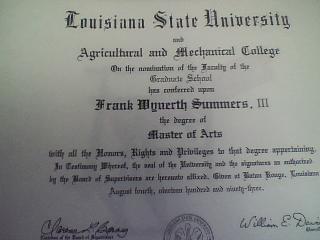
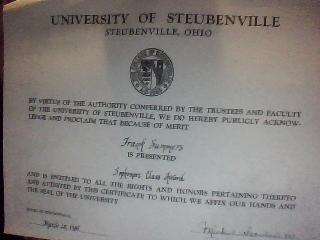
I am a reasonably educated guy and although most would not do so I do not mind posting my academic track record, warts and all: Here it is:
I have taken university courses in microbiology, astrophysics, sociology, political science and graduate level anthropology. There is a vast amount more that I took in humanities, languages and math but that is about the some total of courses that aspired to be and were exercises in science. Science itself is often railed against and sometimes decried but it is only a very rare and limited target for a critique. Such critiques are rarely given much credence by scientists and are not much use to the scientific community because of that lack of interest in what their critics have to say — at least a lack of interest in a constructive interaction with such interests.
Science as we know it today relies heavily on what are known as Koch’s postulates, although not all scientists know that. Here they are as distilled by the University of Maryland website as they were developed by Koch workin in microbiology:
Koch’s Postulates
Four criteria that were established by Robert Koch to identify the causative agent of a particular disease, these include:
1.The microorganism or other pathogen must be present in all cases of the disease.
2.The pathogen can be isolated from the diseased host and grown in pure culture.
3.The pathogen from the pure culture must cause the disease when inoculated into a healthy, susceptible laboratory animal.
4.The pathogen must be reisolated from the new host and shown to be the same as the originally inoculated pathogen.
Koch is setting a standard for establishing what is provable in a mirobiology lab as the cause of an infectious disease. He is not establishing a standard for the only possible causes of all tings which present in some way or other as disease. The two things are profoundly different. The influence of this set of postulates is that it represents a series of clear steps involved in the scientific method. The Wikipedia super site has a diagram that attempts to depict the workings of the scientific method here. The image is produced below. The idea that something must be named and identified, a connection must be made to surveyed information in the larger world of evidence are at the basis of scientific research. The idea that on e must master and manipulate and control the named thing are at the basis of scientific experimentation. The idea that one can cause disease on purpose for the sake of knowledge but within limits is part of scientific ethos. The idea that the process of the connection with the named thing and the surveyed evidence can be repeated is part of scientific verification.

But the truth is that scientist breeds a kind of network of communities which have a kind of culture and all too often that culture focuses only on the limited things there method can perceive and believes it can see all things. Heaven, Hell and Purgatory have not been shown to exist by any scientific process yet and so they must not exist. There is no sense in many cases (most of which are not directly religious) that anyone ought to be responsible for the horrible damage done when debunking destroys the basis of life, survival and culture and is then shown to be wrong. Pluto was debunked as a planet and Tyson was a rock star for doing so but it still turns out to be a round beautiful and complex world. Most of us survive this just fine but in the applied sciences the effects are often horrific and not easily reversed. There is often a value in keeping treasure together that cannot be regained after scientific hoodlums have ransacked the place. What about optimism, are there different grades of optimism? I might have been more optimistic if more people in science early on had believed it likely that there were many habitable planets –for reasons that I cannot discuss here and now. Its hard to find evidence now of how many believed there were none or vanishingly few and were smug in that belief. Now most admit there are a vast number of planets and plenty of habitable ones. Many people have been driven from beliefs handed on through the ages by earlier scientists who taught that Earth was the only world. Clealry they were wrong and the destruction is done.
I love science too and am generally pessimistic about it. Can a generally pessimistic person embrace a generally uplifting and optimistic view of life?
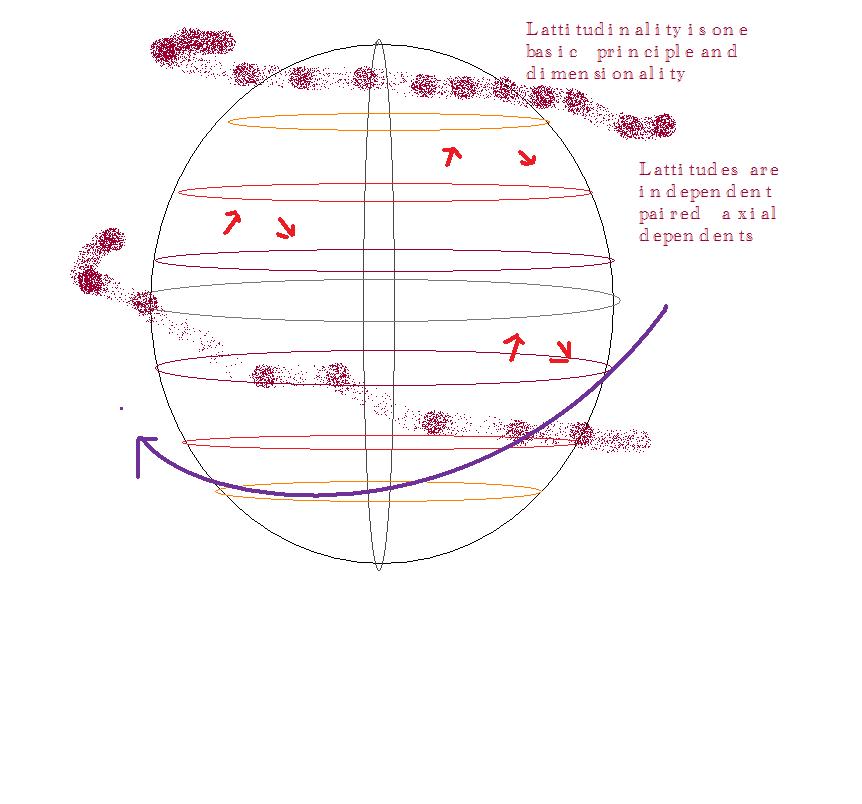
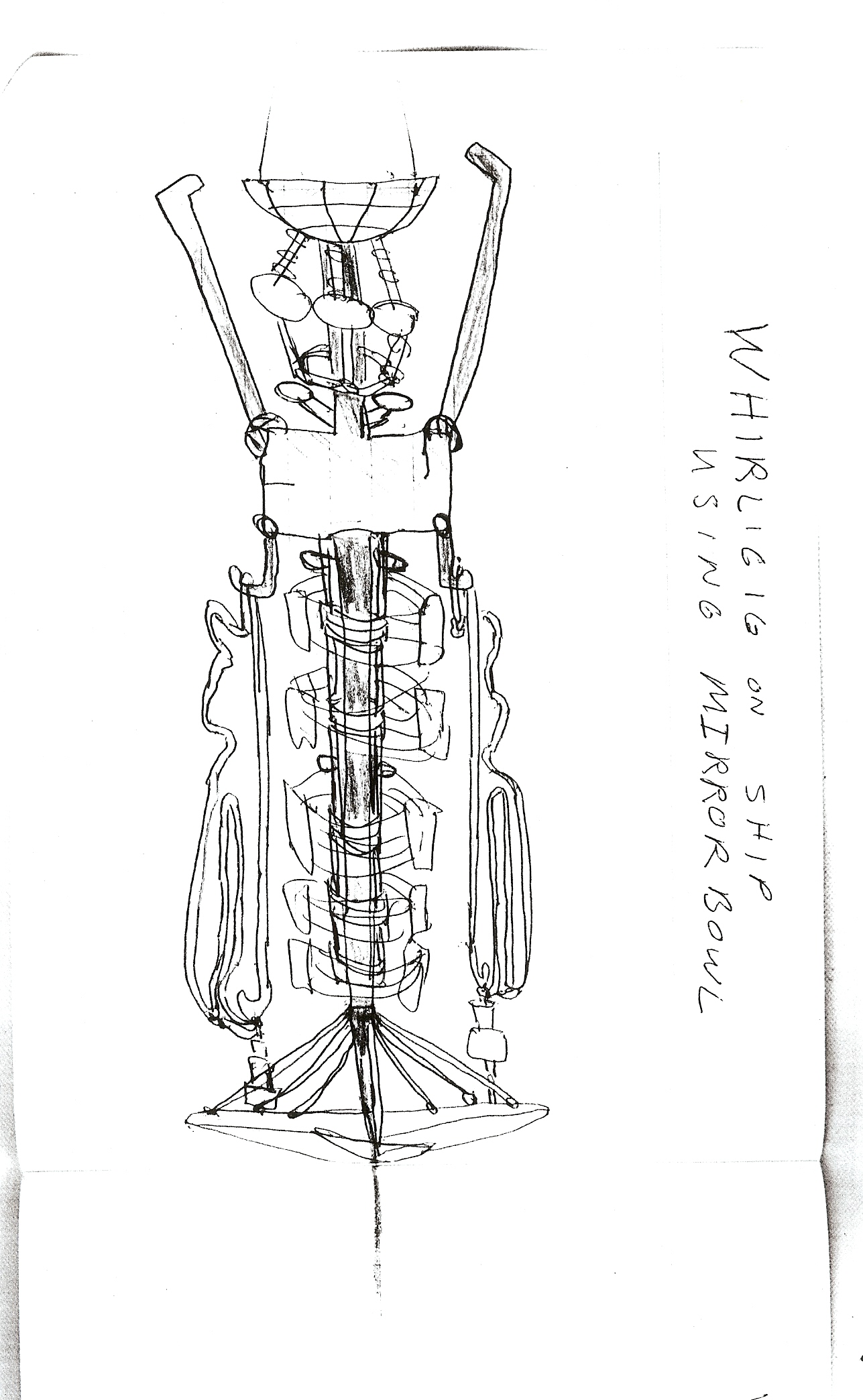
My posts on physical geometry appears across this blog. They are especially here, here and here. They seek to open a window on a science which could retain the valuable insights of current science, deal with the unified field questions and explain Dark Matter. But they are also the principles of a science that stand before God and the spiritual world.
The general rule of this particular age of this particular universe may or may not be entropy. The laws of thermodynamics seem to imply such a reality:
The four laws of thermodynamics are:
Zero Place (added later) law of thermodynamics: If two systems are in thermal equilibrium with a third system (a=c, b=c), they are in thermal equilibrium with each other(a=b). This law helps define the notion of temperature. it is also sort of like saying, “yeah, the algebra stuff is O.K.”…
First law of thermodynamics: When energy is expended in doing work, radiated or combusted as heat, or joined with matter passes into or out from a system, the system or original energy entity’s internal energy changes in accord with the law of conservation of energy. One might say E¹ = E±(w+r+l) where w,r and l are positive integers and can be seen as p. E¹ = E±p. In other words if the amount of energy is shown to pass in or out of the system it is increased or diminished by exactly that amount. But in fact the law only usually considers passing out of the system in traditional physics.
Second law of thermodynamics: In a natural thermodynamic process, the sum of the entropies of the interacting thermodynamic systems increases. In other words all the costs are cumulative if one considers the entirety of the equation of known parts A-b=A¹, C-d=C¹ and so on but if you see that (A+C) is really what you are looking at then you can not get around the fact that b and d have been lost. You find in fact that (A+C)±(b+d) = (A+C)¹.
Third law of thermodynamics: The entropy of a system (as we can study them in laboratories and classical experiments) approaches a constant value as the temperature approaches absolute zero. Molecular physics has been very consistent in showing that with the exception of non-crystalline solids (glasses) the entropy of a system at absolute zero is typically close to zero, and for those who can do such math better than I can is usually equal to the logarithm of the product of the quantum ground states.
We can find a way to not that these venerable laws do not explain the most recent experiments of astrophysics all that well. We find verified in science a universe expanding and not only expanding but expanding faster than it used to expand. The entropic model accounts for what we know of matter and almost not at all for what we now know of the material. That is the truth, I have faced that truth with courage in my theory. Big science has not done so at all. In the dark energy and dark matter of current science is the possibility that physical geometry explains. and in that is the path to seeing how God and spirits may be among us in physical terms. Cowardice and guilt in the scientific community ought not to be allowed to dictate all of our futures nearly as much as they do. I may not deserve anything for my efforts but my belief in purgatory does not disqualify me as much as Tyson’s belief that Pluto was a laughingstock disqualifies him.







 Franksummers3ba's Blog