Tag Archives: Oil & Gas Industry

The BP Oil Spill & Tyranny: Links and Notes

I. “If This Be Treason Make the Most of It!”

I will not interpret or attribute the quote above nor even say what it has to do with the horrors and struggle  in the Gulf of Mexico. For me the gusher crisis is the very strong indication that we should have real and radical change. I do not think we are likely to undertake the right changes. However, prior to the spill I had been outlining some ideas for radical change. I believe that the word Tyranny which was once the greek word for a bad monarchhas been changed by usage. The Greeks had a word for a bad aristocracy which we translate as oligarchy now and a word for a bad democracy which was ochlocracy. They could discuss intelligently what a mixed government that combined the rule of the many, few and one would be like when it was rotten. Even though most of there best political sages believed the best government would combine rule of the one, the few and the many.  Other thinkers like Montesquieu also saw that mix as ideal and it is the template of our governance. But I do believe our government has become corrupt as an institution in a way which makes it an institutional tyranny. It is from this base of ideas that I have written many blogs posts about radical political change. These posts propose change. However, while I am not hiding these posts there are too many of these blog posts to link them all to this site. These posts are in this blog and follow the link I am posting just below and the one linked here is a good place to start reading them:

FWST1. https://franksummers3ba.wordpress.com/2010/03/06/the-mental-ferment-for-men-and-women-who-might-foment-an-american-revolution-part-one/

I have among these many posts one which describes changes that might be useful to have in effect as this crisis has developed. So it will be out of sequence but will show where the proposed regime had intended to bring the country:

FWST 2. https://franksummers3ba.wordpress.com/2010/05/10/the-direct-imperial-government-in-the-new-american-regime-part-two/

While the post describes the inner workings of a proposed regime which is complex and has many parts I think you could read the two posts I have linked from that long series and have some ideas about what a possible regime change might aim to achieve. If it did exist right now then the Imperial Waste Authority (which is purely imaginary right now) might play a vital role.

II.Business  Media Coverage  of the Oil Spill

This catastrophic spill is getting attention even from those who one might argue are the most committed to the status quo. See the Wall Street Journal’s coverage in the link below:

WSJ 1. http://professional.wsj.com/professional-search/search.html?ar=1&dt=4&mf=0&pg=1&ps=25&sb=1&pid=0_0_ES_1000&cnt=&st=3&nfddg=0_0_EA_DeepDive_32|WIZARD_EDITOR_ID|deepdivel1&mod=wsjpro_hphook

WSJ 2. http://online.wsj.com/article/SB10001424052748704764404575285772746839504.html?mod=WSJ_hpp_LEFTTopStories

See also Bloomberg’s Business Week

http://www.businessweek.com/news/2010-06-04/hayward-pledges-to-steer-bp-through-crisis-has-board-backing.html

So while none of these people or institutions are advocating radical change as I am they can all see that this is a very serious situation.  We are also in a country which was already in some trouble and had some difficulties which were well-defined before this gusher blew through its controls. Besides those who are making lots of money in business under the current mode of the country’s operations there are also those who are highly motivated to be recognized as being accurate. I have a few links showing the views of such people and institutions seeking to discuss the BP Transocean rig Macondo wellsite Gulf of Mexico Spill:

III. Academic Insight into the Spill

My own undergraduate alma mater:

 UL 1. http://www.louisiana.edu/Advancement/PRNS/news/2010/477.shtml

UL 2. http://www.louisiana.edu/Advancement/PRNS/news/2010/EnvironmentalEffects.pdf

This University of Louisiana has a lot of resources to bring to this discussion that are likely to emerge as the crisis unfolds. They are likely to bring more of those resources to bear as one needs to analyse things in detail. They have expertise in petroleum and wetlands related subjects for example. However, they also have expertise in understanding how the whole complex of cultural and market forces which make up the state’s tourism scene. See this link for that  coverage:

UL. 3 http://www.louisiana.edu/AboutUs/Excellence/CCET.shtml

My own graduate alma mater, Louisiana State University:

LSU 1. http://appl003.lsu.edu/unv002.nsf/9faf000d8eb58d4986256abe00720a51/c8166483d13083bd862577370071fde5?OpenDocument

However, I want to make it very clear that I am referring to none of these people and groups in the Academic because I believe that they advocate cultural change.  All of the people listed above are simply evidence that there are major issues involved in this major event.

The longer the crisis goes on the more there will be discussion of what it all means. The news is still spreading. The ferment of political discontent may grow over time. BP has no certainty about when it can get control of this situation. We are in the throes of a full-blown calamity. The world can see the struggle as well, which I indicated in my last post. I have a sampling of world press coverage of these events which indicates that this spill commands some world attention.

IV. World Press Coverage

See this example of coverage in the China People’s Daily:

WPC 1. http://english.people.com.cn/90001/90777/90852/7012683.html

The online version of El Diario from Mexico:

WPC 2. http://www.diario.com.mx/nota.php?notaid=3e3a7ea2c10f01e84a137cfa322f779e

The coverage in the international online periodical Japan Times:

WPC 3. http://search.japantimes.co.jp/cgi-bin/eo20100605a2.html?utm_source=feedburner&utm_medium=feed&utm_campaign=Feed%3A+japantimes+(The+Japan+Times%3A+All+Stories

V. American Change Agents

There is a crisis. That much we know and the question becomes is our system creating or worsening the crisis in many ways. I think that it is. I want to explore our political situation within this context.  Now I am leaving behind a review only of the discussion of the BP Gulf of Mexico Spill. I want to discuss those who are looking for change. They do not all seek the same kinds of change and some do not believe they favor any kind of radical change. Yet, the truth is that all of them are seeking change and proposing policy or lifestyles that if they were more successful would remake America. I am listing only groups that I believe are both legitimately American and legitimately responsible groups. 

I think that we can argue that this is a time that demands radical change. I do argue that it is time for radical change. While the regime change that I have proposed earlier in this blog’s posts are my ideas and I do not claim that other American change agents support them I do think it is significant that there are many “American Change Agents” who are not informed by selfishness or hate primarily but pursue differing responsible ideals. So I want to discuss what the options are and why we should consider those options. Of course I would like to see them informing and enriching the vision I have proposed. Together we might reach more successful solutions.

A Sampling of  Other American Change Agents

Catholic Far left with Deep Right Harmonies

ACA 1. http://www.catholicworker.org/communities/index.cfm

Deep Indigenous Right with Left Roots Harmonies

ACA 2. http://www.ncai.org/

American Critical Left 

ACA 3. http://motherjones.com/politics/2010/06/next-deepwater-horizon

Mostly Protestant Activist Left 

ACA 4. http://go.sojo.net/campaign/climate2010

Strident Independent Outside Objectivism

ACA 5. http://www.csmonitor.com/USA/2010/0604/Louisianans-to-Obama-on-BP-oil-spill-Show-us-we-matter

The Counterrevolutionary Right in Catholic Populist Form

ACA 6. http://www.tfp.org/

Committed Christian Fringe Left

ACA 7. http://mcc.org/

Center Right Patriotic Catholic Voice

ACA 8. http://www.kofc.org/un/eb/en/index.html

This is only a reminder of a group people say is dead — I do not agree.

ACA 9. http://www.royalty.nu/America/Hawaii.html

American Leftist Innovation

ACA 10. http://users.erols.com/ccnv/

Deep British American Centrist Force

ACA 11. http://www.scottishrite.org/

Trying to find and preserve a Confederate Voice

ACA 12. http://www.scv.org/

V. GOHSEP’s Oil Sightings

I would like to end this post as I have the last two posts by simply reproducing what is reported on GOHSEP’s site in terms of daily oil sightings.  They show that we still have not yet reached the worst case scenario but things are not good.

Oil Sightings Report June 4, 2010

Plaquemines:
Sighting: Heavy streamers 5 miles east of Grand Terre Islands
Date: 4 Jun 10

Sighting: Sheen near South Monka Island, 7 miles NW of Barataria Bay
Date: 4 Jun 10

Sighting: Thick oil in the Lake Washington area, 8 miles NE of Grand Terre Islands
Date: 4 Jun 10

Sighting: Sheen with tar balls approximately 1 mile NW of Grand Bank Bayou with stranded wildlife
Date: 4 Jun 10

Sighting: Oil south of Bennie’s Pond, 7 miles NE of Pilot town
Date: 4 Jun 10

Sighting: North of Bay Long, the boom around the island is completely saturated and allowing the oil to approach the marsh
Date: 4 Jun 10

Sighting: Oil on the rocks off the state park shore
Date: 4 Jun 10

Sighting: Oily sheen located at the mouth of Bay Baptiste
Date: 4 Jun 10

Sighting: Heavy sheen at Four Bayou Pass, 7 miles NE of Grand Terre Islands
Date: 4 Jun 10

Sighting: 50 yards of saturated hard boom on the bank at Quatre Bayou Pass
Date: 4 Jun 10

Sighting: Oil on an island in the eastern portion of Bay Jimmy extending 3 to 4 miles N of the island
Date: 4 Jun 10

Sighting: Sheen with tar balls 200 feet wide in Bay Long at Point Chenier Ronquille
Date: 4 Jun 10

Sighting: Heavy oil sheen at Pass Abel, 8 miles E of Jetty South Pass Light
Date: 4 Jun 10

Jefferson Parish:
Sighting: Metallic sheen with tar balls extending from Middle Bank in Barataria Bay to Coupe Abel
Date: 4 Jun 10.

Sighting: Oil with sheen at Port Eads, 3 miles W of Grand Terre Islands
Date: 4 Jun 10.

Sighting: Sheen in water, mile E of Mendicant Island
Date: 4 Jun 10.

Sighting: Oil just off rocks, SW side of the Grand Terre Islands
Date: 4 Jun 10.

Sighting: Heavy oil with streamers, 3 to 4 miles inside Coupe Abel Pass
Date: 4 Jun 10.

Sighting: Oil slick with stranded wildlife in the middle of Barataria Bay
Date: 4 Jun 10.

Sighting: Oil 2 miles E of Grand Isle with stranded wildlife
Date: 4 Jun 10.

Sighting: Oil 1 mile SE of Basa Basa Island
Date: 4 Jun 10.

Sighting: Oil 1 mile SE of Grand Terre Island with stranded pelicans
Date: 4 Jun 10.

Sighting: Large tar mat mile SE of Barataria Pass
Date: 4 Jun 10.

Lafourche Parish:
Sighting: Gray sheen ribbons between Snail Bay and St. Joseph Bay 2 miles South East of Little Lake
Date: 4 Jun 10

Terrebonne Parish:
Sighting: 2 miles of containment boom on the shore of Raccoon Island
Date: 4 Jun 10

BP Spill: Environmental Awareness links & questions

Will there be a system producing the oil and gas before the relief wells are completed, supposedly in August?  Will the relief wells be fully successful early on?  There are so many distressing images coming to us over the spill cam.  For me there is so much of my memories and hopes long ago lost are brought to mind. my own life was already pinched in before this disaster. To understand the freshwater sytem behind the saltwater marshes that are behind the almost lost barrier islands. One can see that there are oil and government scars that are still across Louisiana. This spill is an attack on a struggling set of ecosystems and while they are vital and fertile they are not extremely resilient. So we hope BP gets it capped, will they?  

The Cut and Cap had not succeeded to the fullness of its potential when I posted this blog.  British Petroleum is working its robots all over the wreckage they have tried to clear and clean up. They have a trimmed Blow Out Preventer gushing more oil than ever before and a cap that was lowered down without a riser pipe to collect the oil. In addition the seal certainly seemed to be spewing lots of oil.  I of course am not sure what exactly is going on and I do believe that restoring the barrier islands is important. I have however seen that in the context of a larger system. my idea is described in the next link. https://franksummers3ba.wordpress.com/2009/10/02/ideal-wetlands-policy-on-the-louisiana-coast/ 

I hope that I wake up tomorrow to the news that the gusher is capped. However, I probably will not. Even if I did there is already a great deal of oil to deal with.  For me the world was already in a very big mess before this spill and the spill threatens a very strained set of cultures and ecosystems. So I want to look at the spill just as an environmental issue and incident in this post and yet also connect it to the  events and an analysis that have been developing. 

 The situation in the Gulf of Mexico is dire and not likely to get better very soon. I want to use this blog post to discuss this as an ecological and environmental disaster. I will also provide links that discuss this incident from that point of view.  Then I am providing some links and samples from other sources to just give a context and vision of what is happening in the Gulf of Mexico.

The Audubon Society has a unique claim to be involved and informed in this struggle.  That is because John James Audubon, the namesake of the society did much of his natural history research and bird painting in Louisiana.

1.http://www.audubonaction.org/site/PageServer?pagename=aa_HowtoHelp

2.http://www.auduboninstitute.org/gulf-oil-spill-resources

Besides the Audubon organizations there are many other major environmental organizations weighing in on the situation. I have located a few major links here as well. No two of these groups have exactly the same perspective.

3.http://members.greenpeace.org/blog/greenpeaceusa_blog/2010/06/03/the-ixtoc-blowout-31-years-ago-today

4.http://oceansociety.blogspot.com/2010/05/oil-spill-in-gulf-proves-need-for-oil.html

6.http://www.gulfmex.org/director.htm#oil

7.http://www.defenders.org/programs_and_policy/wildlife_conservation/threats/offshore_drilling.php

II. Assessment of the Situation

Besides these organization above that are advocating for various kinds of environmental policy and response there are others in the world trying to report on the situation. I list a few of those in links by home country. These reports are all very different and may offer useful insights into what we can expect different groups and interests to be discussing.

USA

Time has photos of affected wildlife.

1.http://www.time.com/time/photogallery/0,29307,1992275,00.html

New Orleans has a major newspaper covering the situation.

2.http://www.nola.com/news/gulf-oil-spill/index.ssf/2010/06/bp_places_cap_on_gulf_of_mexic.html

Scientific American Magazine looks at how the Spill could affect the microbes and their role in the Gulf, especially that area called the dead zone. 

3.http://www.scientificamerican.com/article.cfm?id=how-will-the-oil-spill-impact-dead-zone

The Society of Petroleum Engineers marks  the event and refers visitors to three other sources. See their text.

“Gulf of Mexico spill

The Society of Petroleum Engineers wishes to express its concern for all those impacted by the oil spill in the Gulf of Mexico and support for our colleagues who are working to resolve this situation. Updates on the situation are provided at the following locations: BP, Deepwater Horizon Response and API Gulf spill.”

4. http://www.spe.org/index.php

China

China’s National English Language TV discusses alternate energy policy in light of this spill.

5.http://english.cntv.cn/program/newsupdate/20100603/101270.shtml

United Kingdom

BP reports to the Prime Ministry in London, England.

6.http://business.timesonline.co.uk/tol/business/industry_sectors/natural_resources/article7143846.ece

III. GOHSEP Sightings in Louisiana

I have decided to end this post with the GOHSEP report on oil sightings so we can base the rest of the reading and discussion on basic facts about the oil’s landfall.

“Oil Sightings Report June 3, 2010

Plaquemines:
Sighting: Large dark red/brown ribbon of oil southwest of Tiger Pass (north-east to south-west direction).
Date: 3 Jun 10.

Sighting: Thick brown streamers with rainbow sheen in a one mile area running north to south, 11 miles west of lower Plaquemines Parish.
Date: 3 Jun 10.

Sighting: Two separate lines of oil 1.7 miles due south of the Mississippi River Delta.
Date: 3 Jun 10.

Sighting: Sighted oil in the reeds on the east side of Redfish Bay.
Date: 3 Jun 10.

Sighting: Oil reported of a mile east of Loumis Bay.
Date: 3 Jun 10.

Sighting: Shoreline impact of oil 0.17 miles south of Grand Bayou Pass.
Date: 3 Jun 10.

Sighting: Small patches of silver sheen 50 – 200 feet in diameter; 18 miles south-east of Mud Lumps Historical Landmark.
Date: 3 Jun 10.

Sighting: Line of emulsification 3.8 miles north-east of Timber Bayou.
Date: 3 Jun 10.

Sighting: Heavy black oil one mile long by 350 yards wide in north-west Wreck Bay.
Date: 3 Jun 10.

Jefferson Parish:
Sighting: Sheen and spots of heavy oil 200 yards off Shell Island. Beach impact is eminent.
Date: 3 Jun 10.

Lafourche Parish:
Sighting: Boom washed up on island of a mile north-west of Hacket Lake.
Date: 3 Jun 10.

Terrebonne Parish:
Sighting: Oil impacted on a small, unnamed island north of Whiskey Island; did not appear fresh and possibly remnants of a previous impact.
Date: 3 Jun 10

Sighting: Patches of light sheen at the intersection of King Lake and Mud Hole Bay.
Date: 3 Jun 10

Sighting: Ribbons of sheen on Bayou Little Caillou near Lake Boudreaux.
Date: 3 Jun 10

Sighting: Light continuous sheen approximately ten yards wide, six miles south-west of Coupe Colin Island.
Date: 3 Jun 10″

The BP Transocean Gusher’s Risk: Some Links and Notes

This post is  mostly about the oil spill from the point of view of risk. There is a great deal of risk in this crisis and it is a part of the story which is  something we need to really understand and work out in terms of making sense of these events. It is really important to  understand the parameter of risk for this crisis and for all the related crises that may or may not emerge over time.

Life is pretty damned difficult for lots of people and lots of eco-systems when things are working out within the context of the agreements and arrangements within which life and the economy ordinarily operate. When there is a large and sudden unplanned change it often causes a great deal of harm.  This gusher is a large and unexpected change. But in addition it is just a very bad thing. It is if nothing else a huge waste of valuable oil and gas. Forty days into this crisis it is still gushing out into the Gulf of Mexico. So I want to go through this set of issues related to risk.

Understanding a Salt Water Ecology is Difficult 

One of the things many of us did not like in this crisis is that we feel that the impact and risk were so downplayed and minimized in the early days when this was developing.  It seemed to many of us (how rightly time will tell) that those in charge were not considering the reality of a major gusher in that place.  I first began to deal with this crisis on-line with the following tweet: “BP Oil spill seen from space: old worry- https://franksummers3ba.wordpress.com/2009/10/02/ideal-wetlands-policy-on-the-louisiana-coast/” That tweet was posted on April 27, 2010.  Since then the story and the situation have continued to develop.

I want to start with a link that will give people an idea of how much science, skill and knowledge is required to make an assessment of toxic impacts on the environment.  When I write the word toxic I am including the sticky, choking and smothering qualities of oil besides it direct bio-chemical toxicity. Use this link to get an idea of the field. 

1. http://www.cmast.ncsu.edu/index.php/cals-agriculture-a-life-sciences/physiologicalbehavioral-biotelmetry.html

II. Tourism and Export Dollars as Well as the Natural Treasures

In the case of many Louisiana coastal industries a small relative amount of damage can have a disproportionately huge impact.  appearance of the landscape, taste and health of fish and many other things of similar nature can be very subtle and difficult to measure. Beyond that the nature of the things being marketed is that they react in complex and varied ways to the damage done by oil. Some things will heal and some will deteriorate in an accelerated manner. Determining the likely results requires some accounting for currents, rainfall, winds, acidity in the water and many other factors. 

A. Lodging

People will not choose a less desirable site without some adjustment in real cost most of the time. A minor amount of damage can have a large impact on lodging for fishing and recreation. See this link to understand the lodging industry in Louisiana. 

2.http://www.louisiana-lodging.com/regions/cajun.html

B. Seafood

With seafood there is a great deal to the complexity of how an oil spill can affect things. I hope that we can all look back and see this as a minor incident but it  will take a long time to know for sure. The next few links can educate you a bit about how this real industry really operates. 

3.http://www.louisianaseafood.com/

4.http://www.fishlcba.com/

5.http://www.wlf.louisiana.gov/pdfs/license/Certified%20Commercial%20Fishermans%20Form.pdf

6.http://204.196.151.247/oyster/

7.http://204.196.151.247/oyster/

8.http://www.wlf.louisiana.gov/pdfs/license/Personalized%20Oyster%20Tag%20Order%20Form.pdf

III. The Lingering Risks of Oil Spills

One of the first things that we have to understand is that this is not likely to be completely cleared up any time soon. The Exxon Valdez experience makes us expect bad effects that will linger and persist. 

9.http://www.miamiherald.com/2010/06/02/1660593/expert-from-exxon-valdez-accident.html

IV. This Particular Spill and Dealing with It

Much of what I have covered so far is about oil damage as a general thing. Some is about Louisiana’s risk towards all oil spills. Now we want to look at this particular spill and how it is being dealt with and should be dealt with in the exact situation we are all in right now. The next site is the grandfather of all sites on this incident if you want to understand the crisis read through the sites content if you can. 

10.http://www.deepwaterhorizonresponse.com/go/site/2931

First Note:  So far the Damage has not Been all that Huge as Far as we Know

The truth is that by almost any measure this has been a relatively modest landfall so far. Even someone like me who is highly committed to the idea that this is a stressed and fragile environment will admit that this has so far not been as catastrophic as it could be. The following text is lifted from GOHSEP’s site. I have my doubts about some of it but I think it is a fairly excellent survey and much better than no source or the average source of measurement. 

“Oil Sightings Report June 2, 2010

Plaquemines:
Sighting: Oil found on mangrove trees in the canals of East Grand Terre near the Grand Bank Bayou area.
Date: 2 Jun 10.

Sighting: Tar balls found scattered in a rip line made up of mostly trash in the south west inlet of Wilkinson Bay.
Date: 2 Jun 10.

Sighting: Boom is washing up on an unnamed island at Grand Island Port in Barataria Bay. There is no oil in the grass but not in the water.
Date: 2 Jun 10.

Sighting: Tar balls found scattered in a rip line at the southern end of Lake Grand Ecaille.
Date: 2 Jun 10.

Sighting: Oil sheen approximately 40 yards wide by two miles long just outside Baptiste Collet.
Date: 2 Jun 10.

Sighting: Blackish oil slick with some red/brown and foamy areas 4.5 miles east of the Southwest Pass Lighthouse.
Date: 2 Jun 10.

Jefferson Parish:
Sighting: Ribbon of sheen with surface foam in Bay Dosgris off of Little Lake.
Date: 2 Jun 10.

Sighting: Grey sheen running approximately mile south down the Barataria Waterway.
Date: 2 Jun 10.

Sighting: Rip line with grey sheen extending approximately 300 yards south of the mouth of Bayou St. Denis in the Barataria Bay Waterway.
Date: 2 Jun 10.

Sighting: Oil found on the mangrove trees in the canals of East Grand Terre at the north east side of Little Bayou Chevreau.
Date: 2 Jun 10.

Sighting: Thick oil found in grass on an island one mile south of Manilla Village.
Date: 2 Jun 10.

Sighting: Small area of grey sheen in north east corner of Hackberry Bay.
Date: 2 Jun 10.”

So while we do not yet know what this spill will amount to in the end we do know what  may be at risk and that risk is hard  to assess. So we have to do something.

Note: Responses and Plans

In this segment I provide some links and a little analysis as to how the response is going and how it may go. There is too much to cover well in a short blog post. The barrier islands are an idea being given attention.

11. http://usace.armylive.dodlive.mil/index.php/2010/06/corps-works-with-interagency-response-team-on-oil-spill/

12.http://www.lacpra.org/

I have seen the development of restored barrier islands in the context of an entire system of renewal as a good idea. My idea for policy is outlined in the post behind the following link.

13. https://franksummers3ba.wordpress.com/2009/10/02/ideal-wetlands-policy-on-the-louisiana-coast/

So if you read through all of this I hope that you have a better sense of what is at risk. There will probably be more posts on this subject later.

Oil Spill and Setbacks: 12 Questions

As I write this the saw which BP was using to cut the riser on the blow out preventer has gotten stuck in the pipe a mile down. The first cut was made which was vital but the second cut has been impeded by the saw blade getting stuck. They hop to bring the second saw down or use other instruments to remove the saw and operate the one that is stuck. THIS IS YET ANOTHER SETBACK!

I have a few questions to ask about setbacks. Most are about avoiding future setbacks? :

1. NOAA has been discussing what they are doing now and it is impressive. How will they contribute to the kind of policy infrastructure for the Gulf Coast that we need to build or will we use the structure of government as an excuse not to govern?

2.Has NASA and its enormous infrastructure for fluid and pressure studies been used to design the caps we are about to use to contain this oil? If they have not been used and all works well then I am unable to complain much but I wonder if the first containment dome would have worked if NASA had been consulted as to its design. Can we stop squandering our knowledge wealth?

3.When nesting oiled birds are rescued and their nests are known are the eggs brought to incubators and their chicks raised in zoos so that we a t least preserve an insurance policy outside the wild?

4. I ask the same question as regards nesting turtles — except that the behavior is different. Almost all should have hatched now but if relevant — are we saving at risk eggs in artificial beaches when we find them? 

5.Are we creating at least a small emergency Atlantic Bluefin tuna hatchery to mimic nature in this area and release later?

6.Are we calling in and positioning clean distressed aged slab, shell, gravel and other assets to quickly position in areas where bridges and berms need to be built?    

7. Are we considering the list of designs and inventions we might need for the future even if we are not going to address them now? A few things come to mind:

 a. We could use a speedy starter ship which can get anywhere and start drilling relief wells right away and then be replaced by a compatible long-term drill rig later.

b.We could use a deployable  circular boom system which could surround a site except for gates and keep a high percentage of deep water oil in a circle with a twenty-mile radius from the well site.

c. We could use quick deployment blimp bought in by helicopters and inflated on site in air that would provide integrated sensing, viewing and communications from the first day.

So are we listing thing we would like to have?

8. Have any oral historians been hired to interview those who are involved and impacted when they are not needed to respond so we can have a complete record of these instances and events?

9.Are we building an aviary in the area so we can keep birds nearby until beaches and marshes are clean and then release them to the original sites?

10. Are at least some oiled creatures being tagged so that the future assessments may be made correctly?

11. Have the Audubon Society, the Rockefeller Wildlife Refuge and other major local environmental institutions been given funds and brought into official response groups?

12. Are specific gravity measurements being made of various emulsion samples so we can better calculate their behavior in the water column?

Spill Response: So Little, So Late and So Horrible

In today’s post I am going to discuss the horrific losses that we find in a world going to hell in a handbasket and how the spill exemplifies this process. Today the BP robots are finishing cutting off the final rubbish around the riser from the Blow Out Preventer, they are then starting to cut off the riser and will try to mount a cap to channel the flow. We will all be pleased if they mount a rising conduit.

Here are some points I want to consider today:

1.  A unique and separate point from all others is that when something of this magnitude happens I am not willing to eliminate the possibility of an act of war, piracy or terrorism by any party until the total investigation has occurred.

Then there are the more systemic points:

2. Had the deductible on the Oil Pollution Act been $100 million instead of $75 million and had the premium been 15 cents a barrel all this time instead of 8 cents  and then a graduated series of co-payments of say 25% to $2 billion, 50% $2-4 billion, 70% from $4 billion to the exhaustion of the fund — had such a sane policy been in force there would be less chance of a disaster and it would have been better managed. BP might find little reason to count most of us their enemies (assuming this is not piracy). This policy might have encouraged the development of clean energy alternatives, safer drilling practices and even a sound coastal policy. I again cite my own proposal. I encourage you to read it if you have not — it predates the crisis: https://franksummers3ba.wordpress.com/2009/10/02/ideal-wetlands-policy-on-the-louisiana-coast/

3. Senator Mary Landrieu (not alone) has long demanded the manifestly fair and necessary revenue sharing by the state had that money been granted we would have had money to invest in coastal restoration.

4.This country is in many ways a tyranny which has betrayed all of its basic constitutional principles and few people have suffered more from that shift than the people of South Louisiana. The structure that have been imposed on the region in so many meanings of the word structure have been really destructive. I know what tyrranical means and so many instances of  tyrannical waste exist that I cannot list them all.

5. I may come out of this as a known enemy of the oil and gas industry. If so then it seems grossly unfair to me and to others like me to be put in that position. Although I have earned money from the wetlands and seafood industries directly I have written about and discussed for pay and for free the oil and gas industry. I also got a few hundred dollars of more or less direct oil exploration money once. It rankles, if  because of many very bad factors I did not choose, I am cast as a foe of drilling in the Gulf of Mexico. Oil and gas have always been part of my life and community.

6. This situation is so bad in so many ways that it would take ages to write about how bad it is. The truth is in a vast catalogue of small and large horrors.

7.There is need for radical change. But radical change is usually bad.

The British Petroleum Oil Spill and Memorial Day

Memorial Day actually springs from the traditions which came out of the Civil War, War Between the States, War of Northern Aggression, War to Save the Union, War for Southern Independence, Last Stand of Western Civilization or War to Put Down Rebellion– that great cataclysm of bloodshed and destruction which to many Southerners is what one is always presumed to be speaking about when one simply says “The War”. However on this Memorial Day my memory turns to the War Americans call the War of 1812 which gave us our National Anthem and the first complete military victory of the US over the Brits in a major engagement where no foreigners helped. That came in the battle of New Orleans.  Despite Lamar Mackay, Bob Dudley and thousands of US employees and stockholders the odd truth of all this is that the British and their Swiss allies are invading our most precious resources under the leadership of Tony Hayward and under the concealed banner of British Petroleum.  

Scraping oil off beaches


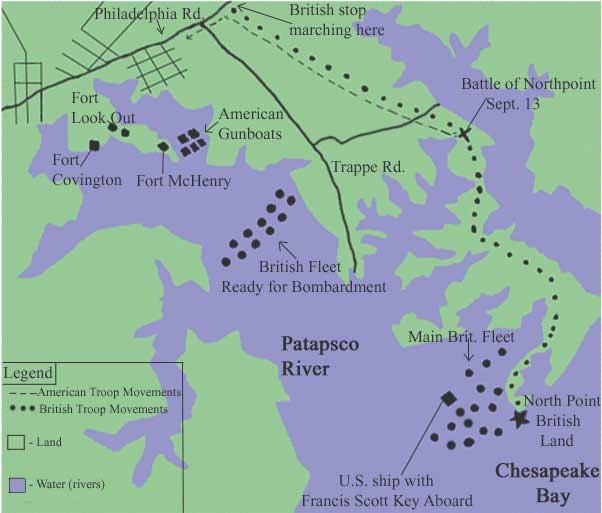
Below we have a map of how the British invaded Baltimore and how Americans sunk their own ships in a line to block access to the harbor. The British were large held at bay by that single maneuver and the heavy artillery from a fortress which was operating under an enormous star-spangled banner which a lawyer saw from a truce ship and about which he wrote the song which became our anthem.  
This Map Shows  how British Besiege and Attack Baltimore in war of 1812
The American gunboats were supported by a line of sunken American ships in lines not shown on that map that were sacrificed by the waterfolk and traders to limit movement of the mighty British fleet as well as by the fort McHenry which fired off huge guns and small ones beneath an enormous starry flag. The battle was watched by a lawyer in a truce fleet and  he wrote our National Anthem from its inspiration.

British invasion and repulsion in the Battle of New Orleans


The round of hostilities between Britain and America which reached such poetic height in Baltimore reached it end in the Battle of New Orleans which was fought very near where the current battle for the survival of the marshes is ongoing. We are facing the invasion of British Petroleum Crude near where Jackson and his army and Lafitte and his navy (injured by a new American attack) drove off some fine units of UK invaders. There in New Orleans they handed the British the first decisive defeat at the hands of an all American force in a major encounter. The Revolution owed much (if not most) of its winning to the Kingdom and Empire of the French but here French and English-speaking Americans drove out the British Empire in blood-soaked victory alone.    

This 2010 battle of Memorial Day  is an epic struggle and the stakes are very great. It is hard for us to win on this side because if there is little damage it will be used as an excuse for future sabotage or carelessness to be more easily permitted. If there is great damage then we live in age when the natural world is already under great strain and we have rich “well-educated” idiots (who had the capacity not to be idiots when they were young) in government and in big business who never think things through as regards the natural world. I hear so many stupid and irrelevant remarks. The damage done in a short period of time can wipe out millions of years of vital continuity and removing the toxins through there being biodegraded later won’t help. The oyster beds of South Louisiana ought to be compared and classed with vineyards of Napa and Sonoma and instead are classed with the sands of the Arabian deserts. It is hard for me to write this through all the pain and depression I am feeling.
I am very careful to use legal materials in this blog but if I have infringed any rights in this post I will worry about it after I see how much of my homeland has survived. This is a struggle  of enormous proportions. The eleven killed in the explosion and the  dozen or so cleaners who have been hospitalized have suffered in a war in which admirals, generals and Guardsmen are also battling. This is really a struggle for what cannot be replaced.   

http://www.usa-flag-site.org/song-lyrics/star-spangled-banner.html 

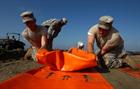
Local efforts to block oil incursions

I am going to include a few phrase of my own between pictures of the struggle and verses of the National Anthem. Just above you see people drawing a line against the new invasion. Do we doubt they risk their health in this noble struggle? 

 The Star Spangled Banner Lyrics
By Francis Scott Key 1814


Oh, say can you see by the dawn’s early light
What so proudly we hailed at the twilight’s last gleaming?
Whose broad stripes and bright stars thru the perilous fight,
O’er the ramparts we watched were so gallantly streaming?
And the rocket’s red glare, the bombs bursting in air,
Gave proof through the night that our flag was still there.
Oh, say does that star-spangled banner yet wave
O’er the land of the free and the home of the brave?


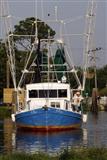
Fishing fleet cleaning or stranded in many places

Like Baltimore and Lafitte’s flotilla it has fallen to small ship and boat owners to bear the brunt of much of this great battle and they do so alongside the Coast Guard and others in their government’s formal service. But is their civilian service much less patriotic? 

On the shore, dimly seen through the mists of the deep,
Where the foe’s haughty host in dread silence reposes,
What is that which the breeze, o’er the towering steep,
As it fitfully blows, half conceals, half discloses?
Now it catches the gleam of the morning’s first beam,
In full glory reflected now shines in the stream:
‘Tis the star-spangled banner! Oh long may it wave
O’er the land of the free and the home of the brave! 

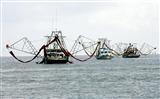
A flotilla of shrimp boats adapted for skimming

This flotilla of shrimp boats sails like the Americans of 1812 and 1814 to save their homes families and country. Already some languish in hospitals. Are they not our heroes too?  

 And where is that band who so vauntingly swore
That the havoc of war and the battle’s confusion,
A home and a country should leave us no more!
Their blood has washed out their foul footsteps’ pollution.
No refuge could save the hireling and slave
From the terror of flight, or the gloom of the grave:
And the star-spangled banner in triumph doth wave
O’er the land of the free and the home of the brave! 

Louisiana National Guard fights a new enemy.

The National Guardsmen know that their world will not recognize this as combat. They will earn no new respect on world battlefields. Yet they risk their health in a beautiful but dangerous coastal wilderness under hot suns in proximity to possible and unmeasured risks of poisoning. The battle for their homeland and can not hurt the liquid at which they throw their human and mortal flesh. Are they not good warriors in this case as well?  

Oh! thus be it ever, when freemen shall stand
Between their loved home and the war’s desolation!
Blest with victory and peace, may the heav’n rescued land
Praise the Power that hath made and preserved us a nation.
Then conquer we must, when our cause it is just,
And this be our motto: “In God is our trust.”
And the star-spangled banner in triumph shall wave
O’er the land of the free and the home of the brave! 

 I wish everyone a good Memorial Day weekend. I have several friends nobly risking their lives in the two foreign wars we are fighting  and I wish them well.  SD, AD, JS,and JS if you read this know you are not forgotten. But this day my heart is full of pain and also the debt of respect for those who fight with little hope for honor or glory against an invasion so near to so much that I love. 

Note: Throughout the BP Macondo oil leak crisis I was responding day by day to an enormous set of devastating problems for many that I care about deeply or am connected to. While I have made no money on all that work and tried to use my own, open source or public domain materials in every case the stresses were enormous. This particular post has received many views and I have few if any net assets. If it happens that this or any materials used during the crisis are proprietary and used without permission I first apologize and secondly will do in a slow and careful manner whatever I can to make things right. Nonetheless, I am gratified that so many have visited this post over such a long time…

Biggest US Spill: Living in the Age of Liquidation

This BP — Transocean spill  is not just another mess. This spill is historic and calls for a response in historic terms. It also must be seen in context. That context and response is what this post is about.  The liquid nature of the spill goes with the crisis of unstructured flow of migrants who are joined by the desire to make money flow around for no real reason. This joins with the government forcing racial groups to flow together in no structured way. This goes with an economy designed to liquidate all wealth and punish the kinds of wealth that does not flow quickly. In may ways this spill symbolizes our whole set of social disorders. 

We are facing the largest oil spill in US history. We had the failed Times Square bombing, the underwear bomber, the Fort Hood shooting and we have hundreds of thousands of people protesting  forcefully to proclaim that one should be able to stay here as long as one wants without documentation. Not all the Arizona law protesters want to say that but hundreds of thousands do. We have people in our congress advocating an unconstitutional ex post facto law against BP. Here again the nuance is that if Congress were saying they would issue letters of Marque and Reprisal against BP if they do not adequately deal with the spill I would not object (Britain would but not I). Our debt to revenue ratio is outrageously high and people largely believe we should all spend more to stimulate the economy.  We are still involved in two foreign wars. In my opinions all the things I mentioned above are only minor symptoms of the disease afflicting our society. We are a country in crisis, deep and serious crisis.

I am different from  most of those who are likely to read this blog as American citizens in that I support and advocate radical constitutional change. I advocate change which is revolutionary  — although I am willing to see that change come in the following Constitutional form: “or, on the Application of the Legislatures of two-thirds of the several States, shall call a Convention for proposing Amendments, which, in either Case, shall be valid to all Intents and Purposes, as part of this Constitution, when ratified by the Legislatures of three-fourths of the several States, or by Conventions in three-fourths thereof, as the one or the other Mode of Ratification may be proposed by the Congress; Provided that no Amendment which may be made prior to the Year One thousand eight hundred and eight shall in any Manner affect the first and fourth Clauses in the Ninth Section of the first Article; and that no State, without its Consent, shall be deprived of its equal Suffrage in the Senate.” This quote makes up most of Article V (Article Five) of the Constitution.

The part I did not include is the first few words reproduced here and now ” The Congress, whenever two-thirds of both Houses shall deem it necessary, shall propose Amendments to this Constitution, (or, on the Application of the Legislatures)” the words in parentheses are the words at the start of my quote above. All amendments in US history have been passed through the houses of congress and then ratified by the States. However, a constitutional convention summoned by  two-thirds of the States  and ratified by three-fourths of the States could effect total transformation of the country as long as every State retains equal votes in the Senate and the entirely new Constitution would be a formal and legal continuity of our current regime. The only role of Congress in this second path would be to choose whether State legislatures or State conventions should ratify the larger convention.  In the real world if a convention had been called then force of arms would be justified if (by no means certain) a Congress refused to act to make this one choice. Thus if three-fourths of the states can be convinced of the need for radical change then we can have it. And we do need radical change. It is time for our society to evolve. I have outlined the ideas for a new regime elsewhere in this blog.

We need to create a system which will value conservation, preservation, familial wealth, nature, honor and recognize that neither big business nor bureaucracy has all the answers and yet both have a role to play. The risks these spills and other things like the war on terror relate to or not adequately addressed in an eight year presidential administration. We need the kinds of changes we are very far from adopting so far.  The total destruction of our society is what is likely if we continue to follow the path we have been following .  As our society becomes more dysfunctional the rate of decay will increase. Making the right changes now will be very hard but making them later will be much harder.

We are partly destroying and may be largely destroying an estuary which is the product of processes ranging in millions, thousands and hundreds of years. We are doing this in days and months. We need a government with a loner term view of things. However, not just any old thing will do. We need to make  the right changes. I have tried to outline those changes elsewhere in this blog. But we will not have many more chances for good change. It will not be long before any effort we make will be the kind of desperate and frenzied reaction that seldom works out well — to say the least.  This may be our last chance to create change that is rational, wise and measured. 

So let us consider really  changing the government. We have a choice now. That will not be true forever.

BP Has Failed to Stop the Gusher: A Catalogue of My Blog’s Coverage


British Petroleum has announced that the “Top Kill” or dynamic kill option has not  worked and is being abandoned. They claim only 38 acres of Marsh have been damaged severely and that only 107 miles of coastline has been hit. However I live in distant Vermilion Parish and we have verified small amounts of oil contamination on our own coasts. There is so much we do not know. Everything is in flux and under a strain and pressure.

I want to give you the list of my blog posts on the subject of this spill in reverse chronological order. Perhaps there are some you have missed that would be of use to you in understanding this crisis. We are ready see this struggle continue indefinitely but I am using we in the broadest sense. I myself am not very involved in the struggle itself in the way that some other parties are involved. 

1. https://franksummers3ba.wordpress.com/2010/05/28/links-loss-and-the-laws-biggest-us-oil-spill/

2. https://franksummers3ba.wordpress.com/2010/05/27/the-largest-spill-in-us-history-more-links/

3. https://franksummers3ba.wordpress.com/2010/05/25/british-petroelum-spill-and-clean-up-crisis-goes-on/

4. https://franksummers3ba.wordpress.com/2010/05/24/two-bps-on-my-mind/

5. https://franksummers3ba.wordpress.com/2010/05/22/oil-and-gas-an-odd-argument-for-continuing/

6. https://franksummers3ba.wordpress.com/2010/05/22/twelve-questions-about-the-deep-water-horizon-gusher/

7. https://franksummers3ba.wordpress.com/2010/05/20/the-oil-spill-in-the-gulf-and-making-desperadoes/

8. https://franksummers3ba.wordpress.com/2010/05/18/yet-more-of-my-thoughts-on-the-oil-spill-and-a-few-links/

9. https://franksummers3ba.wordpress.com/2010/05/15/more-thoughts-about-the-oil-spill/

10. https://franksummers3ba.wordpress.com/2010/05/12/the-deep-water-horizon-oil-spill-thoughts-about-the-crisis/

Links, Loss and the Laws: Biggest US Oil Spill

Well today there are a a variety of possible descriptions and some of them conflict as to the state of the dynamic kill of the gusher a mile below the surface of the Gulf of Mexico. Is the spill growing by crude oil and natural gas and if so by how much? Or is there only mud and seawater coming out now. Most television channels are showing only the top of the blow-out preventer and no longer showing the issuance from the riser. That makes it even harder to tell what is going on because the top of the preventer could be spewing mud only and it would mean much less than if the broken riser were also only spewing out mud. I mud is coming out of all leaks without oil then in fact as some have said they are cutting off the flow of oil while they pump.  Of course spewing drilling fluids is not perfect either but it would be a sign of progress. Nonetheless, this is a good time to turn to issues that are not so sensitive to the progress of events minute by minute.

After the Exxon Valdez disaster the laws were changed under the Oil Pollution Act. This Act had many good effects such as forcing all major players to file an emergency response plan and setting up emergency response under the Coast Guard. MAYBE: It had the very bad effect of having the responsible party do all the clean-up, then pay a 75 million dollar deductible and then tapping into a grossly underfunded indemnity or rainy day fund to compensate those injured. A sum of 75 million dollars would compensate for a minor interruption of the Louisiana Gulf Coast for about a minute. The remaining two billion or so in the current indemnity fund would constitute lost business insurance for less than a week in this region in a worst case scenario and would leave no money thereafter for other injuries than lost business. Creating a plan like this removes all incentives to have a responsible coastal policy at least on its face. To see what the laws are as described by the Environmental Protection Agency see the link below.    

http://www.epa.gov/lawsregs/laws/opa.html

The EPA and other parts of the government have built up some response capacities based on these laws. It is arguable that the regime under the Oil Pollution Act is often far better than it was under most statutory regimes likely to apply before the laws changed.  To see some of this response capacity as it is relevant here see the next link.

http://www.epa.gov/oilspill/index.htm 

On the other hand the insurance capacity is very low relative to real risk in this area. It is also true that such a disaster as this must be best mitigated before hand. This is best done by policies which may not be considered because of the current scheme. See my own ideas in the link below.

https://franksummers3ba.wordpress.com/2009/10/02/ideal-wetlands-policy-on-the-louisiana-coast/

The federal government of the United States of America is also very much engaged in regulating the industry. There is very little that the public has followed about the Mineral Management Service but you can look at their link below.

http://www.mms.gov/

The State of Louisiana has to deal with the terrible results and fight against the worst consequences of the Deepwater Horizon disaster. In order to fully know what there concerns are there are several agencies to check with. I am not going to repeat government links I gave before. I would encourage you to look at what Wildlife and Fisheries has to say in the next link.

http://www.wlf.louisiana.gov/

As you consider the environment and the culture one would also remember that Louisiana is a civil law jurisdiction governed by the Louisiana Civil Code and has a very different system of laws than the 49 Common Law states and the US Government in this regard. To begin to understand what this means see the next link.

http://legal-dictionary.thefreedictionary.com/civil+law

To keep track of how Louisiana’s government  tracks environmental quality and see what issues have been addressed here see the next link. The Department of Environmental Quality has a close relationship with the federal EPA. 

http://www.deq.louisiana.gov/portal

To see the central electronic focus of the Louisiana government for this crisis see the next link.  There is little else that can be said of the many agencies and parishes responding  in this short blog post.

http://www.emergency.louisiana.gov/

Ironically, one of the State’s law schools had just held an academic conference on water quality and environmental law when this huge disaster occurred.  The environmental law issues have been important to Tulane Law School for a long time actually. See their link on the recent conference below.

http://www.law.tulane.edu/tlsOrgs/tels/telc/index.aspx

Perhaps some of my readership have seen James Carville and his wife addressing the President, the media and anyone who would listen about this crisis in the last few days. Well Mr. Carville will be addressing Louisiana State University’s Law School Graduating Class at commencement today I think. 

http://www.law.lsu.edu/index.cfm?geaux=newsandpublications.newsstories&pid=4097261D-1372-69E5-F7FF16FFC9B54892&bid=EF114F50-1372-69E5-F7A58C48228BF9F2

The President, Barack Hussein Obama, has been in Louisiana today addressing this crisis. I would urge all of you to take him up on his invitation to visit the White House online in regards to this crisis. Find two links for that purpose below.  

http://www.whitehouse.gov/

http://www.whitehouse.gov/deepwater-bp-oil-spill

One issue that has not been addressed is that there may be limits in what our curent governement can do beyond the Liability caps. Ultimately, things like frezing production or leases are a good way that Obama (whom I dislike and oppose) has found to show that he can overcome limits in his basic legal power over guilty parties and the industry. It is a poor substitute for good policy but it is better than weakness and surrender. I applaud the subtle and not linked use of this ploy. However, BP must largely be motivated by reputation, by pressure through the UK exerted from Louisiana and the Gulf Coast and in the real world by the possibility of extr-legal vengeance. The US constitution does not allow someone’s rights to be changed by retroactive laws. This may happen in practice but it is bad for our law. I applaud anyone who finds a color of right for doing the right but it is not simple. The state Louisiana finds herself in as regards law is another strong argument for constitutional change. The laws on the books MAY have done great violence to the rights of people here for no good reason. But there are some not all bad reasons. That is a difference to be discussed in a latter post. Governor Jindalhas thrown himself into this fray admirably. He and I are very different people and I applaud his effort to find success within this system We shall see what happens next.

I personally am in a disillusioned funk. I will try to post more original analysis when and if I feel a bit more cheery and focused. Until then if you are doing something to help — good luck and God bless your efforts.

The Largest Spill in US History more links…

The United States is likely in the midst of its largest oil spill ever recorded. The United States Geological Survey has estimated that the release is closer to a million gallons or over 20,000 barrels of oil per day than to the 5,000 barrel per day estimate recently used. The original 1,000 barrel or 42,000 gallon idea is completely forgotten.So the Exxon Valdez spill was 11,000,000 gallons and this spill has possibly been 30,000,000 already. Can anybody say wow!

Nobody has ever convinced all parties of the effects of any spill. Did the Valdez wipe out the herring fisheries in the Alaskan sound where the spill occurred?  We do not know but do know herring have greatly declined or disappeared in nearby areas.

There was a 140 million gallon spill in the Bay of Campeche in Mexico’s section of the Gulf of Mexico. This Ixtoc 1 spill ran on for a long time like this one may and occurred in the 1970s.  Many disagree on how much the nearby fisheries and eco-systems were affected. Some even say it led to a boom in shrimp catches somehow and then there are those who say it created instability in the shrimp populations that really reached it peak several years later.

Here is a link to the basic of the Ixtoc 1 incident. It is not very detailed. http://www.incidentnews.gov/incident/6250

For some idea of how commercial seafood industries and fishing businesses work in the modern world I recommend Urner Barry. Their Price Current is the premiere business publication of this industries hard-working and busy small offices in ver expensive and not very fancy buildings all over the world.  See this link. http://www.urnerbarry.com/

Mexico definitely is among the parties fearing that this spill may be  disastrous for them. Please check this link especially if you read Spanish.  http://www.oem.com.mx/oem/notas/n1626358.htm

For a chance to see what BP has to say for itself check this link: http://www.bp.com/bodycopyarticle.do?categoryId=1&contentId=7052055&nicam=USCSBaselineCrisis&nisrc=Google&nigrp=Branded_Crisis_Management-_General&niadv=General&nipkw=british_petroleum  There is also the site for BP as a whole. Check it out and contact them there if you wish. http://www.bp.com/bodycopyarticle.do?categoryId=1&contentId=7052055 I am in the same spirit providing a link to Transocean: http://www.deepwater.com/fw/main/Home-1.html It is worth noting that these links and any link can go dead over time if you are accessing this long after I wrote the post.

There are many government entities responding to this crisis. Among the most interesting is Plaquemines Parish in Louisiana in the USA.  However, the link content may change a great deal over time. Here is that link:  http://www.plaqueminesparish.com/

I am settling in for a lot more pain and misery.  I will probably post on this spill several more times.