Tag Archives: Moon

Water on the Moon: A Frank Summary of Implications

I. LCROSS has reported: “There is water in Cabeus.”  This is a long way from reading these word on a statue of Anthony Colaprete on the campus of Cabeus High School on the Moon but it is important. The picture below is of me on one of my family’s farms when I was a child but modified to seem the interior of one of my imagined lunar or Martian crater colonies. The wetlands, ponds and gardens at the bottom of the crater are analagous to the Pacific Ocean on Earth it is to be remembered. They are the great concentrations of the water. 
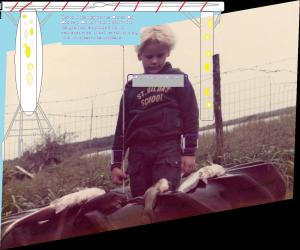
Crater cap fish


The way this environment could be effected is diagrammed below. However, since wet craters exist on the Moon’ polar regions the plans would need to be modified in the first colony. Thus the major solar arrays would either be orbital or (preferably) miles away and connected to the colony by buried cables. Later colonies in the regions of more light  would use a design closer to this one.


CCCC mining concept
How a crater on the Moon or Mars might be developed.

Here is a crude  and brief key to the diagram.

1. The ring at the top is a cap which covers the crater rim.
2.The yellowish gold lines running out from it are rail lines joining the colony to spaceports, colonies and other assets — no spacecraft are allowed near the colony.
3. The red straight lines are the rails on top of the cap built of very strong and light materials.
4.The blue disks are solar array which in the case of a polar colony would have to be remote.
5.The orange-gold disks on the land near bu or observational astronomy, science and communications assets.
6.The green square with the x in the middle is a green pyramidal building housing the only airlock connecting the colony to the surface.
7.The heavy dark green line and the heavy dark red line are buildings which as columns support the cap from the middle and have elevators connecting the floor to the cap and in the case of the green building to th rest of the universe.
8. The irregular green and blue areas at the bottom are the farming, fishing, park and hydrology features.
9.The series of lines in grays and blues and tube-like shapes fanning out near the bottom are the mines which would be the economic base of the  colonies in most cases.
10. In a mature colony many homes would be in the mines and the better ones would  carefully built into the rims of the craters. The floor space of the crater would only be for viewing, agriculture, recreation and truly urgent assignment for other uses. The mental health and prosperity of these colonies would depend upon such a rule.

 II. Having seen what could be does not mean that it will be. We will probably never do these things — but our only hope for a good future involves doing these things.

III. I hope ye few, ye brave, ye readers will consider getting involved in this process.


LCROSS: We Slam the Moon looking for Water

Tomorrow, on my clock here in Louisiana NASA will slam a school bus sized part of a space craft into the Cabeus crater on the Moon’s South Pole. A second shepherding spacecraft equipped with many sensors and transmitters will navigate through the particles, gasses and vapors and whatever may have been thrown up by the impactor. The principal purpose of this exercise is to prospect for water.

If the impact reveals an ample near ice cap in the shadows and just below the surface then many other factors will suggest to many people and companies that the Moon can become a hub for a space industry. If there is water rich subsoil that does not amount to the large quantities in an icy pole but is nontheless significant it means outposts and colonies on the Moon can be started with great care and skill and hoping for the best according to optimistic space boosters. If there is very little water then developing the Moon in any way will be a very costly and daunting task by most definitions and analyses of the situation. Of course the spot could be an anomaly and not represent much that is typical of anything but almost everyone will presume that this is not true.

The LCROSS will be a vital step in coming to know what the resources on the Moon are and how they are distributed. We know there is abundant water ice on the Martian poles. We know there is water in many other places in the solar system. However if it does not exist on the Moon it will be much harder for us to develop a real space policy than if it does not have water in greater than the small amounts we have already detected across most of the surface of the Moon.

The more water we find the more chance there is also for me to see the Crater Cap Colony Concept I have pushed for come to some kind of fruition in my lifetime. It will not cause anything to happen but will certainly help if LCROSS kicks up lots of water.  For some basic data on the LCROSS as it has been intended from the start go to:

http://www.nasa.gov/home/hqnews/2009/jun/HQ_09-143_LCROSS_Launch_Success.html

This will interact with my own colonial ideas in complicated ways. But a water train shuttle or pipeline from the poles to feed the colonies would certainly be a vastly superior goal than hauling the water in from the Earth.

Crater cap fishCCCC mining concept

We may hit dry spots that are not typical or there may be malfunctions we do not detect. However, it would be great to find a great deal of ice and water. That is what I will be hoping until the report comes in to us all.

What about that water on the Moon?

Today NASA held a press conference revealing that by combining calibration sightings of a comet watcher called Deep Impact and the data aquired by the Moon Mineralogy Mapper riding a hundred kilometer orbit over the moon on the Chandrayan India based lunar mission. I watched the press conference on TV and am basing this note on what I remember from that conference without using any more sources. Somewhere on the site www.nasa.gov one can doubltless get the most up to date data. Probably some of it will correct errors in my summary below.

A Frank Summary of Moon Water Issue

1. The general surface of the Moon remains drier than any Earthly desert.

2. There is water difuse and spread over the whole surface of the moon in rough terms. There is is a chaotic and broad pattern of water distribution.

3. There is a broad distribution of hydroxyl as well which is a different combination of hydrogen and water.

4. There is evidence in ejecta that hydroxyl and possibly subsurface deposits of water have been thrown up by impacts.

5. There is an average of between one liter and one gallon of water in every ton of typical surface regolith.

6. There may still be water in permanent shade, water in subterranean deposits of ice and remnants of meteoric or comet borne material that was not part of this surface distribution.

7. We now have a baseline above zero for water on the moon. It is much less than Martian conditions and very austere but it can be combined with other elements of water located.  Together with other sources it increases the chances of successful futute lunar crater colonies above the worst case scenario.