Tag Archives: Mexico

Chapter Nineteen of Online Memoir: Masses, Margins and Metros in Mexico City

Life has brought me back to some places more than once and to others only once. It seems a better and more effective way to write a memoir to go evenly from ur time in Cuernavaca and IDeal and tell how we followed the trip medical progress of my uncle Jed  as we connected with the Justicia and Alabanza community and Dad began working with Will Rodriguez an evangelist in the Mega-city that was Mexico City in 1978. But I think of a time a little later when we would come back for the visit for Pope John Paul’s visit in 1979 when millions came to see the Pope at several venues. By then we would have Susanna Maria SUmmers born in Colombia on September 20, 1978. Sarah still had some memories of Cuchilla del Tesoro and we had come down in a vehicle and parked in front of what had been our apartment  building  in 1978. It was a somewhat refurbished and livable vehicle. It was simply  a stop on the way to our longer and more eventful mission in San Pedro Atzcapotzaltongo (or Villa Nicolas Romero) near Mexico City. We were drawn back there and had many reunions with friends and prayer groups near the busy airport.   I remember tacking a man coming out of the shadow of our van in panic after returning after midnight from a prayer group.He seemed to be very much caught in the act of doing something he was afraid to be held accountable for but he would not really fight me or confess before he left the area and I did not see him again. 

 I had grown and filled out a bit compared to when we arrived only with Sarah the first time. During the Pope’s visit I  also hung out with three siblings. It was another lesson in life’s road. I had feelings for one sister and she did not much care for me but her sister did have feelings for me. I remember her fondly but I was aware at the time that there was something about the cruelty of the situation that had nothing to do with the fact that we were all too young to have much of the relationships we were dreaming about and trying to discuss. It was all pretty innocent but also pretty genuinely sad. I came to visit Mexico City a number of times. Once or twice a group of people came up to give me booklets in Spanish on social and religious theories. One of them explained a history of what would be known as the Theology of Liberation. ANother was about how Jesus had a separate tradition from the Christian Churches that also came from him – a line of sacred prostitutes and knights. All of it was hard to process and it was coming at a time when I was learning about Alcoholics Anonymous,  the Freemasons,  the Guerreros Cristeros who had fought against repression of the Church in Mexico in the 20’s and also revolutionaries of the likes of Pancho VIlla. With all these things and others I will return to in a later chapter on San Pedro I went alone to Cuchilla on a visit and stayed with the Rodriguez family in their home.on March 14, 1979. I slept in their home full of troubled dreams. While I slept the rest of the family left the building and sirens filled the streets and the ceiling and roof cracked above me and my bed moved twenty feet from inside a bedroom looking out at the morning sky. There had been a large earthquake and I had never woken up. But in the night I slept to the shock of everyone and emerged unscathed. I had dreams which have stayed with me all my life and are more prominent than any of my waking experiences in that place. For me, the Cuchilla will always be a place where earth split and the sky was laid bare to my waking eyes.  But that was long enough after we first arrived there for it to really be a different story.

I was working on this chapter as April wrapped up and May drew near in 2024 in Abbeville, Louisiana. Whatever it was that occupied me in this period that ran from my wife’s 60th birthday on Saturday the 20th of April. It was a special party and like almost everything in this memoir, I am holding back something about it because it seems to make life even more ridiculous to expose the hurt and pain of life for so little consequence.  I am unpaid for this and have so very few readers. It is important to me to note that on the 27th of April I worked as an election commissioner for the Precinct that I live in for an election in which our precinct only had two local tax renewals on our ballots. I also voted there. Clara supported me wonderfully, bringing me a Sonic diet cherry limeade. There was a very low turnout and I made sarcastic remarks about it. I also got paid $200 for my 13 hours on the clock. I was plenty tired afterwards. But the system is built for the heavy turnout elections and from a system point of view these small elections are easier and function as a valid election but also a rehearsal to keep all the systems in good shape, including the performance of commissioners like myself.  It is both sad that less than ten percent of the voters in my precinct showed up to vote for something that matters AND ALSO it was a proof of the great expense that is laid out for Americans to express themselves politically. Because I knew that I was going to be writing about this period in my life I could not help could but compare all of this to life in the forming Colonia (not yet fully a colonia) San Lazaro where my father and sometimes I ministered when we lived in Colonia Cuchilla del Tesoro in Mexico CIty in 1978.    Unlike the people of my precinct in 2024 who were not willing to vote on the infrastructure issues on their ballot, the people of San Lazaro came to the prayer meetings that we had and besides the prayers, Bible study and shared snacks they had a very big infrastructure issue. Waste water and sewage pooled in their neighborhood and the synch was sickening. Germs and disease were prevalent and there was contamination of the water they had access to for drinking and washing. But the people had petitioned for the public plumbing, grading and paving at the heart of their community to be done.  That public infrastructure was the focus of the prayers and my father was happy to report it as God’s blessing when the city came and started working on their problems. I was happy to praise God because it seemed I might go to most of those prayer meetings and not get sick. However, from a point of view of how exactly God may have heard the prayers of his people in San Lazaro, there are some facts. It is not hard to believe that there were in fact people in the city who investigated the situation and found that a foreigner whose father was on the highest court of the US State of Louisiana and who was a lawyer educated in law schools in New Orleans, New York and London  was visiting these people. It was not a matter of hatred for the people of San Lazaro that would have kept them in the desperate situation. They responded to the potential risks of the village being healed or being neglected. WHile the village thanked God for the change they also thanked the government, they continued to work hard and with less sickness and misery they improved their houses and developed small businesses more quickly and people paid their taxes. It was a good outcome. This would be a pattern of the SUmmers family ministry in the days before Family Missions Company. A number of time we were able to direct and redirect new attention to a variety of needs, problems and resources and things changed for the better. Often the vehicle was a prayer meeting. I had little doubt then and still believe now that God heard the prayers of  the people gathered to pray. It was a very powerful moment in our lives and there would be others.      

This chapter has seen some time pass in getting it out to the miniscule readership and slightly larger potential readership that could be said to await this chapter, Like most of the chapters of this memoir, this one starts with a look at the recent days and then ties back to a time and place in the past. The time  and place in the past was the time when we first lived in the Colonia Cuchilla del Tesoro near the large international airport in Mexico City . I will discuss it a bit more in my usual rambling way. But it was in those days the city was also the Distrito Federal, like our District of Columbia plays a unique role in the United States, this federal district played a special role in the constitution of the United Mexican States.  The city had its roots in the Aztec capitol city of Tenochtitlan. It was a city of causeways, a few highlands and many man-made floating islands. There was even a system for causing the natural salts to be pooled separately from the freshwater used for drinking and agriculture. A center of governance, military administration, religion and human sacrifice that supported large scale cannibalism. Then there was SPanish conquest and Catholic evangelization. It was on these foundations that the modern megacity of Mexico City had risen. 

It was the largest city in the world and from its streets, I often watched the jets come and go from the airport. In other places in the city I looked at the little bit of snow caps on the mountains. Snow was among the things that did not occur  any closer to the equator than this. We knew that we were South of Louisiana and deeper into the more tropical latitudes. But you could drive or ride a car for a few minutes for a really good view of the snow  in the winter. You could also expect plenty  of relatively cold  winter days in Mexico CIty itself. It was yet another part of my education in my overall immersive understanding of geography. 

With jets, snow caps and the interest I had in the stars, I found Mexico CIty a place to look up. I still look up. In recent days  (April 24, 2024) I received an email in response to the message I had sent to the White House about space. I have attached the  test of the message in the body of this chapter. I am a part of the lunatic fringe of people who are really very serious about colonizing the Moon and Mars. We do not all agree and yet we all agree in the space colonizing community that the stakes of getting it right are pretty high.

The real story of that part of my life is for a much later chapter. But I do remember that there was a great deal of talk about space among a few of the people I knew and almost no talk of space among most people I knew. But there was another factor, it was a matter of language. In the English spoken around me in my childhood, Heaven was where God reigned over the angels and where the souls of the Blessed went when they died.  Sky was where the clouds formed and the stars and sun shone down upon the Earth. But, in Spanish “CIelo” covered the meaning of SKy and Heaven in the English of my childhood. 

There are many things from my life that are not easy to recount.  Some things are hard to fit into the records I am able to find. I am pretty sure of a storm, earthquake or public event of some magnitude and it is still not easy to figure out which one it was some times. Writing down one’s own history is much more challenging than some people might think. I was in a significant earthquake in Cuchilla del Tesoro. I was sleeping at the home of WIll Rodriguez the evangelist and my friend Benito who was his brother- in- law.  WIll was a  Rodriguez who had married another Rodriguez. That must have been on a visit to the Colonia not during the period described in this chapter. I have not been back in many, many years but I did visit it on a number of occasions.     

 The White HouseDear Mr. Summers,Thank you for writing to me about the wonders of space

Our Nation’s space program has always blazed trails into the deep unknown—from landing the first humans on the Moon to launching the Space Shuttle and International Space Station programs and developing the climate-monitoring Earth System Observatory.  And we’re just getting started.

Recently, NASA launched the world’s newest and most powerful deep-space telescope to peer back in time to the origin of the Universe.  Thanks to the James Webb Space Telescope, we can now see light from the oldest galaxies over 13 billion years ago, a testament to the power of American ingenuity and collaboration. 

We will continue to invest in science and technology in order to accomplish great things.  Importantly, in collaboration with commercial and international partners, NASA will lead a triumphant return to the Moon with the Artemis program.  This innovative and sustainable program will land the first woman and first person of color on the Moon, establish a long-term presence on the Moon, and learn about living and working farther away from Earth than ever before in preparation to send the first astronauts to Mars

Thank you again for sharing your enthusiasm for space and what lies beyond the cosmos.  Together we will continue to show the world that our Nation can do big things, and that there is nothing beyond our capabilities.  America is defined by possibilities, and the endless possibilities of space exploration are within our reach.Sincerely,Joe Biden

Each phase in my life and each place I have lived has left a mark upon me. My awareness of the way that Colonia la Cuchilla del Tesoro impacted me has developed over time.  I was feeling aware of the world in different ways when we got to Mexico City. My friends and I used to watch the jets come and go   and sometimes we talked about where they were coming from and where they were going. I don’t remember meeting anyone in the neighborhood besides myself and my parents who had ever flown on a jet. Furthermore,  there were very few people who worked at any of the many jobs a large airport creates. I never saw mechanics, custodians, pilots or vendors from the airport in the neighborhood. It was like a huge portal to the wide world  bursting with resources, noise and complexity that was divided from another huge world bursting with resources, noise and complexity. The two worlds were divided by a fence  and in most places by a trench that ran at the end of our block. The biggest difference was that I knew the people in the airport and the jets could mostly ignore the colonia but in the colonia we were frequently interrupted by the almost deafening roar  of the jets. I have flown out of a lot of airports including several in Mexico during the 59 years of my life  – but even now I don’t recall even having a layover in the big airport in Mexico City.  I suppose it is meaningful to me that a few things have not changed from when I first looked through the fence at the airport.

It was hard to accept all that was different about lives on each side of the fence. But I thought about it quite a bit. WHat were those differences and why did they matter. 

Monday,  April 22, 2024: I had a meeting with an experienced and successful insurance agent. I enjoyed what he had to say. However, I was aware of the general decline of the petty professionals like independent insurance agents based in small town America, freelance writers and untenured teachers. I do the best I can and I legitimately like the company that I am working for now. I feel like the work I do is pretty important and I am hoping that with some effort and a little of what we call luck I might be able to do it for a living while I donate plasma and work as an election commissioner. I am probably not busy enough to make a living and that gives me time to tend plants, cut grass, do some more cooking and laundry etc. I am pretty sure that the down time not spent on the clock is something that appeals to me. I am not a person who falls into the middle of a lot of averages and hangs out in the middle of a lot of bell curves. But of course there are some exceptions. I have tried to answer the   test called the Political Compass Test honestly over the years and I have moved sound a bit. However, although the exact position has varied I have always been placed much closer to the center than either the authoritarian or libertarian extremes.  I have also always gotten a result nearer to the center than to the right or left extremes of the test. That used to surprise me more than it does nowadays. 

Clara and I attended the rite of Confirmation within the  Mass for my niece and her first cousin who were confirmed at St. Pius X Catholic Church in Lafayette, Louisiana on Sunday, April 21, 2024. We then went to a reception at my sister Mary Hindelang’s in-laws home where there was cake, a soft drinks bar, a spread of snacks and appetizers and decorations for the occasion. Earlier that day Clara and I had picked up the shrimp dinners she had ordered from the Knights of Columbus and we had eaten those dinners at home. We then stopped at Costco where we did a small amount of shopping. Once that was done we headed home. Later in the evening we had leftovers fro supper that remained from the party the night before. 

  . 

On Saturday April 20, 2024 we celebrated Clara’s birthday in our home. We had a cake and buffet (to which some guests contributed potluck dishes) , an open soft drink bar and an open bar of the other kind.  Decorations announced the occasion and in some decorations there were stacks of photographs taken throughout Clara’s life that people could look through. We also had a gift table and after the cake was served to everyone, Clara opened gifts. We had sent our two dogs Abby and Bella to the dogsitter. Besides Clara and I we had her sister G—- and nephew Z_____ but  hubby D_____ could not come. Among the first to arrive were Freddy and Sandy Dubois, the couple that led our marriage preparation classes.  Clara’s godfather R______ and his wife C______ came from New Iberia as did her cousins P— and D—–  P. & D. are the couple from whom she adopted  our two dogs over two separate litters. We had her brother Father Edward.   We also had my sister Sarah, her husband Kevin and their children I—b–, J— and E—but I—-a- could not come because he had another party he had to attend that evening. My sister Mary was there with her husband C—- and two of their five children N— and J—-. Our good friends in whose presence we started our adult relationship J–c– M— and her brother J—d- M— were there as well as J—c–’s son S—- J—-. In addition two mre of Jackie’s dear friends M— L—- T— R— and A– M— E— were there, along with this J–c– M—  and Clara herself these two other  ladies were the four woman majority of a tight group of female friends called the YO YOs.  

The party was not overly complex  but it was very nice, I think. I cooked a large beef brisket, a homemade chicken rice-a-roni style  dish, chicken soup dumplings, several kinds of rice and gravy as well as setting out a bowl of fruit. Guests who chose to bring something combined to provide: a guacamole dip, rice dressing, potato salad, spaghetti and cheese as well as an additional cookie cake to compliment the birthday cake. Nobody seemed to be doing without.         

When we first moved to Mexico City I had memories of having lived in two modern megacities, New York and London. They had left their impact on my life, character and perspectives. Each of these two cities was very different. In Soho in London there was a mix of graduate students, artists, small businesses and  sex workers among the flats, and walkup townhouses that dominated the area. New York CIty had a block association that ran a small park and we all knew about it . Our building had a buzz-in foyer and a set of elevators that almost always worked. There were professionals in the lawyer and doctor class but the general demographic was much the same. Cuchilla del Tesoro had lots of private homes with small gardens in their atria. They were two or three stories in many cases and in a culture with limited financing they were mostly being built or added on to by the people living in them. But there were businesses and shops of many kinds. There were a few apartment complexes and one of them was  the one we rented. It had clotheslines built into a structure on the roof and a washtub, concrete washboard which had running water and a good set of drains under the stairs. Like most buildings in the area and much of Mexico the wall of the building was right flush with the sidewalk. In our case there were no windows on the lower level facing the street. A utility room and a gate for the whole complex made a solid wall. Our apartment had windows that looked out onto the atrium’ s lower level, across an empty but painted  wall and a staircase. There were no apartments on the other side of the courtyard, so it was not a true atrium but meant to feel like one. My memory is growing dim on odd things, I am really not sure if there were two or four apartments in our complex but I believe we had four. Two rented to families that lived there and two to business people who were almost never there. There was one other tiny studio on the same floor and it was rented to some business person who was almost never there. The upper floor was occupied by two  apartments. There were two little girls, Blanca and Adriana who became good friends of Sarah’s. There was another studio rented to a business person almost always out of town.The apartment was very near the airport. Our block bordered on the outer fence of the airport but the fence extended around a lot of open space between our block and the buildings and runways. Nonetheless there were many times during the day when the planes taking off and landing created noise that was truly deafening in our home.   

We faced a class in becoming habituated to the interruptions until we did not notice them. We occasionally made  simple tapes to send home in those days or even to a very few potential benefactors. We were operating in a position where I was not in school and my parents were doing a variety of things. But the central assignment we had as a missionary unit was to work with WIll Rodriguez. He lived in the same fairly large house with his wife and some of her family including her brother, his brother- in- law who was not more than 20 years old at the time. He and I would become friends. I valued his help in teaching me to improve my Spanish and we sometimes met to try and discuss the Bible. My father was invited to go with WIll and he assisted with music, learned the basic memorized prayers and some of the most used Bible verses – not very well at all. But he did learn and with some translations from leaders in the Justicia y Alabanza community, Dad and Will got to know each other, in the flow of things WIll began to tell the story of Dad’s spiritual journey with Christ. That is called a “testimony”. 

. It was with Will that Dad had begun the ministry to San Lazaro that was discussed in the first paragraphs of this chapter. I wished to be clear that this was my father’s ministry although we all did our part to support it. I did take up a small job teaching a shopkeeper English. He was able to tutor me a little form a math book in Spanish and paid me a differential of a bag of groceries and a few pesos. However, he only found this arrangement worthwhile for about twelve lessons.  We met  three times each week. I also took advantage of study and an occasional hourly job from the social services ministry in the local church parish. But there was nothing like full-time school, full-time ministry or full time work. My life was a hodgepodge of activity     

Chapter Seventeen of Online Memoir: Mexico City and Cuernavaca for the First Time

I wrote this seventeenth chapter of my online  memoir during one of the weeks of the Easter Season with spring in force. Our fig tree, potatoes, onions, begonia, hibiscus, onions,  green onion tops, ferns, swamp lilies and Kalanchoe are prospering and the weeds are also thriving that gained ground when our lawn was damaged by the drought that is well over now but lasted for months. I cut the grass and work on the lawn often, but with s motorless reel style mower and frequent rains it can be a challenge for me to keep it presentable. But the effort helps me to keep a number of things together – it provides me with exercise and helps me to stay aware of things that need to be tended to. I am very much aware of the Season in every sense.   I am also aware that my wife is celebrating her 60th birthday on the 20th of April. In 1977 my mother turned 34 on a Sunday on November 13. I made her a card and bought her a simple gift. Dad did not do much it seemed tome but I may be forgetting something. We had a big Abbeville Thanksgiving with both sides of the family in 1976, but in 1977 I am pretty sure we were just arriving in Mexico from the United States and we were moving from a country that celebrated tis very AMerican holiday to one that did not… But again my records are very limited and my memory could be flawed. I do remember Christmas and New Year’s Eve in December of 1977. That was in Cuernavaca a city in a state not far from what was in those days the Distrito Federal in which Mexico CIty – the largest city in the world at that time – was located. I have a lot of memories to sort through. But they are never going to be fully resolved into any particular synthesis. But I do spend more than I can afford on seeing a therapist online to help me deal with feelings and memories among other things. On April 13, after going to anticipated Mass, Clara and I ate supper and watched the film A Beautiful Day in the Neighborhood on one of our streaming platforms. The biopic of Fred Rogers (played by Tom Hanks) is the story of the host of Mr. Rogers Neighborhood and a journalist who was impacted in his own family and life by his encounter with Rogers. Rogers was  presbyterian minister and other things besides a television icon. The journalist whose story ended up being on the cover of Esquire Magazine was able to connect to the deeper, spiritual power of Fred Rogers in a very personal way. I admire the film and the story behind it, but Fred Rogers and Mister Rogers’ Neighborhood were things I watched sometimes as a child, but his take on the world always seemed like it came from a different place than any I had ever lived in….

What we  were living in 1977 with my baby sister, Sarah, was an adventure not in healing our feelings and learning to find a well adjusted life. It was wholly a life of insecurity. But it was also a life of beauty and new sights and learning. For me it was a time that I would go back to over and over again in memory and reference…         

On April 10, 2024 Clara and I had supper at Jalisco’s in Abbeville. That is the same Mexican Restaurant where we reconnected 3 years ago on the same day of the same month after not seeing each other for about 45 years. I have an online therapy session every two weeks and that one ran from three to four that afternoon. That is not my usual day and time for this appointment but due to a technical glitch we had to reschedule the session. Thursday, I donated plasma and got paid, I got home and did some things along with picking up a takeout lunch and then had an insurance sales seminar online at 1:00. Afterwards Clara and I took a nap together and  when I woke up I had received my paycheck  for my work as a Commissioner in the last election, I drove to the bank to deposit the check because the money gets to my account quicker than if I deposit it digitally in my app.  I woke Clara at the time we had agreed and  then we went to the health club where we regularly engage in various forms of exercise. I paid our dues for the month. We changed there and went to the free concert series in our hometown’s main square that is called  “Sounds on the Square”. The band playing this concert included three generations of the Leblanc family of musicians and others playing drums, several kinds of strings and brass instrumentalists as well as  a number of vocalists of both sexes. The group was called the Bad Boys. Clara and I danced several times as well as listening to the music. My mother showed up and  I danced with her as well and Clara captured our dance on video. Because I was working on this draft of this chapter, that dance reminded me of all that my mother and I have been through together. I thought of the dances we had shared over the years and the dances I had seen her do with my father. I also thought of how the dance I described at Mount Carmel in a recent chapter of this memoir came at a time when she and Dad rarely danced except on the rare occasions hen simple expressive dances were included in the worship gatherings of the Charismatic celebrations we attended. In some ways, our time in Cuernavaca was a low point in the romantic aspect of my parents’ lives. It was one of several low points – but their lives had  a number of high points in their romance as well. So many things have happened since then but it is to those times that our story now turns.      

On the next day, Friday the twelfth, my wife and I had coffee together, then I went to the post office to check my mail, then to the dump to bring our recycling. Because our city does not offer recycling pick up. I thought about the fact that although there were many beautiful and picturesque parts of Cuernavaca — which did impress me as well – I was deeply and unfavorably impressed by the midden beside a major street where people from our neighborhood  came and dumped their garbage into a natural ravine. Once again waste management was very prominent in my view of society.  I longed to see pollution diminished throughout the world,  that feeling went through all my years of life as a recurring theme.

At the DIsciples of the Lord Jesus Christ community on the Damascus Ranch in Channing, Texas near Amarillo we had prayed the entire DIvine Office (or Liturgy of the Hours) except for the Office of Readings and almost all of it as a group. We worked hard and had some time to play as well but we had what in current English vernacular were called not Matin, Lauds and Vespers but rather Morning Prayer, Daytime Prayer, Evening Prayer and Night Prayer. It was a life soaked in so much Scripture. The traditional Roman Catholic system of Liturgy when it includes the mass and the Liturgy of the hours is an enormous amount of scripture. Read, reflected upon, chanted, sung and prayed Scripture as well as some poems and prayers produced by recent editors living the faith at that time. I did love all of that. Any understanding of my life at that time  is woefully inadequate if it does not take into account that I had what mystics call “Consolations”. I prayed and I felt that God was deeply present to me and my fellow believers. These feelings affected my imagination, body, intellect and will. There is no doubt that such a sense of the DIvine was the greatest payoff in my life. 

When we were in El Paso I rejoiced in the prayers of the people there that fully expressed the Charismatic Gifts, expressions and traditions in connection with the liturgy. Sometimes I wondered if I shared a particular sense of how things should be prioritized and how they should be understood. I did not believe that I was necessarily in harmony with all aspects of each  Christian community we fellowshipped with – nobody could have been in harmony with each. But I did believe that we were all involved in living Communion with God in Christ.

An image showing the basis of all this Christmas celebration.

But I had a sense that lf I had a destiny it was in the Presence of God that was  going to take in larger parameters in the world.  When I was in prayer one or two nights before we left El Paso,  it was a prayer time before I fell asleep, I had a sense of Christ as though I were seeing him in an almost causal way as he had been in his earthly ministry before his crucifixion, death and resurrection. I felt his greatness as a great man, somehow different than any image or story I had heard before. I sensed that some of the men I saw were his apostles and they were all speaking in a language I did not speak or understand. I felt the holiness of the moment and then it passed and I fell asleep and in the days to come I pondered it but did not speak of it much if at all, I had no words to share how it differed from other experiences of visual and imaginative prayer. Life  meanwhile was somewhat distracting from my mystical and inner life. Our family was invited to appear on a Christian television show and we were all to be interviewed together with a little interview for each of us, including little Sarah.  The interview was set for the day before our train left Juarez for Mexico City. Sarah mysteriously hurt her hand and Mom stayed with her while Dad and  I did the interview. After the interview the man in charge  gave me a hand powered device that could play a recording of scripture on a sort of record.      

In the next few days we were brought across  the border and to the train station. We set off on our journey to Mexico CIty. On the way we listened to the Spanish spoken around us, detecting the few words and phrases we knew and trying to put them to use. When we were back in the sears, the four of us gathered after any foray to fins food or restrooms or views, we would  try to use a few Spanish words in our family prayer and conversation. The net result of all this was really to make it clear that we spoke almost no Spanish and struggled even with the simplest signs and announcements on the train and in stations. It was a new world that was opening up as we looked forward to reading, speaking and interacting in a different monolingual society. There were bilingual French and English elements in the life and community we lived and experienced in Louisiana. Tonga had been bilingual as well. We had toured Europe as well in areas where we spoke nothing of the local tongue. But we felt the difference, a few people spoke to us in English but most people did not speak any English outside of their English classes in elementary school. We were not tourists or tied to a university with a large English speaking population. We were diving into a society right beside the United States in an effort to be part of the life there and to grow as the missionaries that perhaps God had called us to be. Yet, it was still very much a question what we were possibly called to do. I loved my parents but I deeply pondered and intently  wondered if God had perhaps a connection with our  moving into a world of new possibilities while we had still so little to define our path in a way that might lead to some kind of career security. But I did think that we were doing something very different and that we were living a life in which our whole family shared a life and a purpose which was admirable in itself.  Yet there were a variety of themes and contours in the shape and fabric of our lives and our belief that a mission in Colombia was the direction we should be heading in once we learned some Spanish.          .

Sister Antoinette who had been Mother John Marie’s main contact for us was the driving force and organizing power behind our first stays in Mexico CIty and whatever welcome was available But there was another figure who played a very large role in making our way in the city. That was Father Carlos Talavera RIvera. Among the contacts in the Archdiocese was Father Carlos Talavera Ramirez who was the head of the Comunidad Justicia y Alabanza, Justice and Praise Community. Father Talavera had been ordained in 1948 for the Archdiocese but his ministry now focused on the Charismatic Renewal in Mexico and the service of  that popular Christian movement to the poor. In a few years in 1980 he would be ordained and consecrated as an auxiliary Bishop in the Federal District’s super diocese. My parents, with my younger siblings, would serve under Talavera many years later when he was bishop of Coatzacoalcos, but I was doing another thing at that time. We would stay with Father Talavera’s wealthy family members  in relative comfort approaching luxury for a little while.  In Mexico CIty,  we somehow had the invitations to interact with many aspects of the Justicia y Alabanza Community gathering and ministries. We had a volunteer translator who was a very intelligent German engineer married to a Mexican woman who was very fluent in English, German and Spanish and possibly other languages as well.Capable and distinguished in so many ways, he was very possibly the least capable and most inadequate interpreter I ever encountered – and in my life I encountered many interpreters and translators.     

Joseph was somehow not aware that instead of hearing Spanish and then saying the equivalent in English, he would hear the Spanish speaking people speak to us in Spanish and then tell us the same thing in Spanish. He would then hear what we said in English and repeat the English words to the audiences and people around us in English. It was staggeringly weird and funny. People would try to clue him in and he could not grasp what he was doing. People with much less command of the languages involved would repeatedly have to jump in and fulfill the duties of interpreter but he continued to attempt to do the thing he seemed incapable of doing..

His efforts only went on for a few days, but the memories of those days have remained among the most metaphorically charged after all my life. I remember working with Elsa, the very attractive girl I met with her family on an English assignment for her classes and learning a few more words in Spanish. The Climate in Mexico City was much cooler than in El Paso/Juarez because the elevation was 7, 349 feet. It was nice to be cooler as fall and winter seasons were approaching and there were many new foods to try. I was aware that we were also meeting not only the poor and middle class but some rich people as well. However, we never built on those relationships over the years. Although our family would  work and fellowship with some very wealthy people in the course of our lives. I am pretty sure that none of those original contacts in Mexico City were part of that network.

. While we had begun to make inquiries about the Language school we now went there. Cuernavaca was at 4, 954 feet and the climate was warmer than Mexico CIty but still much more moderate and cool than that areas at that latitude at sea level. It was greener and more lush as we rode the bus toward Cuernavaca. At that time and for many years afterwards, Mexico had many classes of bus tickets for many routes – it may still, but I am out of touch. At the lowest levels there could be live chickens tied together in small bunches for transport, no cushions on the seats and small holes in the floor. . At the higher levels there could be immaculate conditions, on board restrooms, baggage handlers and an attendant or two serving drinks on board. There were probably five classes of bus from Mexico City to Cuernavaca in those days and this was probably the second from the top – why I am not sure. The ticket may have been a gift from someone in Mexico City.    My mother was to stay home with Sarah while Dad and I were able to attend the courses at IDEAL. In addition to the classes we had lunches served to us which were typical of the region or some other region with the details of the pertinent  region’s cuisine explained, I remember sopapillas, various tacos and churros.. Our instructors often met with Dad and I alone. Our homework was to read a conversation or two set in a particular environment written in English and Spanish.  Then we would start with repeating those exact conversations without instructors. We would try to learn all we could about glottal stops, tongue placements, aspirations and the finer points of emphasis and pronunciation. After that, we would create ad lib permutations of the text. We also  worked on pronunciation drills. Every two or three days there would be a lecture on history and culture and during a couple of breaks a day we socialized with some of the diverse students attending the school. It was in an elegant building with an enclosed garden. While I was attending the school someone there taught me to make pottery ( I had previously taken a class at Notre Dame de La Bayou Dominican Convent in Abbeville, that Dominican Convent  building now belongs to Family Missions Company which is a non profit that my parent later founded).  I formed, fired and glazed three Christmas presents for each of my family members which long ago disappeared like almost everything I have ever owned or made – but not everything.

My mother was with Sarah across the street in a very different environment. Our family rented a single room for my cot, my parents double bed and a tiny crib of sorts for Sarah. The woman who ran it was cantankerous and spoke no English. Her income came from occasional room rentals and from some tiny pension she got from  either from her husband and father who had died a few years earlier or by being a survivor of someone or something else  – but it was not a full pension. Her very attractive young daughter of between  19 and 22 years of age, as I recalled with her in their modest but not poor home. I had seen a good bit of prostitution and wondered when I saw her devotion and displays of affection to a married man in the home if she was perhaps such a woman as I had seen doing these things before. But the one man I saw with her was the only man who came to see her and although there was a professional tone to their connections it was different than what I had seen before. He however did bring food and money and wine into the house and Christmas decorations. They were very physical without being x rated in their affections. On weekends he went home to his family. I decided in my own mind without being able to talk to anyone about anything that she was his mistress. He slept in her room, not the other way around. In those days there was no phone of any kind in the house and so I never had to wonder what his communication with his wife and kids from there would be like if he was not with his mistress. When he went to work or business he may have called home from an office or a payphone. I barely got to know either of these people. But I could see they wer ein dealy earned about surviving and keeping their home. The mother seemed to be harassing my mother when she prayed or sang because she had given up all religious practice in the hard times since her husband’s death. 

The family also had a young thirteen year-old daughter whom I occasionally helped with her English classes in return for her helping to show me what schools in Mexico were teaching. But the girl stayed busy at home helping her cantankerous mother to keep house and she seemed worried about her sister. Somehow my mother converted the mean and angry woman who ran the home to enough Christianity to take out her Christmas decorations and that included a large and very nice manger scene. The 13 year old,  Anita I believe, got me to help decorate and it was a holy time. The illicit couple in the house were also moved in a number of ways too complicated for me to do justice to in this chapter. We shared a christmas feast with the mother and two daughters and we sang badly in Spanish hymns and carols of the season.Our family sang a few songs in English too.

The family had some kind of lapsed connection to the theater and in a kind of half basement below there was a large collection of props in various states of disrepair as well as a number of almost surrealist. Statues. There were times when I sat down there and worked on my school work for IDEAL just to get out of the strange house. My mother had a notepad and a pencil on her person all the time and was busy learning all she could each day from Lucha and her daughter. In addition,  a few times she and I went over my lessons.  In Abbeville, after leaving El Paso, we had all worked on a Berlitz course in Spanish and bought a simple Spanish- English dictionary. Mom found a little time each day to work with the materials in the dictionary and Berlitz course to systematize what she had written in her notes. Dad and I were both learning Spanish much more rapidly than ever before but I was learning a lot faster and eventually we ended up in different streams. One of my teachers was a very pretty young woman and there were never more than three students in a class. This seemed to upset my mother who was worried about the sexual aspects of everything in my life always and always according to her own particular point of view. Before I had the pretty girl Dad and I were in a class where one man told us every greeting used in Mexico in his experience. These varied from the formalities of the remaining traditional haciendados in the anterooms  of their villas who when greeting a fellow aristocrat new to their home used words that might translate as “Welcome Your Grace, You are in your home and on the land my family holds from God.”   But he also ran through the run of the mill greetings until he reached the ruffians of a particular neighborhood in a particular seaport town who, he assured us,  greeted one another with the words translating as “Have a good day fucking your mother!” I made a comment about something my mother had said about sexual norms in the school, I parroted back words I really did not understand and another American woman, a  student who was actually renting rooms from the school itself and had an apartment, a microbusiness and a somewhat difficult reputation in town did not react well. She walked over and remonstrated with my mother in front of the uncomprehending cantankerous landlady. But that was before Christmas. We went to some beautiful Catholic Churches and that was part of our weekend touring. We also went to  Protestant church which was virulently anti-Catholic and very  unpleasant in a number of ways because a friend invited us  Slowly, the life in the house across from the school got better and I did not feel I had to hide in the basement to do my homework. After Christmas, I could speak some Spanish well enough to understand and they began to tell stories about the days before their husband and father died. They put out a few photos and knick-knacks from happier times. Anita walked with me to a little chapel she had wanted to visit, we did this  just once but seemed near tears. We learned that the family had never had a celebration from the time their father died till  the Christmas we shared. No saints Day feasts, no birthday parties, no secular national holidays and no Christmas nor Easter. Anita felt some hope that hey might have a life again. 


Dad stayed on in school after me to catch up and I did some shopping for Mom and touring for myself. We also were invited to dine with the owners of the school and it was very nice, later we ate with a friend we met at their  home. He was an older wealthy man but he took time to get to know me and talked told me in Spanish and English mix that I could follow. He claimed to be a nonbeliever but he had a sort of shrine in his house very much of his own design. It had a monument to Jesus Christ in the Place of honor. Then he had other great men, I remember Beethoven, Simon Bolivar, Napoleon, George Washington, Adam Smith, Benito Jaurez and Albert Einstein. I also remember him saying that the world I lived in was divided between three Jews: Jesus Christ, Karl Marx and Sigmund Freud. “It is from the minds of one of these three Jews that most of the forces driving the world forward draw their power.” It was one of many rich cultural experiences in Cuernavaca where I felt somewhat privileged and fostered in my intellectual development. He gave me a copy of Hundred Years of Solitude  in ENglish and another in Spanish/ He also gave me a book by Octavio Paz in Spanish with some handwritten and typed notes in English. I read them all pretty quickly.  

The most memorable physical feature of life in Cuernavaca was going to church at Santa Catalina de Siena. It was indoor and outdoor, modern contemporary art and architecture and classic tradition. The church was very Mexican, yet generally Latin American and fully international.    

When we finished our studies I was by far the best reader but Mom could speak Spanish best of all us, I was second and Dad was third. The opposite of the amount of time we had spent in the very good school to which we had come. In our last days we were corresponding with the ministries in Mexico and we found a place to be in ministry as a family in a poor neighborhood in Mexico city called Cuchilla Del Tesoro, “Wedge of Treasure”  near the airport.  We would be heading back to Mexico City as missionarieswho knew something about the language and culture of the place we lived. 

Before we left I got sick and so did others but I was the sickest and it was hard to find my way to a restroom or lavatory, hard to get a bucket or medical care. I vomited on myself, my cot and the wall. In my fevered dreams I had visions of the mysterious orb of heaven and hell.   I would never fully recover from whatever I had. My digestive health would suffer for the rest of my life in some new ways that I will not detail here. I felt somewhat weaker as we prepared to return to Mexico City. I also knew that I would not be enrolling in any school accessible from the poor neighborhood that we were moving into together. I also doubted that I could make much money for myself in a country where I spoke so little of the language still. But although I was worried, I was determined to make the best of things and still find the courage to hope for a good life for myself.  In the meanwhile, I also believed that the power of Jesus was driving the world to better places. I believed the path of brining the Gospel was a valid call on my life.

“Keeping the Faith” and Keeping the Faith

There is a good bit of questioning about antisemitism in America and about the Jewish identity and experience in America if one is attuned to such discussions. The totality of the discussion would include a variety of relatively disinterested observers, Jews and also thoroughgoing antisemites.   However, this post is not primarily a post on antisemitism. Like a lot of posts on this blog it sort of meanders along –but it meanders more into being a discussion of Jews in America than being a discussion of antisemitism. However, for those interested in a more thorough discussion of antisemitism in America in recent years this article on the Huffington Post is a place to start.  But while there are no simple answers to the question, it is possible in a meandering way to ask “who are American Jews?” With all respect to Wrangler and Lee, it has always seemed to me that the most American garment is a great pair of blue jeans and the most American of the great blue jeans is also Jewish. The Levi Strauss company founded by a German Jewish family before Germany became known for the Holocaust and when Mendelssohn’s wedding  march filled both synagogues and Christian churches and was likely to be what one thought of in terms of the relationship of Jewishness and German identity. But this article is not mostly about Mendelssohn but mostly about another music maker — Billy Joel. (Still alive and more than welcome to comment on my little blog).

I like Billy Joel music and songs — in fact Piano Man is probably my favorite Billy Joel song, although this post is much more about Keeping the Faith. But in this post I want to discuss a particular aspect of my appreciation of his music. That aspect is how his music added, and still adds a certain something to American life and culture. Something which is Jewish, which is American and which is more profound than it seems.

alg-billy-joel-alexa-christie-brinkley-jpg

The story of American life and the story of American Judaism is a complicated pair of stories that relate very definitely to one another. Some names that come to mind when thinking of the Jewish qualities and tones that are part of American life and the American qualities and tones that are part of some Jewish life are Billy Joel, Eli Wiesel, Albert Einstein,  J. Robert Oppenheimer, Gloria Steinem,  Adam Sandler, Gilda Radner, Billy Chrystal and Yasmine Bleeth among others. But in the matrilineal tradition of many parts of modern Judaism and Hebraica neither Bleeth nor Steinem or necessarily Jewish –only their fathers really are for sure. Some people like Jean Chatzky are not so open about it in all aspects of their life but they are still willing to reveal their Jewish identity in the right format. The connection of all Jewish life to the events of the Holocaust is a real and vital set of connections. That doesn’t mean that the terms “Hitler” and “Nazi” have not often enough been bastardized to mean whatever anyone might want them to mean. Nonetheless, the Third Reich was real enough. The nation of Israel has shown Jews fighting for their own people and doing so effectively. There were few such successes in direct Jewish resistance to the Third Reich. But a Jew from Germany ‘s First Reich (named J. Robert Oppenheimer) with the support of a Jew who refused to return to the Germany during the Third Reich (named Albert Einstein) designed and developed the atomic weapons that would have defeated the Third Reich if we had not already beaten them a bit earlier. These same Jewish based technologies secured America’s place in the post-war world. As much as these varied people have contributed to American life and greatness I still am drawn to think about Billy Joel.

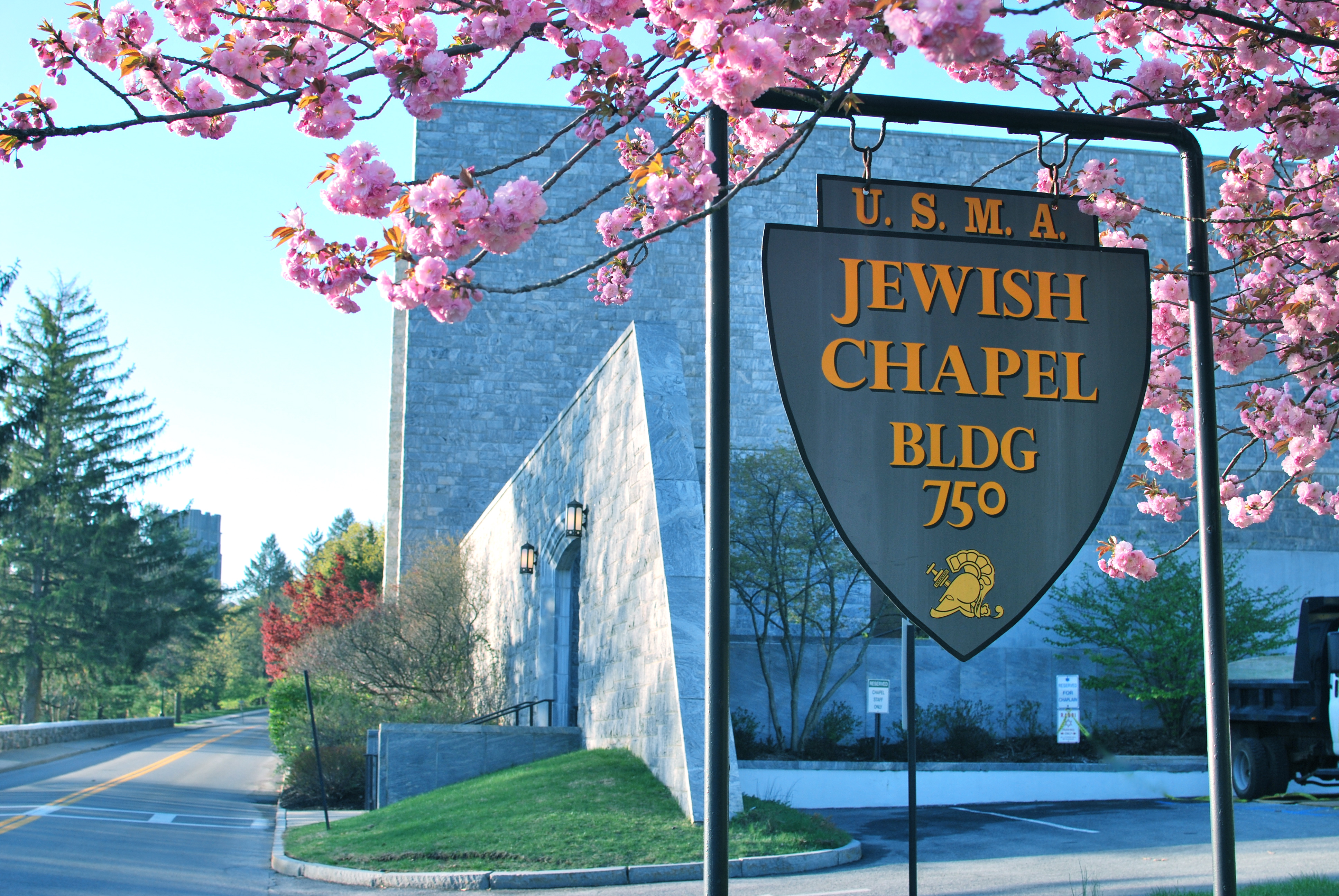
west_point_jewish_chapel_sign

I am where I am in my own journey through life. There is not much I have to write that does not matter in some significant way to me but I am aware of the limits of its import to the larger world. But as I begin this post I have a particular song on my mind — Keeping the Faith, by Billy Joel. The video features his real life wife playing a character in the song. Christie Brinkley is the only woman to bear him a child that I or the general public know about for sure — Alexa Ray. Although he would be married several other time and Christie Brinkley would have other children not with him and most romantic of all, she and Joel didn’t make it all the way to the grave together they were a couple who made an impression. I have spent a good bit of time in the last few months talking about my own past, in some ways I find something to relate to in Billy Joel’s song. But it is hard to know how well America relates to this nostalgia for an American youth.

Billy Joel is a man who in real life has known something about the love affairs and American living that he heard about first and later wrote intelligently about in  the songs of American popular music. The story is that of a man with his fair share of woes to say the least but also the story of a great American pop artist. The lyrics of “Keeping the Faith” tell some of his story.


“Keeping The Faith”

If it seems like I’ve been lost
In let’s remember
If you think I’m feeling older
And missing my younger days
Oh, then you should have known me much better
‘Cause my past is something that never
Got in my way
Oh no
The truth is that when one looks back on the past and sees only the glory days or only the sorrows one does not really look back on the past.  But we have a hard time not looking back on the past with all the many colors of nostalgia at one time or another. Billy Joel has allegedly attempted suicide a number of times and had struggles with alcohol abuse. What I am sure of is that he wrote and performed songs which people have related to fairly intensely over the years. Judaism contributed to the founding of Islam and Christianity each more than any other single source in objective historical terms — and therefore it is older. Nostalgia has a particular place in Jewish identity in the West.

Still I would not be here now
If I never had the hunger
And I’m not ashamed to say
The wild boys were my friends
Oh
‘Cause I never felt the desire
‘Til their music set me on fire
And then I was saved, yeah
That’s why I’m keeping the faith
Yeah, yeah, yeah, yeah
Keeping the faith

There was a  whole lot more going on in the  urban neighborhood of Joel’s song besides just music and faith. One thing he seems to believe in as he tells the story in song is the junction of youth, community and the  commerce based on  local  shared consumption. One can imagine a largely or susbstantially Jewish neighborhood in a great American city in the song. the song is sometimes shocking but a Catholic who is honest about Mardi Gras or Carnival as a Catholic liturgical season that is not a liturgical season should have no trouble making room for some kind of insight.

We wore old matador boots
Only Flagg Brothers had them with a Cuban heel
Iridescent socks with the same color shirt
And a tight pair of chinos
Oh
I put on my shark skin jacket
You know the kind with the velvet collar
And ditty-bop shades
Oh yeah
I took a fresh pack of Luckies
And a mint called Sen-Sen
My old man’s Trojans
And his Old Spice after shave
Oh
Combed my hair in a pompadour
Like the rest of the Romeos wore
A permanent wave, Yeah
We were keeping the faith

The boys with the condoms and  and the knowledge of which local merchants had the right clothes who smoked and got their hair done were making the boundaries of their community real enough. One wonders about the connections between the Catholic situation in America and the Jewish one at various times and in various places. the Jewish belief in the rituals that consecrate sex, life, the seasons of the year and the sense of being a people are modified in different ways as they come into Christianity. The secular Jewish experience is another modified view of those ancient streams.

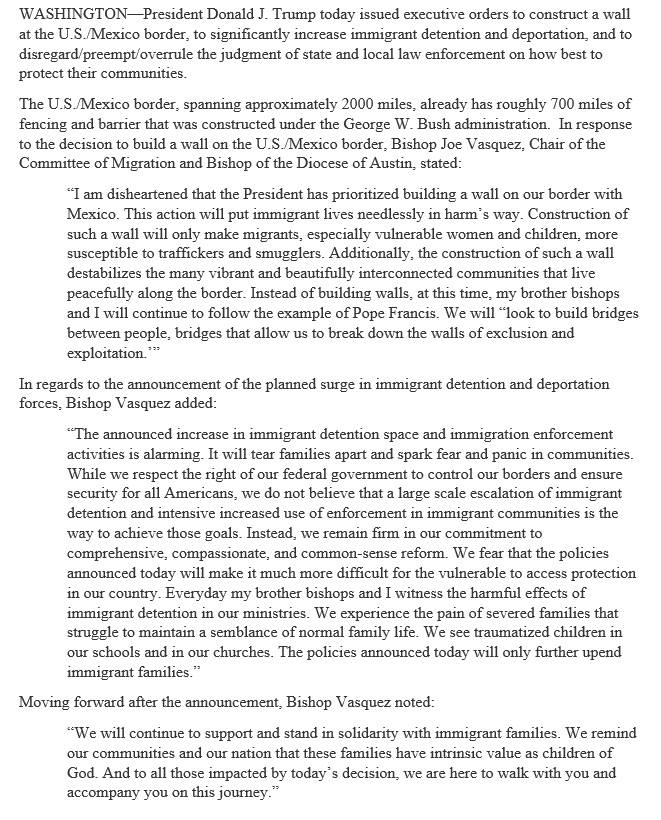
Catholics have different reactions to the Trump administration singling out Mexico for his principal target of isolation. Isolation can be targeted. So the reactions over time will be interesting…. the targeting of Sanctuary cities may well be a cause of conflict with Catholics in many cases.  But the Catholic identity is that of Mike Pence, VP as well as of the undocumented worker. In addition Mexico and Central America are much less Roman Catholic than they used to be — much less. One wonders about the kind of Catholicism that Donald John Trump expects to confront. In the paper below from the American bishops, the right of the country to protect itself is balanced with the rights of those who might suffer. But there is a cultural sympathy that is not to be missed. One sees in trump a man who is very much an American secular Protestant who surrounds himself in close relationships with Catholics and Jews as well as others. I still have not pegged Trump at the personal level, his real policy goals I feel I understand well enough to discuss them but the man — not so much. Pence seems a likeable Catholic and his job is important and official. Mnuchin seems an unusually unlikeable American Jew and may not get confirmed. While Ivanka and Jared seem to be trotted around a great deal neither seems to have an official position. If not all Catholics will trust Trump is devoid of Anti-Catholic bias one wonders what varied Jews might be thinking.

16195966_10154294522377285_8543268698604309940_n

I am told that the President of Mexico has cancelled a meeting with President Trump. I like Trump being strong and energetic and I favor a vigorous and strong America. I also favor a healthy Mexico. I am a Catholic and an American. I look at the people who are trying to see where Trump plays out with Jews and there seems to be a hint that some people are wondering if only Israel is the Jewish place to be. Some see this perhaps in Trump’s chief strategist. I myself am on the far right (in my own opinion). I am able to oppose too much driving of Christianity from the Public square. But I also see a value in secular space and zones of governance. I also appreciate the Jewish American experience I even think there are things all of us can learn from their journey — even my WASP friends.

Getting back to Billy Joel, I too can remember that my own ethnic and specific heritage as a particular kind of American was not perfect either. You  (or one) can see a criticism of both a blind progressivism and a cultural conservatism that is unquestioning for any American in his  next few lines. Take them as autobiography, politics, romantic memoir or any  number of other forms and one can find some truth in them.

Yeah, yeah, yeah, yeah
Keeping the faith
You can get just so much
From a good thing
You can linger too long
In your dreams
Say goodbye to the
Oldies but goodies
‘Cause the good ole days weren’t
Always good
And tomorrow ain’t as bad as it seems

But Billy Joel and I do indeed have different pasts and he is quite a bit older than me. Getting a bit off text again we witnessed different parts of the fire he sang about. We had different parts of the song going through our heads. But only the differences of versions and arrangements of the greater metaphorical song — I relate to his song We Didn’t Start the Fire , just fine. But like a lot his songs it is not of a single simple meaning. For now, let’s get through the song for which this post is named.

Learned stickball as a formal education
Lost a lot of fights
But it taught me how to lose O.K.
Oh, I heard about sex
But not enough
I found you could dance
And still look tough anyway
Oh yes I did
I found out a man ain’t just being macho
Ate an awful lot of late night drive-in food
Drank a lot of take home pay
I thought I was the Duke of Earl
When I made it with a red-haired girl
In the Chevrolet. Oh yeah
We were keeping the faith
Yeah, yeah, yeah, yeah
Keeping the faith

A while back on Facebook I received a compliment from a red-haired beauty from my own ethnic community in Acadiana and reminded her of a long ago date in Chevy Impala and was gratified by a smoochy emoji in response. While Billy Joel’s lyrical boasts do not apply to the date she and I were commemorating online much is similar, thus remembered by me or in song  it is a deeply American experience.  So I look at the role of Jews as a religious minority and I contrast them to the Jihadi Muslim communities. The other Muslims may or may not listen to Billy Joel but the smartest among them realize that American Jews have worked hard to create a workable secular American culture because it is one that they can participate in. It is sometimes good and sometimes bad but I respect the effort. Muslims, Christians and Jews can all wear Levis, listen at least to Piano Man if not this post’s theme song  and enjoy some discrimination-free public space. I have a  Jewish friend, a woman whose initials are JY and like some of the great American Jews she has done humanitarian and secular and patriotic things. She is spiritually adventurous and like so many she is vastly more liberal and more leftist than I am (two separate measures) but I think she has come to respect me and my views a little. I have mentioned her here but will not go further than this in this particular post. The relationships between Acadians and Jews are very complex and very enduring. there is plenty that is of Hebrew origin in the mix of French, Greek, Latin, Spanish and MiqMaq ingredients an Anglo scholar can find in the Cajun culture. I have reminded miss JY of her heritage more often than not — although I do not know really how closely she relates to it. But whatever her struggle is with majority culture it does not involved blowing up people in their homes and at markets. Europe’s murdered millions of Jews filled a niche that others from the same region of the world now fill- a good number of those people are committed to destroying the Europe both Goethe and Mendelssohn built together.   Where Hitler complained of the occasional Jewish Caftan there is now the burka.

You know the good ole days weren’t always good
And tomorrow ain’t as bad as it seems

I told you my reasons
For the whole revival
Now I’m going outside to have
An ice cold beer in the shade
Oh, I’m going to listen to my 45’s
Ain’t it wonderful to be alive
When the rock ‘n’ roll plays, yeah
When the memory stays, yeah
I’m keeping the faith
Yeah, yeah, yeah, yeah
Keeping the faith
I’m keeping the faith,
Yes I am

So what about America and Billy Joel? What about the world of Christie Brinkley and Billy Joel? I am not sure that America will be great again or OK or anything else. But I will be here fighting my corner until I can’t anymore.  I am glad there are friends of Israel in the new administration. But along with some York, some Cornwall, some Languedoc, some Extremadura and some Shetlands — besides some Sicily and some Chihuahua — I like a little Galilee, Judea and Israel in my America as well.


Presidential Politics and American Demographics

What will this next Presidential election tell us about the future of America?  Will it tell us more clearly where we are headed as a country? It is not such a simple thing to discover a national direction at all — all of us know that any great country and certainly ours is composed of lots of different people with differing interests, backgrounds and minor allegiances and associations within the great national whole. Donald Trump seems to be getting a lot of his energy and momentum from reacting to those whom he clearly believes must first be removed from whatever share of America they occupy unlawfully


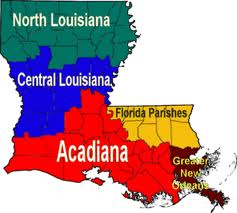
Louisiana regional map bold

It is certainly worth noting that Donald Trump has moved into the commanding lead for first place by taking a strong stance against illegal immigration. The question of whether or not the children of undocumented workers should be treated as unlawful aliens is yet another question. Trump is committing himself  to acting within the law more or less but pushing for a legal methodology to effect the export of native born US Citizens. Nobody disputes Ted Cruz is a citizen as inherited from his parents and affirmed by his life but his one liability as a non-native is that he cannot be President but he is spearheading the larger movement to destroy Native Provisions and Rights as a whole. Those who read this blog will know that I believe false ideas and ridiculous interpretations of equality have driven the country into chaos and dysfunction but this all out press against aliens in this way without adjusting any other issues in our society is really about the wrong kind of discrimination and the wrong kind of identity politics.  I have written about discrimination in many places in this blog and you can see some of the posts here, here and here. We must recognize the rights of those here legally and we must recognize the faults in our legal system. But the solutions we need are not likely to involve such a drastic misinterpretation of the role which labor and consumption by people from neighboring and other alien societies may have on our development and our current state of being .

Gay Marriage has usurped the meaning of the rainbow symbol but it is a symbol of harmony, hope and coexistence with many different bases for its meaning, We all have to recognize that not all aspects of our lives and heritages must be blended to make a strong America. My own views about what needs to be done are rather radical and have been spelled out in model constitutions in this blog. You can begin to access them here and here. However, let us consider carefully that we have plenty of room for anger against ISIL , plenty of need for radical action in saving our infrastructure. We do need to assert our control over our demographic future — I make no bones about this. But is dispossessing and moving people as criminal by the millions the answer?  I propose mass movements within the country with compensations, some deportations and lots of constitutional reform. The issue will be visited in this blog again. But Mexico and the Mexicans here contribute a great deal and this proposal is couched in very hostile terms.

Double rainbow at Big Woods in August of 2015

Double rainbow at Big Woods in August of 2015

I was born in 1964.  I made tie-dyed tee-shirts at school, people I knew were hippies and others served in the military operations in and around Vietnam.  It was a different era. One of the things that I remember is that not only was the music which was being written and performed by first artists different but different music got covered, got sung around campfires and at schools and was part of my childhood’s sound track.  One song I remember was the anthem by Woody Guthrie. It was a song in English addressed to Americans but it had a meaning that led to a kind of harmony we are losing touch with today.

One is not sure to what degree private ownership of real estate is being attacked and to what degree a more complex sense of human community is being expressed which allows for a subsidiary sense of ownership of specific pieces of land when Guthrie sings:

This land is your land This land is my land
From California to the New York island
From the red wood forest to the Gulf Stream waters
This land was made for you and Me

Policies come and go but we all see the heavens and can dream and see visions.

Policies come and go but we all see the heavens and can dream and see visions.

Three highways, the waters, the great commons of our country are indeed places all Americans should feel responsible for in life.  The desire for clean air and clean water will mean restricting what people do with their access to air and water and their use of land. Guthrie was committed to the great commons.

As I was walking that ribbon of highway
I saw above me that endless skyway
I saw below me that golden valley
This land was made for you and me

Today there is a lot of concentration by Presidential hopefuls on the States of Iowa and New Hampshire. However over the totality of a race the  candidates do tend to reach out to a lot of the Union. These United States are not equally addressed and  courted but all of them and some of the lands outside the states are at least addressed and courted. We all watch these candidates chart their paths and plan their trips across the face of our great nation.  Restricted access to the many reactions to Donald Trump on immigration can be accessed here.

I’ve roamed and rambled and I followed my footsteps
To the sparkling sands of her diamond deserts
And all around me a voice was sounding
This land was made for you and me

When the sun came shining, and I was strolling
And the wheat fields waving & the dust clouds rolling
As the fog was lifting a voice was chanting
This land was made for you and me

In those diamond sand deserts in Arizona people who feel that the government of the United States has long ignored there concerns are flocking to Trump rallies by the thousands. I have a mixed history personally with illegal migrants. I have helped people in need and given casual work to people likely here without full paperwork. I have physically but not criminally driven men off the places they were camped and parked who were not meeting the standard of the place. I have of course lived in Mexico and had lots of conversations with the families who send people to work here. I am aware of the increase in Central Americans passing through Mexico. My opinions and proposals are not modest but they are based on reality. They also recognize a rich, wide and diverse country to be preserved.  Can liberal and libertarian people accept the need for border security in Arizona? Can conservatives consider the economic and cultural realities of the country we actually live in? Travelling around the country gives all our candidates a chance to see different realities. Those realities are what matter more than our wishes about the way things ought to be.


Guthrie like the varied pioneers, the Acadian Diaspora, Johnny Appleseed, the armies marching in the War Between the States,  Lewis and Clark’s expedition,  The young George Washington, Alex De Toqueville and so many others is roaming across this great land learning and changing.  Like the others listed and many more he hopes to come and believes that he is coming to a clearer sense of what the United States of America is all about. Hillary Clinton has had several road trips and  has found in them a kind of legitimacy fro her causes and aspirations.   In America we find the adventure of human solidarity awaiting us and we must face that challenge in determining how we will face the future.  Guthrie had this to say about the quest for that dreamed of solidarity in sufficiency in his lyrics:

As I went walking I saw a sign there
And on the sign it said “No Trespassing”
But on the other side it didn’t say nothing
That side was made for you and me

In the shadow of the steeple I saw my people
By the relief office I seen my people
As they stood there hungry, I stood there asking
Is this land made for you and me?

Recognizing what he must address that is not well in this great land gives both Guthrie himself and his fictional persona in the lyrics of his song a quest, a destiny and a sense of daily purpose.  The candidates on the road are also in search of such a quest which in turn they can persuade a lot of other people to support them in pursuing. In their resolve they will find their message. Guthrie desscribes such a resolve and such a message.

Nobody living can ever stop me
As I go walking that freedom highway
Nobody living can ever make me turn back
This land was made for you and me.


The best thing about along race by a large field of candidates is that there is plenty to write and say before the election runs its course. The truth s that American politics has gotten pretty interesting lately and has never been boring. But that does not mean we all are interested in the same things and in fact many people do not have an interest which inspires them to vote at all.


What do Americans expect? If there is an American dream still around what is it? How do all the parts of  our economy come together to shape a vision for the future and the workings of that future? Asians who flock to our technical and science programs and go home to teach and lead,  the decline of marriage and formal nuclear families, the war on neighborhoods, the lack of some cultural systems needed for survival AND problems with illegal immigration from the Southern Border ARE ALL factors in our demographic crisis. The kinds of jobs people will take and do and how many parts of our infrastructure are undermined by new systems that may be ill advised — that also has a demographic element. I advise against panic but the crisis is everywhere.

Changes in American society are made manifest in all sorts of ways. Amazon has recently been blasted by the New York Times for its work culture in an important piece of journalism that may be read here in a form similar to the newsstand and subscription article I think and you can see how other media outlets have covered the exchange here and here.

A lot of Americans are reacting to a fear of Mexican ethnic demographic expansion when they support Trump’s proposals. I love Mexico but I want the USA to be the USA and not the EEUUMM (as Mexico is properly abbreviated). But hating Mexican-American ethnicity even where it is troubled is not in any part of my vision for the country.   My father, my nephew Soren and I recently gathered together to watch McFarland USA which starred Kevin Costner and Maria Bello along with a larger cast of lesser known Latino and Hispanic actors… I recommend watching it and think most people will come away thinking what they already thought on the big issues. But at least it is a glimpse of one part of the huge puzzle too many politicians are pretending does not exist. Our Demographic puzzle is discussed in detail in my model constitutions and I take it seriously. But to single out one problem in an extreme way can be  ill advised.

Our Lady Of Guadalupe’s feast is December 12

Here in the United States of America there are many people who know very little about the Feast of Our Lady of Guadalupe being celebrated on Decmber 12 throughout the Americas but more in Latin America, especially in Latin America, intensely in Mexico and most of all at the Basilica of Our Lady of Guadalupe at Tepeyac in the Federal District of Mexico City where millions of pilgrims are gathered today. However, we also had a gathering of hundreds of Hispanics and a few others to celebrate the feast of the Patroness ot the America’s in my home town last night. There were processions, a mass, a feast of foods, dances by Danzantes recalling Aztec dances as well as some with questionable provenance and intention that have long been part of the holiday.   The Honoring of Our Lady of Guadalupe is extremely significant in numerous and diverse ways. From a linguistic and literary point of view it is an important tie to Abroiginal American language.  The many serious narratives, songs, poems, marching chants and children’s stories which have been written about the apparitions of the Lady of Guadalupe (mostly in Spanish) are all directly or indirectly  inspired by the Nican Mopohua, or Huei Tlamahuitzoltica, written in Nahuatl, the Aztec language, by the Indian scholar Antonio Valeriano in the early 1550s. There is brief collateral testimony in writing of seeing this work from almost the time it was written but no early manuscript has been found to survive to our time.  The document referred to today is a  printed copy that was first published in Nahuatl by Luis Lasso de la Vega in 1649. 
In English this is the text: 

Ten years after the seizure of the city of Mexico, war came to an end and there was peace amongst the people; in this manner faith started to bud, the understanding of the true God, for whom we live. At that time, in the year fifteen hundred and thirty one, in the early days of the month of December, it happened that there lived a poor Indian, named Juan Diego, said being a native of Cuautitlan. Of all things spiritually he belonged to Tlatilolco.

FIRST APPARITION

On a Saturday just before dawn, he was on his way to pursue divine worship and to engage in his own errands. As he reached the base of the hill known as Tepeyac, came the break of day, and he heard singing atop the hill, resembling singing of varied beautiful birds.
Occasionally the voices of the songsters would cease, and it appeared as if the mount responded. The song, very mellow and delightful, excelled that of the coyoltototl and the tzinizcan and of other pretty singing birds. Juan Diego stopped to look and said to himself: “By fortune, am I worthy of what I hear? Maybe I dream? Am I awakening? Where am I? Perhaps I am now in the terrestrial paradise which our elders had told us about? Perhaps I am now in heaven?” He was looking toward the east, on top of the mound, from whence came the precious celestial chant; and then it suddenly ceased and there was silence. He then heard a voice from above the mount saying to him: “Juanito, Juan Dieguito.” Then he ventured and went to where he was called. He was not frightened in the least; on the contrary, overjoyed.
Then he climbed the hill, to see from were he was being called. When he reached the summit, he saw a Lady, who was standing there and told him to come hither. Approaching her presence, he marveled greatly at her superhuman grandeur; her garments were shining like the sun; the cliff where she rested her feet, pierced with glitter, resembling an anklet of precious stones, and the earth sparkled like the rainbow. The mezquites, nopales, and other different weeds, which grow there, appeared like emeralds, their foliage like turquoise, and their branches and thorns glistened like gold. He bowed before her and herd her word, tender and courteous, like someone who charms and steems you highly. She said:  “Juanito, the most humble of my sons, where are you going?” He replied: “My Lady and Child, I have to reach your church in Mexico, Tlatilolco, to pursue things divine, taught and given to us by our priests, delegates of Our Lord.” She then spoke to him: “Know and understand well, you the most humble of my son, that I am the ever virgin Holy Mary, Mother of the True God for whom we live, of the Creator of all things, Lord of heaven and the earth. I wish that a temple be erected here quickly, so I may therein exhibit and give all my love, compassion, help, and protection, because I am your merciful mother, to you, and to all the inhabitants on this land and all the rest who love me, invoke and confide in me; listen there to their lamentations, and remedy all their miseries, afflictions and sorrows. And to accomplish what my clemency pretends, go to the palace of the bishop of Mexico, and you will say to him that I manifest my great desire, that here on this plain a temple be built to me; you will accurately relate all you have seen and admired, and what you have heard. Be assured that I will be most grateful and will reward you, because I will make you happy and worthy of recompense for the effort and fatigue in what you will obtain of what I have entrusted. Behold, you have heard my mandate, my humble son; go and put forth all your effort.” At this point he bowed before her and said: “My Lady, I am going to comply with your mandate; now I must part from you, I, your humble servant.” Then he descended to go to comply with the errand, and went by the avenue which runs directly into Mexico City.

SECOND APPARITION

Having entered the city, and without delay, he went straight to the bishop’s palace, who was the recently arrived prelate named Father Juan de Zumarraga, a Franciscan religious. On arrival, he endeavored to see him; he pleaded with the servants to announce him; and after a long wait, he was called and advised that the bishop had ordered his admission. As he entered, he bowed, and on bended knees before him, he then delivered the message from the lady from heaven; he also told him all he had admired, seen, and heard. After having heard his chat and message, it appeared incredible; then he told him: “You will return, my son, and I will hear you at my pleasure. I will review it from the beginning and will give thought to the wishes and desires for which you have come.” He left and he seemed sad, because his message had not been realized in any of its forms.He returned on the same day. He came directly to the top of the hill, met the Lady from heaven, who was awaiting him, in the same spot where he saw her the first time. Seeing her, postrated before her, he said: “Lady, the least of my daughters, my Child, I went where you sent me to comply with your command. With difficulty I entered the prelate’s study. I saw him and exposed your message, just as you instructed me. He received me benevolently and listened attentively, but when he replied, it appeared that he did not believe me. He said: “You will return; I will hear you at my pleasure. I will review from the beginning the wish and desire which you have brought.” I perfectly understood by the manner he replied that he believes it to be an invention of mine that you wish that a temple be built here to you, and that it is not your order; for which I exceedingly beg, Lady and my Child, that you entrust the delivery of your message to someone of importance, well known, respected, and esteemed, so that they may believe in him; because I am a nobody, I am a small rope, a tiny ladder, the tail end, a leaf, and you, my Child, the least of my children, my Lady, you send me to a place where I never visit nor repose. Please excuse the great unpleasantness and let not fretfulness befall, my Lady and my All.”
The Blessed Virgin answered: “Hark, my son the least, you must understand that I have many servants and messengers, to whom I must entrust the delivery of my message, and carry my wish, but it is of precise detail that you yourself solicit and assist and that through your mediation my wish be complied. I earnestly implore, my son the least, and with sternness I command that you again go tomorrow and see the bishop. You go in my name, and make known my wish in its entirety that he has to start the erection of a temple which I ask of him. And again tell him that I, in person, the ever-virgin Holy Mary, Mother of God, sent you.” Juan Diego replied: “Lady, my Child, let me not cause you affliction. Gladly and willingly I will go to comply your mandate. Under no condition will I fail to do it, for not even the way is distressing. I will go to do your wish, but perhaps I will not be heard with liking, or if I am heard I might not be believed. Tomorrow afternoon, at sunset, I will come to bring you the result of your message with the prelate’s reply. I now take leave, my Child, the least, my Child and Lady. Rest in the meantime.” He then left to rest in his home.

THIRD APPARITION

The next day, Sunday, before dawn, he left home on his way to Tlatilolco, to be instructed in things divine, and to be present for roll call, following which he had to see the prelate. Nearly at ten, and swiftly, after hearing Mass and being counted and the crowd had dispersed, he went. On the hour Juan Diego left for the palace of the bishop. Hardly had he arrived, he eagerly tried to see him. Again with much difficulty he was able to see him. He kneeled before his feet. He saddened and cried as he expounded the mandate of the Lady from heaven, which God grant he would believe his message, and the wish of the Immaculate, to erect her temple where she willed it to be. The bishop, to assure himself, asked many things, where he had seen her and how she looked; and he described everything perfectly to the bishop. Notwithstanding his precise explanation of her figure and all that he had seen and admired, which in itself reflected her as being the ever-virgin Holy Mother of the Saviour, Our Lord Jesus Christ, nevertheless, he did not give credence and said that not only for his request he had to do what he had asked; that, in addition, a sign was very necessary, so that he could be believed that he was sent by the true Lady from heaven. Therefore, he was heard, said Juan Diego to the bishop: “My lord, hark! what must be the sign that you ask? For I will go to ask the Lady from heaven who sent me here.” The bishop, seeing that he ratified everything without doubt and was not retracting anything, dismissed him. Immediately he ordered some persons of his household, in whom he could trust, to go and watch where he went and whom he saw and to whom he spoke. So it was done. Juan Diego went straight to the avenue. Those that followed him, as they crossed the ravine, near the bridge to Tepeyacac, lost sight of him. They searched everywhere, but he could not be seen. Thus they returned, not only because they were disgusted, but also because they were hindered in their intent, causing them anger. And that is what they informed the bishop, influencing him not to believe Juan Diego; they told him that he was being deceived; that Juan Diego was only forging what he was saying, or that he was simply dreaming what he said and asked. They finally schemed that if he ever returned, they would hold and punish him harshly, so that he would never lie or deceive again.In the meantime, Juan Diego was with the Blessed Virgin, relating the answer he was bringing from his lordship, the bishop. The lady, having heard, told him: “Well and good, my little dear, you will return here tomorrow, so you may take to the bishop the sign he has requested. With this he will believe you, and in this regard he will not doubt you nor will he be suspicious of you; and know, my little dear, that I will reward your solicitude and effort and fatigue spent of my behalf. Lo! go now. I will await you here tomorrow.”

FOURTH APPARITION

On the following day, Monday, when Juan Diego was to carry a sign so he could be believed, he failed to return, because, when he reached his home, his uncle, named Juan Bernardino, had become sick, and was gravely ill. First he summoned a doctor who aided him; but it was too late, he was gravely ill. By nightfall, his uncle requested that by break of day he go to Tlatilolco and summon a priest, to prepare him and hear his confession, because he was certain it was time for him to die, and that he would not arise or get well.On Tuesday, before dawn, Juan Diego came from his home to Tlatilolco to summon a priest; and as he approached the road which joins the slope to Tepeyacac hilltop, toward the west, where he was accustomed to cross, said: “If I proceed forward, the Lady is bound to see me, and I may be detained, so I may take the sign to the prelate, as prearranged; that our first affliction must let us go hurriedly to call a priest, as my poor uncle certainly awaits him.” Then he rounded the hill, going around, so he could not be seen by her who sees well everywhere. He saw her descend from the top of the hill and was looking toward where they previously met. She approached him at the side of the hill and said to him: “What’s there, my son the least? Where are you going?” Was he grieved, or ashamed, or scared? He bowed before her. He saluted, saying: “My Child, the most tender of my daughters, Lady, God grant you are content. How are you this morning? Is your health good, Lady and my Child? I am going to cause you grief. Know, my Child, that a servant of yours is very sick, my uncle. He has contracted the plague, and is near death. I am hurrying to your house in Mexico to call one of your priests, beloved by our Lord, to hear his confession and absolve him, because, since we were born, we came to guard the work of our death. But if I go, I shall return here soon, so I may go to deliver your message. Lady and my Child, forgive me, be patient with me for the time being. I will not deceive you, the least of my daughters. Tomorrow I will come in all haste.”
After hearing Juan Diego’s chat, the Most Holy Virgin answered: “Hear me and understand well, my son the least, that nothing should frighten or grieve you. Let not your heart be disturbed. Do not fear that sickness, nor any other sickness or anguish. Am I not here, who is your Mother? Are you not under my protection? Am I not your health? Are you not happily within my fold? What else do you wish? Do not grieve nor be disturbed by anything. Do not be afflicted by the illness of your uncle, who will not die now of it. be assured that he is now cured.” (And then his uncle was cured, as it was later learned.)When Juan Diego heard these words from the Lady from heaven, he was greatly consoled. He was happy. He begged to be excused to be off to see the bishop, to take him the sign or proof, so that he might be believed. The Lady from heaven ordered to climb to the top of the hill, where they previously met. She told him: “Climb, my son the least, to the top of the hill; there where you saw me and I gave you orders, you will find different flowers. Cut them, gather them, assemble them, then come and bring them before my presence.” Immediately Juan Diego climbed the hill, and as he reached the summit, he was amazed that so many varieties of exquisite rosas de Castilla were blooming, long before the time when they are to bud, because, being out of season, they would freeze. They were very fragant and covered with dewdrops of the night, which resembled precious pearls. Immediately he started cutting them. He gathered them all and placed them in his tilma. The hilltop was no place for any kind of flowers to grow, because it had many crags, thistles, thorns, nopales and mezquites. Occasionally weeds would grow, but it was then the month of December, in which all vegetation is destroyed by freezing. He immediately went down the hill and brought the different roses which he had cut to the Lady from heaven, who, as she saw them, took them with her hand and again placed them back in the tilma, saying: “My son the least, this diversity of roses is the proof and the sign which you will take to the bishop. You will tell him in my name that he will see in them my wish and that he will have to comply to it. You are my ambassador, most worthy of all confidence. Rigorously I command you that only before the presence of the bishop will you unfold your mantle and disclose what you are carrying. You will relate all and well; you will tell that I ordered you to climb to the hilltop, to go and cut flowers; and all that you saw and admired, so you can induce the prelate to give his support, with the aim that a temple be built and erected as I have asked.”After the Lady from heaven had given her advice, he was on his way by the avenue that goes directly to Mexico; being happy and assured of success, carrying with great care what he bore in his tilma, being careful; that nothing would slip from his hands, and enjoying the fragrance of the variety of the beautiful flowers.

THE MIRACLE OF THE IMAGE

When he reached the bishop’s palace, there came to meet him the majordomo and other servants of the prelate. He begged them to tell the bishop that he wished to see him, but none were willing, pretending not to hear him, probably because it was too early, or because they already knew him as being of the molesting type, because he was pestering them; and, moreover, they had been advised by their co-workers that they had lost sight of him, when they had followed him.
He waited a long time. When they saw that he had been there a long time, standing, crestfallen, doing nothing, waiting to be called, and appearing like he had something which he carried in his tilma, they came near him, to see what he had and to satisfy themselves. Juan Diego, seeing that he could not hide what he had, and on account of that he would be molested, pushed or mauled, uncovered his tilma a little, and there were the flowers; and upon seeing that they were all different rosas de Castilla, and out of season, they were thoroughly amazed, also because they were so fresh and in full bloom, so fragrant and so beautiful. They tried to seize and pull some out, but they were not successful the three times they dared to take them. They were not lucky because when then tried to get them, they were unable to see real flowers. Instead, they appeared painted or stamped or sewn on the cloth. Then they went to tell the bishop what they had seen and that the Indian who had come so many times wished to see him, and that he had reason enough so long anxiously eager to see him.Upon hearing, the bishop realized that what he carried was the proof, to confirm and comply with what the Indian requested. Immediately he ordered his admission. As he entered, Juan Diego knelt before him, as he was accustomed to do, and again related what he had seen and admired, also the message. He said: “Sir, I did what you ordered, to go forth and tell my Ama, the Lady from heaven, Holy Mary, precious Mother of God, that you asked for a sign so that you might believe me that you should build a temple where she asked it to be erected; also, I told her that I had given you my word that I would bring some sign and proof, which you requested, of her wish. She condescended to your request and graciously granted your request, some sign and proof to complement her wish. Early today she again sent me to see you; I asked for the sign so you might believe me, as she had said that she would give it, and she complied. She sent me to the top of the hill, where I was accustomed to see her, and to cut a variety of rosas de Castilla. After I had cut them, I brought them, she took them with her hand and placed them in my cloth, so that I bring them to you and deliver them to you in person. Even though I knew that the hilltop was no place where flowers would grow, because there are many crags, thistles, thorns, nopales and mezquites, I still had my doubts. As I approached the top of the hill, I saw that I was in paradise, where there was a great variety of exquisite rosas de Castilla, in brilliant dew, which I immediately cut. She had told me that I should bring them to you, and so I do it, so that you may see in them the sign which you asked of me and comply with her wish; also, to make clear the veracity of my word and my message. Behold. Receive them.”
He unfolded his white cloth, where he had the flowers; and when they scattered on the floor, all the different varieties of rosas de Castilla, suddenly there appeared the drawing of the precious Image of the ever-virgin Holy Mary, Mother of God, in the manner as she is today kept in the temple at Tepeyacac, which is named Guadalupe.
When the bishop saw the image, he and all who were present fell to their knees. She was greatly admired. They arose to see her; they shuddered and, with sorrow, they demonstrated that they contemplated her with their hearts and minds. The bishop, with sorrowful tears, prayed and begged forgiveness for not having attended her wish and request. When he rose to his feet, he untied from Juan Diego’s neck the cloth on which appeared the Image of the Lady from heaven. Then he took it to be placed in his chapel. Juan Diego remained one more day in the bishop’s house, at his request.The following day he told him: Well! show us where the Lady from heaven wished her temple be erected.” Immediately, he invited all those present to go.

APPARITION TO JUAN BERNARDINO

As Juan Diego pointed out the spot where the lady from heaven wanted her temple built, he begged to be excused. He wished to go home to see his uncle Juan Bernardino, who was gravely ill when he left him to go to Tlatilolco to summon a priest, to hear his confession and absolve him. The Lady from heaven had told him that he had been cured. But they did not let him go alone, and accompanied him to his home.
As they arrived, they saw that his uncle was very happy and nothing ailed him. He was greatly amazed to see his nephew so accompanied and honored, asking the reason of such honors conferred upon him. His nephew answered that when he went to summon a priest to hear his confession and to absolve him, the Lady from heaven appeared to him at Tepeyacac, telling him not to be afflicted, that his uncle was well, for which he was greatly consoled, and she sent him to Mexico, to see the bishop, to build her a house in Tepeyacac.
Then the uncle manifested that it was true that on that occasion he became well and that he had seen her in the same manner as she had appeared to his nephew, knowing through her that she had sent him to Mexico to see the bishop. Also, the Lady told him that when he would go to see the bishop, to reveal to him what he had seen and to explain the miraculous manner in which she had cured him, and that she would properly be named, and known as the blessed Image, the ever-virgin Holy Mary of Guadalupe.
Juan Bernardino was brought before the presence of the bishop to inform and testify before him. Both he and his nephew were the guests of the bishop in his home for some days, until the temple dedicated to the Queen of Tepeyacac was erected where Juan Diego had seen her.

The bishop transferred the sacred Image of the lovely lady from heaven to the main church, taking her from his private chapel where it was, so that the people would see and admire her blessed Image. The entire city was aroused; they came to see and admire the devout Image, and to pray. They marveled at the fact that she appeared as did her divine miracle, because no living person of this world had painted her precious Image.

This image was part of a great transitional joining of two civilizations into a third new Mexican and Ibero-American Civilization. This was the start of a long series of events which would weave the story of the image and aparition into the heart of Mexican History.  One common way in which public art in Mexico and private homes in Mexico show the  iconic image is at the head of the army of Padre Miguel Hidalgo y Costillas. This Catholic priest was an  early hero of the Mexican cause against the Spanish Empire.  Once he had built up enough of a following to see that his recent uprising against a series of perceived serious wrongs was  becoming an army on the march, Padre  Hidalgo made it an early priority  to stop at the Sanctuary of Nuestra Señora de Guadalupe in Atotonilco.  Entering the church with a combination of priestly reverence and military bluster Padre  Hidalgo affixed an image of the Virgin to a lance and bore it out as the  banner to go ahead of his army.  As quickly as possible he organized a campaign to acquire exsiting good copies of the image and also to have others quickly and less perfectly produced to serve as battle flags.  These were modifed by the addition of a slogan before the were fully authorized as his  troops’ flags: “Long live religion! Long live our most Holy Mother of Guadalupe! Long live Ferdinand VII! Long live America and death to bad government!”

This was powerful political and military cause which moved masses of insurgents and was most weakened by the constant rushing forward which did not allow for much development of the ideals of a Mexican nationalist, Catholic, Constitutional Monarchy to be negotiated at arms with the Spanish Emperor who would remain their Head of State. For the rank and file in this  movement the  Virgin was the perfect symbol that expressed an intense and truly Mexican religious sensibility.

Padre Hidalgo and his chief ally Allende had left the early rallying point of Dolores with about 800 men,  about 400 on horseback. They built up a much larger army in the skirmishes before reaching  the shrine where he took the banner. There were moments of glory and lectures of imprtance whose words have been lost.  Hidalgo first went marched and wandered wildly both at once  through the resource rich and  fully peopled province of Guanajuato. He led a force which was no joke at all but he lost the battle to integrate  Christian codes of conduct, Allendes efforts at military discipline and Mexican nationalism . On 21 September 1810, Hidalgo was proclaimed general and supreme commander after arriving to Celaya. At this point, Hidalgo’s army numbered about 50,000. This movement continued with marches, victories and defeats as well as devlopment of popular culture for quite some time. Each step along the way they became more of a scandal to the gospel, less of an army andby murdering so many Spanish and Creoles in regular fashion if not exactly in cold blood they  defeated any real chance of a negotiated autonomous polity under Spanish constitutional monarchy. They more or less governed Michoacan but never fully organized themselves before deciding to try for the wole of Mexico by siezing the capital city.  They succeeded in coming as close to Mexico City as Monte de las Cruces, between the Valley of Toluca and the Valley of Mexico. However, Hidalgo’s ideals were not mostly bad and his efforts were not without some lon-lasting good results. It is more true to say that he was one of the worst commanders-in-chief known to human history than to say he was a very bad man or lead a very bad movement.

The role, function and significance of the Basilica and the image of our Lady of Guadalupe would expand and develop over time for the next hundred years after Hidalgo but they would next find expression in a battlefield situation which  was far more regular disciplined and responsible to Christian standards than the collapsing period of Hidalgo’s cause.  Many people have written about the Cristeros in Spanish but not so many in English. One writer whose work is partly available on the web and in English is Louis Siqueira Campos and he is among those who have recollected the great significance of the Guadalupe devotion to the Guerra Cristera, or War of the Cristeros. The people and especially men known as  Cristeros are more completely styled guerreros Cristeros or “warriors for Christ”. These were Mexican Catholic men who fought mostly on horseback with simple firearms against mechanized infantry and other troops when President Calles and the Federal Army’s revolutionaries were killing priests and nuns, closing churches and creating many forms of persecution and repression. The surviving Cristeros and their wives and widows were old men and women who filled my teenage years with songs, books, stories and faded photographs that have shaped my ideas and life ever since.

The  armed conflict that took place in the 1920s -1930s  as a battlefield struggle between Church and State in Mexico was nothing like the mad rush that Hidalgo had failed to stand in front of in such a big way except that he was carried along in front of it and had some of his inner fabric washed away in the flood.  These fighters were really representing a mixed and diverse group of people  throughout Mexican society who had engaged in discipliened dialogue and political development that ultimately goes back to five articles of the 1917 Constitution.  This was an agresssive constitutional reform:  Article 3 mandated secular education in the schools; Article 5  abolished and criminalized monastic orders; Article 24 forbade  the public worship outside the confines of churches which was the very life of so much of Mexican festivity piety and culture and Article 27 confiscated much and severely  restricted other property owned by any religious organization.  Most hateful to Catholics was Article 130, depriving priests of all  basic rights and making  them in something between criminals and second-class citizens. Priests and nuns were denied the right to wear clerical attire, to vote, to criticize government officials or to comment onpublic affairs in religious periodicals.  Much of the country’s map was either entirely renamed or slightly renamed to reduce Catholic heritage. Also the earlier names often had a blend of Catholic and indigenous names such as “San Pedro Atzcapozaltongo” but the renaming that began then would continue for decades and would separate Catholic and indigenous  interests. The town where I lived still called by its old name by my friends  above would in time become Villa Nicolas Romero. This would allow future secularists to turn Catholic and Indianist elements against eachother by erasing the vast official records of there collaboration.
The Cristeros emerged in a context political  of challenge-and-response.  There were many political organizations and well organized meetings before the first shot was fired in anger among these were the Mexican Association of Catholic Youth (ACJM)from  1913, the National League for the Defense of Religious Liberty (Spanish acronym LNDLR), from 1924 on and the Popular Union (UP), a true political party started in 1925 which more or less dominated politics in the intensely Catholic west-central region of  Mexico. When the shooting war got going the ACJM and UP would furnish the Cristeros with a cadre of young officers. Before the war the Catholics had found a strident secularist with whom they could negotiate and more less worked out a slow political process of Compromise with Venustiano Carranza. However, he was replaced by Calles about whom rumors of unofficial rape, murder and robbery were already common and believable before he held the reigns of power.

Enraged by the Calles Law calling for force to bring about the strictest enforcement even in the most Catholic areas for the  most objectionable constitutional provisions , the Mexican Episcopate voted for interdict on July 11, 1926 which suspended all public worship in Mexico, the suspension to take place August 1. Later after mettig with lay leaders and priests in delegations from both parts of the Catholic forces (Bishops and non-episcopal Catholics) it was  on July 14 that the bishops endorsed the LNDLR’s plan for an economic boycott to humble or check the government. In many regions, Catholics stopped attending movies and plays, riding on buses or street cars and Catholic teachers refused to serve in secular schools.

A number of rich Catholics of all sub ethnic groups supported the Cristeros admirably but the coallition found the richer members of the coallition very resistant to the boycott.   Rich Catholics began to be resented by many in the movement. I heard a story from one Cristero which I cannot confirm that one man was called the Burro de Oro “Golden Ass” or “Donkey of Gold” necause he had encouraged resistance to the government and resisted taxes on the one hand but then failed to support the boycott or the new army on the other. When a number of   Cristeros called on hime to make good earlier pledges he rolled up American Dollar and Mexican  Peso bills of high denominations around fine tobacco and smoked this cigarette saying that was the money they had come for. He also incurred anger by admitting to  paying the federal army for protection and having earlier called on police to break up the boycotters’ picket lines. The Cristeros went and defeated the approaching Federals and then in an unusual act of iregularity came back and lynched the man. But his property went to his heirs and his family was not harmed. These Cristeros soon saw many songs developed to honor the Virgin of Guadalupe. I know many of these songs and once led a group of singers and marchers in Mexico where we wre threatened by descendants of the opposite side repeatedly.

Louis Siqueira Campos describes the battlefield side of the devotion: 

Viva Cristo Rey! Viva la Vírgen de Guadalupe! “Long live Christ the King! Long live the Virgin of Guadalupe!” These battle cries gave unity and force to the Mexican Cristeros to enter into combat, to resist torture or to defy death.Viva el Demonio! “Long live the Devil!” was shouted in response by their opponents, the soldiers of the Federal army of Mexico, dominated by atheistic officers.
Still today, after almost 80 years since the Cristiada – the epic fight of the Mexican Catholic Cristeros for their faith in the fields and hills of Jalisco, Mijoacan and other States across Mexico – it is astonishing to see the degree of hatred shown by the enemies of the Holy Church in those dire days. To understand such a hatred, we must recall the words of God the Father to the Serpent in Genesis: “I will put enmities between thee and the woman, and thy seed and her seed: she shall crush thy head, and thou shall lie in wait for her heel” (3:15)Not only then, not only in Mexico, but in every time and place when Catholics are truly devoted to the Mother of God, the Devil and his cohorts try to destroy them. But in the case of the Mexican Cristiada, an explanation of the name Guadalupe can explain the particular ferocity of this hatred against the Church. In 1531, twelve years after the landing of Cortez, and ten years after the Conquest, the Franciscans could report the baptisms of about 200,000 Indians, only a small fraction of the whole population.” The siege of Mexico City in 1521 marked the Spanish conquest of the Aztec Empire. But the spiritual conquest still remained, and this was a task too great for mere men, even the fervent Franciscans who began the evangelization of Mexico. The small group faced multiple obstacles: the bad example of many of the Spaniards moved by greed, power and lust was certainly one. But another less perceptible but more profound barrier was the feeling of many Indians that Catholicism was the white man’s religion, that it did not really belong to them.

Louis Siqueira sees as I do the role of our Lady of Guadalupe in creating  an authentic American Christianity and the struggle of the Cristeros to preserve the synthesis Catholic and Indianist elements had been building. This war was in favor of the integration of civilizations that had produced millions of American Indian conversions after the Apparition. It is also important to note that the Hebrew ethnicity of old conversos families was still part of the Cristeros union as well as the Indians and Mestizos and mainline Spaniards.  The secualrist, atheists and Masons who made up the heart and bulk of the Federal Army and regime s hadn’t counted on  men and women with no military background turning out to be military geniuses.  This would be an era which would harken back to Joan of Arc  who was a peasant girl in the Catholic tradition. History has this theme recurring outside of Catholic heritage as well but it surely occurred here in the Cristeros. Jesús Degollado was a great warrior who had been a druggist, Aristeo Pedroza and José Reyes Vega  were both successful fighting priests and Victoriano Ramírez  was an illiterate ranch hand. All economic classes fought on both sides  but land reformers  were among the poor rank and file under calles who wished to break the big haciendas up. Some among  the Cristeros sought a true and improved version of the complexity of Christian manorialsim and others favored modern capitalism with some Indian restorations while others had no strong opinions on the subject. The land reformers were called “agraristas”. On February 23, 1927, the Cristeros defeated  a sizable  combined Army-agrarista force at San Francisco del Rincón in the state of Guanajuato. This was followed by two more victories; the second, at San Julián, Jalisco, was gained  by the Cristeros over an elite cavalry unit supported with  small but expensive logisitcs and mechanized infantry forces in reserve.

Throughout 1928, the Cristeros continued to whip the tyrants in the field. By early 1929, the increasingly unpopular  government’s problems were made worse by a revolt within the Army but the Cristeros rejoicing was fleeting as the Federal Army’s internal rebellion was crushed. On June 2, 1929 a Cristero leader Gorostieta died in an ambush. But despite the fact that the Cristeros had over 50,000 men at arms and were a superb force theCristero Rebellion was horribly failed by the compromises at the bargaining table by the Mexican Bishops under enormous pressure  from international diplomacy and especially US Freemasons despite some countervailing pressure by the US Knights of Columbus.  The Cristeros devotions to Our Lady of Guadalupe continue and new  events have enriched the tradtion . On May 21, 2000, Pope John Paul II canonized a group of 25 mostly martyred saints arising from the Mexican Cristero War. Most of these were Roman Catholic priest  executed for regular  ministry or chaplaincy to the Cristeros despite the President Plutarco Elias Calles’s intense persecution. Actual fighting priests were not canonized. These saints share the feast day of May 21 but almost all were fervent observers of the Dcember 12  Feast of Our Lady of Guadalupe.

The vast majority of the Guadalupe tradtiion is till drawing from the rich history described here. That has been enriched by truly Christian Lebanese- Mexicans who form part of the culture. However among the Lebanese wave in Mexico have been many secret Moslems who have created constant attacks on Jewish and Conversos families, hate towards Cristero and Knights of Colombus Heritage and antipathy between whites, mestizos and Indians.   These are active in making Indians with negro blood more authentic than those with only white and indian blood and perpetuate hate against the US in our own Mexican ethnic groups. These people are committed to destroying America in the larges sense and brining about the secret caliphate. Ninety percent or much more of Guadalupe’s devotees are opposed to these ideas but have been beat up by history. The other forces are sophisticared an persuasive in the cultural vacuum which is enveloping the Americas. I feel that I live in the last gasp of what I call civilization and often feel sorry for myself. For me the Guadlupe tradition is the remainder and reminder of a long struggle for something that could have been much better than the hell in which live much of my life. 

.


Positioning America for the Future We Face

I have listed, described and written about making very significant changes in America. That is what this series of posts is mostly all about.  There is no realistic reason in the world write all these things but some things are worth doing which are not realistic. We have to look around the world and see how America will fit into the future as it ties into the present. How will we find the world no matter what we do? In addition, in the context of my rather extensive and complex model of change and revolution described here how would America interact with the world after having undergone this transformation?

Anyone who really proposes revolutionary change must propose some things which would not be possible without some kind of revolution. If such a proponent does not then he is really some kind of a looter. The risk of revolution is not worth taking unless the results one needs to achieve are more substantial than can be gotten from ordinary political maneuvering.  I am exhorting America to recommit to a survivable future and one that could lead to what I would consider good places.  The chances of my living to see our society and the world get anything that I would consider a passing grade is almost negligible. However, there is a chance of moving from an almost completely dysfunctional student to one making low D grades and headed towards a B average after some tutoring. That would be a very good result.

I do not think there have been very many societies in history more intrinsically difficult to set on a sustainable path than the United States. On the other hand, besides sustainability there is another measure of a society’s success and viability. That measure is decency and the quality of progress or “progressiveness”.  I think that America is fairly near the top on that second measure of a society’s greatness. There have been many that were more decent and progressive but most of them were small and unambitious. We are one of the most generally decent and progressive  great societies in history. I say that being well aware of many horrors and inhumanities in our past and present.

We have to deal with recent geopolitical changes, with the limits of our own society and culture and also with the enduring and endless problems of  both the Earth and the human condition. That is in a sense a struggle that can never be entirely successful. However, it is true that it makes a great deal of difference whether or not one struggles. The mess we will end up with if we struggle well is much better than the mess we will be in if we struggle poorly or not at all.

If America makes the changes I am suggesting then it will be going down a path which will certainly be lonely at first and may not ever become much less lonely. First of all, many human societies (and most at many times) are fundamentally self-destructive and insane. America will become a society on the path of sanity.  Secondly, America will become even more committed to a moral sensibility. Thirdly, within the context  of sane and avowedly moral societies it will be a modern heir to the traditions of Western civilization in a North American context. Added to all of that, it will remain a great power. We will have to move forward with our own sense of what is real and right. Add to all of that the fact that we have our own dark side which I and others who might become key players would believe we have to deal with and you would surely have a country which nobody can find to be very much like any other country nor any less than a profoundly forward step for this country.

The science of calculating risk is very old and has been approached by many very clever and some very wise people from countless angles over a very long time. Nonetheless it is a vast distance from being perfectly systematized.  Only in formal games can we even get close to showing what would have happened if a set of complicated human decisions and actions had been substituted for another set of complicated decisions and actions. America is living in a world where many bad things and many good things will come its way regardless of whether or not the changes I suggest are made. There is a whole set of possibilities in which the changes would be attempted but basically fail. Then there are unforeseen changes which could come from anywhere and rewrite the course of future events. We face a great deal of possible tragedy that is hard to exactly predict.

I have come to writing these posts after a life in which I have done many active and open things  but in which there are many open and active things that I almost never do.  I am committed to writing for a readership with which I have little organized connection.  I respond to comments that sort of come in over the transom. But this is very different from giving speeches in a public square, leading parades, putting pamphlets out or writing newspaper articles. These are all things that I have done in the past. I do very little now compared to what I would ever have believed I would be doing for such a sustained period of time.  But I believe there is much that I must attempt to do before the worst trends become inevitable. What those trends are has been discussed in earlier posts and will be discussed  in later posts more than it is discussed here.

I personally have had over the years a number of contacts and correspondents both in post-Soviet Russia and in the Soviet Union.  On the other hand I have never been there, do not speak the language and have run into a good number of  Russians in the many places that I have visited and I do not believe our relationship with them is good overall. It has gotten much better but we squandered a very big opportunity during the Gorbachev and Yeltsin eras. I think that even had Putin become the player he has become he would have been a different Putin had we acted differently. However, while I think Putin is a ruthless, homicidal, devious puppet master (who must prove he was innocent of the blood of the ninety-eight Polish leaders recently killed in the aircraft crash) I think he is basically a good man. Yes, I am serious and not sarcastic. He is willing to be a monster to save Russia from complete collapse but he has shown real interest in being something besides a Monster. He promotes the Russian Orthodox Church, tolerates other Christians, limits antisemitism and maintains a quasi-atheistic secularist power bloc in politics. That is a real work of  religious tolerance. He has invested himself in preserving parliament. If he faced a strong and dangerous President here who might exercise the positive pressures he might still be a better man and leader. However, earlier he might have turned out better. Russia is still devoted to Putin mostly because he is still devoted to Russia. That is how things are supposed to be. We are likely to be adversaries over the medium term but I do not believe that was inevitable.  

Of course one of the things about the system I have outlined (among many things) which is very notable is that  the system is a complex racially aware system and that will certainly complicate many geopolitical relationships.  However our current color blind system and our past of Jim Crow madness complicated foreign relationships as well. I will specifically say that our relationship with India would be among the most problematic.  Indian (not Aboriginal American Indians) would be presumed to be the types of people who live in the Colored Districts of the States or the Mixed Race Districts of the Territories. However, the Racial Codes of each State would need in some way or another to allow Indian families to file a particular form and have it verified that they are consistently and predominantly made up of a lineage of one or more of the following Indian Bloodlines (one form for all admixtures of the three) Moguls, the Old Northeast Asian Colonies of North Indians and Portuguese. Indian families certified as such would be eligible to vote in the North East Asian Districts of the States. America would pursue distinctions like this regardless of how they were received in home countries of populations. Portuguese found to be Portuguese families from India would eligible to choose Northeast Asian or ordinary status. No country will be quite as unique as India but many will have complex issues. 

Relationships with Britain, France and Spain, Mexico, Holland and Russia will be formalized to include their direct participation with areas they colonized. In the case of France, Britain, Mexico and Spain they should have formal relationships with a Compact each which are recognized by the US and limited by the overall society and yet are really direct to the Compacts. All of this will have a cost. These countries will play to their interests in areas we allow. There will be costs with ties to the constituted, armed and territorial Black community in a society that is formally white supremacist. The costs in money and blood are inevitable. But American institutions which are now not allowed to build our society would be given every help in doing so in the future.

The new era would be very difficult and would invest in the future. But not acting somewhere in ways akin to this plan will have serious costs as well.  I am urging us to take the medicines we need to take now and be a little but hopeful that things won’t go completely wrong. We could hope a little bit that hard work and courage will lead to a good result.

My Thoughts about Homecoming Twenty Years after Graduation


I am planning to buy a ticket to my alma mater’s homecoming football game more or less as soon as I get finished with my blog post.  I will be buyuing it with my mother’s credit card. I sometimes do this and pay her back with cash but in this case she is giving it to me as a gift. I feel a sense of obligation to be there and I have often been to Homecoming games over the years. But I have not gotten an invitation to anything except those sent out to all University students and have not had the resources to  initiate much organization although I did start a Facebook group for my classmates nobody joined it. Nonetheless, it discharged another sense of obligation. I do love my school and watching football. However, I certainly am not proud or happy to be going alone and in many other ways in the situation I am currently in at this time.

The bulk of this post is a Facebook note I wrote a while back. I had a really miserable time copying it in here (a process which is often very easy). That means I had more of a chance to correct spelling, mechanical and minor factual errors than usual because I spent longer reworking it. However, I know from experience that there may be a gross error of continuity from pasting parts together and have lots of irritating glitches. I hope not. If you read it and wish to comment I will try to address errors and questions.


Approaching 20 years since my Bachelor’s Degree
Sunday, March 22, 2009 at 10:58pm
I graduated from the University of Southwestern Louisiana in May of 1989 with a degree in English and the honor of a latin phrase after the designation of a bachelors degree. There have been many days since mid May of 1989. Each of them was a bit different from the others. Suddenly I am coming up on 20 years. Sooner or later it had to happen. Actually it had to happen exactly 20 years after I graduated unless I died. It was always likely to make me feel that my life was not exactly where I had hoped it would be. Twenty years ago was a rather high mark in my life. But not a perfect time at all.

In the years since then there have been opportunities to do things that I had not done. Perhaps I resemble some huge portion of the human species in that I would define the last twenty years as having been much better and much worse than I would have predicted. However as a generalization I would describe my last twenty years as being profoundly different from any plan I could have made or discussed in those days. First of all the most important person in my life in those days was Michelle Denise Broussard Summers and I have not seen or spoken with her since about 1995. We had gotten married in December of 1987 while still in college. I graduated in May of 1989 and she graduated in December of 1989.

I think both that we always had our problems and that when I graduated our best years were still ahead of us. But the time of my graduation was a more difficult time than most of our time together up to that point. In those days I still had high hopes for many things that no longer draw forth that response from me. What Michelle’s hopes were becomes less clear to me with each passing day and month and year. I do know that we were very much together at that time. Her support meant a great deal to me. On the day of the Blue Key reception for the Outstanding Graduate award for their colleges and were nominated for the overall award only one person had no guests for company — I was that nominee. I did win the award however. That of course makes the approach of the 20th year anniversary even more ominous somehow. It is harder to measure up to expectations announced in those days. Of course, no matter what I had that happy summer when I had been so honored and before a life I would often categorize as horrible reverted more to the norm and became fairly horrible again. In the years since there have been lots of good and bad times. I have ended up with more self-respect than I would have ever imagined possible and very little else in many ways. Yet also blessed to have lots of people in my life and memory who have meant something to me. The journey has had its surprising joys. Instead of only following a chronology  only I wanted  to kind of set this up as journey story — because it is.

Mary graduates from UL L as I did. A young mom who does not make time for Facebook yet.

Watching one brother Joseph and one sister Mary graduate with higher Latin honors than I earned from my college alma mater has been a joy and a blessing. It has been a joy to see another sister Sarah graduate with a perfect GPA from Louisiana State University where I got my masters degree. It has been a joy to have my middle sister Susanna graduate with honors from the Franciscan University of Steubenville where I won one of two Sophomore Class Awards (one for men and one for women) in 1985. I look forward to having my youngest brother graduate from UL-L which is my renamed alma mater this May. My handicapped brother Simon received his certificate of Academic completion of merit from Abbeville High School when I was working for the school board in which they are located and which administers them. All of those were joyous milestones. But Michelle was not around for any of those events. After my Bachelor’s ceremonies, hers and my Master of Arts Degree graduation we were not to be together much longer.

Michelle and I lived in Abbeville, Lafayette, Kenner, New Orleans and Baton Rouge  all in Louisiana when we were married. We traveled to Mexico but otherwise never left the country together. We did make trips to Arizona, Texas, Kentucky, Tennessee,  and Illinois. But all though we were not absolute cave-dwellers we traveled less together than has been typical of my life. In this post I have included pictures of places I have been since. I had many pictures of Michelle and I together and would put some up but they have been among the many casualties of my trips and dislocations. I do not have access to a single image of her and I together or of her as I type this.

The picture below is of the Shandong Institute of Business and Technology in Yantai. The SDIBT  was the China Coal College a few years before I was there.Set on the Shandong Peninsula where Confucius and Mencius began Classical Chinese scholarship the Campus overlooked the glorious Yellow Sea.
These are some of my students and advisees graduating two years after I left.
Front page of an article I wrote about my journey to China and time there. The top photograph is of English Corner which was largely organized and facilitated by Lu Ting ting who is on my Friends List although her name appears in characters I cannot reproduce.

However, China is not the only place that I have been. There were journeys to Micronesia, Mexico (on numerous occasions) as well as to Nova Scotia/ Acadie. All these trips were since my divorce . Each of these journeys has added to the long route across and just above the surface of this planet which I have had other distinct good things and times. My trip to China ranks near the top of these life enhancing events one recalls at a time like this. I have posted the link to the university level institution where I taught.

The theme of of travel in my story is rather huge and important. It can be minimized and still seem drawn out in my life. Prior to graduation the Philippines, Europe, Colombia, Mexico, Tonga, Samoa and New Zealand were among the places that I had visited long enough to feel that I had lived there.  It bears repeating yet again that extensivetravel has been a very large part of my education and personal development both before and after my undergraduate studies.

 Soren, Alyse and Anika in Zacatecas, Mexico in the center of town.
Alyse in the mines which were the source of wealth for Zacatecas as a Spanish Colonial City and in the precolumbian days as well.
 
I have also been a bit below the surface of the planet a few times. Mammoth Caves is one of my favorite US National parks and I have enjoyed visiting mines like those in the beautiful Mexican city of Zacatecas. Michelle was not a great outdoors woman and now I seldom participate in the outdoors in Louisiana which were such a huge part of my life before because I have had a lot of bad experiences and am not very happy here in any way but Michelle and I once camped at Mammoth Caves in a very happy exception to the rule of our time together. 

What I know is that my life has been a journey in a very literal sense. When I graduated from UL I went to work that summer for the law Firm of Mangham, Hardy, Rolfs and Abadie in the offices near the top of the First National Bank Tower in downtown Lafayette. It was as close as I have ever come to feeling like my life was on a smooth and established track and not a trek through dangerous places. I was headed off to Tulane Law School in the fall. A lot of people in my life who have always behaved badly toward me when they were around chose not to that summer. I had been on television and in the newspapers a great deal when I won the Outstanding Graduate award and it seemed like I would be given some space to do things one step at a time in a way that I have never really known at any other time.

My time at Tulane Law School that first run was one of the worst times of my life. That is from my point of view saying a great deal. We lived next to a family who were in charge of our floor in student housing and screamed and roared many hours every day. Michelle never found any job of significance which wrecked our financial plan, I got hit in a horrible traffic situation and got the ticket, I was chronically sick, we had several family crises. Someone who owed me a substantial amount of money skipped out on payment and it was an informal exchange without legal recourse. Those patterns were established early on and then there were a lot of other bad things. Michelle told me she was pregnant fifteen minutes before my first moot court competition and that she was not (either never was or had lost the pregnancy) just in the middle of my real examination preparation. Then my relationships already included a lot of people who were the opposite of supportive. Despite being a harsh, grim and critical man my grandfather Frank W. Summers I came across as a major source of counsel, social and financial support. He and I had been close of years and this put a strain on our rebuilding relationship but it was a time when he really shone in several ways. When Michelle and I left Tulane after a semester and a bit then in almost every way the life I had sought to graduate into was  dead. The journey since then has been an entirely different journey.

When I left Tulane we engaged in that activity my associates in life often refer to as “licking one’s wounds”. That took a few weeks. Then I was working in seafood sales and brokering as I had done many times before including even during my time at Tulane Law. I went down with the owner and chief sales manager of the privately held company that was my employer on a buying trip to Merida. This was typical of a lot of things about my seafood crowd. The owner paid for four tickets, four registration packages, four hotel and food packages and in me provided one of the two or three best interpreters on the trip. However, the trip was supposed to be a sales trip sponsored by the US Department of Commerce and we were there buying. While that exact event was unique it somehow encapsulates all of my considerable experiences in the fishmongering world. While there Lieutenant Governor Paul Hardy presented me with the honor of Honorary Lieutenant Governor of Louisiana. He gave me a very large and beautiful certificate that I was proud to display as I was to mention the honor on my resume.

When I got back I set up those purchases and set up a series of chain and institutional sales for catfish and catfish products of sizes which were not in the main stream of demand and commerce. That was about all I did before quitting my job and going to work for St. Thomas More High School. I knew it would annoy him but I left my employer with a proposal for changes needed in the company. From a distance over the years I watched many of them take place. (Since I wrote this note however the company has closed because it imported much Mexican labor after the ties established on this trip and has had trouble gettibg the paperwork in order in recent years according to one of the former owners).

My story must return to the subject of St. Thomas More High School.  My Mom had helped me hear about and get an interview for the job at STM and I took Sarah to school there as I commuted to work. Michelle soon found a job in Lafayette in a career field she would follow in for a good while. I added a part-time job as youth minister at St. Mary’s Parish and then we moved from Mom and Dad’s neighborhood in a rental house to an apartment in Lafayette. Mom and Dad soon moved to house only a few miles away. My sister Susanna was registered to go with Sarah to STM the next year. However, by that time I would be a Board of Regents Fellow at Louisiana State University. Michelle had a good job in Baton Rouge with the same company she had worked for in Lafayette and I had the fellowship money and some other sporadic income. We were pretty happy and pretty successful as far as living in a rental townhouse can be considered successful in America. We had two new vehicles we had bought new and although I was getting really fat for the first time since early adolescence we were more in love and happy than at any time since just after our wedding. So if Law school was really brutally bad then graduate school was pretty good. I was tired and stressed but not as alienated as I have often been. It was a time for maintenance and restorations. Then two things did happen when I was in Grad school at LSU that had a big impact on my life between the two of them. One was that my half-brother Paul Nicolas Jordan came into my life. The other was that my grandfather Frank W. Summers I died. These things and earning my Masters really defined those years.

Paul came into my life as a huge surprise since I had been assured of his impossibility. I had devoted a huge portion of whatever positive focus of energy there had been in my life to being the oldest sibling of seven and an older brother. I had become involved in a whole web of transgenerational things on all sides of the family to pass them on to another generation. When Paul came many of relatives who have always perhaps been happy to make me uncomfortable liked to point out that he was both older and my sibling. All the ways this was done I will not get into here. It so happened that my grandfather Summers was not related to Paul by blood, marriage or memory and was busy dying. I had worked for him, lived with him when in from the Franciscan University of Steubenville, bore his name, had discussed genealogies, family traditions and acts and orders of chivalry. He had brought me into some secret and other semi-secret groups and other groups with tasks that were not entirely clear to me and I had tried to humor him even when it was tough. So at this time we drew closer together. His mind, body and poise were all failing but they all were a noble ruin. Old men I had never met came and began to ask me questions about him and some of our activities and talks together. Many of those men I never saw again.

I undertook a research task or two in Acadiana at the time to deal with these odd meetings and with my dying grandfather. I had often been angry with and resentful of “PauPau” as I called him.When he did die I had seen him dying only a day before and the pain was raw and shocked me in its intensity. There were reasons for that which I will not go into here but the biggest reason was personal loss. I was the only primary pall-bearer with streaming tears and shaking sobs as we gave that last shove of his coffin into the elevated stone mini mausoleum where his remains rest. Typical of he and my grandmother there was a space beside him with her name on it and four other spaces for some (but not any dead) who might need a resting place in our extended family. My grandmother was there and many others and my wife. But I felt a loneliness I had not known before, it may not have been my loneliest moment but it was a very lonely one. I pulled through that semester, took my general examinations and went through commencement. I thought I might go to LSU Law school but I would work in large scale food sales again before returning to Tulane Law School. My marriage was almost suddenly falling apart in real earnest.

During the year I worked we still had some good times but by the summer before Law school we were seldom together as I worked in a law office in Lafayette and she lived in Baton Rouge. Then we moved into a town house in Kenner where we last lived together. This time at Tulane things were smoother in some ways but smoothly bad. My first time at Tulane I had organized a petition and a protest along with other woes and distractions and I am quite certain some faculty there still had it in for me. My relationship with my nuclear family was strained, I missed my grandfather, he had promised me several keepsakes when he died all unsolicited by me and I got none of them just as had happened before when his mother died. My marriage was for the first time cold. It is unacceptable to talk about sex between married couples but our sex life had always been very good by all standards that can be quantified or verified. Now it was not. We were sentimental about splitting. We seldom discussed it and when we did it was usually over a nice dinner calmly. We knew it was coming and I began to seek treatment for depression. We both sort of moved from not quite newlyweds to forty years of marriage in our frank awareness of the opposite sex. It was clear that we would not be happy together and we had tried Marriage Encounter, made Engaged Encounter before exchanging vows and read books as well as making a couples retreat. We had no kids or prospects of having kids soon. I had some concerns my grandfather had entrusted me with that we could never really discuss. My relationship with her parents got pretty bad and hers with mine was not good. None of this was all that obvious or even serious in a certain sense.

I am adding this paragraph for no particular reason to the original note in my Facebook page.  I was never sexually involved with anyone while married to Michelle. That is an absolute fact and in addition I did not pursue things that came up as that marriage ended. However, it is dishonest ( by my high standards of candor) to leave out the fact that I did meet a woman at Tulane the second time who made a big impression on me and she seemed to feel something too. We have never seen eachother since then and I really did stay with a miserable and hopeless marriage instead of a new and compelling relationship. I am not even the tiniest bit ashamed of her, my behavior, or of Michelle and I being old fuddy-duddies who tried to play things by the book.  

Suddenly I was out of law school, legally separated and living with my parents in a two storey thatched building overlooking Micronesia’s Truk Lagoon as the GIs knew it on the Island of Weno in the country of Chuuk. Another point of no return had been crossed. Another re-invention of a life and a future. Among the markers of that transition I had a truly horrific sunburn that almost defied description. I have been hospitalized twice for sunburn and none of those burns were in the same category as this. I think I could easily have died except that a clinic there sold my mother a few hundred dollars of Silvadene cream for a few dollars. The agonizing physical pain and baseball size blisters were oddly soothing to my shredded soul. I healed and snorkeled again as I had that first burning day. I ate Eggs Benedict overlooking the gorgeous lagoon, spent time with my brothers and sisters and found a job teaching at the local community college which I never undertook because I left before school started. I heard rumours that made me think a reconciliation might be possible and decided to come home and try. However, I have never seen Michelle since the day we were separated. I have never spoken to her on the phone or seen a convincing video of her. Except for third person testimony I have no reason to believe that she is not dead. I now reached a place in life where I was not to cut my hair or shave for about three and a half years.

When I was in graduate school at LSU I published one book review in the Historical Journal of Film, Radio and Television as well as two note length letters to the editor — on in Time and one in Newsweek. I did a lot of writing during my marriage but what was most notable was how little publishing I did. I wrote novels, plays, short stories, book length rough drafts on international law, rocketry, ethnicity and theology. This was in addition to countless papers, exam essays, lesson plans at Saint Thomas More, tutoring materials and half of the  catechetical materials Michelle and I used together to teach our faith in two dioceses and sales materials as well. But now, in the wandering in the desert phase of my life (involving very few deserts) I began to fill composition books titled as journals. With hair down to my waist almost and long journals to write Mom got me a chance to work out every day almost at Olympus health club in Nunez which is a small community with a  gymnasium (in the old sense), a steak house, a gas station and a lot of houses and fields. I got into pretty good shape while not losing weight. In my journals I was able to deal with the absolute and enormous wrongness of nearly everything in the world of humanity from my point of view. It was amazingly soothing to say what was wrong and what might be done about it even though it would not change anything. In many ways life was more hellish than it had been in my worst nightmares but I could at least express that thought in an environment not entirely toxic. I might fell that I was living a nightmare but at least I could say so in peace. I do find the world to be a kind of nightmare made real as much as I find it to be anything else.

I acquired some land from my father after a few years and began a very small business. I did a wide variety of odd jobs and my parents donated mortgage payments on the land to me this was our symbiosis. When they were paid off it was about the year 2000. I also had started a small business subsidized by payment made for driving a few people back and forth from jails and hospitals and other government agencies. My little business was distributing books, cards, prints, jewelry and prints produced in Acadiana or by artists connected with Acadian in a surprisingly large number of the United States, countries and cities. But my income was not nearly (not even approaching nearly) enough to live on.In the year 2000 I returned to the Catholic sacraments after having been a regular mass goer who never received communion, I cut my hair and shaved my beard, I took out a $10,000 signature loan on the land and I applied for and got a substitute teaching job starting in the fall in the Vermilion Parish School board system. Most of this happened in May of 2000. Then I went up to New Haven Connecticut for my sister’s birthday and my brother in laws graduation from Yale Divinity School. I had a wonderful visit with Sarah, Jason, Alyse and Anika as well as others gathering there. However, I did sense before I left that there were serious problems still in their marriage which had been evident last time I had seen them. Some of these and other tensions spilled over into the latter part of a great visit. However, for me this would be a blessed renewal of a closeness with Sarah and her children which would be a large comfort of the following years and had always been there largely. I stopped in at EWTN headquarters in Birmingham, Alabama and at the home of the relative who owned the adjoining piece of land and lived in Virginia. Both these stops and a stop in New Orleans were on the route of my round trip Amtrak ticket and were a mix of business and pleasure.

For three following years I devoted myself to family affairs, kept my little intellectual properties distribution business going, built fences and acquired tenants for all the land while maintaining the mortgage. I also did a great deal of substitute teaching sometimes a week and a half for each week or even more after storms like Hurricane Lilli closed down facilities and caused schedules to be consolidated.

I also began to write again publishing sports pieces at the Daily Advertiser, sports and feature stories in the Abbeville Meridional and features and a column in the Bonnes Nouvelles (Vermilion). Meanwhile, I continued researching, filling composition books and writing a great deal on topics related to my first big efforts in doing my own thing when I left Tulane. About the end of that time a lady I liked ( and might still like) a whole lot and I really pronounced the death of a long term on again and off again relationship.

Towards the end of that period I considered and sort of attempted to return to graduate school in a different discipline. Then I traveled around to see my sister now living in Mexico and to look for a job. I also had applied for a teaching job in China. As it turned out I did teach there in 2004 and into 2005. It was a very powerful experience that deserves more space than I have here so I will skim over it. Having graded dozens of term papers, directed numerous student workshop dramas and advised hundreds of students I returned here because of paperwork problems. I saw many terrible problems in China and faced many but they did not oppress my spirit in the way that the woes of my homeland and of my life in this land have oppressed it.

I got back in time to settle in and then took a job caring for my brother Simon Peter in a home health agency. This went on as I also volunteered during hurricane Katrina but ended with hurricane Rita. I left badly injured to in California and to look for a job. When that failed I spent a very nice few months with Sarah, her children and the missionary team in Mexico. It was on that trip that we took the pictures in Zacatecas which I have included here. My last paycheck, an anonymous gift and some FEMA money went far in Mexico. They would have gone farther if I had not spent so much in California.

I got back healthy for Christmas and have not really been gainfully employed since then but have lived here at Big Woods. Nor is that the extreme underemployment the only lack in my life. But I have gone on with my life each day doing a variety of things. When I think back on the last twenty years since my graduation there are many events not mentioned in this note. Many blessings and joys as well as many horrors and woes. While I have used the skills and knowledge I gained in the university studies I completed twenty years ago many times this is not a career that sounds like a career.

Now I am coming up on twenty years since graduation. I feel very much the absence of many things. I have no legal marriage certainly, no net worth, no significant US credit or income profile or ownership of a car. My views of many institutions is very dark and my interpersonal relationships are perhaps possessed of some of the worst qualities of the modern and some of the worst qualities of the ancient. Yet there is some good in them as well. I have been to pretty many of my alma mater’s homecoming games but not to any organized class reunions. Despite advanced credits and generally good grades I had distractions and preoccupations which prevented me from graduating in four year and that lessened my ties to the people I actually graduated with although not my ties to the school. Now I wonder what the twenty year mark will bring.I doubt I could some these years up to my satisfaction in a single line or a one paragraph program entry. Yet I do note the occasion and find that it commands my attention. I am aware that twenty years as an alumnus only comes once and there is no guarantee that the multiples will come at all. So I look towards May’s anniversary and October’s homecoming week with a varied mix of emotions. Life does not delay so we can explain it well.

END OF FACEBOOK POST

Now, those who really know this blog will know that I correspond with some influential and privileged people and believe in leadership. However, there is a tone of resentment and profound unhappiness with the status quo that is hard to miss in much of what I write and say. First, I would remind people that although the Baron of Louth and I (for example) may correspond it does not mean we are really living in the same circle. Second, this tension (which some see as a contradiction)  has been a part of me almost all my life. In an age where people who are unhappy with Bishops join a church with no bishops I choose to complain (when I have reason to) about the episcopacy. While I could have found a way to leave many ties of my youth behind I tend to stay and raise a little hell about the things I dislike.  Those who know me best no that my self-concept is very distinct. I am far from perfect but not at all inclined to give up all that I am for some lie about equality and sameness which is not even understood by its advocates. So this is my thinking about this twenty year milestone.