Tag Archives: history

Acadians and the American Revolution: A Crucial but Overlooked Influence on the Struggle for Independence

Introduction: Reframing the American Revolution Through Acadian Experience

The American Revolution is often narrated as a revolt of the Thirteen Colonies along the eastern seaboard. Yet recent scholarship insists that the Revolution was a hemispheric struggle, shaped by shifting alliances, imperial contests, global commerce, and the movements of peoples far beyond New England and Virginia. Among those peoples were the Acadians—descendants of seventeenth-century French settlers of maritime Canada—whose forced dispersal beginning in 1755 positioned them across North America and the Caribbean in ways that profoundly shaped the revolutionary era. Their experiences under British rule, their strategic resettlement in French and Spanish territories, their militia service, their cultural networks, and their role in trans-imperial diplomacy made Acadians vital—though often invisible—participants in the American quest for independence.

This essay argues that Acadians played a crucial role in shaping the American Revolution by weakening British imperial cohesion, strengthening Franco-Spanish military capacity, and enabling decisive campaigns in the Gulf South that directly facilitated American victory. Drawing upon the works of John Mack Faragher, Dudley LeBlanc, Michael Leech, Kathleen DuVal, John Garrigus, Warren Perrin, Carl Brasseaux, and the collective scholarship in Acadie Then and Now, this study situates Acadian contributions within a larger Atlantic framework and shows that the Revolution cannot be fully understood without accounting for their influence.


I. The Grand Dérangement as a Catalyst of Anti-British Consciousness

A. British Imperial Overreach and the Seeds of Revolutionary Rebellion

In A Great and Noble Scheme, Faragher offers the definitive scholarly account of the 1755 expulsion of the Acadians—known as Le Grand Dérangement. He reveals the deportation as an act of extreme imperial coercion, motivated by British desires to neutralize a francophone Catholic population considered politically unreliable. Faragher demonstrates that the Acadian expulsion was not merely a tragic episode of colonial history; it was a precursor to the very logic of imperial overreach that the American colonists would later resist. The forced removal of thousands of Acadians foreshadowed British heavy-handedness in the 1760s and 1770s and exposed the tensions inherent in managing diverse populations within a centralized empire.

This brutality cultivated among surviving Acadians a profound memory of injustice and a collective orientation against British authority—one that would shape their choices during the American Revolution. In this sense, the diaspora itself became a form of anti-imperial resistance.

B. The Formation of a Transnational Acadian Network

Carl Brasseaux’s Founding of New Acadia chronicles how many Acadians eventually resettled in Louisiana—then a sparsely populated outpost of the French and later the Spanish empire. This relocation was not random. Acadians possessed agricultural expertise, strong communal bonds, and a willingness to occupy frontier lands that imperial authorities considered valuable. By the early 1770s, Acadian villages were well established along the Mississippi River and the bayous of south Louisiana, forming a strategic demographic presence on the imperial borderlands.

Their new settlements placed Acadians at the very center of geopolitical tensions during the Revolution. Their population became a resource that could—and did—shift the balance of power in the Gulf South.

C. Identity, Memory, and the Will to Resist

Dudley LeBlanc’s two works, The True Story of the Acadians and The Acadian Miracle, although more hagiographic than analytical, illuminate the emotional and cultural dimension through which Acadians interpreted their history. LeBlanc depicts the Acadian experience as a saga of resilience, faith, and cultural fidelity in the face of overwhelming oppression. This sense of collective survival fostered an identity predisposed toward anti-British sentiment and sympathetic to other struggles against imperial domination—setting the stage for the significant Acadian role in the Revolution.


II. Pre-Revolutionary Louisiana: Conflict, Power, and Opportunity

A. The Louisiana Frontier and the Roots of Acadian Political Agency

Michael Leech’s Roots of Conflict explores the political and social complexity of pre-Revolutionary Louisiana, revealing a region in which multiple groups—French Creoles, Acadians, Native nations, free people of color, Spanish officials—negotiated power and identity. Acadians proved especially adept at navigating this environment. Their prior experience with displacement enabled them to cultivate autonomy, self-governance, and militia skills valued by both French and Spanish authorities.

These patterns of frontier adaptability helped shape a population ready to contribute meaningfully to wartime efforts.

B. Strategic Settlement Under Spanish Rule

When Spain acquired Louisiana in 1763, it inherited thousands of Acadians. Their presence strengthened Spanish claims in the Gulf South at a crucial time. Spanish governors recognized the Acadians’ military potential and integrated them into local militias, granting them land and permitting relative cultural independence. As Leech and Brasseaux note, Acadians became “middle peoples”—cultural brokers who connected French traditions, Spanish administrative power, and Indigenous presence.

This position made Acadians key to Spanish wartime strategy when conflict with Britain erupted during the American Revolution.


III. Acadians in the American Revolution: A Strategic Population

A. The Gulf Coast as a Decisive Theater of War

Kathleen DuVal’s Independence Lost reframes the Revolution as a multinational conflict that extended far beyond the Thirteen Colonies. She highlights the significance of the Gulf South, where Spain—an American ally—engaged Britain directly. Acadians, living under Spanish rule, became instrumental to Spain’s military success in the region.

B. Acadian Participation in Gálvez’s Campaigns

When Spanish Governor Bernardo de Gálvez launched a lightning campaign against British West Florida in 1779, Acadians formed a significant component of his forces. Their roles included:

  • Militia infantry in the battles of Manchac, Baton Rouge, Mobile, and Pensacola
  • Guides and scouts with unparalleled knowledge of marshlands and bayous
  • Boatmen and logistical operators essential to transporting supplies
  • Local intelligence gatherers among frontier communities

Gálvez’s victories—made possible in part by Acadian manpower and expertise—eliminated British control on the Gulf Coast. This deprived Britain of crucial access to the Mississippi River, prevented coordination with Southeastern Loyalists, and undermined the broader southern strategy.

Without these victories, DuVal argues, American independence would have been far more difficult. Spain’s triumphs in the Gulf forced Britain to divert resources and weakened British influence across the South.

C. Acadians as Political Actors in Wartime Louisiana

Acadian village leaders played decisive roles in ensuring continued cooperation with Spanish authorities. Their willingness to serve in campaigns—motivated by loyalty to France, gratitude to Spain, and hostility to Britain—helped maintain stability in Louisiana, allowing Gálvez to operate without fear of internal rebellion.

These actions were not passive; they were deliberate choices rooted in communal memory of British oppression and in hopes of securing their own future autonomy.


IV. Acadians in the Wider Atlantic Revolution

A. The Acadian Diaspora Beyond Louisiana

The collected scholarship in Acadie Then and Now reveals that the Acadian diaspora extended across the Americas, from Québec to France to the Caribbean. In each region, Acadians influenced the Revolutionary struggle indirectly:

  • In France, Acadian refugees contributed to naval and maritime operations that challenged British control of the Atlantic.
  • In Nova Scotia and New Brunswick, Acadian settlements complicated British efforts to maintain total regional control.
  • In the Caribbean, Acadian exiles sometimes aligned with French or Spanish forces in actions that hindered British logistics.

This global diaspora created pressure points across the empire—undermining Britain’s capacity to suppress the rebellion fully.

B. Acadians, Free People of Color, and the Francophone Atlantic

John Garrigus’s I Alone highlights the role of free people of color within the broader French Atlantic, particularly the complex social fabric of communities shaped by French colonialism. Acadians lived alongside such communities in Louisiana and elsewhere, forming a trans-racial Francophone sphere often aligned against British interests. These alliances broadened the anti-British coalition from Massachusetts to Martinique and from the Acadian parishes of Louisiana to the streets of New Orleans.


V. Legacy, Memory, and the Post-Revolutionary Influence of the Acadians

A. The Aftermath: Cultural and Political Contributions to the Early United States

Warren Perrin’s Acadian Redemption traces the long legal and cultural journey toward recognition of Acadian suffering and resilience. He argues that Acadian memory became part of the broader American narrative of liberty and resistance to tyranny. Their integration into the American South contributed to the region’s distinct cultural identity, shaping its legal traditions, its cultural tapestry, and its sense of historical purpose.

B. The Acadian Narrative as an American Narrative

Works by LeBlanc and the contributors to Acadie Then and Now show how Acadian culture—rooted in survival and communal identity—helped shape Louisiana’s distinct blend of American, French, and Spanish influences. By maintaining their heritage, Acadians provided a crucial foundation for the multicultural identity of early America, especially in the Gulf South.

C. The Long Memory of the Revolution

Acadian participation in the Revolution was remembered in community traditions, parish histories, and military rolls. This memory became part of the collective identity of the Cajuns in Louisiana, contributing to their pride in the region’s foundational role in the nation’s fight for independence.


Conclusion: Re-centering Acadians in Revolutionary History

The American Revolution was not solely the achievement of colonial patriots from Boston, Philadelphia, and Williamsburg. It was a hemispheric struggle whose outcome hinged upon the actions of peoples across North America and the Caribbean. Among these were the Acadians—deported, dispersed, and resettled, yet unbroken in their cultural identity.

Acadians shaped the Revolution by:

  • Weakening British imperial cohesion through their earlier resistance and forced removal.
  • Strengthening Spanish Louisiana’s military capacity at precisely the moment the American cause needed allies.
  • Serving as essential fighters, guides, and logistical supporters in Gálvez’s Gulf Coast campaigns.
  • Influencing French and Spanish decisions to challenge British supremacy, thereby aiding the nascent United States.
  • Preserving a cultural continuity that enriched the post-Revolutionary American Republic.

Their role was not marginal but pivotal. Without the defeat of Britain in West Florida—made possible in part by Acadian participation—Britain might have maintained strategic dominance in the South. The American Revolution might have unfolded differently or even faltered.
Chapter Eight of Online Memoir: Starry Skies above the Land of Enchantment

:

When I think back on the brief time in New Mexico I think back on the relatively few days and hours I spent in Hogans and ruins and traditional compounds. I think of the native jewelry in silver and turquoise and the two items I managed to buy and keep for a number of years. I also think of weavings and the Ojo de Dios objects which combined weaving and a woodwork design in geometric shapes. Ojo de DIos was a Spanish phrase, not a Navajo word. I didn’t speak Spanish at that time. I also remember the variety of license plates I saw from various Native AMerican or Indian Nations and the  ones that said New Mexico “Land of Enchantment.” I remember the skies in the dry clear mountain air far from city light pollution that could be so full of stars. I remember talking to my friends the Bordelons about the skies in  Tonga that had different stars which included parts of what was the Southern sky including the Southern Cross  of the flags New Zealand and Australia and parts of the sky that were part of the northern sky that were slightly visible in the North. I explained how it had been a non event when we crossed the equator in almost every way but still it was different. It was about half as far South of the equator as New Zealand, the last place I would live in the Southern Hemisphere. But it had great sky views in those days and I think it still does. So did New Mexico.

I cannot look back on the time in New Mexico after leaving  American Samoa without thinking about all it has come to mean to me since then. That includes the time I spent in Las Cruces when we lived in El Paso Texas and it includes talking to a friend I made even later in life who was from Roswell and talked to me about the culture of UFOlogy there and the UFO tourism in the town.that was her home town. I was  aware when I stayed among the NAvajo that I was there both to witness the Gospel and invite people into the Catholic Church on the one hand and also was very eager to understand what traditional Navajo religion was all about.  When my family toured Europe we had lived on a farm in the Swiss Alps for a while. But really, this was one of my longest states in Mountains up to that point in my life.I was reading the Bible a lot  and I was very aware of Mount Sinai, Mount Horeb, Mount Carmel, Mount Tabor and the unnamed mountains such as that of the Sermon on the Mount where God had drawn close to humanity. Mount Rainmaker in Samoa created its own clouds in the midst of the ocean, but the Mountains of New Mexico raised us up above much of the atmosphere to the star crowded skies.                

We boarded that plane in American Samoa on December 22. So our arrival in the cold of Albuquerque was a Christmas thing. Like most snowy states, first snowfall means the first snow of a tenth of an inch or more that persists. Albuquerque has plenty of White Chritmasses even by that standard. However a lower standard than the records would allow bits of snow on the rocks in mountain passes – I am not sure what the records will show. but whenever legal snowfall documents may state – l I clearly remember our headlights picking up the glint and shine of  bits of snow as we moved through the mountains towards Thoreau and Blue Lake New Mexico where the Bordelons lived. However, It was not a landscape wrapped in snow.  Like almost everything in my life I have no confidence that the records will back up what I know to be the truth of the past. Of course any snow was a big deal compared to the South Pacific. The Bordelon’s home was decorated for Christmas and they had a fireplace and a wood burning stove as well as other heat. It seemed like a great place to land for Christmas.

The big news that we shared was not only the Good News of the Gospel reminding us that on Christmas we remembered the birth of Jesus Christ. In Bethlehem. The other good news for the prolific Bordelons was evident as Mom and Diane charred the joy of her expecting the baby that was going to be known and named as my oldest sister Sarah. Barry and Dad had some rejoicing about the fact that our families were becoming more alike. The Bordelon kids were interested in how I was transitioning from being an online child to expecting a sibling. Overall, I was pretty happy about it.   

The reunion with the Bordelons, who were working for the Checkerboard Missions and serving in Saint Bonaventure Catholic Church Parish in Thoreau New Mexico brought together two families from Abbeville, Louisiana who had already been changed to some significant degree by their time in the missions. It was difficult to know exactly how to be with my friends and to chart the social and emotional distance between the way we had been together in a different time past in Abbeville, Forked Island and other parts of Louisiana. then and the way we were supposed to be now.  We talked about home and who had kept in touch and who had not. We tried to sense the differences and similarities between the ways that each of us had bought into the religious vocation of our respected  families and the degree to which we were resisting it in favor of more normalcy. 

We talked about the Navajo. Went to Church and met the priest,  the school that was not currently in much use for some reason. Before we left my parents and I would spend at least some nights in that school building, it was the first but not the last time we would live in an underutilized or abandoned church school building. While there we would tour the Navajo  cultural and historical exhibits and museums in Crown Point, New Mexico. For was while it seemed that I would enroll in the school that the Bordelon children went to – I was scared that I was not going to be evaluated fairly or well in a way that would assess my placement and I was nervous about the new school in an environment that I did not know. But I am not sure that any of these were significant factors in me not going to school there. Some of my memories have become blurry and confused and the timeline of our lives in those days would be practically impossible to retrace in any effort short of a very well funded book with many months of research for some weeks of our lives. However, it is possible to tell true facts and avoid falsehoods. It is also possible to capture a specific general tone and set of qualities that connected that time to my larger subject – in this text that larger subject is my own life.

I had a very bad experience in my time there but I don’t remember where exactly it fit into the timeline of our stay there. It involved a rather clumsy effort to entrap, shame and humiliate me by the creation of an incident and the misreporting of it. That kind of thing had happened before and many far worse things that I have not reported in this text. The pain of such events and the damage done to me and my long-term mental health were real.Here the betrayal involved one of the Bordelon kids and their father. But the general pattern for me was that among other things as a child observant and aware of people and the misbehavior of adults I was particularly vulnerable to malice and retribution. If I was very decisively an influential lesson in my life. If I was much more powerful and respectable and immune from ordinary harms then I would probably write a very different memoir, I would name names and describe details in some numbers and have research done to corroborate such things.  But as things stand in this version I am still telling less than many memoirs. This is very far from a tell-all. I don’t know what impact the secrets I carry from my life have had on the trajectory of my life. But there has never been a time when I did not have in my memory a good number of really bad incidents that I could attribute to other people.

Although I can emphatically state that I never engaged in anything that could be construed as sexual behavior when I was a kid there were incidents that involved seeing people naked or in various sec acts. Some of these incidents were accidental and innocent and really not situations in which anyone had done anything very malicious or evil. However, others were elaborate forms of harm – some directed at me and some directed at others but  witnessed by me. I also had come to know that people used sex, the shame of sex and the criminal penalties related to sex to pressure and blackmail people into other bad or criminal behavior  – or if they were very vulnerable to sexual shame they might even pressure them into suicide or at least poverty and bankruptcy. 

I was alienated in some significant way by may parents choices, alienated as a kid not in school, alienated by the malice of so much of the human race, alienated by the fact of being a white guy in Navajoland and alienated because my friends among the Bordelon boys knew how to split firewood for the fireplaces and to cut logs into firewood size lengths and many other things related to living close to the land in New Mexico that I did not know. They were not big on teaching when it required a lot of speaking in the cold. So I did not make much progress in learning those skills.

Somewhere in those weeks, I found myself alone with the adults when the Bordelon kids went to school. I set up a sort of school schedule mostly on my own. I read an entire encyclopedia of wildlife and a number of books on Navajo culture and a book or two on the liturgical reforms in the Catholic Church after the Second Vatican Council. Sunday Mass was better attended but daily Mass was bothe very poorly attended and beautiful and exciting to me, The priest led a  mass that demonstrated a degree of the experimentation at the time and I was thrilled by both its freshness and the ancient and scriptural elements of the Eucharist and the study of the Sacred Scriptures. Once a week we had a prayer meeting with guest speakers and some were protestants from small churches not so far away who would normally have been pretty anti-Catholic – but these speakers were generally respectful of the place where they were speaking. The greatest oddity of the Church was that the altar, tabernacle, pulpits, baptismal font and other sacred spaces were placed close enough together so that they could be closed off from  the rest of the space. The seating was removed from the rest of the church. The large part that might be called the nave was used as a skating rink for several evenings each week and the funds raised were used to help support the church and its ministries. In addition, Navajo teenagers who came to skate might not come tot the missions for any other reason and there was an effort to share the gospel and invite them to participate in the life of the church. I had long conversations with a few Navajo Christians about the connection between their Christian lives and traditional Navajo religious culture. I tried even then to figure out how this related to the struggle of Polynesian Christians to integrate their faith with Polynesian religious heritage. I also was aware that South Louisiana had religious traditions that either complemented and enhanced or else defiled the practice of Christianity in the region I would always call home.      

A few days before typing the major draft of this chapter I was talking about how I had lived through some exotic encounters with North Koreans when I was in China. “I have lived a very unusual life. I am sure that it is hard to believe some of my stories. That is why I don’t tell some of them very often.”

“I like this kind of conversation.” My sister-in-law responded. 

Overall the conversations of this past weekend of Saint Patrick’s Day 2024 were about the CHristian, Faith, Catholic Sacraments and family traditions. My wife has been doing volunteer work improving Church records at our home church. I find a lot of interest in all her research and when she sends me a picture of a record related to my family it gives me a thrill and almost as much when it is one of her ancestors. My same sister-in-law also has a strong interest in these records, genealogies and family histories.

I really enjoy  a lot of what goes on in the ordinary and not so ordinary flow of life. I also find a lot of interest in and expend a lot of energy on understanding the things I don’t like in ordinary life. But I still do care about some things in  the realm of the mystical, mysterious  and unexplained. I will return to those areas again in this narrative but will not be able to fully do it justice in this book. My mother’s book, Go You are Sent: An Incredible Odyssey of Faith  treats the whole period of this visit to New Mexico along with some other things in the chapter titled Navajos to La Cueva. She spends fewer words on this period than I do but she is more careful to confine herself to recounting those events. My tone here is to talk about my own life and formation as we go. Just since I began writing this online memoir, I have received word that I am probably eligible to at least be seriously considered for the Medicare portion of disability. I am fully vested in DIsability retirement since I earned the minimum of forty valid quarters years ago and I will get something if I live to retire. The minimum retirement age is 62. It won’t be a lot but if I take it then I will get a retirement income. I will get a bit more at 67 and the maximum at 70. For disability the general but not absolute rule is not the forty valid Social Security quarters but rather 20 valid Social Security quarters in the last 10 years and  20 valid Medicare  quarters in the last ten years. I have the Medicare quarters and therefore qualify for early Medicare, if I am deemed disabled enough. But I don’t have the Social Security quarters, some of my paychecks paid into the Louisiana State Teachers Retirement Fund and some went into a special public service FICA replacement retirement fund. Someone from a Social Security office suggested that I apply to one of these funds for disability pay. I am still not sure how it will play out but I may not qualify to get the monetary benefit under Social Security and if that is the case I may be much nearer the end of my life’s journey than otherwise. It is with that sense of retrospection that I am accounting for this period.        .               

When I think of the time in New Mexico I think of having just left Polynesia and thinking how people were seeking to preserve family and tradition in the modern world and how Christianity fit into all of this. I still care about all of those things and they still all factor into the way that I actually spend my time. This past weekend  illustrates that I am still preoccupied with many of the same concerns. 

          .  

On March 17, 2024 Clara and I celebrated the First Communion of her nephew and godson Zacharie in a small rural Catholic Church in Iberia Parish here in South Louisiana. Her brother Clenes and his wife Lori stayed with us for a Saturday and Sunday night  as they came in from the Dallas-Fort Worth area to attend. .Zacharie is the child of her sister Gigi and her husband. Her youngest brother – who is the priest who presided over our Wedding – was there as well. It was a beautiful celebration. Clara got him a rosary with his name engraved on the sterling silver cross. This rosary was like the silver rosary with her name engraved on it that her godfather had given her from the same retailer and sometimes manufacturer of rosaries and other religious items when she was a little girl making her First Communion..  

Today I tended to plants in our lawn and garden area and I cut the front lawn with a motorless push (reel style) lawnmower. I am a homebody when I can be, in a way that seems not so different  from what I remember of both the Samoans and the Navajo at that time. But we did not stay in either place very long. However, our stay in New Mexico was much shorter than our stay in American Samoa. My mother writes of our time there in these words;

The ancient, noble way of life on the reservation inspired us. We were drawn deeply to the privilege that it would be to know them better. We knew that the more that they embraced Christ the keener would be their ability to preach his Word. How beautiful that word would be coming from such a rich heritage.

The Bordelons left New Mexico for a  visit to Abbeville in late January and early February. We stayed behind on Mission with Father Doug. Living in the Mountains gave us a chance to be alone as a family. Barry had been right in his description of the mountains of New Mexico. They were beautiful in a spiritual way. God was near to us there.” (Summers, page 182)..   

In those weeks that we were alone I used to ride the hard plastic toboggan like sleds and disks the Bordelons had for the snow. I often did this alone and sometimes even at night alone.Racing down the little slopes lit by star and moonlight was a great thrill. I loved physical activity and adventure and knew that I rarely made an impression on others that would make me feel better about myself or the activities that I was involved in every chance I got. So doing things alone was always an option that I was ready to consider, the pure love of solitary sports was already a theme in my life.

In the night sky I would watch the shooting stars and the glow of the Milky Way and I tried to find some of the many stars I saw on an old star map I had managed to acquire and hold on to for a while.   In the sky I watched as often as I could, I saw some things I could not explain. That had not been the first time and would not be the last but I had enough things on this planet to occupy my interest until we left New Mexico to join up with Father Rick Thomas  and his ministries centered around Our Lady’s Youth Center and The Lord’s Ranch near El Paso, Texas. When we did leave, I wondered if I would ever again return to Navajoland. So far I have not.

Rankings and The Problem of Perception


Louisiana has often been ranked at or near the bottom of various surveys and  studies that claim to show the relative position of various states in the United States as regards the kind of excellence a particular study seeks to define and understand. Those seeking to lead or hold public office in this state have long had to contend with the perception of inferiority as well as with the rankings that proclaim that inferiority. There are few enough conversations regarding policy which do not include a discussion of these realities: Louisiana is perceived as straggling and in many regards (even if the studies are flawed in some ways), it is straggling as regards the United States.

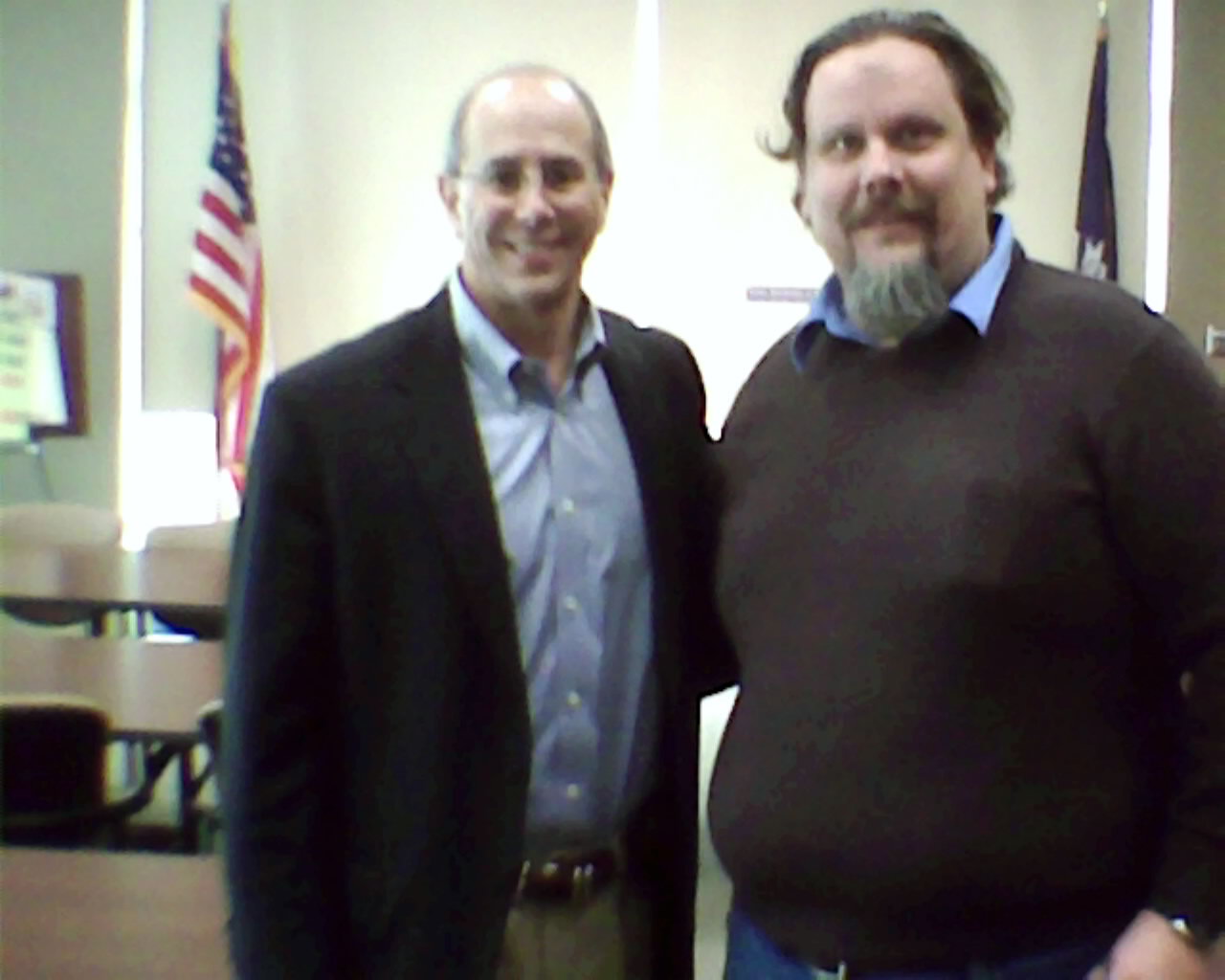
Dr. Boustany and I at a town hall meeting. This was several years ago.

Dr. Boustany and I at a town hall meeting. This was several years ago.

There is a recent ranking of Louisiana schools among the schools of the United States of America. It has been discussed in the Daily Advertiser and that discussion can be accessed here.  The survey ranks Louisiana schools at 47 out of perhaps 51 systems with the district of Columbia. Interestingly, the  Yahoo News did a ranking of fifty states about the same time and did that ranking on the broadest possible basis and ranked Louisiana of all fifty states and in that ranking Louisiana came out ranked fifth.

Window in St .Louis Cathedral showing the Crusader saint's body being borne back when he died after launching a great war against Islamists who were terrorizing local Christians and others.

Window in St .Louis Cathedral showing the Crusader saint’s body being borne back when he died after launching a great war against Islamists who were terrorizing local Christians and others.

The struggle of life in Louisiana is an easy one to simplify. The struggle includes an ongoing struggle as to where we stand in the country.  Louisiana has been amazingly dominant in the millions of pounds of seafood landed at saltwater ports. There are times when half of the top five or ten ports were Louisiana ports in that category. We have never done as well in ranking of the dollar values of catches landed. Although the seafood industry is still a big deal.

Louisiana has done an amazing job of leading in the production of offshore oil and gas at various times but has gotten little of that money into state coffers to invest in things like education. The federal government has taken most of that revenue from huge categories of mineral production and has sent back funds in other forms with less social benefit like transfer payments to needy in systems that foster permanent poverty.

The Gulf of Mexico's oil reserves remain vital to our country's future.

The Gulf of Mexico’s oil reserves remain vital to our country’s future.

Louisiana has a vast treasury of cultural resources but exists in a society committed in general to degrading and destroying those resources over time. Jean Lafitte National Park and CODOFIL notwithstanding there has been a constant war on the distinctive values and traditions and assets of the state. So one has to ask what people here are being educated towards and why and how.

This may be one of the many reasons why although Louisiana has above average military enlistment it ranks below some of its neighbors in the former Confederacy. The military establishment here is significant but certainly not the biggest Fort Polk came out of recent reductions pretty well but over the decades has lost ground to other bases like Fort Hood. So rankings are part of the overall struggle to make sense of our place in the world.


My cousin Severin was killed in battle in Afghanistan.

My cousin Severin was killed in battle in Afghanistan.

Not very many people read this neglected blog compared to its heyday. However many of those who do have not heard of the term Silicon Bayou. There is disagreement about all aspects of the term. However the truth is that the area from New Orleans to Houston including Baton Rouge and Lafayette most of all is a technology center for the nation many aspects of the industries and universities in the region are ranked well in the fields of technology and information science.  The future is being built and sought here and has been for a long time. The results are always going to be mixed for many reasons.  I myself once led a group of interested people around the world in developing a plan for colonizing the Moon and Mars. There are thousands of ventures that do not achieve major recognition that have some influence. But there are also large operations and institutions.

How a crater on the Moon or Mars might be developed.

How a crater on the Moon or Mars might be developed.

That brings us back to the idea of perception. Louisiana has a substantial tourism industry and a substantial film industry. Both of these industries labor to improve perceptions of the state in different ways. Nonetheless, there is little perception nationally or globally of how much this state faces challenges for the world and the nation and not caused primarily by the negligence or incompetence of this society itself.

Shrimp boats become skimmers

Shrimp boats become skimmers

In the face of all the challenges of Louisiana life in this time it is interesting to not that Lafayette has been ranked as one of the happiest or the happiest city in the United States of America.  This happiness is not indifferent to or disconnected from all of our modern struggles but is perhaps rooted in our older heritage. That is perhaps also a key to how we perceive ourselves.


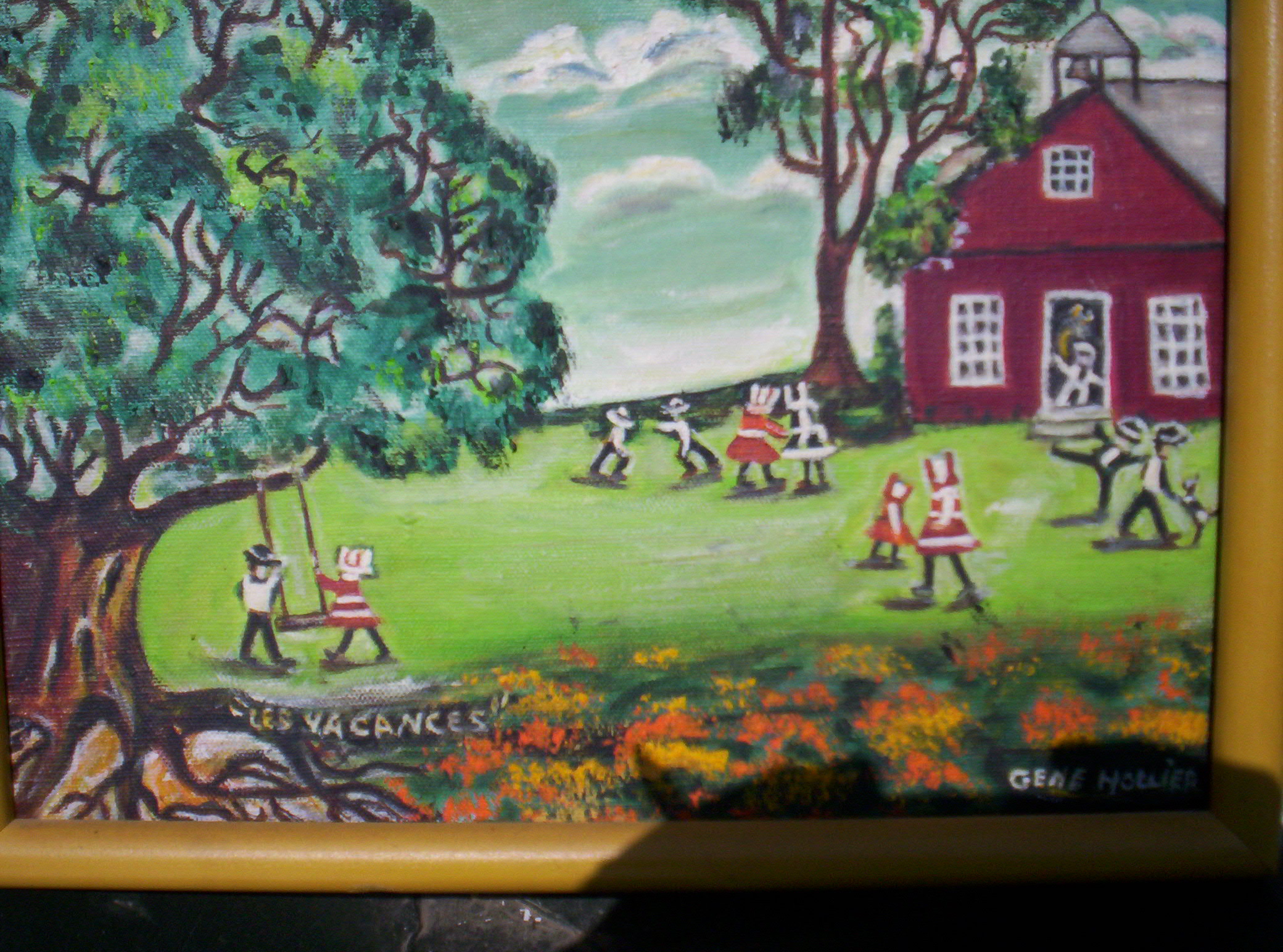
my great grandmother's painting

my great grandmother’s painting

As we all seek to find our way forward it is useful to remember who we are, to see who we wish to become and to try to help our young people realize dreams they and we both can value and affirm. The future after all is uncertain and we cannot be sure where everything will end up.

Congratulating Louisiana State Senator Fred Mills on reforming Marijuana law...

Congratulating Louisiana State Senator Fred Mills on reforming Marijuana law…


Dragons

This is a sequel in many ways and a companion piece in every way to the post titled “werewolves” which appears a few posts earlier. They both come from the same Facebook group. That group was founded by someone else but is now administered by me. Like all recycled posts so far there have been no substantive corrections or changes in the first version posted here.
First Original Post:
 
If one goes back to very ancient images of dragons such as the ones carved in jade in ancient china they were representations of what could easily have been currently existing creatures. Thus in a sense all crocodilians susch as crococodiles, alligators, kaimans and similar creatures are dragons and so were Kimodo Dragons, monitor lizards and iguanas. They were part of that process by which humans embraced their environment. These totem animals would connect societies of tribes and clans which came into contact with the world and some were used as familiars and domsesticated as pit guards in the ancient world. In this ancient human pre-literate world the body of knowledge of composite dragon lore was exchanged and espanded by retelling confusion and exaggerated dance and art. These dragon people would have been comparable to hawk people, wolf people, cat people and many other webs of clans and societies that bound people together and often determined whom one might marry.

Among the legends that was part of the world then was a bit of firebreathing because on the rearest occasions while dragon people were out gathering small cracodilians swamp gasses would ignite and they would find the young near the neast just after the unseen firebreathers had left. However, even with these rare miracles the medicine and magic of dragons was not very strong. For a long time they were second rate totems behind wolves, lions and hawks even in areas where they would later dominate.

Later dragons would become the most important totem for many peoples and one of earth’s most universal symbols. That change would come about in a major revolution of ideas that was one of the most significant changes of the prehistoric world. I will get to how that happened in the next post.

Second Post a few days later in the same group.

    It is sort of a matter of definition that all the things listed in the description of this group are hard for lots of people to believe that they sort of persist as beliefs people don’t believe in and yet we all know that this is more complicated. Dragons are in a category where the story that I am about to tell has not really been told much at all and yet it is likely to proven impossible in the minds of many people and it is very complicated. Unlike the werewolf stroy which is really kind of simple and pristine the dragon story is by its nature very confusing and complicated. The original phase grew and developed lore that included some fantastical and fictional pieces. Even in the first post above on this topic of dragons in one sentence I typed “rearest” kinstead of “rarest”, “cracodillians” instead of “crocodilians’ and ‘neast” instead of nest. Sometimes just such a small error could create hege misunderstandings in the ancient system of communication of the mythopoeic arts of ancient animal societies. The next phase in the Dragon story comes to be after werewolves had begun to emerge in dominance and had begun to drive vampirism into unimportance in many places. While this is not a discussion of Vampires per se its possible to say that many vampires were “snakepeople” they belonged to snake societies. They had high priests who had the art of milking poison from deadly snakes and using it to kill secretly. They emulated the qualities of the snake ass sneaky and deadly and they aspired to master the imortality of the snake who could survive sheeding its skin. They wished to persuade their vicims to accept death because of snake magic imortality and they wished to live many human lifespans which they did by shortening human lives by killing people and drinking their blood.These snake people were hunted and warred upon by the werewolves. In the very ancient world when an animal society was in trouble it would become a sub-society of a larger animal society. Had the werewolves been losing the war they would probably have become part of the bear society. What happened instead is that the snakepeople brought all their knowledge, magic and medicine into the dragon society. This made the dragon society much stronger and more powerful and it changed the way that the dragon people saw the world.But that is only a part of the change. Just as not all vampires had become snakepeople not all snake people became dragonpeople. But dragonism itself was about to be greatly changed. Dragons guarding great secret wealth in caves and rocky chasms which are very huge and breathe fire were about to become part of the lore forever. Fossils revealed by earthquakes and other events revealed the giant stone dragons of many ages earlier. These dinosaurs skeletons were powerful prroof that heir dragons were descendants of mighty gods who had the secret to real power over the world. In some of these same fossil pits the dragon societies found oil seeps and began to mine coal. The theme of imortailty was affirmed by these indestructible gods of the our totem which were dead but still breated fire.Using live small dragons at these holys sites and startin g fires with fosil fuels they used vampiric systems of deceit and murder to create places where people would sacrifice their neighbors and children to a combination of smalll dragons fossil fuels and a few stone dinosaur teeth. In this event cluster the dragons found power to dominate much of the ancient world. The learned to mine coal and gather oil, to lie to dceive and to klll many at once. Because the old morals of the dragon society were against many of these behaviors they developed the theme of light and dark magice which became common in other magical circles. The dark places where the stone gods were found was the place where death magic came from. The fierce but balanced outdoor world where the old (in terms of society lore) living dragon species existed was the source of life magic.

    The dragon people also saw a kind of IQ test in which they felt superior to people who made up absurd fictional animals from found dinosaur and pre-human fossils. They developed a crude kind of science for recognizing that dragons had once covered all the Earth in many forms.

    Their knack for elaborate theatricality made it possible for them to convince ancient peoples that villages destroyed by dragon pirates were destroyed by giant firebreathing dragons. These dragon societies were still very strong among the Vikings who raided and conquered much of the world in the Eleventh century AD. The societies never completely disappeared but became more secretive and less relevant in the last 1,000 years.