CHAPTER FIVE OF ONLINE MEMOIR: CONFESSIONAL CONSIDERATION

“What are you doing Baby?” Clara asked me as we sat together on the couch. “I am writing a memoir for blog.” She smiled indulgently, my writing is one part of my complex life.

I have filled out the online application for SSDI. I filled out the forms they sent me and attached a packet of about forty pages of documents. I have since then sent the Social Security people two more packages of amil and documents. I have napped more and spent more time with Clara, cooked more and been working on plants and other issues and assets in the yard. I donate plasma twice a week and we have been keeping a better Lent than usual with more time for religious devotions. It is however, a time when I am very busy trying to work through the process of praying to be declared disabled when I spent a lot of my life trying not to be disabled. Life has been a hard journey of missionary work, freelance writing, subbing, caregiving, microbusinesses and lawn work among other things. I am now back to wondering how to survive a very difficult situation and hope for a decent outcome. I still write and cut grass but that has changed as well as not teaching any more.

I have given the lawnmower and string trimmer that I sued for years to my youngest brother. I was unable to crank the motors anymore by pulling the cords on either one. I had already replaced the use of these devices with a motorless reel lawnmower and a a large set of scissor-like hedge clippers. I called him and said, “If you had a thousand guesses you would not guess why I am calling.” In the end I got around to offering him the lawnmower and string trimmer and he accepted it. “Thanks for the gift, Brother.” He said as he drove off with the equipment.

Is it useful to know what experiences other human beings have had outside the public eye? Is it useful to understand the private moments of others which have formed them but cannot be clearly shown to have impacted history or the common stream of ideas and actions that people share in our society today? 

If it is not useful then that is one more good reason not to keep reading this D- memoir. It is better to read only the A level autobiographies about famous people doing famous things. This D- memoir will make much of my private memories and experiences. Those experiences go back to my early childhood and connect tot the present day in which this book is being written.

On March 6, 2024, Clara and I joined a good number of other parishioners for the third session of a four session School of Prayer at St. Mary Magdalen Catholic Church in the little chapel. The first session focused on the teachings on mental prayer and the prayer practices of Saint Ignatius of Loyola. The second session last week focused on the teaching o prayer and prayer practices of Saint Bruno. The session on March 6 focused on the teaching on prayer and prayer practices of Saint Theresa of Avila – the Doctor of Prayer among the Saints who are titled Doctors of the Church. I am not trying to write this memoir exclusively to Catholics or even exclusively to those who believe in God or practice a defined spiritual path. But I am a Catholic Christian myself and this book is about me.  So, I want to discuss one thing that distinguishes spirituality in a way that connects to the rest of this chapter. That connection is the secret element of spiritual life.    I would imagine that those who have driven a good bit on the highways of the United States over the last few decades have at least once seen a bumper sticker that says, “I do what the voices in my head tell me to do.” There are a few variants of this. That and “the flying spaghetti monster” cultic groups simply want to make it clear that religious quests are fundamentally silly. The idea (as old as Aristotle) That all knowledge enters the mind through the senses is behind most of materialist positivist thinking that defines so much of the world of  planning, funding and regulating science, engineering and even the thinking elites that typify our times. But no all of science is on the side of the belief that there is no secret world, Jung’s collective unconscious, Plato’s archetypes and the inner life of CHristianity and other religions may relate to brain biology that developed in evolution in various ways but may operate for each of us as a link to a kind of inborn system of knowing that is not public and shared. Likewise the astrophysicists who recognize that dark matter and dark energy pint to a flaw in our thinking and suggest a holographic and information system related universe may very well be on th way to showing a proof of an underlying reality that people and perhaps other non human beings may access that is real and impactful on the world we perceive with our senses but is not the same as that world. That is the subject of ordinary physical examination. This is a complicated subject and will not be much dealt with here. I am writing a chapter about secrets but things less  secret than the inner life itself. But it bears reminding that I follow the faith founded by Jesus who taught: “ But when you pray, go into your room and shut the door and pray to your Father who is in secret. And your Father who sees in secret will reward you.”Matthew 6:6 (English Standard Version).

On March 5, 2024, my wife Clara and I went to the funeral of a 34-year-old woman named Morgan “Maggie” Mckethan. She was a producer for a show on Fox 26 in Houston, Texas. She was a producer on a daily news show called the Factor Uncensored. That show paid a tribute to her passing. However, we did not go for that reason we don’t get Houston’s Fox 26. My wife Clara was in the same suite with Maggie’s aunt Margaret at the now defunct Saint Mary’s Dominican College in New Orleans. Margaret’s mother married Lydia’s father and they grew up as sisters. Margaret sent us      Her mother Lydia who remarried after Maggie, her only daughter was born.  She grew up devoted to both her mother and the man she grew up calling Papa. We had invited Margaret to our wedding, Clara had been a reader at Margaret’s wedding mass. SHe sent a lovely gift but could not make it to Louisiana from Switzerland, where she works for a pharmaceutical firm. The funeral at St. Mary Mother of the Church Catholic Church and the reception at the Petroleum Club were each poignant, beautiful and sad. These events were well attended and after the rosary and before the Mass the deceased’s godparents delivered the eulogy. In the heartfelt delivery they made the point that some people gathered for the funeral knew her family but not her friends or work while others knew her friends but not family or work and still others knew her from work but not her friends or family. A memoir is supposed to enjoy the vantage point of the person whose life is described. Reading a biography may cover some things but an autobiography ought at least to be informed by all the major influences and connections in the subject’s life.  I am aspiring to do that in my D- memoir.  I hope that I give the reader a chance to really understand all the parts of me that might illuminate the human condition, have some significance in the sweep of history or even be legitimately entertaining. 

My readers will readily recognize that so far there has not been much in terms of personal revelations in this memoir. When I settle into the part of the memoir that travels across events in a series from birth to the present then I will surely come across some memories that are relatively revealing but I have decided to discuss the whole concept of revelations and confessional literature first. This weekend as I wait to see the outcome of my Social Security Disability Income application I am typing a draft of this chapter after coming back from mass at my home Church of Saint Mary Magdalen in Abbeville, Louisiana. The Deacon who preached the sermon which mostly focused on a fairly typical Examination of Conscience used before the Sacrament of Confession or Penance and the Rites of Reconciliation. The deacon tied the gospel reading telling the story of Jesus’s overturning the money changers tables and trying to cleanse the temple, he focused on the way that our sins can be like money changers in the Temple of our soul, preventing us from drawing close to God.

I also have been looking over the first-mailed-to-my-home-Weekend-Edition of the Abbeville Meridional. That is the newspaper where I held a number of roles over decades. In the life of a newspaper and even a low level newspaperman there are secrets that one remembers among everything else that has to be dealt with in the stream of those memories that flows through one’s mind as one looks back over the years. The church in which the deacon was preaching has a pulpit right up and to the left from the congregation’s left and the the celebrant’s right from the sacramental altar. On both sides of the transept of the cruciform church building are large sound proof confessionals. Catholic Christianity is, in part, about the idea that Christians fall short of the call of God and the promises of Baptism and there is a Sacrament to save them (us) from their sins and the inner spiritual consequences of that falling short. There is a lot of scripture supporting this theology and some that can be quoted to dispute this understanding but the point here is that this is the milieu in which I live.

However, nobody much believes that one receives absolution for writing a few confessional passages in a memoir. We have all read those passages if we have read a lot of memoirs but they are written for other reasons. I am not really writing this story to convince people to come to Jesus and be saved, although I think that would be great if it happened. I also am not trying to sell a few more stories to newspapers or even to deal with my grief over the decline of print journalism in America. So, if I get to self revelation it has to be for reasons that are more or less unrelated to the great themes of the power of journalistic sunlight or Christian confession. I will have little revelations sprinkled across the remainder of the book, but this chapter is devoted to the subject of such revelations.

I have only been married to Clara since the 19th of November of in 2022 and I am writing this chapter draft in early March of 2024. We only met again on April 10th of 2021 after not seeing each other for 45 years. It seems like there is some risk in a book that will treat openly and  honestly in the retelling of old love affairs, some of which lasted longer than our love affair has so far. Yet Clara and I have a relationship built on a lot of honesty and I am not sure we are very vulnerable to such revelations. In addition, Clara and I did not meet in 2022, we met again. Our first getting to know each other happened in 1970. We continued to get to know each other in school until  about 1977. The chapters in this book are thematic and this deals with the theme of secrets but it does focus on the first period of my life  – from conception, life in utero and birth through the time when I was nine years old and my parents had a profound religious conversion and we became a family of Catholic lay missionaries (starting off in the  Polynesian Kingdom of the    Tonga Islands of the South Pacific) those years were years in which my bride and I got to know each other. One of the reasons that we made it through early courtship and got  together was our mutual knowledge of the childhood secrets of those years.

I will be talking about the secrets of sexual activity but I want to be clear that I had no sexual life of erotic practice and expression in my early childhood. If I was sexually abused I don’t remember it although other people were whom I knew. I choose to take the risk to discuss sex because not doing so makes the rest of my life a lie on paper or screen. But I do not pretend this is a tell all. It is a tell most.   I also wonder if the fact that I could disclose some of the facts about my journey through life  could impact the things I will have to do to get a decent award for disability. I don’t think it should matter, but I don’t tend to think that most things work out the way that they should. So any kind of expression carries some risk that may be the easiest way to explain my destruction, if and when I am destroyed. Self revelation is always a risk.  . 

In the previous chapters, I have discussed a great deal the context of a life. I suppose it makes sense for me to not write about much of anything. But if I am to attempt to tell the tale of my life then it makes sense to me to do a good deal of contextualizing. But if I am to write a meaningful memoir or autobiography  then it has to lift the veil to some life which is beyond a rearrangement of the public record and the entries one would find in my curriculum vitae and my genealogy.

On the other hand any juicy secrets generally involve one  of the following activities:

  1. They may well involve violating the confidences and exposing damaging secrets of others who are either innocent or perhaps less than innocent but for whom one has a fiduciary or other responsibility to protect their secrets.
  2. The secret may well expose one to criminal liability and possibly result in one’s prosecution.’
  3. The secrets may also expose oneself or others to civil liability.
  4. The secrets may simply be very far out of sync with one’s general character and reputation so that one’s standing in any number of associations and communities.
  5. The secrets may well expose dangerous criminals or corrupt office holders who have the resources to punish those who expose them.
  6. The secrets may hurt the feeling and damage the reputation of former or current lovers, spouses and confidants.
  7. The secrets may be so disturbing or controversial that they simply coerce society to respond with its reflexes of ridicule and other forces up to and including psychiatric commitment.

There may be secrets in all of these categories. The practice of twisting a fact here or changing a name there may limit some of the damage and yet there will surely be a risk of doing some harm. That is more relevant in a D- memoir where there is very little chance of doing any good. Yet I feel some sense of obligation to record my perceptions of the world and that means recording the perceiving of it that makes up my life. I have a great number of secrets crowding in behind my eyes and trembling along the halls of memory just waiting to be released by the rhythmic tapping on a keyboard. I have decided that dealing with the story of my life which is true to its dates and places does not mean exactly following a timeline. I did not grow up in the sheltering folds of a childhood consumed by childish pursuits and a set of overprotective parents. I remember feeling out of place in school more often than not, failing to achieve success and recognition in team sports and also being around marijuana, drunk driving, stolen goods, sexually illicit behavior, drunk people with guns  and many other aspects of a world that seemed at odds with the environment that one seemed to be supposed to associate with childhood. 

I would divide the secrets in my memory into five categories. Each of the five categories has something to do with the truth of my life and perceptions  – whatever that may be about and why ever it may matter.

The first category is related to all things regarding my own sexual, romantic and relational history.  That matters because the sexual journey is very significant in any life, no matter what the sex or the life are like.

The second category is related to the criminal activities of people that I have known and cared about in my life. That has meaning because I am not at all sure what my life would have been like without it surrounding me and shaping my development at countless points.

The third category is made up of organizational secrets to which I have become privy over the course of my life.The most important of these are related to Acadian ethnic institutions and to a particular circle of people once drawn together by a unique trauma.

The fourth category is about things I have done at great risk to achieve certain goals that were worthwhile but, which could still possibly hurt me if I revealed them now. So I am  possibly going to be driven to write something which will take away whatever I gained at great risk and great cost. It is odd that they may happen, yet it might work out that way.

The fifth and final category could be divided into lots of subcategories. I suppose that is true of the other categories too. But this final category is made up of memories that I cannot fully vouch for or entirely process myself – memories that might be dreams, fantasies and hallucinations or the impact of such things on repressed secrets. 

I don’t have any way to explain how it feels to be looking back on life this way and to see some of the darkside and some of the bright  – but so much that seems relatively void. Yet also so much that was rich and beautiful and good in countless ways. My life was lived with a sense of focus and presence at the very least, I did gamble on some unlikely outcomes and I did some plodding along as well. But there is also the real possibility that my life is deeply impacted by delusions and dealing with these is part of any true story that I could tell.  ..  

When I think about secrets  and confessional stories I am drawn to a few moments in my life. All secrets do have a way of eating at the people who keep them in different ways. That is perhaps even more true if someone is a storyteller and a communicator who has done enough of it to get paid and to do it for thousands at various times. I suppose that for me the walls of secrets divide people in all sorts of ways. They become the walls and fences and levees.that outline the boundaries and territorial claims of various human communities.

Priests consider the seal of the confessional to be their most sacred defining obligation. Lawyers take an oath to keep their clients secrets. Freemasons and Knights of Columbus are among the groups joined by values, activities, organizational structures and a PROMISE OF SECRECY taken by every member. I think that among my most significant experiences with secrets were those kept by others for many years. Whatever the reason, my mother gave her first child up for adoption. I was an only child for over a decade and then I became the older brother to three sisters and three brothers. In all those years I never got any indication that there was another brother. I fully cemented my identity in the role of an eldest brother and had a wedding featuring my childlike younger siblings playing up in their roles in the wedding. Then while I was at LSU in  graduate school, my mother reconnected with her son whom she thought of by the name she had given him – but whom we would know as he was legally named as Paul Nicholas Jordan.  He was part of our lives after that in complicated ways, the relationship between he and I was as complicated as any relationship could be, but I felt some comfort and positivity in being able to comfort him when he came to stay with us as he was dying of AIDS in the years following my divorce from my first wife Michelle after I returned from teaching in China and recovering from the injuries I received during Hurricane Rita. It was an episode that lasted for over a decade but our connection was always shaped by the fact that he was a person that I had been connected to whose existence was hidden by the secret of a closed adoption. My mother had gone off to a home for unwed mothers to give birth to a child she had never expected to see again.

I have some other secrets too. I have some that would perhaps prove the adage that Hell hat no fury like a woman scorned. But I rarely felt that I had scorned a woman when I did not have sex with her after a hard pass. I am someone with a great deal of trouble trusting anyone and the number of possible paths that have for me to end up having sex with a woman. Not that there were other paths for me to havesex with men or children. Sex was always problematic for me and having women rub their breasts on my heads, show me their vaginas or directly ask me to have sex was not always enough to make me feel sure even if it was not about a moral issue at the time, I was attracted to them and I was feeling lusty. Perhaps my anxieties that have impacted my work life were pretty much the same forces inside of me that have limited my sex life. I have often craved sex without a loving, fairly committed relationship. I am not saying that  I never valued chastity. I lost my virginity  pretty late and while I was at times fully eager to lose it to some particular girl and at other times pretty eager to lose it to anyone – I also was willing to consider a perpetually celibate life without any sexual activity at all and also was willing to consider the possibility that abstinence would deepen a spiritual walk that was very important to me. Beyond that, I never behaved like my main priority was to wait for marriage but intellectually  I remained committed to the idea that I would lose my virginity on my wedding night. That is not at all how things worked out. The first time that my first wife and I had sexual coitus, we had spent a lot of time involved in heavy petting, II gave her a promise ring and a dozen roses and reserved a special venue, one that was very private and that could not be observed. We had sex and both claimed it was the first time for us. IN her case I don’t know all the details of the previous times but for me it had been years and there had been only a few times in my life  – each in very different and extraordinary circumstances. We were to be married about a year later, we never lived together but were sharing a bed more nights than not. I actually always felt out of sync with the generally sexually permissive ideology of society around me and with the Christian ideology of chastity in many of the associations and communities in which I moved as a teenager and young adult. Sometimes, in literature and history I found sexual norms and mores that were more in harmony with my own inner sensibilities..   

So, as for most people, sex was pretty complicated when I was young. I am happy to own up    to actually spending many years seeking to find some kind of sexual purity along the lines of the Christian ideal. But, more often than not, in the many years that I was alone and needing sexual companionship and not trying to moralize too much I was almost never able to handle the advances of a woman just honestly looking for sex who was not already someone I was seeing romantically. So although I am not super attractive I have quite a few memories of awkwardly fumbled  moments with women who thought I was flirting with them because I was and who just could not know the depths of my trust issues and made me nervous. I am happily married now and will keep my sexual relations with my wife between us, but sex has remained somewhat complicated all my life so far. 

I have read enough biographies, memoirs and personal letters to know that sex is the great school of secrecy for many people. I was no exception, though I am far from having lived a life with an extremely notorious number of relationships, much less a vast number of secret ones. But there were some secret and private and mysterious moments in every relationship that I ever had. But while sex may have been the school of secrecy it was not the only place in my life where secrets would  come to play a part in defining who I was.

While there are child stars such as Shirley Temple, Drew Barrymore and Jodie Foster who remained well known as adults and were well known as children they are unusual. Most children are not well known in the world and if they are well known as children people do not necessarily remain well known as adults. Prince William of Wales and his family are among the great exceptions. In the Gospels, Jesus is given a genealogy and a historical context as well as angels and miracles and an exile from conception to somewhere in early childhood. Then in the boyhood phase of what is now known as the preteen years Jesus taught in the Temple. Then he has a ministry as a very much grown-up man and will return to teach and preach in the same temple.  There is something fitting in the idea that our childhood is our secret history, a well of information not available to everyone as we venture out to make our way in the world. But I think that in a modern memoir – even a D- memoir – the reader ought at least to see behind the curtain to much of the backstage. Of course because I am not really very well known this secret part of my life is not much less well known than the public part.   But the principles that divide my secrets from my public persona have some application to all human beings. 

One part of this secret life was the life of childhood. A childhood tradition that  was a big part of American culture when I was a child that boys in neighborhoods and suburbs and sometimes on farms.had clubhouses where outsiders and girls were not allowed. These might be in a treehouse or an old shed or perhaps an abandoned building or a hole in a hedge. Girls with some resources often had playhouses and invited their friends over for tea parties and  if they had a bit more resources they  had nice tea sets. AMong their resources they might have special toys and dolls and sometimes to use easy bake ovens and cook with the heat of an ordinary incandescent light bulb using special baking supplies and an insulated oven that got hot enough. I had a horse, real guns and ammunition and dogs and my family had a farm, mostly let out to tenant farmers but with some hunting camps and duck blinds and corrals left for family use. It was mostly on the farm that I found my secrets. It was there that I caught fish, caught frogs and sometimes worms and crickets to make bait when I ran out of the cheaper frozen bait shrimp made from lower quality shrimp from the nearby seafood packing houses as they sorted the abundant catch brought in by Louisiana’s shrimping fleet. Small fish also made bait and sometimes live small crawfish. The drive for bait was such a well known phenomenon among boys my age in my circles that there was a lot of passing around of a story of a group of boy scouts that had tried to use small venomous snakes for bait and had died of snake bite. We could almost all remember having the fish biting and feeling a desperate feeling about not having any more bait and being unable to drive to the bait stores and country stores where we could get more. I found the story especially meaningful because on the Fourth of July, while watching the Independence Day fireworks at the Abbeville Country Club I had jumped out of a tree and been bitten by a snake and with tourniquets and my dad and uncle cutting my bites and sucking the blood and venom out and spitting it out while the other cleared the huge parking jam I had gotten to the hospital and gotten anti venom. But my leg became hugely swollen.  I was very sick  and unable to walk for a while. There would be permanent damage to the function of my foot which never went away and would mask the onset of gout in decades still distant in time. But, although I built a clubhouse or two. I did not have the secret of exclusion and secret organizations as the main secrets of my childhood. There were the secrets of the best fishing spots and rabbit runs and places to catch bait. We rarely used artificial lures and everything was very centered around killing and eating with the extra level of killing for the fish to eat. They always got away with some of the bait on strikes we didn’t land. I fished and hunted with my Dad a lot and with some cousins and rarely with an uncle – But I hunted, fished and trained dogs largely alone. I had no siblings till I was twelve and no first cousins my age and I was a loner in many ways.  I found the world a scary and dangerous place and before being old enough to go to the freedoms of the lands and waters of the farms on my own, I remember hours in my very early childhood hiding under beds or in large closets in the large houses of my grandparents and playing with little simple toys I made myself, reading or drawing. I would venture out and sometimes be the center of attention and called a chatterbox by some, but then I would retreat for hours to the loneliest places I could find. Unlike sexual secrets or the clubhouses of some of my peers,  this was a secret world not protected by lies, subterfuge or  exclusivity. It was a secret world of real places and later real hunting and fishing secret – sometimes friends from school or cousins were happy to benefit from the real knowledge I had gained about hunting and fishing spots. Sometimes adults were proud of the catches and kills that I learned early to clean and dress on my own. Those were rare and happy times of camaraderie. I was not a well liked kid and generally did not have a lot of friends at school or anywhere else. I was a decent horseman and a little bit of a cowboy but not a prodigy and since all of these early years ended when my family went into the mission when I was nine years old I would have had to be truly extraordinary be able to be anything other than a very low level hand at eight or nine on cattle drives and roundups. Abusive and bad behavior was common among adults I knew as was generosity, providing for children and protectiveness. Nature, with guns, boats, horses, dogs, and fishing gear seemed safe and the alligators, snakes, wild dogs, coyotes and fast trucks on the roads seemed like challenges I could face more safely then most rooms full of people. When I wasn’t  outside I was mostly unhappy. I did very badly at Biddy Basketball camp, but did acquire some basic skills. My mother hired a young man to be my friend  (not babysitter) over one school break and he swam with me at my grandparents pool and we played horseshoes – both of which I knew how to do fairly well.But I was also exhausting him in that I knew he was hired and working and would put up with me. We threw and caught footballs over and over again until I moved from hopeless to inferior performance and the same with catching, pitching, throwing and hitting baseballs. I was a very slow runner – I often finished last or second to last in races run by all.the boys in the classes I was in and  sometimes I ended deep in the pack of girls when most girls wouldn’t race hard against boys.   Most of my childhood secrets that were like the fishing spots and rabbit holes I spotted have no application as secrets now.  Mostly my secrets of childhood are really the things I experienced that very few people were aware of at the time and almost everyone.has forgotten since they happened. Of that kind of childhood secret I have a vast supply as would most people.I would like to hit a few of the high lights and lowlights. But before I do that, I want to set up a very  basic understanding of the periods that define my life. I see the major periods as being:

  1. My early childhood from birth in and the years before we went into mission as a family when I was nine. – nine years to 1973.
  2. My years as a missionary kid and young missionary   Until I started studying at the University in 1983 – – ten years.
  3. My undergraduate years including time not in school till 1989. 6 years
  4. An overlapping period of my first marriage – from 1987 to 1995 –  8 years.
  5. The years from 1995 till I went to China in 2004- nine years.
  6. The years from when I went to China until I moved into my grandparents house in 2016 –12 years.
  7. The years from when I moved into my grandparents house till I met Clara again in 2021- 5 years.
  8. The years from when I met Clara to the time when I filed for disability and started writing this memoir. That was about three years.

Each of the eight periods that I have lived is capable of forming many periods of time as well. But I am very certain that these periods define the structure of my life. I am very much committed to sharing a few lesser known illustrations and events from each of these stages

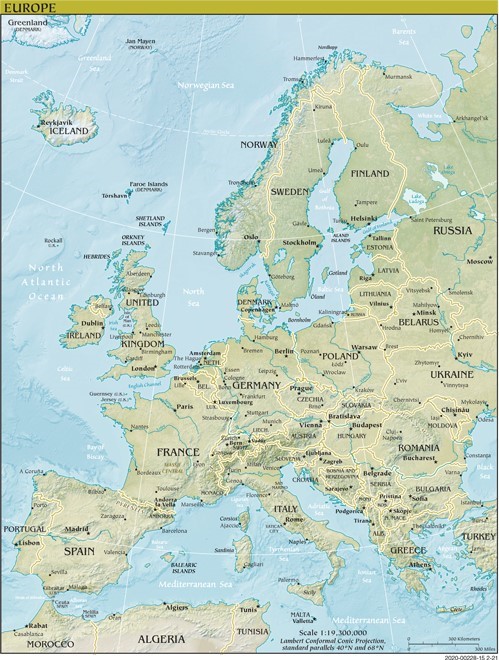
One notices that I divide my childhood at the age of nine. There were certainly real transformations and disruptions at nine, first when my parents “turned to the Lord” and then when we moved to Nukualofa, Tonga.I had to give up time on the farm I loved for a long time. But I had given up time on the farm when we lived in London and toured Britain and Europe while I was four and Dad was studying at the University of London. He was pursuing further studies in law that he had begun at Tulane University in New Orleans. I had lived there as well in the cottage behind my grandparents home at 1812 Palmer Avenue. I was a precocious kid in New Orleans, then attended a nursery school in Abbeville, then I was  a kindergarten student in London. My mind was full of different cultures, museums, the Vatican, the Parthenon,the British changing of the guard and the sites and sounders of crossing the Atlantic on the great ocean liners. The QE2 and the Le France when I got back. We were not wealthy on a students’ living but we had a car when most people did not in Europe and we came back to Abbeville.In telling the stories of my travels I tended to emphasize the great sites and grand occasions and not the fact that we  used a travel guide called Europe on Five Dollars a Day. That is $42 a day  today and is still a very small number. We were not traveling like royalty most of the time. I had some nice tokens of our travels and I liked to show them off, but we had lived simply most of the time. I came back from Europe with delusions of grandeur to some degree. Pops, my maternals grandfather had made little books of cutouts and pictures and a few words and sent them to me in the mail. WHen I got back I was sure he really loved his oldest grandson, there was that and my aunt with Spina Bifida whom they cared for devotedly and the shrine to saint Jude.There was the pool and horseshoes and barbecue pits and there were many charities and businesses that gave poor people a chance in an unjust world. Their house had secret passages and chutes and trapdoors to the outside hidden in closets. It could be a wonderland when we stayed there as we did when we returned from England with their youngest living son who had gone. The other side was that there was a great deal of alcohol. Lots of guns and plenty of criminal activity that I choose not to reveal among the secrets of this book. But this was another place that contributed to my sense of being part of a secret world and knowing other things that people would not know about me and would not guess.     

 There I began first grade with Clara and my other classmates. I always liked Clara. I have almost no unpleasant memories of her but overall my time at Mount Carmel Elementary School would be difficult in the years before my parents’ conversion and much worse afterwards. Clara would always have the memories of my troubled childhood and few memories of my activities and life outside of school. 

I was late to school almost every day and by the time I rode the bus  once in a while in the morning, I was already established as the alienated kid who started every day late checking in with the principal’s office and bringing a late slip and trying to catch up with class. My paternal grandfather was a justice on the Louisiana Supreme Court, they had thousands of acres of land and tenant farmers and ranchers who were deferential I had lived in EUrope before first grade where society was more stratified. My paternal grandmother had come into some of their land in a family line from a Spanish Royal land grant. I was sometimes insufferable as an an American who basically indicated that he considered himself an aristocrat in a small community school that did not formally distinguish such things and had other students whose parents at least were more affluent and more fashionable anyway. My parents also did not pray or got to church and although that was not unique there was generally a life of faith shared at school. In addition to all of these differences I had experienced my first infatuation and first kiss in London. And when her family came to visit us that year we were still infatuated with each other – it was bizarre, Further I had been little King of Mardi Gras at two Mardi Gras balls and ridden in a parade. At a Catholic school in Louisiana I could boast having seen the Pope in person. Two days after Clara’s birthday we celebrated the worlds first Earth Day and although several kids in my class knew how to serve at the altar I was invited to assist the priest on television as he blessed the Vermilion RIver. When one combines all these factors with being a hote -tempered inferior athlete who often had the messiest desk and cubby in his class, I was an easy kid not to like. I was among the best students in the class. After that year I wa smitten by the copperhead on the fourth of July and became slower and more impaired as a runner and never made it up.

The second grade year in New York followed Mom and Dad and I traveling up across the country in a generous meander staying at national and state parks. We fished, built fires took park tours, hiked and watched abear raid a neighbors supplies. We slept most nights in a tent. It was a wonderful time. In London and Europe we had my mother’s brother Jed with us. Uncle Jed andI had sometimes shared a bed but he went to boarding school in England. In those days we had bonded somewhat but the time alone with my parents in the wonders of nature was amazing.  

Mom furnished our apartment with the vintage discount castoffs of the rich and fashionable. I went to St. HIlda and St. Hugh School of the Angican Episcopalian Holy Ghost sister. I published a poem in the school circular. I l also had a year of experience that had a black African classmate whose parents were also only in New York for a time. as a best friend at school and a very diverse set of friends in our block association part. I got beaten about the head and shoulders with an umbrella when I rang the wrong doorbell next door to go to art class. As in the case a t Mount Carmel I was drawn to the prayers, Christian Scriptures, stories about Jesusother aspects of chapel and religious life at school. 

My Dad studied at Columbia and Mom  brought me to museums, enrichment events, concerts and plays. I had really lived the culture of New York at a variety of levels when I got back to Abbeville and was with Clara and others in third grade. Third grade was a better year than first and some of the kids came to my swimming parties at my mother’s family pools and a few boys joined me on the farm to hunt and fish. But I was absent a lot with both health and family. I began to get in trouble and bond with some of the wealthier boys who rebelled in the neighborhood we lived in. Armed with slingshots and BB and pellet guns, we vandalized stole and caused trouble and thought we were a gang. The oldest boys were old enough to get in real trouble. How often we really did criminal things I am not sure but we did  them and spoke about them When I was not on the farm I had  more  excuses for doing countercultural and antisocial things than I had before. When I visited my grandparents my aunts, uncles and older cousins amused themselves by letting me drink and smoke.   I was late to school almost every day, I was messy and I was aware of problems in my parent marriage in a world where divorce was still fairly raire and frowned upon  In fourth and fifth grade I began to get occasional grades that were not perfect and found I needed help with some things and had nobody to go to in order to get it. I still mostly had good grades and had a role in a play that was not very successful. I started to get in fights but I was out at the farm more. And was better at those skills. I was starting to ride the bus to my  great grandmother’s  house after school. My mother would pick me up after work and beside doing homework and watching her paintI found my first business. Peoplebegan to pay for glass Coke and other soda bottles returned for recycling. Although eventually the refunds were limited to bottles with a deposit mark it was not that way at first. At first any clean bootle would do. I scoured the area around my great grandmothers’ house and found hundred of bottles in ditches, culverts, bushes and small dumps that abounded. I cleaned them and returned them. I was suddenly not begging my parents for a bigger allowance but  rather I was actually  making enough money to buy frozen drinks and comic books every day from the store that paid me and also keep a little of my pay in saving for bigger things. This was a wonderful feeling, digging through filth and running my Momee’s unmetered hose to clean bottles and then hauling them to the nearby store. I felt the joy of income that was my own and I would always want it from then on whether I had it or not. 

The fifth grade year Mom and Dad fought and drank enough to get known for it. Yelling at parties etc. Mom took me to visit my divorced godmother and her sons in Houston. She was practicing for divorce. When we got back, Dad had experienced a religious conversion  and soon she did too. At first I was confused and skeptical. They went off for a second honeymoon and made a lot of progress in Faith, Hope and Love while I stayed with my Dad’s parents . They came back and we went to church regularly, attended the Catholic CHarismatic Payer Group in town, began to serve the poor in Christian outreaches. The big shock came when they heard the call to take literally the gospel;’s injunction to “Sell all you have and give alms to the poor.” The house and most of my possessions were sold and the proceeds put in a loaves and fishes account for charity. We moved to a camp on the farm while they decided what to deo nest. I was included in these decisions and prayers. I mostly hunted and fished when I was not in school.

It was not long before the prospect of going to Tonga as missionaries with the MArists would emerge. In the travels as a missionary much of my story up till the point of our lives as missionaries would not fit with the new context of  life  as we were trying to live it. I said goodby to my classmates with the religious fervor of a child believing he would go into the missions and maybe never come back. However, I would be with them again. I liked Clara and some others but we were not close. I was increasingly alienated and troubled. I believed that my faith in Jesus Christ would guide me to a better life by the time we left, and I wore a cross around my neck like my parents. 

          .    ,.

It did not turn out that my life was going to be all religious zeal and fervor. AsS it turned out my life would have many twists and turns and there would be times when I would be closer to the not quite pretend gangster of my last years before the missionary years. I would connect with some of the same people.   I have secrets borne of the life I have lived in and around the underworld. I will give an example of what I mean. It is not the most exciting or dangerous or anything. I remember driving a sports car to California in  a caravan of cars with someone I thought was a little shifty. I remember being very careful to see that  the car was legitimately registered and all of that. I took so much up front and got a bus ticket back from LA in advance. However, it turned out that two of the older vehicles were an SUV and an old pick up truck. We crossed the border into Mexico and the VIN numbers were rubbed off the vehicles and the plates were changed on the two old vehicles. There was a market for old American vehicles and I don;t think that hey were stolen. I am pretty sure no drugs were involved but we are hiding something from someone and I was nervous as I drove from New Mexico to California with one of the drivers in my custodial car.  I made some money and it didn’t come back on me. The years that I spent driving around there were plenty of times that I gave rides to people who were illegal immigrants or were carrying some kind of illegal substance. That is not the  basis of an exciting crime story but it is an indication of what my life could be like when I wasn’t working, teaching or reading. It was part of the story that made me who I am.  I had secrets when I drove criminals back and forth between jail and halfway houses for their jobs. I had secret when I was involved in ministry in a conflict zone in the Philippines and ran into the CIA officers there and had to figure out what that meant. 

But among the secrets of my life was always a sense that there was a world behind the curtain of the known and obvious events and facts of life. In this story I may get to tell the story of some of those secrets. Now that I am filing for disability, I am less concerned about people thinking I might be schizophrenic or delusional. Whether I am or not, some of the experiences of my life go very much beyond the range of what most people would be willing to believe. In time it may be more than potential readers can tolerate – but all people have secrets.
Chapter Four of Online Memoir: A retrospective on Teaching and Learning

“How long have you been teaching?’ a student asked me at my last job. He didn’t know that I had dealt with the same question at many other jobs over the decades. There had been times when I took a job at the lowest rate possible for the position by filling in “zero years of comparable experience” when I could just as easily have put in ten years or eight and the answers would perhaps have been more truthful. But I had many problems with records and certifications and other things — in the sense that records were messed up or misplaced in ways that were hard to believe. But even if I had not had such bad luck my path was a very complicated one and not easy to record on a form. ” I first got paid to teach when I was fifteen and I am now fifty-nine. I can fill you in on some of the details, but last year I taught at New Iberia Senior High School and earlier this year I was at a Catholic school in Lafayette.”

i cannot teach for a living any more. But I want to tell my life story even if it perhaps closer to the end of my life journey than I hoped it might be. The future if I get the Social Security Disability award may involve me living a better life for a longer period of time. But overall my life is about wrapping up and making the most of the closing scenes one way or another. l hope that it will be with the dignity that the SSDI award would provide for Clara and I. If I don’t get the award then spiraling into ruin is going to happen pretty soon and that is an outcome that I have known before.

This is a retrospective on teaching and learning before collecting on hoped for disability income award and simply try to live out the remaining years as a decent human being with a little dignity and comfort is what this chapter is about.

As I discussed in the opening chapter of this version of my life’s story, my expectations of this book are very low. I stated  this memoir can only be a D minus or below memoir on the traditional American grade scale of A+,. A, A-, B+, B, B-, C+, C, C-, D+, D, D- and F. That is probably overly ambitious. More likely, any objective measure would rate it a total and complete failure. Both as a student and a teacher I have gotten and given grades that were above average. Mostly the grades I earned were very good. But there were some telling and key periods of underperformance. In addition, I rarely felt that I was on track to securing a life in the path of merit and effort by which I secured almost all of my good grades. It is not hard for me to accept that my story would have almost no interest to anyone and if it does get read by anyone actually reading as a reader of a literary text, it will not monetize in my favor. That sense of futility is not new to me. I am accustomed to the sense of deep futility. It has been a big part of my life for as long as I can remember. The occasion for writing and posting this particular version of my life story is that I am applying for Social Security DIsability Income. That in itself is an admission of a kind of deep futility in my life. The application itself may be futile. 

I have recently been a long-term contract substitute teacher at Erath High School until a very severe set of spasms related to another incident motivated me to file this application. Before that I was an as needed (and mostly very short term) substitute teacher in a kind of hybrid position that I had held off and on since the year 2000 with the Vermilion Parish School Board. In August of last year I started as a Social Studies Teacher at Holy Family Catholic School in Lafayette and before Christmas break rolled around there was an incident that showed me many weaknesses in the society we live in but also weaknesses in my own ability to see, hear, track and perceive what is going on in a classroom with more than a few special challenges. In the previous year, I successfully completed a year of teaching at New Iberia Senior High as a World Geography  teacher for High school freshmen or 9th graders.  I had a satisfactory professional assessment although I was treated for severe vertigo, gout, sleep apnea, COVID, gastro-intestinal disorders, anxiety, impaired vision and ear canal problems that school year. Overall, the year (one in which I got married) was a year of unusually good health for me. I can remember other years when I dragged myself along the ground from my car to the door after a hard day’s work.  Yet I have evaded the kind of diagnoses that would make it impossible to get regular work up until now. I am going to devote this chapter to my life in education in a somewhat different  style and approach than my discussion of education in the first chapter. There will be no famous events or deeply moving human tragedies or great achievements. Some of the events briefly visited here will be discussed and reviewed again in later chapters. But I can take these liberties with a D- memoir. There is no potential critic or reader to alienate in a D- memoir and no list placements,shelf space or accolades to fret about losing prematurely.    

 It is therefore evident that I have almost nothing to lose. That emboldens me to defy some conventions. Having the fourth chapter sort of shift the the tone and style of the memoir is fine since it could never have been successful under any circumstances.  

I have substantial research, writing and teaching experience. However, it varies greatly over time and space and I will not seek here to give a thorough accounting of it all or to show how it all applies. 

I have been paid for writing and related journalistic work for the Abbeville Meridional, the Daily Advertiser, the Vermilion, and Bonnes Nouvelles. All of which are newspapers of varying examples of the American newspapers. They are all located in the Acadiana region of Louisiana.  None of this really seemed to count as writing related to my role as a pedagogue and none of my pedagogy really seemed to relate to deepening my insight and voice as a writer.   

I have done legal research for a number of lawyers and law firms as well as for abstractors and landmen. This all follows on or is interspersed in time with the research and writing I did in my studies. In addition to studies in the strict sense I also worked on projects such as helping to translate the Papeles Procedentes de Cuba while in undergraduate studies.    For that project I did research on various subjects to assist with translating the reports and papers related to the Acadians in that massive collection of Spanish Colonial documents. I don’t think the research was really ever credited to making me a better writer or teacher. But I think one could argue that here is a good C level of research in my paid work and there are huge numbers of unpaid projects that arguably add something.

In teaching I can readily account for having taught at Saint Thomas More High School in Lafayette, Louisiana. Also I taught at the Shandong Institute of Business and Technology in Yantai, Shandong in China. FInally as regards easily documented work I was a substitute teacher for the Vermilion Parish School Board for several years.

 However, much of my teaching was among small groups and classes in short and less well documented courses and lectures over the decades, this included a number of unique positions. Tutoring a grocer in the Cuchilla del Tesoro section of Mexico City in return for groceries. Leading a large youth group in San Pedro Atzcapotzaltongo– Villa Niicolas Romero near Mexico City, Teaching an informal English circle in CIte, Santander del Sur, Colombia among members of a Catholic farming commune. Tutoring my now good friend and lifelong associate, my mother’s godchild Louis Philippe Boudreau when he transitioned from local schools to study at Portsmouth Abbey I received a generous lunch expense account and a dollar over the minimum hourly wage at a time when that was significant. It included leading the Maranatha Youth Group in Titahi Bay, New Zealand near Cook Strait on  the  North Island. It involved leading a number of youth and young adult ministries and having a youth Conference in the Province of Bukidnon in the Philippines. It involved being a director of religious education in   Our Lady of Fatima  Parish  in Lafayette, Louisiana as well as St. Theresa Parish in Duson, Louisiana and being a youth minister in Saint Mary’s Parish in Lafayette. It involved being a catechist at St. Mary Magdalen Parish in the Diocese of Lafayette and Saint Jude’s Parish in the Diocese of Baton Rouge.

I was not without training and certification in  those years I was formally commissioned as a Lay Evangelist by the Diocese of Lafayette in the auditorium at Vermilion Catholic High School, I was certified as a Scriptural Exegete by the East Asian Pastoral Institute’s Scripture Venture Programs at the Ateneo de Manila University in Manila, Philippines and I was certified as a Catechist in the Diocese of Lafayette and a teacher of Religion in the DIocese of Baton Rouge.I received the Sophomore Class Award at the Franciscan University of Steubenville where I double majored in English and Theology. I was on a sterling committee, in a Youth Services organization and in a household. In addition to all this, I attended, staffed and planned many retreats. Those were days and years when I was very serious about such things. I think at one point I could have written a C- memoir of just those years alone.   

Among other things those were days when I continued through rereading and recommending and informally reviewing a huge amount of reading, shared prayer and discussion about what Christianity meant when it was lived out. I was building on what had started when I was 9  and my parents had a religious conversion from an agnostic and an atheist  lapsed Catholic  – to Catholics who would soon be pioneers in a path of lay missionary work in their church. I explored in an experiential way the popular and prayer group based forms of the Catholic Charismatic Renewal, the Sword of the Spirit form of the Covenant Community model of very ecumenical covenant community Charismatic Renewal in the Catholic Church and its connection to other churches in the movement. It was a time when I honored the stories and movements and Protestant ministers involved in popular “testimony” books like The Cross and the Switchblade, Run Baby Run, For this Cross I’ll Kill you, God’s Smuggler, Tortured for Christ,  Is That Really You God?, the Hiding Place and Through the Gates of Splendor and other stories of the twentieth century that were usually tied to American experiences even if the people were not American. During my early adolescence, I lived and worked with my Parents and Father RIck Thonas who was the central subject of the book Miracles in El Paso. He is now the subject of the biography A Poor Priest for the Poor. My own life is chronicled in part in my mother’s books Go You Are Sent and Our Family’s Book of Acts.  To understand these books fully one has to know something about the other books I mentioned and also about books we read aloud as a family in mission. Those books included A Penny a Copy by Catholic Worker founder Dorothy Day,The Little Flowers of Saint Francis, When You go to Tonga written by a Marist Missionary before we joined the Marist Missionaries in Tonga ourselves and others by leaders like Cahterin de Hueck Doherty, who wrote:Poustinia: Encountering God in Silence, Solitude, Prayer,  Not Without Parables: Stories, and some others we read together and others we dabbled in alone  from her numerous books. We had lived in a YWAM house with the organization described in the book Is that Really You God?. I  had also read Dietrich Bonhoeffer’s the Cost of Discipleship, the story of Charles Foucauld’s ministry and prayer in the Sands of Tamanrasset, Butler’s Lives of the Saints, Billy Graham’s Peace With God and everything C.S. Lewis ever published. This was on top of many other readings on theology, scripture and ministry.  I had a hope to make a difference for the same Kingdom of God that Jesus preached millennia ago and which I saw in the struggle of so many. I also found meaning in books like the collection of writings Martin Luther King collected in different volumes. I was especially influenced by Letters from a Birmingham Jail, a sermon and a collection called “Tough Mind and Tender Heart” as well as the more famous “I Have a Dream” speech delivered at the  Great March on Washington. I read fast, deeply and well and that could be proved objectively by ever relevant standardized test I ever took related to reading comprehension. As much as I read about Christianity I read many other things as well. I read entire encyclopedia  of wildlife and many volumes of standardized collections Like the Harvard FIve Foot Shelf of Books, almost all the Classics Illustrated comics, the Syntopicon, all the works of Chalre Dickens that had been published as books and all of Edgar Rice Burroughs, Kipling, Hawthorne, Tennyson and most of Jane Austen before I got.married the first time. Even that leaves out huge swathes of Tolkein, science fiction and most of Tolstoy, much of Alexander Solzhenitsyn, Mark Twain, Hemingway, Robert Ludlum and so many others. It seemed that I could not have done much besides read. But I did do other things. My memoir will have thematic chapters and I am going to write about outdoor life and sports in another chapter. 

I will say that I somehow realized that I was never going to become a great saint in any path that lay clear and true before me. I also realized that I would not be a great missionary or religious leader in any likelihood. The reasons I felt that way were complicated. It was a very gradual and painful adjustment.  But in that process I thought of all the secular teaching that I had done and I thought that I could do it in the future as well. But I never felt a passion or a sense of potential greatness that approached the  aspirations of my very Christian religious dreams of youth.   .          .    .   

I studied Literary Theory and Criticism in English 459 at U S.L. I studied Christian Morality in Theology 259 at the Franciscan University of Steubenville. I studied Structuralism and Semiotics in Anthropology 7909 at Louisiana State University. But although I have a lot of experience tackling big questions I find it hard to say big sweeping things about teaching and education. Maybe my philosophy of teaching is personalist phenomenological philosophy. Stuff happens and people need teachers. 

But in terms of learning and study, I am ashamed that I do not have a single credit from a College of Education, I do not have one from UL or anywhere else. I am asking you to help me get certified to be able to make a better life for my fiancee and myself who are getting married in November. But I look forward to learning and being formed by the experts in education for a little while. My philosophy is to develop my philosophy with your program. I have worked at teaching a lot in my life – help me do it better and make a better living.

I taught Plato to my relatives between enrollments under the trees on our family lands. I have tutored the young  rich and privileged, improving their reading comprehension scores to go to elite boarding schools. Other times  I  tutored needy  students struggling in public schools. Most of this was unpaid but some paid very well.  These  things I did  happened in Louisiana. My philosophy is that teaching is necessary in the real world.

I am an NEA member for years and have more formal experience. I have taught at the Shandong Institute of Business and Technology in Yantai on the Yellow Sea in China. I have delivered three lectures at the Gulf South History and Humanities Conferences and been part of an academic panel with Warren Perrin and Dr. Barry Ancelet at the Louisiana Historical Association Annual Meeting. In the nineties I taught at a Catholic High School for which I was qualified by specific catholic forms of teacher certification. Those include certificates in Exegesis, Catechesis and Evangelism. Since I first began working as a substitute teacher in the public schools in the year 2000, I have read lesson plans, studied curriculum objective papers  and discussed the teaching classes certified teachers had formerly taken and those student teachers were in fact taking while they were chatting with me. I would like the chance to receive certification as a teacher in Louisiana.  My philosophy is that I have something to contribute, so do other people.

I don’t think anything I can write here will do justice to all those who bothered to teach me and to give me credits that are supposed to indicate that I would be qualified for a program such as this. I cannot even really write anything that will do justice to myself as the younger but not very young man who held down two longer term substitute teaching positions for the Vermilion Parish School Board in the aftermath of Hurricane Lili when schools had been destroyed and there was a platoon system.  I taught J.H. Williams Middle School students for one school day and then stayed in the same room and taught Abbeville High School students for another school day. I have a lot of self respect and  I cannot pretend that I have not done and tried a great deal in my life. My philosophy is that teaching is a demanding vocation.

As a Student: My Educational Experience

Has Been a Long Story 


I remember something about my mother using the product she bought called “Teach Your Baby to Read” . Certainly, I remember the flashcards being around the house after I got a year or so older than when I was taught by  her using those cards. The number of schools since then and other educational opportunities has become a very large number.  I think there is no substitute for a list in this case:

  1. Happy Howards Nursing School
  2. Soho Parish School
  3. Mount Carmel Elementary
  4. St. Hilda’s and St. Hugh’s Episcopal School. 
  5. Mount Carmel Elementary
  6. Tonga Side School
  7. Calverts Correspondence School test program.
  8. Home School in Navajoland 
  9. Mount Carmel Elementary
  10. The Lord’s School
  11. Institututo De Esudios America Latina 
  12. Estudios Casa de Oracion
  13. Estudios Justicia y Alabanza
  14. Lay Evangelist Formation Program, Diocese of Lafayette
  15. Bishop Viard High School
  16. Apprenticeship to Master Craftsmen: Bert Farquarh
  17. Alagad Training Program
  18. Scripture Ventures Exegesis Program at the East Asian Pastoral Institute.
  19. University of Southwestern Louisiana 
  20. Franciscan University of Steubenville
  21. University of Southwestern Louisiana
  22. Tulane Law School
  23. Catechist  Training and Formation. Diocese of Lafayette
  24. LSU Graduate School
  25. SYSCO Agent Training
  26. Tulane Law School
  27. Insurance Specialty Training of Louisiana
  28. Exam FX Insurance  Licensing 
  29. Woodmenlife Agent training
  30. WebCE
  31. University of Louisiana College of Education, Alternative Certification Program

It seems like the list is more  complete than many would wish it to be and yet it certainly does not nearly exhaust the totality of courses in which I have been enrolled. The list does not include all the writers conferences and writers seminars and writers meetings. It does not include the Press Association meetings, seminars and conferences. It also does not include all the sales seminars and conferences.  It fails to touch on all the Charismatic, Social Justice, Evangelism, Liberation Theology, Conscienticization, Conservative Reform, and other spiritual-poltlical movements as seminars and conferences. But then as I do not really know if the assignment is mostly about experience as a student or as a teacher – that makes me wonder.

As far as Teaching Goes: It’s a Long Story 

I am not really sure when I first began to teach. It seems like I have been teaching in different ways for a long time. But I suppose not as a baby. There was no “Teach Your Baby to Teach” box of educational aids that my mother used. I remember however, volunteering to lead groups in classes and other little tasks for students to teach when those opportunities came up. I had given many talks in various movements and groups, had a lead role in a school play, and read to and instructed my two oldest (still much younger than I) sisters  when I completed the Lay Evangelist Course and  was commissioned in the Diocese of Lafayette in 1980. Preaching, witnessing, focused listening, and sharing personal experiences were ore central than teaching. But teaching was included – it was my first teaching credential and I was born in 1964. So I was about sixteen. After that:

1981 – taught in Maranatha Youth Group (Titahi Bay, New Zealand)

1982-1983 taught guest lectures etc. Central Mindanao University, San Isidro College and Bukidnon State College  and others.

1983 – tutored students at USL privately.

1984 – More FIlipino College lectures etc.

1984 &1985 taught at group level informal University of Steubenville.

1985 Director of Religious Education, St. Therese Parish Duson, Louisiana.

Also started writing high school sports and dealing with coaches.

 1986-1989 Taught catechism and tutored at USL.

1990-1991 Taught Theology full time and advised student TV at Saint Thomas More High School. Involved with sister’s speech tournaments for first time. Also first basic certification as a teacher of religion.

1991-1993 Board of Regents Fellowship, earned M.A, at LSU stating it is a teaching credential in paperwork. Earned second basic certification as a teacher of religion. Taught at Travel Talk Language Academy and taugh Catechism.

1996 taught my brothers at home when they returned from overseas late in the school year before they returned to school the next year.

2000-2003, 2012, 2018-2022 Substitute teacher for the Vermilion Parish School Board.

2004-2005 Taught at SDIBT, Yantai China.

2018 to 2023 Presented at five peer-reviewed academic conferences. Worked with peers and alone.

2022-2023 Taught at New Iberia Senior High School

2023 taught at Holy Family Catholic School

2023-2024 Varied contracts with the Vermilion Parish School Board.

Chapter Three of Memoir: Dixie and Diversity in my Days

“I am applying for Social Security Disability Income.” I told my friend Jude on the phone. “I just don’t think I can push through the pain and everything else to work any more.”

“Well, I hope that works out for you.” Jude said. “Jude had seen me underemployed and desperately broke as well as serving in my wedding When I had a good teaching position and paid for his tux and other expenses before taking Clara on a seven day Caribbean cruise for our honeymoon. “I think you have done a lot and I am sure it was not easy to decide to try.”

“It is definitely not what I hoped for.” I said over the phone, “But after the way the last two jobs ended I have no doubt that I cannot do this any more.”

“Well, I hope that it all works out for you.” Jude replied.

I thought back over all the complexities of work. I had gotten Jude started as a substitute in the Vermilion Parish Schools. I had worked the sub jobs for many years and done it much more steadily. I also remember we worked on a movie together and got food and premiere tickets

We also have a mutual friend named Philippe who lives with his wife in Argentina and we three had spent a lot of time together. All of us had worked on the movie I just mentioned and attended the premiere. We had eaten together and we had moved each other’s furniture and listened to music and discussed current troubles and also plans for the future. But mostly we had smoked and talked about big topics like the Christian Faith, women, the troubles with emotional issues and therapy. We also talked about older relatives and the issues of race and race relations that had shaped their attitudes and our relationships with them. It was a fact that all of us had come to deal with our own background of racial perceptions and the works of white relatives who grew up under the Jim Crow laws of the Southern states in the USA before we were born. There had been a lot of change and all of us had found a way to seek a new path in the world than the one of our grandparents world but we also were able to remember the ways different relatives had dealt with racism and with all other races. We had in different ways acknowledged that dealing with all different lineages, communities, ethnicities and races around the world in the different ways that we had encountered them was less complicated than the legacy of race relations between African-Americans and white families in our hometown.

Some of the incidents that had recently made me sure that I could not work regularly any more had happened in an almost all African- American Catholic school. What each day had brought since then had been less than really workable connections of health and work. But the future has gotten clearer now. I will either get the SSDI award or I will not have any future that is likely to work. I have just sort of reached the place where depending on this system I have paid into over the years is all I have left that might sustain me — if the insurance covers my disability.

I have a great deal of awareness of all the limitations of my resources, energy and even capacities of this blog. So I have the context in which I am committed to telling my story with imperfect text and images. A story which may not have a potential readership anyway.

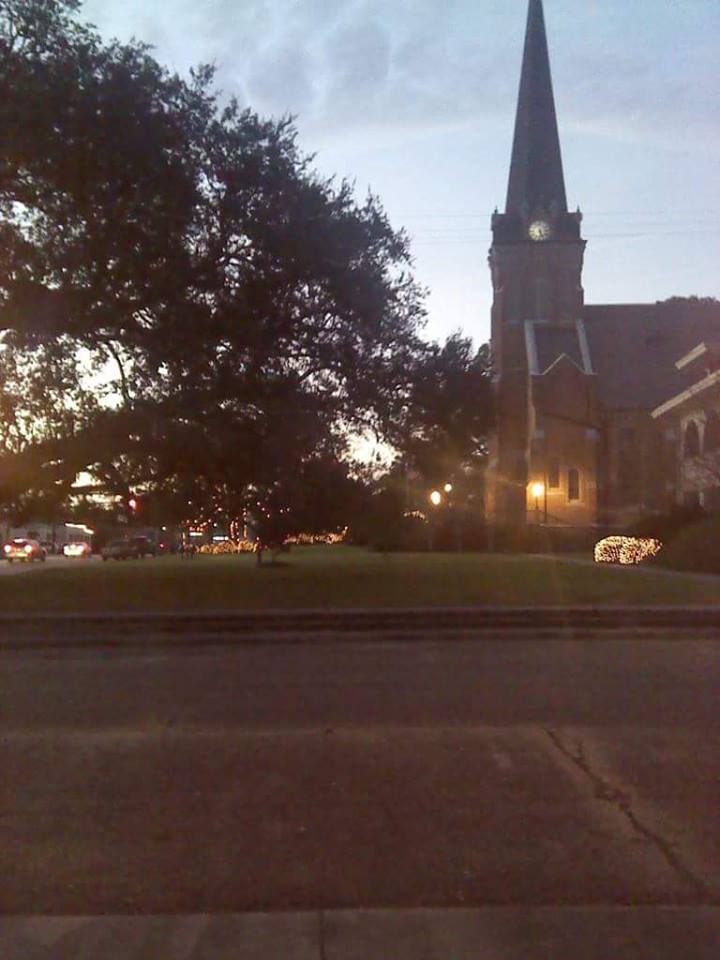
On February 21, 2024 my wife Clara and I joined the complimentary tour of Saint Mary Magdalen Church along with the parents of the second grade children preparing to make their First Communions soon. I have to say that we both enjoyed the history of the town founded by the Catholic priest Pere Antoine Megret of Abbeville, France who bought (in arpents) about 130 acres of land from my ancestor Joseph Leblanc and his wife ( a Broussard by birth). He founded the town of La Chapelle and used the Leblanc home as his first mission church. He helped the town by donating the public and courthouse squares and he also raised some funds by selling lots along planned streets. He did see some Americans convert to Catholicism and helped the Cajun and Catholic majority of the area become the Parish seat (like a county seat another states) when a nearby Anglo- American Protestant community had hoped to be the Parish Seat. The church ahs many layers of history and that is evident in the art and design of various restorations and enhancements. Older stained glass and other images or more likely tied to French origins (like John Vainney, Joan of Arc and Saint Louis King of France) or Canadian references, like John the Baptist, Patron Saint of Quebec. (although Saint George is there), but the new ones have more Italian, Vietnamese, and other connections. Saint Katherine Drexel is there in a painting that seems to be a mural and she did work among African Americans and Native Americans who were all beneficiaries of her great wealth and generosity and she worked with communities even in Louisiana and visited Acadiana. But there is not much that represents African cultures or races or the Black people of our region. There was a black catholic parish of Our Lady of Lourdes in Abbeville that burned down and I worked near it ruins when I was a child. Those families who did not leave the Catholic Church almost all went to St. Theresa CHurch with the Creoles of Color who seemed racially ambiguous in the 20th century Louisiana ad the the working class Cajuns who made up most of the founders of the parish. St. Mary Magdalen where I was baptized, made my First Communion and was married both times has few apparently Black or African American members. It is my home church and is part of the complexity of understanding a heritage that goes back through Jim Crow Laws, the Civil War, slavery and legalized racism. I was a child of the 1960s not the 1860s. I never knew a world after the first few years in which Martin Luther King Junior had not both given the I have a Dream Speech on the March on Washington and won the Nobel Prize. I also lived my life seeing a holiday, a lot of streets and buildings named for Martin Luther King Junior. But although I have taught racially mixed and majority African American classes and worked in all sorts of connections to all communities that live in these lands, race and racial politics and all the complexity of their associations have also impacted my life. Saint Mary Magdalen Parish, has had black priests, raises money for African and African American missions and institutions and maintains a presence of ministry in the site of the old Black Catholic parish of Our Lady of Lourdes. But we have to deal with the racial divisions and tensions that we cannot escape in our history.

The world of politics and race and many other issues of social change in America have been evolving all my life. But I am sure that although I will come back to it there will be some value in looking at my life through that lens early on and being as honest as possible.
.. .

I was not in college at the mass demonstrations against the war in VIetnam. Hugh Thompson of Lafayette, Louisiana was trying to stop the My Lai Massacre and would not be given acknowledgement for it for many years. But in the 60s and early 70s my father was enrolled at Tulane Law School, the University of London and Columbia University and as his child I and my mother were exposed to the forces of campus life. I had some aunts and uncles who were more or less counter cultural or hip or progressive and struggled with each other in search of their own take on the future. I remember the discussion of racial and political violence forming a backdrop for our lives and dinner table discussions. Josephine Dixon was my mother’s family’s housekeeper for many years. Jake was their gardener. They were African American and we were taught to see their service and those of Maggie, and Gwynell and Ernest many others as part of the way our society worked. It was discussed in political terms and also a fac that in some sense we listened to their stories, respected their recipes and folk remedies and supported their churches, schools and clubs. We all saw them as being connected to us and everyone knew the world was changing. I also remember watching Gone with the WInd on television and hearing my mother tell the story of staying up past her bedtime to read the novel and crying herself to sleep. There was a good deal of talk of southern chivalry and southern belles in the world I grew up in every day. The ideals that were embedded in those stories would have meaning form me for a long time.

I was in my mother’s womb when John F. Kennedy was shot and killed in Dallas in November of 1963.. My wife Clara and I have visited the museum in the Texas Book Depository but there was always a lot of influence from that incident in the thoughts and minds of American Catholics, Democrats and Southerners who identified with different figures in the tragedy in different ways. But Lee Harvey Oswald was always seen as the exceptional killer not shooting for American political reasons one could tie to the strife that was all around us. In April of 1968 Martin Luther King was killed by people who espoused a racial ideology openly hostile to the ideals of the CIvil RIghts Leader. In June of the same year RObert Kennedy was shot and it was not so clear why.but people speculated that it had more to do with politics than it was clear it would be about.


In 1972, Alabama Governor George Wallace who had run for segregation and states rights as a third party candidate in 1964 and 1968 returned to the Democratic Party as a representative of the vast majority of whites who would not yet seriously consider the GOP (the party of Lincoln) and was rallying some support for his third presidential campaign and, under a slightly more moderate platform that was responsive to the coalition that still existed in the Democratic party, He was a serious candidate in the primaries. On May 15, 1972 he was shot while campaigning in Laurel Maryland. I still remember that day when I was eight years old although not very well, he was permanently paralyzed and I remember him as a symbol of another martyrdom for a political cause in the United States.

After his getting out of the woods and danger of imminent death, Wallace remained in a wheelchair and whether that was the reason or not he ceased to be a figure of national prominence being an obscure also-ran in the primaries in 1976. As I came into my adulthood in the 1980s, Governor George Wallace’s politics became profoundly different than they had been, he became a powerful force in new racial politics. He sought the forgiveness of civil rights leaders he had forcibly opposed and gradually found ways to build coalitions with them. This new political strategy gained the support of Alabama’s growing number of African American voters as voter suppression was removed from more and more precincts and elections. In 1983 Wallace was elected Alabama governor for the last time with the large majority of the African American vote. The former champion of segregation made more African-American political appointments than any other figure in Alabama history and built other forms of racial cooperation.

The 1860s brought the clarity of war to a very complex reality. The monument to the
Louisiana Acadian General Alfred Mouton, who died fighting in the last major Confederate victory in the entire war stood in downtown Lafayette for most of my life. But it did not play a major role in my life or sense of things as a child. It was one of relatively few Confederate images in my home region. Yet common trips and memories of Lee Circle were part of my many memories of New Orleans. There Robert E. Lee towered high above everyone and everything rushing past him on the streets of a city that held the promise of being rich in oil and gas money and growing connections with an optimistic Latin American business class The Confederate images were subtler but the biographies of Confederates were on bookshelves of several family members. That was the nature of the Confederate legacy among my connections of childhood. To be a Cajun was never to be what had become the ideal of the White Southerners who waved Confederate flags and had run the “DIxiecrat” party of 1948 for States Rights and Segregation in 1948 and won a significant number of electoral votes when third parties almost never win any in our system. George Wallace won 46 or so electoral votes with the American Independence Party, but many people called him a Dixiecrat and his connection with the Confederacy was real to many. The Confederate connection to Acadian itself while Acadians were mostly Confederates they fought a civil war of their own over issues of racial relations and other matters. (see resources: Histoire de comités de vigilance aux attakapas, by Barde, Alexandre: (a number of translations have been published) publication date 1861; Children of Strangers by Lyle Saxon, 1989 by Pelican Publishing, Acadian General Alfred Mouton and the Civil War, by Arceneaux, William,Univ Of Louisiana At Lafayette, 1981)

Once the war was over the politics of the CIvil War would dominate American politics going forward but Acadians would generally call those who were not Acadians Americans by then. In the 1880s many were still motivated by their own ethnic identity. 1881, the Acadians who met at Memramcook for their first National Convention chose August 15 as the date for their national holiday. Since then, Acadians get together on that day of the Feast of the Assumption of the Blessed Virgin Mary to commemorate their history and celebrate their culture. But Acadian culture as a whole in Louisiana had entered a defensive stage. It was a time when the original bilingual constitution would be changed and French would be driven out of public institutions at enormous cost to many. A champion would arise over those issues. He sometimes would champion the rights of Creoles of color and French speaking African Americans and was a moderate voice in the Segregationist political milieu.

In the !920’s Dudley Leblanc,from my home jurisdiction of Vermilion Parish, Louisiana who led a pilgrimage to Acadie on a number of key anniversaries, wrote two histories of the Acadian people, was President of the Association of Louisiana the Acadians and made and gave away fortunes in insurance and patent medicine – That man was also a powerful political voice for the Acadians at the White House, the Vatican and in real elected offices where he was a duly elected Public Service Commissioner. A state representative and a failed but influential candidate for governor. He campaigned for governor even as he traveled across the country and Canada and was busy on pilgrimage as an already established voice for the Acadian people. True Story of the Acadians had appeared in 1926. His efforts through the Thibodeaux Benevolent Association brought new economic access to rural Acadians and other whites. However his support of Blacks in the People’s Benevolent Association was much more controverisal and his political enemies tormented him for supporting them in this life insurance company – even as some claimed to seek more moderate racial policies.

I930 he was running for Governor with a significant political resume Dudley Leblanc, the priests and the Evangeline Girls fo on a trip of remembrance and reconciliation. This story maps in a strange way with his challenge to the emerging dictatorship of Huey Long. The Abbeville Meridional’s July 12, 1930 front page explained that the planning of the trip was tied to the 175th anniversary of the Exile and would bring a Louisiana Acadian delegation to the international celebration and memorial. . As to the Evangeline Girls, “The Association of Louisiana Acadians has devised ways and means by which a young lady, preferably one with an Acadian name who can speak French can defray her expenses.” In contrast to the Share Our Wealth rhetoric for which Huey Pierce Long would become famous, and already was becoming known, the values of the Evangeline Girls were less egalitarian. It was a distinction to be an Evangeline Girl, the Evangeline Girls were chosen in large part by a multiple layer process orf real distinctions that the girls had to earn or prove.. They were certified as eligible applicants by Dudley Leblanc and the Association of Louisiana Acadians and they were then given the task of soliciting votes from the businesses operating in their communities.This took place in the Great Depression. These votes were then the principal basis for selection with fundraising pledges behind the voters groups. The group would be written up and meet with dignitaries in New Orleans, New York, Montreal and Chicago but all of this came from Abbeville and Erath in Vermilion PArish at its core. Abbeville Meridional September 6, 1930 Front page story discusses how the Evangeline Girls were feted in Lafayette on their return from Grand Pre and the reunion by many dignitaries ands supporters and about the importance of the trip for the community at large.

Dudley Leblanc was a Cajun historian before the 1930 pilgrimage in which Yvonne Pavy (later to be Yvonne Pavy Weiss married to the doctor who shot Huey Long) participated and would eventually be released in two versions during her lifetime. A later book appeared long after the deaths of Long and her husband in the state capitol — that book was The Acadian Miracle. The two Leblanc books have also been recently released again in new editions in honor of the 50th anniversary of one book and the 90th anniversary of the other, this joined a recent Dudley Leblanc exhibit opening the Acadian Museum. During the exhibit this museum in Vermilion Parish received the diary of Corinne Broussard, an Evangline Girl. on a famous trip with Yvonne Pavy who later married the man who while a famous local doctor shot Huey Long . The assassination of Huey Long did not greatly advance Dudley Leblanc’s political standing but he did survive both literally and politically. There was political retaliation against Judge Pavy and the Leblanc organization. But there is no reason to believe that his political life was not more threatened by a living Huey Long. the assertion here is not that he ordered Long to be killed.

1940’s World War II Cajuns served as advance intelligence and saboteurs for D-Day invasion:
Cajun French was a close relative of dialect spoken on the fortified coasts of Normandy and Cajuns blended into the scenery. The World Wars each contributed to Cajuns accepting their identity and seeing their value in American culture and in their own eyes. But it took time to give form to their cultural aspirations and that story is beyond what I can cover here. Corinne Broussard Murphy’s brother was the Louisiana State Senator Sam Broussard who would go on to being a major participant in the founding of an organization known as CODOFIL or the Council for the Development of French in Louisiana. He was also the featured central figure in the Pat Mire film Mon Cher Camarade. Broussard along with the still living Robert Leblanc of Abbeville, who was the father of Family Missions Company’s Founders close liefelong friends Mrs.Joseph Tinker were among the Cajuns who by character and dialect played a unique role in the intelligence operations of the United States military in France during the Second World War. These are also men who partly defined the time in which the Documentarians came to Acadiana. Corinne Broussard’s diary of her time in pilgrimage as an Evangeline Girl with Dudley Leblanc in 1930 on the pilgrimage of return to old Acadie or Nova Scotia is a testament to Acadian Identity activism. Sam Broussard is a testament to the fighting spirit and ethnic loyalty and expansive Americanism that could occur in the males attached to these Evangeline Girls. The significant political influence of Leblanc is evident to anyone fairly examining his life up to and following the assassination. That is true although there were later periods when Longism was still very much a political force when Leblanc was less openly political

More or less what Acadian means to those who do not know…

POSTWAR YEARS:. During the 1943 to 1953 years many photographers were active for the government and Standard Oil documenting Cajun life. The film Louisiana Story about the Cajun family of trappers who lease land to an oi company was made in Abbeville and premiered in Abbeville. It was made by the father of Documentary film Robert Flaherty who had made Nannook of the North decades earlier. There is a plaque in forn of the old Franks?DIxie theater where it premiered.

In Abbeville Dudley Leblanc whose granddaughter was raised as the niece of my grandfather who became the Chief Justice of the Louisiana Supreme Court and my father’s first cousin by fostering when her mother died in childbirth. So she was a connection in all these times of my to a vocal ethnic activist was mostly known as the HADACOL man, leading a giant patent medicine concern. He was for a year or two the second largest advertiser in the United States He also distributed many statues of St. Therese of Lisieux to many local Catholic churches including both St. Mary Magdalene and St. Theresa. I never saw any of the CHurches where his statues stood without reference to his legacy..

I have described the 1960’s across the United States. Cajun culture was caught up in such things but there was a whole Cajun history at the same time.In 1968, the legislature established the Council for the Development of French in Louisiana (CODOFIL) to “preserve, promote, and develop Louisiana’s French and Creole culture, heritage, and language.” Under this mandate, we seek to establish French immersion programs, promote French business and tourism, and identify … This was among the many factors that led to more development sin the next decade. In the 1970s Festivals Acadiens is a cooperative of independent festivals that began in 1977. The oldest single component of this group was the Louisiana Native Crafts Festival (later to become the Louisiana Native and Contemporary Crafts Festival), The Cajun French Music Association (CFMA) is a non-profit organization of Cajuns and non-Cajuns whose purpose is to promote and preserve Cajun music and various aspects of the Acadian Heritage that emerged in importance as an idea and perceived need in the 1970s. But it was the nextdecade in which the CFMA was founded in Basile, Louisiana in November, 1984 with Harry LaFleur of Eunice, Louisiana as its founder.

So, now we face the current US period in which racial conflicts have been taking new and varied forms. But it deserves to be said that this is not a book about Southern White guilt over racism, or American guilt over the Vietnam War. I truly was very inspired by the Space programs of the Apollo years and still hope for a future of space colonies for all races and countries of Earth. I have devoted much time and energy to Space and much space in this blog to it as well. Fllorida, Texas and Alabama were in the Confederacy but were also important locations for NASA when I was young. And the world I see around me is one in which there are countless things to address. I am not sure what the future will be, but I am now at a place where I am just hoping to draw back and live out my remaining days, we will see how that goes,

I remember all the events between the death of George Floyd and the riot at the Capitol on January 6, 2021. When I think of all these and other things I know that I live in a world in which racial and related issues continue to shape the country I live in and continue to defy my predictions.

Chapter Two of My Memoir: My Life in History

My uncle Jed was with his lovely (and third) wife Jackie at the gathering on my mother’s patio. It was a special gathering with a buffet of excellent foods — not overly fancy but varied and delicious. I asked him, “I know that you have told me before but I have forgotten. How do you get paid for you online landman work? Is it by the hour?”

“It is by the day.” Jed’s face took on an overly serious look as he continued, “Now the lawyers get paid by the hour.” Jed had been a lawyer graduating with a prestigious post on Law Review and working hard. He had struggled to make ends meet, lost his first marriage in a cloud of small town scandal, had some addiction issues and formally left the profession. He had worked as a professional petroleum landman for decades while happily married and living a clean and sober life. But the loss of his position as a lawyer was always a painful memory in some way and it related to my own experience going to law school twice, losing my first marriage and never practicing law. But Jed might have heard that I was filing for disability, he continued on the theme. “I am 68 and I don’t know what a paid day off is or a sick day. We had a vacation a few years ago and the last vacation we had before that ended on the day when the World trade Center came down in New York.”

“Were you in New York?” Clara asked.

“No we were in New Orleans.” Jed replied.

“You are just trying to make the point of how long it has been when you mention 9/11. Right?” I asked.

“Right.” Jed replied.

“You mention sick days and I have worked for years with no paid days off as well.” I replied to Jed,”But you do have Medicare now, right?”

“Yes that is the best thing that ever happened to me. I used to pay hundreds over a thousand dollars a month for health insurance with a huge deductible.” Jed and Heidi spoke of some horrible experiences.

“I paid about a thousand a month for good insurance at Iberia Parish School Board’s group.” Clara and I told a few horror stories as well. But I was not like my uncle Jed fighting to keep working at all cost. I was ten years younger and I was trying to collect Social Security DIsability. My mother’s oldest surviving brother Brian was there with a special boot as he and his wife talked about continuing their contract plumbing business. He had shot himself in the leg as a young man practicing quick draw and had recently had a stroke. He had never adequately taken care of his leg after the wound and repairs but the new boot somehow tied to the surgery. I recognized in these men an ethic of dying in the saddle. That was not the way my life had worked out. Even before this recent series of events had unfurled I had been off the tracks of work a time or two. My own struggles went back a long way. We had gathered to remember my aunt Rachael and her widower was there. the same age as Jed and still working full time. I was just too sure that I had hit a final wall for me to feel any real doubt about whether I should be trying to qualify as disabled. But if there could have been a group to make me try again to work full-time, it might have been this group.

I am writing the principal draft  shortly after gathering in a group of 40 of may friends and relatives to mark the interment and placing of memorial on the grave of my  Aunt Rachel, who was only about eight years older than I. She was born with spina bifida and her struggle to get an education as it was constantly interrupted by numerous surgeries was mentioned in the first chapter of this memoir on my blog. The Proud name of Broussard marks the stone where she is buried. My mother included her name and the name of the still living husband with whom she raised two children. My mother, the eldest of the family and her only sister, paid for the headstone they share. All of Rachel’s grandchildren are the children of her daughter Jennifer and they were all there. Her son Joshua has never married and is openly gay. Her husband is now openly gay. But he is happy to be buried beside the woman he stayed with till death did them part.All her living siblings were there. Her dead brother was buried not far away and her parents and my father and two of her grandparents were buried nearby.

My aunt died years ago and we had a memorial service but her ashes were only recently returned to the family after her body was used for all the scientific purposes when she donated her body to science and was cremated and her cremains shipped to her daughter. Her body was ever the subject of so much intervention. It is in that science fiction study of a life that my own roots continue to impinge upon me. In my first chapter, I mentioned so much about medical history and it impact on my life, but I did not mention all of it. I was very impacted by the death and burial and remembrance of my uncle Robin who died of Sudden Infant Death Syndrome then called Crib Death. That happened when my mother was a teenager but the impact still affected me.

My father’s medical history included prostate cancer, pulmonary fibrosis, heart disease, dementia, and other factors that led to his demise. But a different memoir could spend a chapter on the impact that his breast cancer and mastectomy had on me. I will not have such a chapter, although I may return to the subject later. The brother that my mother gave up for adoption came back to us to die of AIDS after coming and  going a few times throughout the previous decade and a half. It is a history that lays upon my mind and life in many ways.

But the burden of history goes beyond medical history and the first few chapters of this memoir will deal most of all with the history which defines my life whether readers can validate the connections or not. This is my story about me.

   .    

I have  just recently reached the point in my life of seeking to find the means to retire in the collective instruments of my homeland and the republic. America is a country that spends most of its Federal revenue on Social Security, Medicare, Medicaid and interest on the National debt. In 2033. America is in a retirement demographic crisis according to a syndicated op ed piece by Robert Romano (That appeared among other places in the Tuesday February 20, 2024 issue of the Abbeville Meridional). He writes: ”…by 2033. Once interest and all other mandatory spending is accounted for, mandatory spending will account (for) 77.8 percent of all federal spending, up from its current level of 72.7 percent.” If I get my piece of the pie will it last? It partly depends on how long I live. Generally, the fact that I might receive the disability award rather than taking the earliest regular retirement award in two years and four months would indicate that I am less likely to live a long time. I personally feel that my resilience is spent. So in 2033, I may or may not be on the rolls at 68. At 78 in 2043 I think it unlikely that I will be around. It may or may not work out that a lot of my peers will be around to collect their checks in 2053 at 88 but I do not think I will be one of that group. My therapist’s wife collected her SSDI and died within a year and a few months. That was not typical but it is not unheard of either. Ask anyone in life insurance what  not feeling well enough to work does  in terms of defining someone’s life expectancy and they will tell you that workers or a much better bet to live long lives from any given point in time.  

Such is the nature of this memoir that it focuses on an assessment of the paths taken, risks undergone and crops planted which did not yield much. I will fit the victories, trophies, literal and symbolic harvests and awards into that context. I was born in Crowley in Acadia Parish Louisiana. The Abbeville Meridional which has been publishing since 1856 (but is now ceasing direct door delivery and losing its status as a daily newspaper) has the words “Voice of Vermilion Parish-’The Most Cajun Place on Earth’”. In a thin caption-like banner on every front page.  Acadia Parish is also named after Acadie. That is the colony from which many of my Acadian ancestors were deported. I have found that 
  

The blog in which this memoir first appears (and probably only will ever appear) already has more than a little information on the Acadian people. But I will summarize a little bit of it here.  In the years between 1600-1700 a.d. The Acadians created one of the world’s greatest landscapes by reclaiming land from the sea and salt marshes, created rich farms and hers and a benevolent Catholic society on the Landscape of Grand Pré recognized today by the United Nations as a World Heritage Site. This landscape is situated in the southern Minas Basin of Nova Scotia, the Grand Pré marshland and archaeological sites constitute a cultural landscape bearing testimony to the development of agricultural farmland using dykes and the aboiteau wooden sluice system, started by the Acadians in the 17th century and further developed and maintained by the Planters and present-day inhabitants. Over 1,300 ha, the cultural landscape encompasses a large expanse of polder farmland and archaeological elements of the towns of Grand Pré and Hortonville, which were built by the Acadians and their successors. The landscape is an exceptional example of the adaptation of the first European settlers to the conditions of the North American Atlantic coast. The site – marked by one of the most extreme tidal ranges in the world, averaging 11.6 m – is also inscribed as a memorial to Acadian way of life and deportation, which started in 1755, known as the Grand Dérangement.During this time the Cajuns migrated  mostly from the same small region in France. Europe was changing and they sought to preserve a true Chistian community life . But they also joined closely to the native americans they met in Acadie – Nova Scotia. (See these resources:THE ACADIAN MIRACLE, 50TH ANNIVERSARY EDITION SIGNED BY AUTHOR M.M. Le BLANC Hardcover – January 1, 2016 by M. M. Le Blanc (Author), Dudley J. Le Blanc (1966 version) (Author);  The Acadians: Creation of a People, by N.E.S. Griffiths, Toronto, New York, McGraw-Hill Ryerson, 19730. There is a lot more information about this part of my heritage in this blog and there is a great deal of controversy about many facts and issues related to the colony of Acadie that are important to me. 

The period  of the 1750’s in my heritage is a more important period than for most Americans I suppose. It involves the deportation of the Acadians that  began in the autumn  of 1755 and lasted until 1778. The first removals, comprising approximately 7000 people, were from settlements around the Bay of Fundy involved locking people tricked into the chapel at Grand Pre and gathering others who had not shown up. An armed resistance went on and I was very moved when I visited those sites on a pilgrimage in  the late1990s with family and friends.  .

A third of all Acdians died.in the entire ordeal. There is much that is forgotten and much still not brought into a coherent narrative regarding the  resistance under Joseph Broussard dit Beausoleil and some fighting on land and sea across thousands of miles.  The Acadians churches and holy places were turned into concentration camps and then often defiled and burnt down.  (See resources: HENRY W. LONGFELLOW – Evangeline and Selected Tales and Poems – 1964 Signet Classics Paperback; A Great and Noble Scheme: The Tragic Story of the Expulsion of the French Acadians from Their American Homeland Kindle Edition by John Mack Faragher (Author)  Format: Kindle Edition; Douglas Edward Leach Roots of Conflict: British Armed Forces and Colonial Americans, 1677-1763 (Paperback)). The totality of this  story is really staggering but it is not easy to have a discussion of anything remotely like the totality.

The new period in which my region of Acadiana began to emerge on the world stage starts in the 1760s with the Arrival in  Louisiana of many of the Acadians  who had been exiled wanderers and did not choose to return to the Acadie as third class subjects in Nova Scotia. Their leader was released in 1764, the year after the signing of the Treaty of Paris. Joseph Broussard dit Beausoleil who is my ancestor and the ancestor of both my beloved wife the former Clara Marie Duhon  and my estranged wife Michell Denise Broussard was released from prison in poor physical condition as part of the geopolitical settlement at the end of an almost  world war.  The older than his years  leader, left Nova Scotia, along with his family and hundreds of other Acadians, to Saint-Domingue (present-day Haiti).  Unable to adapt to the climate and diseases that were killing Acadians, he led the group to settle in Louisiana, where some Acadins had settled ins mall groups and connected with the Spanish Imperial administration.   Joseph  was among the first 200 openly known Acadians recognized and supported by Spain to arrive in Louisiana on February 27, 1765, aboard the  ship named the Santo Domingo.  On April 8, 1765, Ina document far more remarkable than is easily understood his official role in the Spanish empire and his community’s  role in the Spanish Empire was established on a land grant as Joseph Broussard appointed militia captain and commander of the “Acadians of the Atakapas” the area around present-day St. Martinville. His tenure was short lived , Joseph Broussard died near what is now the bends of the Bayou Teche, at the presumed age of 63. The exact date of his death is unknown, but it is assumed to have been on or about October 20, 1765. Broussard’s children and grandchildren generally remained in Louisiana, integrating into the slave-owning upper classes of the colony of Louisiana and yet also retaining complicated social and ethnic ties to the Acadian community and very definitely participating in a variety levels of involvement in the entire range of political and cultural development. Joseph Broussard’s society also created opportunities for their mixed race descendants to rise in a society of free people of color who enjoyed a life almost unimaginable in the Southern United States at any time after the 1860s. Joseph Broussard’s descendants include  Celestine and her two daughters Beyonce and  Solange and Beyonce’s offspring. (see resources: .The founding of New Acadia : the beginnings of Acadian life in Louisiana, 1765-1803 by Brasseaux, Carl A, Baton Rouge : Louisiana State University Press, 1987: “Acadian Redemption  From Beausoleil Broussard to the Queen’s Royal Proclamation”, Warren Perrin,  published and distributed with the Acadian Museum in Erath Louisiana). 

 The 1770s saw a new phase starting in the struggle of my people for meaning, prosperity and survival in their  new  homeland in Louisiana. In these years, the truth is that the Cajuns as a part of the Spanish Empire but also as themselves under their own title and structures  defeated the British from Baton Rouge to Pensacola and drove them out as allies of the emerging united state under Catholic Spanish flag and Galvez. Gálvez had spent his early years as governor  fully aware that he must be and was preparing for a potential conflict with Great Britain, which was and ambitious  empire with more troops along the Gulf Coast than Spain. In April, 1779, Gálvez intercepted communications showing that Great Britain was planning an attack on New Orleans. Gálvez went on the offensive, and in that offensive he recruited Acadians (Cajuns) along with many other diverse peoples of Louisianans to join his Spanish army.  THrough treaties and the grievances of the Acaidans among other factors united a force of great importance in creating the United States of America.  While it is  commonly believed and taught otherwise, the American Revolution War for Independence  was really not a simple two sided affair. It was vastly   more than 13 colonies of Anglo-Americans fighting an oppressive (or not so oppressive) British Empire. Controversies about these two powers alone that don’t look at any other players ignore much of the truth.   Even if one ignores everything not officially and legally connected to the struggle (but which are still connected to it in many other real ways) it  was a transatlantic conflict involving multiple countries and their colonies. Louisiana, then under the Spanish flag, waged warfare against British territories and undermining the British war effort against the emerging United States. Spain had decided to support the United States in part due to  their own grievances from a loss to Great Britain during the French and Indian War, which was the North American theater of the Seven Years War.  In 1762, Spain offered to help France against Britain  in exchange for their secure possession of the Louisiana territory west of the Mississippi. (See Resources: INDEPENDENCE LOST: LIVES ON THE EDGE OF THE AMERICAN REVOLUTION by Kathleen DuVal (New York:  Random House, 2015); Bernardo de Gálvez in Louisiana 1776–1783, Gretna: Pelican Publishing Company. Chávez, Thomas E. (2002).)

In the 1810s the struggle for an American existence outside of the British Empire was ongoing for the  Acadians who would become known as  Cajuns. These new Americans protected in their legal and civil rights by the treaty of the Louisiana purchase  fought with Jean Lafite and Andrew Jackson in the Battle of New Orleans in 1814. There is a great deal involved in all of this but I am skimming over except to say that Iremember fine meals under a painting of the Battle of New Orleans as a small child at an exclusive club.  My aunt also painted a  picture of the Chalmette battlefield for me. (see resources:  Lafitte the Pirate by Lyle Saxon, Pelican Pub., 1989; Historical Memoir of the War, By Arsène Lacarrière Latour 1816; A Bloodless Victory: The Battle of New Orleans in History and Memory (Johns Hopkins Books on the War of 1812) by Joseph F. Stoltz III (Author). From this great transformative battle, so much diminished in modern historical thought came one of the great moments of the 1820s when the first  Acadian (to become Cajuns) Governor of Louisiana named Henry S. Thibodaux. An up and coming  soldier serving in the Battle of New Orleans. Henry Schuyler Thibodaux had a complex life and   was born an Acadian in exile on  September 24, 1769 – October 24, 1827. After the  battle he  was a civilian planter and politician, who served one month in 1824 as the Fourth United States of Governor of Louisiana He was also aware of the dozens of others ho had held that title before the United States had come into power over Louisiana.. At the time Thibodaux was President of the State Senate and succeeded him as Acting Governor during an interim. Thibodaux suffered a great deal an most of his family was wiped out by the horrors of the exile and he  was orphaned (his family was thought to have been deported from Pennsylvania) and adopted by General Philip Schuyler, an American Revolutionary War hero.This fact and the cat that he took Schuyler as his middle name provide another piece of evidence showing the link of the Acadian Cause tot he creation of the United States of America. Thibodaux  was deeply connected to the intellectual and cultural foundations of the United States and spent his childhood in the United States and was probably educated in Scotland’s Enlightenment institutions  in the 1780s. His remaining life shows that these connections to the United States  did not sever his ties to the Acadian people. 

Upon  returning to the United States, Thibodaux moved to Louisiana in 1794, while it was under  Spanish rule and chose to settle on  “Acadian coast” of the Mississippi River and was deeply connected to the community. Thibodaux  was married first to an Acadian or Cajun woman, Félicité Bonvillain, who bore him three children before she died a few years later. Thibodaux had five sons in total including his children by a white Creole woman after he was widowed..(wikipedia is a good a published source on Thibodaux as I know about).

 In terms of connecting the Acadians to American culture, a key event occurred in the  1840’s.

Evangeline, A Tale of Acadie is an epic poem by the New Englander  Henry Wadsworth Longfellow  published in 1847. The poem tells the story of an Acadian girl named Evangeline and her search for her lost love Gabriel during the time of the deportation and exile. The poem had a powerful effect in defining both Acadian history and identity in the nineteenth and twentieth centuries. It represents lost loved ones and heartbreak but also keeping hope. It was a huge commercial success. My mother’s relatives largely lived in Evangeline Parish in Louisiana. It has been the namesake of sports leagues and businesses important to my friends, family and region.

It was after Evangeline that the real transition to a very deeply Cajun experience became a reality. The issues that would lead to the CIvil War began to play a larger role than the issues that led to the American Revolution. I have  lived  a life much more defined by a history that is almost ignored than by a history that is endlessly controversial. (See resources:   Acadian to Cajun: Transformation of a People, 1803-1877, by Carl A. Brasseaux, University of Michigan Press; Napoleon’s Soldiers In America,by Simone d Delery, Firebird Press, 1999; The Awakening by Kate Chopin). To understand Cajun culture one must understand their lives in Louisiana from 1840 t0 1860. That means knowing the State then as well.

 My next chapter will deal with my background as a son of the former Confederacy and growing up in the South after being born in the country transformed by the Civil Rights movements and its aftermath. However, to understand me is to understand all this American history that occurred before the War Between the States and is part of my burden and heritage.   

History would remain an important part of my life. The long struggle of a people and a region will be part of any memory of my time on this earth. I will do another chapter about the history of it all dealing with all that goes with the periods from 1860 -1960. But I am going to remember always that there was a lot of history in my mind that does not connect directly to the events of that century, 

I am looking back on a life that may be ending sooner than later and a work life going down in flames I am aware that my own historical contribution will be minimal and I am coming to accept that reality better than I thought I could. But history has very much been the medium in which I have lived and moved. Over the course of this memoir, I will be able to explain a bit better why I wrote it. But for now, I post it in a blog that receives very little traffic at the end of life that has little larger significance.

My new domain name.

Old links to this site will probably not work any longer. The domain name in the past was either including WordPress or was a Dot net or dot com address. The new domain name is franksummers3ba.blog

That is right, this is now a dot blog site. Traffic has more or less withered away, so this may be a good time to make a change if I am to make one.

A New Retrospective on my life Begins

My life is either going to move into a new phase or it will turn out  very possibly to be the most ruinous phase of my life. I am filing for social security disability income which in my case amounts to an early retirement insurance benefit. If granted it will enable me to have a decent quality of life in the days remaining to me. If not, then I will no longer be able to function. I have always thought Social Security to be one of the greatest achievements of this society in which I live but I had hoped for a chance to retire at a regular age despite my many challenges and limits along the way.

“I will always be your brother Simon. Even though times like this may not last for many years. ” That is what I used to tell my brother Simon Peter Emmanuel Summers when I was his full-time caregiver during the COVID 19 pandemic. I was often speaking in response to his comment, “I really appreciate this brother time.” He would near my comment and would reply “I hope we can keep these times going as long as possible.”

My time as his caregiver ended in April of 2022. But in November of 2022 he was the best man at our wedding as I wed Clara Marie Duhon in Saint Mary Magdalen Church. The Summers family and many others had gathered (not every relative invited but many). It had only been a few months since the church had been even fuller for my father’s funeral. I was grateful that Clara had gotten to know my Dad before he passed on September 11, 2022. “Thank you so much for loving Clara and welcoming her to the family.” I had told Dad many times in his last months with us. “I do love her he would reply and it makes my happy to see you together.” Dad had often said “Thank God for Clara.”

Clara and I and Simon and Mom and Dad had made a trip together to Galveston before we were married and while I was still working with Simon. Dad was fading already and Simon has Prader-Wili Syndrome. we had wonderful times Clara and I , Simon and I, all together but it was never easy. I carried a lot of the physical load and Clara a lot of the logistical load. Today I am in a different place. Today I am seeking to end my working life early and seek to spend the rest of my days with a little dignity and extend the time I might live on this Earth. It is that process of seeking to classify myself as disabled that inspired me to write this memoir online right now.

My Past, Prologue and Present: Reflects on A Family’s Journey Navigating the World of Education with Rare Diseases Introduction: 

At the time that I am writing this memoir – I am also filing for Social Security DIsability Income with the Social Security Administration. I have paid into social security, the Louisiana State Teachers Retirement Fund  and a FICA replacement retirement fund as well as into disability insurance and private retirement plans. However, it is not clear whether I will be covered and receive a benefit and I don’t know how strong I will be in waiting for such benefits. I have worked abroad as well and also done a lot of work that was never paid.

My willingness to do serious academic work (without any real tangible rewards being likely) reflects not only my commitment to intellectual pursuits but also the belief that education is a cornerstone of personal growth and societal progress. At one time or another I, both my parents, three of my sisters, a brother, one of my aunts, my paternal grandmother and my maternal maternal great-grandmother were classroom teachers. Only three of these people were ever fully certified career teachers. The pursuit of academic excellence extends beyond the boundaries of our family, as we firmly believe that all students, regardless of their health conditions or cognitive abilities, have unique insights to contribute to the academic world. For me that perspective has been vital and somewhat inspiring and I believe only sound social studies education tied to quality history can prevent a social blindness that can be very costly (see Schlessinger),. Barriers to Inclusion Despite the compelling benefits of inclusion, several barriers hinder its successful implementation. Research suggests that lack of resources, inadequate teacher training, and negative attitudes among educators and peers are significant barriers (Turnbull et al., 2017; Wilson, 2020). Schools often face challenges in accommodating students with diverse needs, leading to exclusion or segregation. To overcome these barriers, schools must invest in professional development for teachers, provide sufficient resources, and promote a culture of inclusivity and acceptance. The forces of social entropy and inertia that push against the best outcomes for people with exceptionalities can be numerous. In addition to the connections to education, my parents, several of my siblings and I myself spent a good bit of time as Catholic lay missionaries and in other ministry in the Church. My wife Clara retired from public service as well as a career as a CPA in the private sector and then went to work for the Shalom Mountain nondenominational retreat house in the Catskills.  She now volunteers at our church regularly. I can remember many hours of effort in academic, humanitarian and evangelistic work that were volunteered as well as those that were poorly paid. Yet now I have to face the consequences of not having paid into a pension or retirement for those days,months and years – I have very much been given the chance to reflect on my life.  I am taking some time to understand myself. 

  .    

 Whoever reads this is taking some time to understand someone else. To read a memoir or an autobiography of someone who is not famous and not likely to be discussed around what used to be a water cooler or at the neighborhood bar – that is an act of investing yourself in the life and community of humanity. I am at a place in my life where I am forced to deal with the summation of my life from a certain point of view.  It is a point of view that does not necessarily scream out to be recorded. However, it is the end of a long journey. I am one who has been in the habit of reporting and recording and so my life  has meant a great deal to me. Just as, if anyone reads this your life has meant a lot to you at some point and probably still does. I hope that you have reached some of the goals of your life and achieved some potential and know what some sense of fulfillment and joy feels like.  The memoir that I am writing today is not the memoir I would have written at any other time.  The successful memoir is one of three of four kinds. The unsuccessful memoir can be one of many other kinds.

The memoir that one writes with a ghost writer a high powered agent, a publicist, two researchers and a fact checker after one retires from a position in which one has achieved the kind of fame and historical significance that everyone expects to endure and the kind of popular interest that nobody can deny is probably the A+ memoir. The memoir that one writes with an excellent editor and a good researcher and a big advance and a hot agent as one retires from a life of distinguished achievement as a novelist, poet,songwriter, music producer, actor, historian, anthropologist or journalist who has become famous for telling the great stories of one’s age is the A kind of biography.  The autobiography of the honest and revealing world famous and also infamous bad guy or gal is the B+ memoir. The truly literary memoir that matches the literary tastes and needs of the time in which it is written and is lucky enough to get published is the B memoir. A good spiritual, religious or professional testimonial written to address the beliefs and needs of a well defined community is the B-. This memoir aspires madly to a D- status. If it is not by all possible measures, an absolute failure that will be an extraordinary level of success.

I was born in Crowley, Louisiana in the United States of America on June 15, 1964. I am writing the first draft of this chapter less than six months before I turn 60. However, it is not at all assured that I will turn 60.  While I do not have anything that is a known terminal disease, I am finally and completely running out of steam – unless I get a Social Security Disability Income award very soon. I have been married to a good woman for just a little over a year. I would hate to abandon her so soon by dying but I must say I think living in this crisis and uncertainty is going to be a challenge beyond whatever strength I am sure that I have right now. During the last part of  my working life, and at some other times along the way, I have been a teacher. Am I going to have another chapter that is endurable? I am not sure at all that I will get to spend any social security benefit. One gets $250 as a death benefit. But since I married last year I can hope my spouse might get some survivor benefit.

The faith and footsteps of a life have left whatever impression people may or may not find in my record. But late in life I got some additional credentials on inclusion and education and felt some sense of closure in a life dealing with educational institutions with a sense of being on the outside.I will interject here that when I was in graduate school at Louisiana State University, on of the professors who ended up being on my committee used to say that I reminded him of the book, The Education of Henry Adams. That book is a memoir written by a sort of New England Patrician who wrote a memoir showing his sense of alienation from the new society emerging around him. I will say that over the years, I have slipped into the sense of the impossibilities of  my life in these times that do resemble Henry Adams in his sense of his own times.  

 Understanding the Entire topic of Inclusion

Having traveled and been in classrooms in New York, London, the Philippines, Tonga and Mexico as well as in my native Louisiana, I was often somewhat outside the norm. I hoped that if I survived all this change and stress it might give me something to offer to  the students I encountered in my  life and work as a teacher.   Inclusion in education is a topic of paramount importance in today’s diverse classrooms. One the films I watched in a Special Education class during my postbaccalaureate alternative path to certification in the College of Education at the University of Louisiana was the film attributed to Sue Rubin as writer titled “Autism is a World”. The film was nominated for an Academy Award for best Short Subject Documentary film. Yet today the method of Facilitated Comprehension used to enhance her IQ from about 29 to over 130 is somewhat discredited today. There is little doubt that Sue Rubin found more happiness and was better behaved when she was more fully integrated in the type of lifestyle her family and their other associates were normally part of and yet it is very much in doubt that her basis for the dramatic change in her status is entirely valid. Given that this film was assigned without much comment about the controversy related to the FC and even techniques of Augmentative and Assisted Communication cannot help but raise questions about whether Professor Beasley has some agenda regarding the films propositions about inclusion that he is not sharing with me or the class. One wonders whether recent U.S. Supreme Court decisions on affirmative action could have an impact on views of inclusion for students with disability. The case Students for Fair Admissions v. Harvard decided in June 2023 is very focused on singling out admissions policies that look solely at race and in fact the language seems to support admissions based on overcoming the struggles such as those faced by those who suffer from disabilities. Yet one wonders if people who have not been admitted to colleges may one day successfully sue for some kind of relief when questionable methods may have been used to secure the admissions of people such as Sue Rubin. There clearly are people excluded from such opportunities as she enjoyed, although I don’t have the data on the year of her admission one can draw some conclusions from the following text taken from an online post titled: Applicants, Acceptance Rate, Yield Trends at Whittier, “At Whittier College, the average acceptance rate over the past 10 years is 69.37% where the current year rate is 75.02%. Last year, it was slightly harder to get into Whittier College than the previous year. The average yield (enrollment rate) over the period is 11.91% where the 2023 yield is 11.01%. The number of applicants to Whittier increased by 4.51% (130 applicants) compared to last year.” https://www.collegetuitioncompare.com/trends/whittier-college/admission.

 Had my own struggles to survive in my pursuit of education and others in my family have experienced challenges but perhaps none as severe as Sue Rubin’s. In her own journey seeking education changes in Sue Rubin’s life occurred when she was still in K-12 education where a right to Free and Appropriate Public Education (FAPE) still applies.In the same class I watched another film called Including Samuel . In this other film made by family and assigned in the same  class, there is a treatment of the costs and benefits of  inclusion in public schools.

All of this discussion has a great deal of significance for me personally. The world of education is an ever-evolving landscape, and for my family, it has been a journey marked by unique challenges and experiences. I started off life as an only child and an only grandchild on my father’s side and unaware of the child my mother had given up for adoption. My mother’s brother was the father of the second grandchild, Michael Gremillion was born with hydrocephaly and in the end he died before any others were born on that side of the family. A few years later, on my father’s side, his brother who was the second in his family had a son who just a few months ago ran for Vermilion Parish Sheriff and came out third in a three man race after retiring from the Louisiana State Police.  I was aware of the education of my aunts and uncles, some of whom had great troubles related to their education such as my mother’s sister Rachel who was born with spina bifida and was kept out of school for many surgeries when she was a child. But the struggles that I, Frank W. Summers III,  had as a child definitely connected to  the story of my family’s connection to the field of education. Later in life this focus would be on other members particularly focusing on my sister, Susanna and her children,  my niece, and two nephews who are battling the rare Fabry disease, and one nephew who is free from this burden but faces the   hurdle of dyslexia.( Vanvickle, straight). Between my cousin Michael and the birth of my nephews and their delayed diagnosis there was the birth of my brother SImon Peter Emmanuel Summers.  who has Prader-Willi Syndrome and spent a significant part of his educational journey in self-contained classrooms. Since completing my own primary and secondary education did not end my formal learning. I taught English and AMerican culture in China at the Shandong Institute of Business and Technology, I taught adults Spanish in Baton Rouge at Travel Talk Academy in Baton Rouge, I taught theology   and led a television club at Saint Thomas More Catholic High School in Lafayette. I taught  in every possible position as a Substitute serving short term in the Vermilion Parish School system. But some of the most important  involvement I had in the world of education had to do with my bother Simon, both as a caregiver when he first moved out of the family home and I worked with the IBC agency and later during the COVID-19 pandemic when I worked for our mother and Acumen FIscal Agent.  But I also spent time interacting with his education  as a substitute teacher. This was a connections that  provided me with a unique perspective on the challenges and triumphs faced by individuals with rare diseases and disabilities in educational settings. I cannot help but locate the issues related to education in the context of larger humanism and empathy (Vanvickle, kind). 

Definition/Characteristics of Inclusion 

Inclusion in education is a multifaceted concept that promotes the idea that all students, regardless of their abilities or disabilities, should be educated together in general education classrooms. This approach is supported by research, as evidenced by numerous studies (Smith et al., 2020; Johnson, 2019). Inclusion goes beyond mere placement; it emphasizes active participation and full access to the curriculum for every student. To successfully implement inclusion, schools need clear policies, trained educators, and individualized support plans tailored to each student’s unique needs. The needs of all students also include people like my brother Simon Peter who has all the emotional, physical and cognitive disabilities of PraderWili Syndrome and the needs of my niece and two nephews with Fabry and the one of them who is also dyslexic. I and some of my family have genius to high genius IQs that map 4 or more standard deviations above the norm. For me education that does not reach people on the fringes is not a very compelling kind of educational model. This textbook in sections beyond those assigned to us has done an excellent job of showing how the interaction of families with persons with disabilities and exceptionalities is entirely essential to the proper understanding of these students and their progress through school and beyond (4. Parents and Families 97 Daniel P. Hallahan/James M. Kauffman/Paige C. Pullen 97).  One variable that has consistently been found to have influenced educators’ attitudes is disability education (Avramidis and Norwich 2002; Center and Ward 1987; Hastings and Graham 1995; Loreman and Earle 2007; Loreman, Forlin, and Sharma 2007; Sharma et al. 2006; Subban and Sharma 2006). Those educators who have received some disability education are more likely to have positive attitudes to inclusion. In this regard, research tends to suggest that there is a positive correlation between the amount of disability education and educators’ positive attitudes. Disability & Society Vol. 23, No. 7, December 2008, 773–785

The advantages of inclusion in education are well-documented. Research highlights that inclusive classrooms foster social interaction, enhance academic outcomes, and promote tolerance and empathy among students (Brown & Jones, 2021; Jackson, 2018). Inclusion prepares all students for a diverse society and workforce. The diversity of my connections  throughout my early life was far greater than most people can imagine even if the world is now mixing so many kinds of people in many big cities that it is hard to overstate the level of diversity that comes into schools across the United States and many other places in the world.

To implement inclusion effectively, schools can employ strategies such as co-teaching, differentiated instruction, and peer tutoring. These methods ensure that students with disabilities receive the necessary support while benefiting from exposure to a general education curriculum. I think it is useful to look at other countries which proportionately single out their gifted and privileged members for even more support so that they can bring innovation and leadership to those societies. I have traveled a great deal and these issues interest me; but judging from the articles I have read (see AI and Linked in Community and McQuillan) there is limited interest in this comparative approach. The film Including Samuel shown in this class did a good job of showing how the costs, risks and benefits of inclusion play out. One of the biggest advantages is a society that is less prone to celebrate cruelty, to have people who are personally callous and to foster more empathy. For me the memoir I write is a story of the struggle for community and spiritual development among others journeys.and struggles.  

 Personal and Family notes:  Rare Diseases and Life Skills 

While every family has unique challenges, our family had little choice but to recognize the vital importance of life skills. Managing rare diseases like Fabry disease that are extremely rare can disquise that there is vast minority or even something like a plurality made up of tiny and small minoriities. the fact that learning disabilities affect a relatively modest minority of the population and that others have issues like discalulia or disgraphia and so dyslexia is a fairly rare condition. While Downs syndrome is very common as individual disabilities go, it is still fairly rare and Williams Sydrome and Prader-Willi Syndrome are less common than Downs and seem quite rare for the families who must learn to deal with them, although the efforts at inclusion in recent decades have lessened the isolation of the past. These syndromes are described and their characteristics well described in the book.( 5. Learners with Intellectual and Developmental Disabilities 125 Daniel P. Hallahan/James M. Kauffman/Paige C. Pullen 125) My brother who has this Prader-WIlli condition not only has intellectual disability but it is partly due to his physical limitations that he continues to now and as a minor often required daily care and coping strategies that extend beyond the classroom.( chapter 14. Learners with Physical Disabilities and Other Health Impairments 457 Daniel P. Hallahan/James M. Kauffman/Paige C. Pullen 45) To a remarkable degree students even in the gifted categories are united to all those with disabilities in a struggle to integrate with society effectively. Thus the skill of understanding the specialty of educating those with exceptionalities is real. ( Chapter 1. Exceptionality and Special Education 13 Daniel P. Hallahan/James M. Kauffman/Paige C. Pullen 13 2. Current Practices for Meeting the Needs of Exceptional Learners 37 Daniel P. Hallahan/James M. Kauffman/Paige C. Pullen 37). All the diverse minorities that make up the students with exceptionalities have some interests in common. Yet the interest cannot be that of competing with a theoretical normal individual who needs educational resources.  Interindividual and intraindividual variation is a theory developed for students with learning disabilities but it applies to many others as well.(Chapter 6. Learners with Learning Disabilities 163 Daniel P. Hallahan/James M.

 Kauffman/Paige C. Pullen 163).

 My sister, Susanna Summers VanVickle, wrote the two articles on Fabry disease which are cited in this inclusion essay but she is also fully trained as a teacher in dyslexic interventions. There are no clear boundaries in the learning she has done for her sons who have Fabry and the ones who have dyslexia and her several children who are gifted. There may be an interesting Venn diagram for other professionals but for her both love and learning needed by her children define the efforts she makes each day. The struggle of families is about the individual, about family ties and about the struggle of those who are different to make their way in the world. The textbook shows an awareness of the difference between the family experience and the struggle of people involved in a purely professional capacity who must respond to legal categories. (Chapter 4. Parents and Families 97 Daniel P. Hallahan/James M. Kauffman/Paige C. Pullen 97). 

. Our family has learned that life skills are not just an added layer of education but a fundamental tool for empowerment, independence, and overall well-being. Yet, I can say as my brother’s former caregiver that he created compelling works of graphic art, communicated in several languages and loved our trips to museums, state parks and art galleries. Whether because of issues with resources or otherwise, it was hard for his schools to meet his potential in those regards – yet I am also certain he did much better because of the programs the schools provided than otherwise. The schools did make it easier for him to function in any situation because of his progress in life skills. The book does a good job of condensing the basic challenges universal to students with intellectual disabilities. Although Simon’s condition is referenced elsewhere in the book as well I certainly found the discussion of pedagogical challenges, inclusion in social interaction and other matters. It does a good job of discussing how people with disabilities fit into state and federal categories as well. Academic Excellence, Educational Activism and Genius-Level IQs In our family, academic excellence has always been a driving force, bolstered by the presence of several individuals with genius-level IQs, myself included. My membership in Mensa for many years, my sister winning the University Medal when she graduated from LSU and most of my sibs and I graduating with Latin Honors is part of our story amongst ourselves and beyond the confines of home. This essay will delve into our journey, highlighting the significance of both life skills and academic education, and how I, with my upcoming presentation at The Gulf South History and Humanities Conference, seek to address the declining state of history as a profession and social studies in the schools. It seems to me that understanding the gifted and talented education is still part of something outside of the concerns central to most of General Education is important. General education may benefit from Educational Specialists but gifted education is still tied to the concepts of the exceptional and the study of exceptionalities (15. Learners with Special Gifts and Talents 489 Daniel P. Hallahan/James M. Kauffman/Paige C. Pullen 489. As an advocate for inclusive education and a presenter at The Gulf South History and Humanities Conference in Natchez, Mississippi, I am acutely aware of the challenges facing the fields of history and social studies education. That panel which I presented in Natchez during the Fall semester of 2023, involved bringing forth a work done in Graduate School at the University of Texas by my wife’s cousin Nicole Duhon-Crowell. She presented a study of the retrospective impacts, lifelong perceptions and educational outcome for Cajuns who first learned English in Schools where they were punished for speaking French. I provided some historical background for her study and discussed the place of educational history in the training of academic historians and the place historians and academic history in Social Studies education. Here again one comes across the perspectives offered in this textbook. None of the questions that I addressed can be explored adequately without understanding relevant issues related to educational exceptionality and inclusion. (chapter 3. Multicultural and Bilingual Aspects of Special Education 69 Daniel P. Hallahan/James M. Kauffman/Paige C. Pullen 69.

 The decline in history as a profession and the diminishing emphasis on social studies in schools are concerning trends that threaten our understanding of the societies we inhabit. Every student, including the most exceptional has something to contribute to our basic shared and normal patrimony of social understanding. I think inclusive educational theory should emphasize both exceptional and other students dialoguing with the resources of social studies, one another and larger social issues. The risk of this not happening are found in many places (see Washington Post article in my references). I find myself committed to advocating for my own retirement when I had for many years simply hoped to fill out my years and retire as best I could at 62, 67  or 70 years of age.  

 My journey into the world of education, shaped by the experiences of my family, began with a profound understanding of the challenges associated with rare diseases. My sister, her daughter (my niece), and two of my nephews all grapple with Fabry disease, an exceptionally rare genetic disorder that affects various aspects of their lives, including their ability to navigate the educational system. However, the biggest issues are not how to deal with infusions, limited participation in sports sufferers learn to love when they are young and healthy. The biggest issue is for them to get diagnosed so their lives and learning are not shortened by death. Fabry disease is characterized by the accumulation of a specific type of fat in the body’s cells, leading to a range of symptoms such as pain, gastrointestinal issues, and skin abnormalities. These symptoms often interfere with their ability to attend school regularly, participate in extracurricular activities, and fully engage in the learning process.

Besides my brothers journey with Prader- Wili Syndrome that has been such a part of my life, I recently saw my sister Sarah who has reared several academically exceptional children who excelled in varied ways. One of the key milestones was this year when one of her daughter was chosen as the elementary shcool student of the year by the Vermilion Parish School Board and another child received a family vacation to DIsney World as part of her Make-a-Wish Foundation support for her struggle with cystic fibrosis. My family’s journey through the world of education also includes my brother, who has Prader-Willi Syndrome, a rare genetic disorder characterized by chronic overeating and other cognitive and behavioral challenges. Throughout his educational career, my brother spent a significant amount of time in self-contained classrooms, where educators tailored their approaches to meet his unique needs. His experiences have underscored the importance of individualized education plans and the vital role that dedicated educators play in the lives of students with rare conditions. Dyslexia: A Nephew’s Battle In addition to the challenges posed by Fabry disease, one of my nephews faces the additional hurdle of dyslexia. Dyslexia is a learning disorder that affects reading, spelling, and writing, making traditional educational methods less effective for individuals like my nephew. Witnessing his determination and the support he receives from his family and educators has deepened my commitment to advocating for inclusive practices and specialized resources for students with learning disabilities 
The perspective of rights driven discourse in the Disability Rights Movement and litigation does not change the reality that an empathy and goodwill between learners with exceptionalities and the general public is vital to the underpinnings of whatever compromise we may work out (Vanvickle, kind) . As someone intimately connected to individuals facing these challenges, I have become a staunch advocate for inclusive education and increased awareness of all sorts of exceptionalities including rare diseases in which schools could play a role in saving lives through early diagnosis.. My involvement as a caregiver during the COVID-19 pandemic, when in-person learning was disrupted, allowed me to witness firsthand the importance of flexible educational models that accommodate the needs of students with disabilities or chronic illnesses. In my role as a substitute teacher, I had the opportunity to step into various classrooms and adapt my teaching style to meet the diverse needs of students. These experiences reinforced the belief that every student, regardless of their health condition or disability, deserves equal access to quality education. However, I will not pretend that I am content with the cultural milieu of the present. . Recommendations to Facilitate Inclusion To facilitate inclusion effectively, schools must adopt a holistic approach. Research supports the implementation of strategies such as Universal Design for Learning (UDL), which ensures that curriculum materials and methods are accessible to all students (Rose & Meyer, 2002). Collaborative planning and co-teaching between general and special education teachers can also promote inclusion (Cook et al., 2016). Additionally, schools should engage parents, involve students in decision-making, and create Individualized Education Plans (IEPs) that cater to students’ specific needs (Eisenman et al., 2019). These recommendations, backed by research, can pave the way for inclusive education. It seems to me that telemedicine support and AI linking, coordination with off school services like the Special Olympics and the Louisiana Association for Retarded Citizens

I could use a little less emphasis on pollical correctness that punished a program like anything LARC can offer. I would oppose the kind of culture that makes close relationships between parents and schools a unique province of SPED in many cases. Whereas it may well be that future well-being means creating a model of community and school interaction that is influenced by SPED. I also oppose a tolerance that corrodes all kinds of order and discipline and makes it simply impossible for many things to get done. But I still believe that an educational mission that embraces everyone is important. I am trying to find a  way of seeing my own experience as it relates to  implementing research-supported recommendations. Schools can foster a culture of inclusion that benefits all students, regardless of their abilities or disabilities. Inclusion is not just an educational philosophy; it is a path toward a more inclusive and equitable society. In navigating the world of education, my family’s journey has been marked by the rare diseases and disabilities that have touched our lives. I now am applying for disability based on struggling with sleep apnea, tinnitus, hearing loss, vision impairment, obesity, gout, vertigo, obesity and some other fairly recent issues.   I am also trying to get consideration of having survived childhood asthma. severe allergies, dengue fever, giardia lamblia, amoebic dysentery, broken bones, snakebite, being stung by a deadly centipede and having been in a number of accidents including having a head-on collision with a car while riding my bicycle and being attacked by a dog I am not sure I am sick enough to qualify for disability but I am sure that I cannot keep working. The mental toll is also part of my claim although I am not eager to be classified a s severely mentally ill. I also do not have diagnoses to show that I am seriously mentally ill.  

I have so many memories of sickness and pain while working and know that for me I have lost what it takes to keep going. But I am not at all sure that I have experienced is relevant in the world of people in which Social Security Disability decisions are made.

Reference Sheet for first chapter:
1. **AI and the LinkedIn Community**
* Source: LinkedIn Advice
* URL: [https://www.linkedin.com/advice/0/how-do-you-prioritize-resource-
allocation](https://www.linkedin.com/advice/0/how-do-you-prioritize-resource-allocation)
* Year: 2022-2023 (dialog)
2. Brown, E. K., & Jones, P. R. (2021). Inclusive Education and Social Interaction: A Meta-
Analysis of Recent Studies. Journal of Educational Psychology, 56(4), 421-437.
3. **Connor, D. J., & Ferri, B. A. (2007). The conflict within: Resistance to inclusion and other
paradoxes in special education.**
* Source: Disability & Society, 22(1), 63–77
* DOI: 10.1080/09687590601056717
4.Cook, B. G., Tankersley, M., & Harjusola-Webb, S. (2016). Impact of Co-Teaching on Student
Achievement: A Review of the Research. The Council for Exceptional Children, 42(4), 63-77
5. Eisenman, L. T., Smith, G. A., & Thompson, H. J. (2019). Parental Involvement in Inclusive
Education: Strategies and Benefits. Educational Policy and Practice, 32(1), 45-59.
6.**Forlin, C., Loreman, T., & Sharma, U. (2008). Impact of training on pre-service teachers’
attitudes and concerns about inclusive education and sentiments about persons with
disabilities.**
* Source: Disability & Society, 23(7), 773–785
Habib, D. photographs, interviews and videography by Dan Habib ; directed and produced by
Dan Habib. (2008). Including Samuel. [Concord, N.H.] :[D. Habib], — You Tube hosted on
Moodle for this class
7. . **Hallahan, D. P., Kauffman, J. M., & Pullen, P. C. (2014). Exceptional Learners: An
Introduction to Special Education (12th ed.).**
* Publisher: Pearson Education Limited, Essex, England
8.Jackson, L. H. (2018). Inclusive Education and Academic Achievement: A Longitudinal Study.
Journal of Special Education, 34(5), 567-582.
9. **LARC (n.d.). About**
* Source: [https://acadianvillage.org/about-us/larc/](https://acadianvillage.org/about-us/larc/)
10.. **Louisiana Department of Education. (2022). Louisiana Student Standards: K-12 Social Studies Student Standards.
11.. **McQuillan, L. (2018, September 24). Developing Countries Lead in Education Innovation: Old-line government schools are failing many children, especially in low-income
neighborhoods.**
* Source: [https://catalyst.independent.org/2018/09/24/developing-countries-lead-in-education-
innovation/](https://catalyst.independent.org/2018/09/24/developing-countries-lead-in-education-
innovation/)
12.Rose, D. H., & Meyer, A. (2002). Teaching Every Student in the Digital Age: Universal Design
for Learning. ASCD. .
13.. **Schlessinger, A. Jr. (2006). [Title of the Article].**
* Source: The New York Review of Books
* URL: [https://www.nybooks.com/articles/2006/04/27/history-and-national-
stupidity/](https://www.nybooks.com/articles/2006/04/27/history-and-national-stupidity/)
14.Smith, J. A., Brown, L. M., & Johnson, R. D. (2020). The Advantages of Inclusive Education: A
Comprehensive Review. Journal of Inclusive Education, 45(3), 213-228.Johnson, M. S. (2019).
Promoting Inclusion in General Education Classrooms:
15. **Strauss, V. (2015, March 31). Social Studies Education Facing Crisis as Class Time Is
Slashed, Departments Closed.**
* Source: The Washington Post
* URL: [https://www.washingtonpost.com/news/answer-sheet/wp/2015/03/31/social-studies-
education-facing-crisis-as-class-time-is-slashed-departments-
closed](https://www.washingtonpost.com/news/answer-sheet/wp/2015/03/31/social-studies-
education-facing-crisis-as-class-time-is-slashed-departments-closed)
16. State of the Art, inc. ; CNN. (2004). Autism is a world. [Washington, D.C.] :State of the Art,
Inc.,
17. Turnbull, A. P., Turnbull, R., & Wehmeyer, M. L. (2017). Inclusion in Education: A Review of
Key Implementation Barriers. Exceptional Children, 43(1), 67-82.
18. **[Title of the Article]these-are-the-states-that-passed-laws-restricting-the-teaching-of-racial-
history**
* Source: The 74 Million
* URL: [https://www.the74million.org/article/](https://www.the74million.org/article/these-are-
the-states-that-passed-laws-restricting-the-teaching-of-racial-history)
19. **Vanvickle, S. (2023). What those with Fabry disease understand about kindness: How
struggles can make us more sensitive to the needs of others.**
* Source: Fabry Disease News
* URL: [https://fabrydiseasenews.com/columns/how-fabry-struggles-can-make-us-more-
sensitive-kindness/](https://fabrydiseasenews.com/columns/how-fabry-struggles-can-make-us-
more-sensitive-kindness/)

Frank Summers Inclusion Essay Reference list submiƩed for SPED 391 (005) Fall 2023 …. 3
20. **Vanvickle, S. (2023). From Fabry disease symptoms to diagnosis: Here’s my family’s
story. Life’s path isn’t always a straight line, especially when it comes to chronic illness.**
* Source: Fabry Disease News
* URL: [https://fabrydiseasenews.com/columns/fabry-disease-symptoms-diagnosis-familys-
story/](https://fabrydiseasenews.com/columns/fabry-disease-symptoms-diagnosis-familys-story/)
21. **Wikipedia. (n.d.). Acadian Village (park).**
* Source:
[https://en.wikipedia.org/wiki/Acadian_Village_(park)](https://en.wikipedia.org/wiki/Acadian_Villa
ge_(park))
22. Wilson, S. A. (2020). Attitudes Toward Inclusion Among General Education Teachers: An
Exploratory Study. Teaching and Teacher Education, 25(2), 167-176

Teaching and Trying to Build a Life with my Wife

These days I have been busy as both a teacher and a student. I am not sure what is more important in the big scheme of things, but it is not that I am not honored and grateful to have a chance to teach the next generation — but it is true that it comes late in a life in which I have made a lot of compromises and choices which are inspired by the belief that the world is not getting on very well and that there needs to be real change for those who are young students to have a chance for a good future.

I hope that in teaching however, as well as in studying the arts and sciences of pedagogy, I can share some insights and help students to engage in higher and more developed processes of thought that may enable them to make a better life, build better families and communities and deal with their obligations as citizens and members of the human race.

But I am teaching World Geography in my home region of Acadiana. That reality in and of itself, gives me an opportunity to address many things that matter to me in the world. The world is a complex place and it is important that people become aware of how deeply interconnected all parts ofthe world are as we struggle to find the future that will affect all of us and our posterity.

If there is a connection across the length of this blog, it is the continuity of the search for a future that is more responsive to the concerns that I have been aware of for most of my life which somehow never seemed to be fully addressed by the powers that be.

I hope that I personally and with my wife Clara can find a way to keep teaching and support myself in a world in which many bad things have happened that compromise my own hope to finish up my life in a certain degree of stability.

My novels on Kindle Vella

I am serializing my novels on Kindle Vella.

https://www.amazon.com/kindle-vella/https://www.amazon.com/kindle-vella/story/B09RK1J7G3 is one of the three. I am also putting out three others on the same platfor

https://www.amazon.com/kindle-vella/story/B09RJK4YZ1 Is another, I would hope that a readership will develop but it is hard to say that will happen.

Whatever else life brings I am saddled with the enormous importance of these novels in my own life. Each has its own extremely high value and importance.

https://www.amazon.com/kindle-vella/story/B09RK1J7G3 I hope that we can see a future in what some of these reasons I spent all these thousands of hours working on this stuff will be reasons for things improving in some ways in the world. But the odds are long of much of anything happening.

Taxes and the Common Good

It is getting time to file federal income taxes in the United States. The deadline is April 15th on most years but the deadline for employers to send out tax documents needed for filing is January 31st. So many of us start thinking of taxes in a bigger way just now. I am hoping that in the coming years Clara and I will be filing jointly most of the time because we will be married. But I am aware that this year is a case of me hoping for a sizable and speedy refund and trying to calculate whether that is a reasonable expectation. In my life money is not a thing I never have but it is not something I have in abundance and it is useful for me to reflect on how it works in my life.

I am very aware of the nuances of the taxation system even though I do not make much money. One of my employers this past year did not deduct FICA but did pay Medicare taxes. That employer does pay into a special qualified retirement fund. Another employer not only pays into FICA for Social Security but also takes out additional withholding at my request. Clara and I are discussing the money each of us has paid into Social Security and how things have worked out since then and how our anticipated marriage will change things yet again. I am not sure what the future of the federal tax system will be or even how I will earn enough money to be taxed but I most admit that for me tax season is usually a time more good than bad. I have at least gotten a refund and more often than not the earned income tax credits. So paying taxes is something I do in lots of ways throughout the year but I rarely owe more taxes at the end of the year. One is aware that many taxpayers really saw Trump’s America as better than Biden’s and the two as very different. Likewise otherd feel that Biden has saved America from Trumps corrupting influence and the destruction of the system that gives our form of governance meaning.

We are a diverse country with diverse historical references. There are a lot of differences in the ways each of us experience family obligations, needs and celebrations. But this is a time when the government in all its facets defines family very specifically with consequence. If you take care of your nephew or granddaughter life is likely to be more complicated than if you take care of your son or daughter. But that is only the start of a much bigger subject. Some people think expenses are hard to find at work and other people spend a lot of money to keep any job they have going. Some think the Church they tithe to keeps their community afloat. Others cannot see that any nonprofit does much that helps society as a whole. But we all have to navigate the tax system as Americans.

Presidential Elections

But beyond filling out forms and finding the way through life as a taxpayer there are other concerns that relate to tax season and paying taxes. Those concerns relate largely to the question of what we pay taxes for and what sort of society our taxes are helping to create. Environmental and climate concerns have to be balanced with economic concerns and also some see that America makes cleaner energy than its competitors and see it as a major mistake to have the American economy pull out of the fossil fuel sector even as other Americans see the extreme importance of America leading the way in Green Energy. Spending on social programs means shaping society in the ways approved by those Americans who design the social programs and their views may be very different from those of many of taxpayers who fund the programs. Bioethics makes all spending on healthcare and all refraining from spending offensive to many Americans. Any administration that even attempts to address healthcare is like to be caught up in areas of deep discord in the USA.

In addition fighting the pandemic has become an expensive and weary process. The tax dollars go to support efforts that are not approved by many whatever those efforts are. The world view of the pandemic and energy issues almost blur into other geopolitical questions. Nobody really can forget that the United States and Russia have large nuclear arsenals even as they use every other piece of equipment in the current quarrel. Again not all taxpayers like the emerging world order.

For my tax season and voting are simply part of my civic duties. But i wish I was making the future brighter than I am. Like everyone else I wish I could pay less for results I admired and respected more than the current outcomes.

Cold Weather and Warm Hearts

2022 fire with Clara.

It is a cold spell in Louisiana”s Acadiana region. I cut the grass during a few warm hours in the low fifties Fahrenheit today. But we have enjoyed gumbo and fires in the fireplace. This was yet another joy and blessing with the woman that I love. But there are many challenges in these days and these challenges may have something to say about my next post and about the state of my life over the next few days and weks.

But I am grateful for the pleasures, joys and comforts that Clara and I have enjoyed in this winter. I hope that the challenges we face will be sufficiently resolved to allow us to proceed with all that an engaged couple should proceed with. Tonight the joys of a winter night’s fire with my Beloved are very real pleasures.