Category Archives: Frank W. Summers

Emerging Views Chapter Two

Originally I put this up with no photographs at all now it simply lacks the photographs that matter to the text. I have included a few photos of other kinds here in the introduction to the post that are marginally relevant because pictures after all are what this is about.
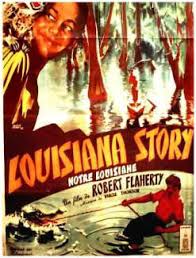
download LS 1

This is a glimpse of how the black and white film was presented to the world. The local papers ran black and white promotional and reporting spreads.

Mommee produce cart


This chapter is very much an amputee without its photographs. As I sit here with my chronic foot problems, in my fifties and in decline in so many ways I feel a kindred relationship with the chapter itself.  The place where the rights to the pictures and the finest instances of those images resides is at the Roy Stryker Papers and Collection in the Ekstrom Archives of the University of Louisville which has now largely been renamed the Standard Oil (New Jersey) Collection .  But the chapter such as it is appears below. A pdf version of a draft of this chapter is available EmergingViewsChapterTwoInsidethelenses.


Here we go:

Chapter Two: Inside the Lenses, Cajun People and Material Culture


Section One of Chapter Two:

THE LOOK OF POST WAR ACADIANA AND THE PHOTOGRAPHIC VISION

Because of approximately  twenty photographic plates needing to appear in sufficient size and quality this chapter has the length and the cost to make it in many measures the bulk of the book itself. The photographs are worth it I believe. However, this can distort the reality that  more of the text is about Louisiana Story than about the SONJ project.  In this chapter there is a good bit of Arnold Eagle in evidence and he operated in both worlds. But before dealing with the operations and goings on based in the Nettles I wish to take the reader a few hundred yards down the street that runs alongside St. Mary Magdalene Church and in front of the Nettles. On the grounds of that fairly impressive church is fairly impressive statue which at a smaller church would truly stand out and draw views but as it is it remains only moderately impressive compared to the lofty tower of a church situated on a high pediment..    


In 1939 on the Feast of St. Therese of Lisieux, Dudley Leblanc donated a marble statue, granite pedestal and concrete base of a state of the Frenchwoman who had been canonized in 1925. Had St.Therese, or Therese Martin,  lived a long lifespan we would have been  seventy six years old in  1939 and only 52 when she was canonized. Today she is a recognized Doctor of the Church. This honor was bestowed by Pope John Paul II. That honor is difficult for non-Catholics whom I would love to have understand this text to grasp. The Catholic Church considers itself to be about 2000 years old and has alway honored the exceptional among the faithful from the Death of St. Stephen. Churches and monuments in the thousands have been dedicated to this vast industry of veneration. How many canonized Saints there are is something that serious people have killed and  argued over. Being a canonized Saint is a big deal, really big deal and there are lots of them.  There are thirty-three Doctors of the Church. These are a very diverse group each of whom represents in some way a  great segment of the vast and complex Catholic heritage.

One of those  thirty-three very exceptional  names has been added since 1939. One would have to say that in terms of Catholic iconography, doctrine and other measures Dudley Leblanc knew how to pick a winner. One could argue he was only caught up in a popular religious movement but that really is not a sufficient explanation. The Cajuns like Dudley Leblanc had a talent for picking the biggest winner imaginable in the Catholic world although for others who choose not to examine religious history in a serious way this all may seem very irrelevant to American history. Nor was this an obvious bet, she was in her twenties when she died. This may seem irreverent to many but to a certain kind of person her face is very beautiful, She had a kind of wit and verve in her writing which was in stark contrast to some other spiritual writers of importance. Dudley Leblanc saw in her a symbol and a stream of thought  worth supporting.

Dudley Leblanc is not known for his speeches or writing or writing on her behalf although he was a very well known speaker and writer. He is known for his donation of an image. Cajun beauty pageants, the HADACOL medicine shows and various other visual expressions were very important parts of his legacy. The blessing of the fleets, the Courires de Mardi Gras, the fais do-do, the tintamarre and many (but not an unlimited list) of other expressions form part the Cajun visual language and system of expression which form a vital part of the culture the Standard Oil Documentaries came to express for and interpret to America. They liked to think and there is quite a bit of evidence that they were pretty good at this sort of thing.


In addition there were and still are many communal activities that defined the community and shaped Cajun life The SONJ photographers did capture some of these events such as the boucherie, the pirogue races and some from the more deliberately exhibition related categories such as  the blessing of the fleet.  Flaherty, as mentioned earlier in this text, keeps the focus tighter than anything that will allow much of this visual language to seep into his film. This text in many ways attempts  to find an understanding of what happens when various visual languages come together and especially when theses specific languages did come together in this particular instance in mid twentieth century America. It is also a story about and a treatment of how these languages and their audiences did not communicate or converge. It is about what can be learned from the way different communities and segments of society competed for ears and eyeballs in an earlier period in the information age.


This chapter leaves out a,most entirely two forces which shaped the production of film and still photographs in this study. More or less the McIlhenny family and the Standard Oil organization are left out of the discussion except  for being addressed indirectly when the Cajuns or Flaherty and Stryker’s documentarians are dealing or being informed by one or more of these other two factors.the major exception is right in this paragraph, just here: Standard oil defined the total concept of the film from the start with a commission for a particular thing. Going through the primary sources on all this is not so simple and even the Calder-Marshall and Rotha biographies   fail to make  the point clearly in a few words. But the rather excellent essay “Step by Step’ by  Eva Orbanz that appears in Filming Robert Flaherty’s  Louisiana Story has a very succinct summary of what needs to be gotten at here.

On april 3, 1944, Roy Stryker, manager of Public Relations for Standard Oil of New Jersey, invited Robert Flaherty to New York. He had something to discuss with him over a bottle of Jameson’s. Would Flaherty be interested in making  a film about the difficulties and dangers of oil production?    An industrial film that would be interesting enough to show in commercial theaters?

Flaherty was interested.   


The commission was not to make a film about the Cajuns or about Louisiana but about the challenges that Standard Oil faced in its pursuit of its basic industrial position. The challenges faced by the oil industry were to be rendered entertaining and meaningful by Flaherty’s artistry. In terms of knowing where the money came from the Cajuns were just along for the ride. But both the fact that Roy Stryker did the asking and the fact that Flaherty was the one asked do frame that business meeting in rather  definite and telling ways. These were not just any two men. They were not strangers and it was not the first time they had been involved in large projects connected to one another.


This is not a book about Pare Lorentz, the FSA,  the collaboration of Helen Van Dongen  and Flaherty on The Land or Roy Stryker’s direction of much of the vast photographic project of the FSA.  It does not have to be a book about the 1930s to recognize that this was in many ways a rebirth with private funding of a massive publicly funded project from before the World War. But anyone who knows anything about the reputation of reborn or resurrected entities knows that the new is usually quite different from the old.  The FSA and New Deal projects did not just simply pause and then start up. A great deal distinguishes the two project and historians of documentary film  have tended to love the FSA — Pare Lorentz era  and nearly ignore this era with the limited exception of Louisiana Story studied and written about with some apology. However just before the work on this book began in the 1990s there were a few scholars who had begun to build on the tiny beachhead of learned discussion of these images. Some of that work was literally going on and coming out  around me as I was starting to put this together.     


The photographs and the film studied here have a history of their own.  The work of Arthur Calder-Marshall on Flaherty’s film and the by contemporary scholars such as James Curtis and Frank de Caro have shown that these same images can be valued as their own historical entities.  I have benefited from the careful and creative analysis which such scholars have provided.  In these pages I seek to understand the photographs as they relate to a social history of cultural group as it is recorded on film.  Perhaps, this comparative and mutually referential method allows more knowledge of all the evidence.  The weaknesses of the method may be exacerbated by the relative brevity of this work.  However, effort to push the frontiers between detailed photographic analysis and a more traditional approach to social history comes from a conscious conviction that this effort will bear fruit in a better historical understanding.


For the purposes of social and cultural history the photograph offers advantages and disadvantages.  Scholars often write and speak of the majority of past persons as “the inarticulate.”  Ironically, these folks spoke, created, built, planted and did numerous other things which expressed their personality in articles of reality.  Their communication, however, becomes either ephemeral, obscure or unintelligible unless someone records it in a clearer more permanent way.  Because this may not happen and because if it does the sources are often ignored, the folk cultures, the masses, the plain folk and the poor of history emerge through the writings of the elite and through statistical evidence.  Both of those sources depersonalize the subject of study and tend to make social history seem less detailed and accurate than diplomatic or political history.  The photograph reminds the historian that his subjects were living beings, existing in the complex and meaning world of personal experience.  The Cajun raconteur Emanuel Mores died as these photographic projects were completed.  His version of the folktale “The Two Ships” captures the situation of all historian s.  Yet it especially applies to this study.  Moras’s comic tale has been recorded as follows:


A cold wave froze the sea and a captain

    shouted to another that a cold wave had

    frozen the ships.  But he did not answer.

    The other shouted the same thing and did

    not get any answer either.


   It made them angry.  They began quarreling.

    The next day the sun came out, the ice melted,

    they were freed, they sailed and the frozen

    voices began to melt.  The ships had left

    the place, but other ships passes there and

    heard the quarrel, saw no one, heard lots of

    noise, but no one in sight.  The frozen words

    were melting.


Leaving aside the comedy of the metaphor and the humor of the poem,  this metaphor seems apt for trying to create a sense of a largely visual dialog now in the twenty-first century based on pieces of communication revived from  a sleep in various forms of preservation over the years.  The historian must take the frozen words and images which he discovers and try to reconstruct the experience of ships which passed.  In the previous chapter the history of the region and people to which the photographers had come was introduced. However, there was no detailed  description of the kinds of realities a photographer or motion picture cameraman can easily capture in their lense. This chapter has three parts. The first part is what you are reading now. The second part is a description of the Cajun hose and a discussion of how the Cajun house relates to the rest of Cajun culture and the Acadian heritage as it is manifest in Acadian material culture. The third and final part of this book works through the SONJ images selected and demonstrates an approach to using these photographs and photography of this sort as an historical source and document. That third part of this chapter is the part of this study which singularly fulfills or should fulfill the promise made repeatedly to take the images seriously as works of history in their own right.     


Looking for the unique images of Acadiana, photographers reached out, like one of the captains in Moras’s story’, to the Cajuns who were living and active to them but are now  frozen in their frames as far our text is concerned. They were trained, skilled and experienced observers often succeeded  captured persisting material manifestations of Cajun cultural that had become rare in the 1940s. In some cases they preserved the information that had some use in the restoration of traditional skills, in other cases they preserved what may have been the only serious portrayals of a given reality on film. They tended toward the distinct, quaint and old fashioned in their choices of subject. That means they tended to photograph places or people who tended in one way or another to be examples of material cultural persistence. The questions a student of Louisiana’s  Cajuns  will have about material cultural persistence cannot resolve themselves here.  But it is possible this chapter will provide a better basis for asking the right questions.

The other interesting set of questions related to analyzing these images is about what may be learned about how the Cajuns photographed related to their subjects. Merely by existing the photographs demonstrate that the Cajuns and the photographers  had substantial interactions. These are not satellite photographs.The photographs were taken on the ground by people who collected other information not contained on the negative. One must also ask how the Cajuns allowed themselves to be frozen in their encounters with photographers.  Finally, how did each party see their encounter with history — the ships to come.


One factor to be considered in understanding the look of Acadiana as the photographers encountered it is to understand the way peoples and cultures interacted with each other and the built or fabricated landscape. Acadiana had an identity as part of the United States as well as many other sources of its cultural identity. So besides Cajun culture in all its rich complexity and American culture in all its richness and complexity there were many other possible adjectives designating a culture which might be applied to  the people, buildings and physical objects which the  photographers tried to capture on film.


Besides Confederate, Francophone and American connections and empathies there are other ways of looking at patterns of people and cultures that in some way typified the region.  The region has a long tradition of harboring those whom some still call Emigres. Literally, this only means emigrants or people moving out of a country. However, in both Britain and the French colonies it acquired a special meaning as referring to the Bourbon nobility who fled from the guillotines that killed the majority of their population during France’s reign of terror which was in many ways brought on by the American Revolution and the French role in it.The pattern begun in those early days had continued  in the centuries before the SONJ projects and has gone on since those projects ended. These left visual cues that the photographers were poorly prepared to discern but would have shaped some of the lives and communities that they filmed or shot. Before Simone Delery’s book Napoleon’s Soldiers in America was published long after the years in question there was little available to alert people to the presence and contribution of the Napoleonic Officer Corps to Acadiana. The boy in Louisiana Story is named  not only Alexander and Ulysses but Napoleon and that name also is  an apt name for a Cajun boy in its own way.  

In certain circles accessible only to the folklorist in Louisiana Emigres is a designation that has come to mean highly elite populations of Francophone background who fled to Louisiana in organized groups to save their lives and settle. The waves of such refugees are: 1. The Bourbon Nobles fleeing the reign of terror, 2. the planter and merchant elite both creole of color and white race  fleeing Haiti after the slave revolt, 3.the Napoleonic Nobility and officer corps fleeing here after his first and second falls, 4. the small but significant group of French speaking Austrian Jews who came here after the fall of the Hapsburg Empire and 5. the Vietnamese specifically who either were themselves or were attached to the Nguyens who are the Royal Clan of Nguyen of the city of Hue and it family of the Kings and Queens of Indochine. Acadiana politics has also always had a somewhat distinctive quality and these layers of people laid on by migration to the basic population groups that existed before  has contributed to a politics with a kind of heritage of relatively right wing politics has been one stream in the complexity of region that produced four term Democrat Governor Edwin Edwards and the first female to hold the office in Governor Kathleen Babineaux Blanco of New Iberia. Both were elected during a time when the Democrats were clearly to the left of the Republicans in what is basically a two party country. At the time of the SONJ photographs however, there had not been a governor from Acadiana since Governor Alexander Mouton the very Acadian Governor of Louisiana and father of the martyred Hero of Mansfield, General Alfred Mouton. The more recent years had seen a great decline in the prestige of the Cajuns and of the French language and although men like Jimmy Domengeaux and Dudley Leblanc were leading a movement to restore French and the Cajun heritage it was more noted for struggle than memorable victories in those years. This ascendance of English had a strong set of visual elements and manifestations. But most of all, to the degree that advertised products were most often Anglo-American or advertised in English, these picture, unable to capture spoken French, actually Anglicize the realities of their subjects’ lives by showing English words.  The photographers struggled to comprehend persistence and change in Acadiana just as scholars struggle today.  Todd Webb, one of the two Stryker photographers whose work most often appears in these pages, wrote to Roy Stryker the following contrast between Harnett Kane’s book and the realities surveyed.  “I was disappointed in La Fourche, where I went last Saturday and Sunday.”  Webb wrote from his hotel room in Baton Rouge, “I had read Harnett Kane’s  “The Bayous of Louisiana” (sic) and he neglected to say that a highway ran along the Bayou and that houses were really quite some distance away.  The people have turned almost completely away from the Bayou and the highway has taken its place.”  Webb would later discover that La Fourche had became famous as “the world’s longest street” and that in other communities the waterway still held ascendancy over graded right of way.  Kane, eager to see distinctiveness survive, had made La Fourche appear as riverine and unique in structure as it had been years ago. according to Webb. Not every scholar would agree about what Webb found. But we see this more clearly if we remember how he may have hoped for many easily obtained photographs of Cajuns in the town using the Bayous  and instead found cars, trucks, bicycles and wagons on the road did most of the work and achieved most of the connections between the Cajuns in this old Bayou Cajun settlement.


Acadiana during the 1940s offered much appeal to the photographers working there.  “Some day this week we are going to Abbeville to see Flaherty.”  Wrote Webb of the man producing Louisiana Story.  Robert Flaherty, recognized as the father of the documentary film, had received critical attention and some financial wealth for previous portrayals of remote cultures and places.  The man who had directed Nanook of the North, Man of Aran and Moana now brought his gifts to a Cajun subject.  His vision of a pristine culture would influence many.  The excitement of working with Flaherty in later days and Webb’s declaration that “Gross Tete and the Teche are both much better…(because they showed more cultural persistence than Bayou La Fourche)” all show that Webb and his boss never saw themselves as dispassionate scientists.  Yet, all parties to this project had ambivalent feelings about the ways this region differed from others in America. The distinctive appealed to them and made them feel successful. But that is not the same thing as them feeling that it should be preserved. However, from what can be remembered from nearly a quarter of a century ago there were more likely to be hostile statements from these generally Yankee aligned photographers when dealing with signs of the Confederacy and the antebellum South than when dealing with the distinctively Acadian. Todd Webb expressed weariness shooting Natchez which was “a crinoline crypt”. Nothing that strongly negative  was associated with his perceptions of Acadiana. But one must remember that a photographer can have all kinds of biases and a very defined agenda and still a shooter of the quality of any of these people will usually be longing most of all for the great picture most of all.  

The fact that there is no story titled Courir de Mardi Gras in the Roy Stryker SONJ collections is one of the most telling facts in the entire survey of what is and is not included in these photographs. The running on Fat Tuesday is certainly a very photogenic ritual of collection of chickens and other ingredients from members of a Cajun Community , beating the bounds around the physical limits of a community and a mixture of charity and intimidation. The whole rather elaborate ritual is  traditionally run by a ridelle under a captain. Men in masks and colorful costumes collect ingredients for a communal feast centered on chicken gumbo. This is done on the day before Lent begins with Ash Wednesday. Why this is not a major feature of the SONJ projects is open to question. But it is significant that it was absent.


The photograph has as complex a set of biases and insights as any other type of evidence.  Both art and science manifest themselves in the activity of photographers.  This paper has benefited from exposure to the correspondence between Roy Stryker and his photographers.  Stryker, while no photographer himself, loved the vision of the camera.  Stryker wrote the artistic and opinionated Webb encouraging words.  “Dear Todd, You are certainly going after Louisiana….” Wrote the office bound Stryker, wistfully, “Looks like the old Farm Security days:  storefronts, gravestones, interesting faces, etc., etc.  It was a nice set of pictures and I congratulate you.  Keep it up.”   The reader should recognize the living eyes which directed the mechanical ones. These men are deeply bound to their New Deal experience and the thing one often senses is that Standard Oil is subsidizing men and a few women whose hearts are invested in the old New Deal concepts. Neither Standard Oil nor the documentarians had a vision that came primarily from Acadiana or the Cajuns.  A photograph like any article of historical evidence is provided by a “witness” and comes through the filter made up of the witness’s interests, prejudices and medium of record.  Photographs provide access to subjects of various types within the context of a single document.  Careful analysis allows a unique view of gender, environment, popular culture and commerce to speak from the complex and holistic mesh of relationships which existed.


This study assumes that photographs have as significant and verifiable a message to convey to professional historians as any other medium. Text has been the dominant source type and should remain so but photographs matter as well.  It is difficult to determine how technical analysis of camera angles, lighting and other aspects of photography clouds the work.  Among the benefits of photographic sources, the greatest asset consists in their ability to speak to the reader’s imagination and intellect without too much introduction from their scholarly chaperone, the researcher.  However, the reader has no guarantee of any ultimate neutral objectivity on the part of the historian who must select the photographs and arrange them in order.Within the photographs, dress, vernacular architecture, transportation, ritual , and occupation serve as points of departure for scholarly inquiry.  The attempt has not been to support an essay on Acadian heritage and Cajun by looking at the breadth of visual imagery within the context provided  by texts and also try especially hard to seek out signs of persistence and assimilation with the  photographs providing key insights into the postwar period. The writer hopes to reveal in these picture and the study as a whole, the history of a people and region by investigating the information in a limited set of photographic documents as they relate to a limited set of questions of an historical rather than an artistic nature.  This study cares as much or more about the backgrounds of Todd Webb and Arnold Eagle, as a New Englander and an Eastern European immigrant respectively, as about their artistic style and is almost ignorant of the many technical questions about cameras, film and lighting which each of them had to answer every day.  A real effort has been made to understand these photographers and their perceptions and biases as well as all the cultural substance of the Cajuns, of Acadiana  and of whatever else they filmed. The human communication and perceptions and not the techniques of photography form the subject of this study.


The reason for mentioning that there was no folder called Courir de Mardi Gras is  because many photographs in this were taken as part of sets and kept as parts of “stories”, a term with a technical specific meaning here related to the ordinary English meaning .  These sets were centered around “stories” such as “The Pirogue Maker,” “River Story,” or “Scenes along a Bayou.”  This study seeks to recreate some of the feel of those stories even where the photographs have gravitated into very disparate sections of the SONJ files.  Perhaps, the final elements of structure to which this study aspires is a movement from environmental mandates on a human nature shared by all persons in all cultures toward those cultural and individual expressions which might never have happened except for unique Cajun experience.  Sometimes, the economy itself is distinctive and nowhere does culture cease to to shape and impact the relationship between Cajuns and their environment.  The section on architecture and the House in chapter one functions as a bridge between discussion of the functional and the sublime. and also between history and material culture studies. But America is a place where many things are hidden that would be obvious in a country where more people understood hidden hidden cultural realities.  


This study is an attempt to integrate sources and methods which are emerging as increasingly important in the study of history and to apply them to a unique set of historical questions. The most arrogant part of this work, and all good writing has an element of arrogance, is the effort to set a high standard of how historians can use photographic evidence. These questions are largely those on the interdisciplinary edge of history, community-studies, anthropology and cultural geography.  The desire by scholars today to recreate a lived experience of the majority of people in a historical period has inspired a wide range of scholarship of history and related subjects  in France and America particularly.


The study of photographs and sets of photographs allows the historian to determine the type of housing, farming and transportation which untied a recent society in a way not available from the descriptions in wills, building contracts standing structure surveys and the documents generated by agribusiness.  Vernacular architecture alone constitutes a part of cultural experience and articulation unknown to those reading social history until fairly recently.  Clearly photographs facilitate the development of a more ready apprehension of a region’s architectural style and landscape function than prose does.  The editors of Perspectives in Vernacular Architecture were somewhat inspiring to this writer in the early days of this project. I understand in researching the next section of this chapter that it brought out the potential of this quality of photographs and that the  Perspectives journal at the time was nearly as photographic in quality as it is textual.  Photographs also allow the historian to make strong prose arguments about the uniqueness of a style or the economic diversity of a farming community while allowing the reader access to evidence which functions as a counterbalance to the narrow focus of the writer.  Clearly, the historian has an obligation to describe individual photographs within the context of the photographer’s career and other factors not related to the function of the image a historical document or even as historical datum.  The wisdom of this approach and the value of the result are very much open to the question, all that is asked is that the study be evaluated on the basis of what it has set out to do.


Section Two of Chapter Two:

ACADIANA’S MATERIAL CULTURE AND THE CAJUN HOUSE

The Stryker photographers’ entire collection did not include much of the relatively few obvious very fine and upscale examples of Cajun architecture which are found near the places they photographed. They certainly did not seek out those which may have lost their distinct visual identity through renovation. Louisiana is a place which has several types of houses within the Creole and Cajun cultural milieu which have a basic modularity. The idea of a modular house in the extreme way in which these houses were modular is that one can start a house with a very modest amount of money and expenditure and live in it have a highly functioning cabin. One can then continue through many stages all the way up to something which can be called a mansion and at all phases have a highly functioning house except for the annoyance directly related to construction of new portions of the building. The system allows for many traits or ideals of the local culture to manifest themselves. There is self sufficiency which does not require a large mortgage, there is attachment to the land as one need not move in order to progress up the scale of financial progress and home value without leaving the same spot. It allowed the family, farm workers (slave or free when both existed) and contract labor to be divided with the home improvements the owners needed in a way which benefitted the builders who had to maintain less permanent labor and the farmer or business owner who might be glad to have work of value to him (or in some cases her) which his employees and dependents could engage in readily when the principal occupation of the establishment was interrupted. This sort of thing happens quite a bit in rural life. Often such an interruption might also involve weather that makes home improvement impossible but there would also be many times when it would be possible to work on the house but not on the normal profit center of the establishment. Thus  in the mindset dsitnctive of the region value could be added even when immediate profits could not be achieved.


After the relative decline of much of the region following both the Civil War and World War One The modular technology common to architecture in the region also had the effect of allowing the owner to disguise the distinct cultural identity of the home by adding what amounted to nondescript or confusing elements to later modules. Thus in time entire groups of houses with  a basic Creole or Acadian identity  were instead sort of odd mainstream American or regional Southern houses.


As stated above, the Stryker photographers’ entire collection  of architectural or architecturally framed images did not include much of the relatively few obvious very fine and upscale examples of Cajun architecture which are found near the places they photographed. The same selective interest also goes for more upscale typically Southern and Creole architecture from the nineteenth century which dots the countryside and clusters in the towns and villages of Acadiana. How such distinctions are made and how various housing types relate to the people living in the towns is a question beyond the scope of this study. But in general the types of houses described above do exist and are not much found in the SONJ photographs.  The interests they followed were not laser focused and narrowly singular either. was in evidence which depicted the economically disadvantaged, the working class, the Acadian, the industrial and the natural —  a house had the best chance of making it on to film if it was a poor or low cost home with a moderate Acadian identity and working class occupants in an industrial or very natural set of environs. Few houses had all those qualities but the trends and tendencies are clearly there. In studying what is on the film there is always a need to remember what is not making it into the lenses. Like all works of human understanding these photographs telescoped reality into a coherent set of themes, concepts and relationships.  To a large degree, the metaphorical ships have left and the words have little context if we do not have someone to tell us they were there. The pictures come from a place and time. WIth the benefit of a broader cultural history that  shows that place and time the photographs have the opportunity to become coherent conversations once again. The historical background provides a kind of map and description such as a good Crime Scene Investigation Unit might compile after a crime has occurred. This at least is a simile and not another metaphor.


During the research for this study a  significant survey of Acadian heritage and pure Cajun houses was undertaken directly by this writer under the direction of Jay Edwards of Louisiana State University, an anthropologist who also directed the Fred Kniffen Laboratory. This project was undertaken in conjunction with his Vernacular Architecture Seminar. The underlying purpose was to get some idea of the prevalence or at least availability of the Cajun House to the photographers in a small area that virtually all of them would have visited more than once. In that project a research was conducted of traditional communities, collections of traditional houses such as exists in Acadian Village in Lafayette. A review of  the Vermilionville living history component of the Jean Lafitte National Park and finally to review folkloristic and historical textual sources and photographs. Unfortunately, the research produced by that last part was lost and the reader will have to rely on the general sense of the sources from which it was drawn as manifest in the bibliography of this text.


After, that research was done a formulaic concept was put forward which allowed for some points in more scientific system as well as an informed judgement  in a more humanist system Using both systems it was arranged for evaluations to be made and credited for  the deviations from the standard to be well understood. This second phase of the project culminated with positing that a classic Cajun house developed which had all or most of a set of easily charted features, including the following:  

  1. A sharply inclined gabled roof.
  2. Construction of cypress walls lined on the inside with a mix of Spanish moss and mud.
  3. The floor is elevated on piers from the ground.
  4. Has galleries in the front and back of the house.
  5. The front and back of the house are on the longer sides of The rectangular structure.
  6. The front gallery runs the full length, or very nearly the full length of the house.
  7. The space above the ceiling is habitable.
  8. The windows have non-louvered shutters
  9. The galleries are beneath the solid wedge of the roof and not beneath an extension of the roof.
  10. There are windows on every side of the house.
  11. The roof is covered with cypress shakes.
  12. The profile includes an acute, an obtuse, and two right angles in its elevation
  13. The walls consist of center-matched or quarter-matched horizontal planks

The third stage of the project was to survey all houses on the road which becomes State St. in Abbeville and record a positive or negative for each characteristic, this survey will extend from the Woodlawn bridge to Henry Louisiana, The other route surveyed will be Hwy. 14-Concorde St.-Charity St. from Kaplan to Erath.  A drive by photographic survey was made first. then an external sampling of measures and more photographs was made of homes scoring at each level range of high medium and  low  However there were entire segments that were not sampled in each category. These samples at all three  levels will provided a little scientific basis for asking how many houses embody enough of these qualities qualities to be a visibly Cajun House..  At least one photograph and the physical location of each house with a score of eight or more positives will be retrieved in this portion of the project. Then a good number of the high scoring sample houses and a few houses in the four to six  points range were entered and thoroughly  examined for construction techniques and the  effects of renovation. The results of all these investigations was preserved and the were recorded and  contrasts between high scoring exteriors and inauthentic construction techniques were noted .


Fourthly, the age, variation, appearance and general feel of the houses with the scores will be contrasted with the model house. it was then evident that the tradition was more varied and vibrant and complex than the model but that the model was nonetheless a very good rubric for having a good investigation and good conversations with owners. Flaws in the set of characteristics and the method as it unfolded were discussed with Doctor Edwards, with owners of the houses and residents and before he dropped out to pursue a related project I discussed these things with the architecture graduate student who was my research partner. Files were developed for  Houses which scored high without seeming Cajun and those scoring low while appearing Cajun will be photographed and discussed.Finally, an effort was made to determine whether certain sets of characteristics appeared together most often and to set up a formula whereby one can analyze the basic frequency of certain characteristics.  

I ended this project with a great deal of confidence that the Cajun House was an important part of the landscape and that it was fair to note that the SONJ photographers had not come to understand the  Cajun House very well.  It seemed that the limits and structural qualities of their project had a great deal to do with why they did see well and missed many opportunities. It was a fair modern American response to ask the question: who decides what a Cajun house is, and what its features distinguish it?


But I was left feeling equally sure that the question could be answered fairly well and that the shallow quality of the architectural awareness I detected in almost every photographer was a real thing to be criticized. That question underlies other questions about Acadiana’s vernacular architecture.  The region is a diverse and complex landscape where the natural, built and near-built environment interact in very close and somewhat subtle ways.  No single simple structural analysis can make sense of all the buildings and builders which have appeared on the scene in this new Acadia.  This chapter discusses a sort of “classic” house.  This typical Cajun house represents a significant number of homes built during those periods of history in which Cajuns developed greatest autonomy and community identity in Louisiana.  This discussion also takes note of the new archaeological evidence for a distinct Acadian architecture prior to the expulsion from Canada’s original Acadia.  The house type defined as Cajun hereis readily recognized locally and has inspired very numerous works of folk art, including paintings, drawings and photographs as well as three dimensional models and toys in a variety of forms.  Furthermore, the house type has commonly served as a symbol for those seeking to promote local “cultural tourism” by outsiders and finally it is a house-form continuously adapted and imitated by Cajuns for their own homes until the time of this writing.


The exact situation in the 1940s was not possible to determine in the time I had but it was possible to see that these photographers and their wealthy patron could have learned a great deal more than they appeared to have actually bothered to learn. The sense this gave me was not that they missed the whole of Acadian architecture but that what they did miss mattered and could be evaluated.


In the environs of Lafayette, Louisiana (the largest city in the prairie region of Acadiana) two collections of historic Acadian or Cajun houses have been established and made open to the public.  The oldest of the two collections is the Acadian Village, operated by the Lafayette Association for Retarded Citizens which was developed in the 1970s.  The six houses appearing in figure “insert info.” vary significantly in age.  The Aurelie Bernard house, formerly of St. Martinville consists of two portions the original built around 1800 and a symmetrical extension sideways added in 1840.  The Thibodeaux house from Breaux Bridge and the Le Blanc house from near Youngsville both date from near the end of the antebellum period.


The fairly broad sampling of prairie Cajun houses at Acadian village constitutes a reasonable representation of what local people see as classic Cajun vernacular architecture.  Many feature predominate in these Acadian Village houses as a group but there is also a gegree of variety in the features of each house.  Significantly, all the Cajun houses at Acadian Village share the following features:


First, all have gabled roofs.

Second, all have an eaveside front.

Third, all have a  basic frontal symmetry with regard to doors and windows.

Fourth, all have a gallery under the eaveside.

Fifth, all are elevated from the ground on piers.

Many other features including the use of cypress in construction appear in all these Acadian Village houses. These houses were not conveniently collected in the 1940s but they were around and people were talking about them.


Those details await further discussion below.  The second collection of houses also serves as a useful reference point from which to evaluate the SONJ photographs and their record of Cajun life.  Vermilionville is a project of the Louisiana Endowment for the Humanities, an affiliate of the National Endowment for the humanities.


The two Cajun or Acadian homes actually collected from the surrounding area share the five features listed above as common to the Acadian Village homes.  They also share cypress construction and other features not listed above with the Acadian Village homes.

One of the homes brought to Vermilionville belonged to Armand Broussard a wealthy Cajun who belonged to the slaveholding planter class.  the house appears distinctly Cajun despite some ornamentation which may have been Anglo-American and Creole in inspiration. In my view of the visual language of the area it seemed to me that the owner was asserting both ethnic identity and a sense wishing to be part of his region and country in which Cajuns were not the dominant ethnic group.  This Broussard home was built in 1790 and its large area and elegant appearance show that the Cajun style was apt for building homes which were as comfortable as most if not all in the surrounding area.  Another home of comparable elegance at Vermilionville is a hipped roof Creole home brought from the Mississippi River Valley and not to be confused with the local architecture.


The above description of these buildings serve merely to demonstrate in verifiable terms a fact which is difficult to support from written sources but which is readily apparent to a perceptive observer.  That fact is that people in Acadiana share a perception of the Cajun or Acadian house.  In fact Cajun people and their neighbors who wish to be more like them have continued to model their homes on this image throughout this century — before and after the SONJ projects.


Important questions arise concerning the interplay between the geographical and historical reality of Cajun houses, the perception of local people that certain features typified a Cajun house and the attitudes of outside researchers and artists towards the local vernacular architecture.  Over the entire history of Cajun houses to the present a complex system of feedback has occurred in which a tradition developed and was understood.  Artists, builders and consumers reacted to the tradition.  The newer homes within a still definable tradition expressed reaction to previous buildings and the impression those buildings had made on the community.  The cycle would continue as these buildings in turn shaped perceptions and were used as models for further building. Thus in short the process of change after establishment in Louisiana might be described as follows:

A= Acadian building tradition as far as an important symbol of their home in what is now Nova Scotia..

e = The effect of environmentally driven adaptations derived from the Caribbean, Louisiana elsewhere. Dating techniques seem to show that the first homes appear to have largely reflected A but quickly became Ae in reaction to the differences in climate and available building materials. and Visual Rhetoric


Section Three of Chapter Two:

( Note to 2016 review group at LSU the images are not currently available to be seen, Reading the text is not entirely pointless in my opinion or I would not be sending this in to be read)

IMAGES OF CAJUN LIFE, WORK AND ENVIRONMENT

The last section of this chapter is a careful examination of some of the images themselves.

it is the heart of this study in which after all the background has been established and before a higher criticism has been applied to the methodologies the photographs are allowed to inform those interested in history. That is they both guide a focus of external evidence and allow for purely visual information not otherwise readily available.

Plate one, photographed by Todd Webb in May 1947, displays the complex rural pattern of cultural and technological development in an assimilating Acadiana.  The levees show both persistence and change in farming and in relations between various cultures and the people who lived those cultures.  Acadiana in Nova Scotia made levees to protect their crops from encroaching swamp and sea water.  The later immigrants from Scotland hired Acadians to design and maintain their hydraulic systems.  In plate one, levees remain a daily part of life, but the water management of rice, not corn or other grains, emerge as the problem.  Here flooded and prepared fields await the airplanes which will plant seed in a broadcast method — strangely combining  new technology with the oldest form of sowing grain.

The farmhouse is of a Southern “shotgun” architecture, which in itself may be a primal expression of Louisiana’s vernacular architecture.  The home is a set of rooms, two rooms wide, going back to the kitchen.  A separate roof covers the porch.  A more traditional Cajun home in contrast would have two storeys , the first alone having a ceiling, and the upper floor would extend over the porch.  The Cajun home traditionally had a steeper roof and rested on cypress blocks at 15 points.  While even the home appearing in plate two, differs from the most typical homes, the Acadian home went through an eighteenth century and possibly two nineteenth century shifts in design and could also expand sideways from its original 15 block base.  Cajun architecture remained significantly adaptable throughout the nineteenth century and has enjoyed a miniscule revival in the last two decades.

The following chapter goes into a more careful and detailed study of Cajun vernacular architecture than is possible in this chapter.  There seems to have been a continuous adaptation to outside forces but there is also a sort of geometrical rhetoric of Cajun houses which is evident during the thirties, forties and even at the time of this writing.  This rhetorical system could preserve forms despite changes in materials and technologies.  The photographers seem to have had a fairly good eye for the “traditional Cajun house” in all its permutations.  The silhouette with its gallery cut away into the eaveside of a gabled house and the eaveside gallery fronting an artery  of the village (bayou or street) is the strongest feature of Cajun vernacular architecture.  This silhouette functions as a sculpted shape against the sky which makes a political statement about community an identity.  A statistical sample taken and anlyzed by this writer indicates that many such houses exist even among newly constructed houses today.  The survival of Cajun vernacular architecture indicates the kind of complexity which exists in the collection of photographs and is confirmed by other evidence.  An important hypothesis for this study is that Cajuns adopted their neighbors’ artifacts and values but also propagated their own values and artifacts to their neighbors.  The evidence gathered for this study indicates that a unique cultural region has endured and does not appear to be in danger of dissappearing soon and even communicates more of its music, foodways and ideas than ever before to the larger society. On the other hand the differences between the larger culture and Acadiana as a society are somewhat less dramatic than in the past.

Why the Acadian home has more often vanished than it has been modified becomes a complex problem.  Architects today admit that, in terms of comfort in the elements and function, the Acadian home outperformed most structures available during its decline.  Apparently, the conformity of farmers who wished to have an American home conspired with the diminishing number of builders who possessed the knowledge to construct an Acadian home.  Carl A. Brasseaux’s discussion of housing in The Founding of the New Acadia and Lauren Post’s discussion in Cajun Sketches offer more highly accessible treatments of these issues.  Apparently the house varied in construction and yet remained within distinct parameters of cultural development.  The photographers did not know a great deal about housing or about the different influences which might be displayed.  Todd Webb, who despised ante-bellum mansions, the French quarter and Southern pride also detected a pride by the Cajuns in their  old cypress homes.

Webb’s impression of the people and their relationship to these houses seems richer in prejudice then perception.

“W.B. has lined up an old house for me which I am

     staring on tomorrow.”  He wrote to Stryker, The way

     they cherish these old houses gives me a pain in

     the ass but I think it will be pretty interesting

     to photograph.  The Live Oaks (sic), festooned

     with moss are fascinating and somehow seem to

     be in line with the decadence that I feel in the

     South.  The cypress tree is a wonder, not only in

     growth but in use.  The wood itself is beautiful

     and almost everlasting and it is almost extinct (sic).

     Another American tragedy of which there are

     many in the South.”

The family in the shotgun home pictured here in plate one in 1947, lived near Abbeville.  These farm people likely spoke French and English, canned foods themselves and bought them canned.  Their furnishings may have included Cajun spindle and calfskin chairs purchased nearby, as well as various store-bought and mass produced products.

Plate one is a composite picture of gradual transformation which reflects the relative independence of the Cajun farmer.  Unlike the urban ethnic working for a non-ethnic, the Cajun farmer could adapt gradually to a changing world.  His family would embrace a new product or folkway because they preferred it, or because it more efficient or at least because the old ways had perished for lack of expertise and supply.  The Acadiana region retained a sufficient base of independent producers to account for their relative autonomy as a culture for 200 years.

Harnett Kane called Acadiana a land of “primarily small men and small affairs,” James H. Dorman has written of the prevalence of “ribbon farms,” and few have failed to mention this diffusion of capital.  The “ribbon farm” serves to highlight the importance of community to a society of small land-holders.  “Ribbon farms” is the term which rural sociologists use to describe farms where farmers live near one another, have some centralized services and work small holdings.  Even today many rural Cajuns work for themselves.  Slavery, sharecropping, salaried work, and accumulated wealth have all changes the region. The industry paying for this project also was already having and would continue to have an effect. The income from oil leases and royalties allowed extended families and nuclear families villages and other units of Cajun culture to make better adjustments to the demands of the era and the problems with the limits of the region than if those oil checks had not come in. In folkloristic terms many oil people from outside the region have commented on how the Cajuns were notable for marrying oil money. Because of legal situation that amount to a great deal on wonders if this book will ever be published if one writes that the oil industry also imposed many costs on the Cajuns that were never mitigated or even recognized. This cost however was very real and still goes on and the legacy lawsuits that have recently been the subject of much controversy are only a small part of that picture. But it is also true that oil provided a much appreciated  and  unique support to the economic struggles and plans of the small landholders of the region. The oil industry  came at just the right time to prevent other crises and  to bolster and support a life of  hard work and the productive capital that the typical small farmer or  (more rarely) landowning trapper already had and continued to maintain. Oil was in itself a kind of economic system recreating the main business climate in the region, in it there were many benefits and opportunities and also some very destructive and unpleasant forces. In that way it was not so different than many other economic systems which had existed at various times in the region.  None of those economic systems ever eroded the base of Cajun autonomous small producers so radically that the tradition of independence withered entirely away.  Cajun racism in the past to the degree that it was distinctive in any way from other racism tended to  focus more on two factors. Those factors were the relatively weak honors an African-American genealogy  would bring to a family and therefore a desire to limit mutual filiation. The second factor was keyed to the fact that Blacks, even free people before and after the war, tended to be employed by wealthier people. Thus free black planters had a very important role. Cajuns had always shared employment within classes  or segments and employed some fellow cajuns continually, But working one’s own capital and means of production and doing this as much as possible within a community with a few elite leaders of significant wealth and with communal facilities  remained a persistent ideal over the centuries and regions. Very little racial conflict or violence ever occurred between Cajuns and Black farmers and ranchers who lived in more or less autonomous communities when the Cajuns were relatively stable and at peace. Men who had beliefs and used language no history department at a major university in the United States would be likely to support would beat  and intimidate white men who were or were not Cajuns and engaged in race baiting of the local colored farming communities. However, in crises there was always a sense among everyone in the region that virtually anything might happen. Some of Longfellow’s idea of a people who love peace above all else is true. That is partly because Cajuns fear more than most people what they may become when pressed too hard. Whether true or not the idea of limitless rage as an ethnic quality is very old and widespread.


Farming and Cattle ranching, war and the learned professions are the most amenable ways to advance in Cajun culture across many times in history.   In recent years, trapping continues but has not enjoyed expansion or been able to offer much steady employment, commercial hunting in banned, and barnyard and cottage industries have declined in recent years.  Only the aquaculture and fisheries enable large numbers of small producers to earn a good living without dependence on the employer.  Those same industries employ many people in the processing and marketing end of the industry, proportionately more Blacks, Anglos and Vietnamese than Cajuns.  Where French language and Cajun customs persist most intensely, where the community is less closely tied to the mainstream labor market, more people enjoy the autonomy traditional to Cajun life.


If the farm in plate one also included stock operations the herd would likely have found its way a few miles up the road to the corrals directly behind the men pictured in plate three.  This stockyard sat on the nearby Richard family property on North Henry Road just outside Abbeville.  The local stock traders watch an auction in progress.  Like much of the local economy, stock auctions were managed by a cooperative.  The auctions in this building occurred in a sort of amphitheater where the cattle could be viewed in small lots when driven in from behind the wall against which the boy is seated.  These men look like other stockmen and farmers in other places.  The lack of accouterments of “cowboy” culture (boots, Stetsons, wide belts, etc.) distinguishes them from groups to the West of Acadiana.  However, this serves as an example of visual images with little evidence of cultural autonomy.  Assimilation seems nearly total.

This picture required the photographer to do very little in terms of composition.  The mix of people, all male and all serious captures enough of the mood sought by the photographer conspicuous to his subjects and yet he does not greatly alter their behavior.

One of the traps a scholar can leap into in this type of study concerns the distinction between Southwestern Louisiana’s economic adaptation and Cajun culture, with the grassy prairies here any European group would have raised cattle.  Nonetheless, stock-raising has formed a vital part of the Cajun economy since first settlement.  In the early days, this mobile property was brought and sold in the bordering lands of Mexico, English West Florida and among the Anglo-Americans settling above Acadiana.  This provided some of the needed money for transportation, resettlement and the development of the lands in the area.  Another form of trade which competed with the cattle drive was the water traffic in furs and foodstuffs which once tied together all of Southwestern Louisiana.  To exclude the physical environment from any model of how behaviors developed would miss a great deal.  Yet the interaction between human culture and the environment becomes highly complex in practice.


The farm near Abbeville and the stockmen both exemplify change and assimilation on the prairie.  The life of Cajuns on the prairies of Southwest Louisiana can not easily  distinguish its ways of sustaining prosperity from countless other plains and prairie cultures.  To the degree that the prairie economy was distinctive, such distinctions (flooding fields for rice, crawfish and catfish) drew upon a wetlands tradition.


The photographer took the picture in plate four not because it was typical but because it fulfilled Stryker’s mission of recording that which soon might pass away.  Without human figures, the photo records the garden and the home as a slice of history.  Empty of children and the other active signs of life the picture speaks, appropriately enough, of a past in which such homes as this had dominated their surroundings.  The intensity of economic production which left little room for such luxuries as a front yard reminds one that Acadiana has never experienced the depopulation of the countryside, by migration to the city, which characterized the rest of the nation since the 1880s.  The land grows ever more populous creating pressures for high profit, labor intensive rural industries.  Journalists, scholars, politicians, economists and sociologists tend toward the urbane.  Fewer intellectuals and writers who become well-known write from the prospective of a resident in a small rural community.  Perhaps this has something to do with those who see poverty whenever they see farms.  If a family owns herds, buildings, boats, and tools and a small spread of land but the immediate descendants of that family become debt-encumbered, college-educated condominium dwellers does that constitute upward social mobility?  In most economic and psychic terms it certainly constitutes a fall in fortunes.  Consumerism and prosperity must be distinguished  by a historian seeking to study those who cherish an economy based on subsistence and cooperation.


This small home has more Cajun features than the shotgun home on the Abbeville rice farm in plate one.  The economic conservative living in the home pictured in plate four practiced a mix of commercial cucumber planting and shrimping.  Such a mixed economy had already declined in Grand Isle, most of this shrimper’s neighbors had abandoned cucumbers to invest themselves completely in the increasingly lucrative seafood industry.  This raises certain ecological questions.  The earlier wetlands economy involved such a variety of small scale operations that the region’s natural balance continued. to produce sufficiently for the population.  Once refrigeration and better transportation made more distant markets accessible, certain aspects of the Cajun economy would benefit unequally.  This change did not obliterate distinctive cultural traditions, it could accelerate assimilation and damage the environment.


One also wonders if the shrimper’s wife lost economic status as production moved into the male dominated offshore world.  Did barnyard animals and subsistence gardening diminish as life and work became more specialized?  The answer seems to be that Cajun women experienced role strain and had to adjust in a much shorter period of time to the transition from a world of family economics, to male providence of nearly all wealth and again to a two career or cooperative economy.  It is unlikely that a significant number of most rural wetlands Cajun women ever divorced themselves from income producing activities or lost power and interest in the world outside the home.


The role of women in the economy of Acadiana is tied partly to the role of the family in the economy.  Acadiana in the twentieth century has increasingly moved towards the separation of family life and economic production which typifies the modern, industrial and post-industrial global economy.  Like countless traditional societies, the Cajuns have been forced to adapt to an increasingly market driven economy in which the accumulation of capital and the development of the new technologies has increasingly led to a specialization and concentration on the production of a few goods and services by members of units other than families.


The success of the local culture in maintaining a large economic base tied to its traditional folk activities is remarkable despite the relative decline of such activities.  The home garden and the small barnyard establishment of chickens, and milk cows have fared less well than traditional male activities discussed in detail below.  However, research would need to be done to ascertain how many families remained vital economic units.  There are still farm families where both spouses cooperate on producing a few staples, women who run small businesses with their relatives from their homes and other signs of persisting involvement by some Cajun women in preserving their families’ economic independence from marketing their labor and developing the capital of others.


The role of women in the culture of Acadiana has yet to become the sole focus of a single monograph.  The economic and social development of the region must include women.Cajun society was still in the early Postwar period  patriarchal to the degree which nearly all Western cultures and many others have recognized men’s authority over their family.  Women certainly expected that during their peak childbearing years wives  focused much of their energy on childbearing and child rearing and that men did not

.

The old woman in plate five had over 100 living descendants and appears in the Stryker collection posed in the same porch and chair beside one of her youngest great grandchildren.  Rural and aged as she was, the photographers must have been as alien to her as she was to them and perhaps they captured this in the way her expression fails to engage the viewer directly.


In the photographs of Acadiana as opposed to other regions, the Stryker photographers have a high incidence of men smiling and relatively expressive of physical affection to their children.  On that basis alone one could not make much of an argument about relationships between family members.  However, it appears that many photographs show men in the region holding their children and smiling among other photographs taken in Acadiana in the earlier part of the twentieth century.  Many also show the serious paternal poses which were typical of the time.  Perhaps Cajun men felt more comfortable expressing physical affection for their children than did some other ethnic groups.


The following picture, plate six simply depicts the pride of a father in his healthy young child.  Cajun culture in prairie and wetlands centered around family life.  Religion, commerce and politics were all shaped by the family.  In politics for example a title of great power before a name was “Cousin,” and in doing business the negotiations between strangers are often preceded by an effort to discover and recognize any familial ties between the parties.  In the pejorative terminology of American mainstream society, nepotism functioned as a central mechanism of Cajun life.  This lifeway allowed the Cajuns to survive.  The keen scientific observer and Spanish governor Antonio de Uloa (much maligned for a passive administration) said of the “Acadianos” in 1766, that they were a “people who live as if they were a single family…; they give each other assistance…as if they were all brothers and sisters, thus making them more desirable as settlers than any other kind of people.”


Despite the remarkable lack of credit and attention given to the people about whom Ulloa wrote it would be difficult to comprehend the draining, dredging, flooding and clearing which the Cajuns had to achieve in order to subsist in what remained a wetlands environment.  Their contribution to the state and the Gulf Coast overshadows that of many better understood groups.


Even in 1992, the folkways of beginning a relationship by seeking to find a kinship tie endures.  Kinship exists in two ways, first there is genetic kinship.  The second type, ritual kinship has been studied in somewhat different forms in the Caribbean, the Philippines and Latin America and will be discussed later in this study.  Third cousins once removed even today may feel significant bonds as “family” which they do not find with non-relatives.  The degree to which they do not find with non-relatives.  The degree to which such values can survive in a society and world which literally worships the individual as the creative source of all that is valuable in life perhaps amazes an observer of twentieth century Cajuns more than anything else.  Families may often be classes by outside “scientists” as codependent, dysfunctional or repressive.  Sometimes they seem appropriately warm and supportive.  However, close extended family ties form a basic element of Cajun culture.


The spirit of extended family loyalties is captures in B.A. Botkin’s A Treasury of Southern Folklore . The details might well represent the perceptions of an entirely candid if effusive observer in a very ordinary situation in Vermilion Parish.  The slightly patronizing tones of the author should not detract from the forceful distinction he made between his and the Cajun’s concept of family.

 “One pitchy black night” writes Irvin S. Cobb

  in the hunting season, five years ago (circa

  1920), we were feeling our way along the bayou

  below Abbeville on our way to the ducking

       grounds.  In a sharp turn our launch went

  hard aground.  The prospect seemed to be that

  we would stay right were we were until morning

  or even later than that….

  There were four of us in the party–three

  outlanders and one native – and inevitably

  the native was a Broussard.  He went aft

  and leaned over the rail and speaking in

  French, he sent his voice out across those

  empty spaces….Promptly out of the void

  came first one answering voice and then

  another and yet a third (The three men freed

  the boat from the mud and refused the narrator’s

  offer to pay)….When navigation had been

  resumed I put a question to the resident:

  “How did you know those chaps were living

  out here in this wilderness?”

  “I didn’t … I took a chance.  I yelled out

  that there was a Broussard in trouble here

  on the mudbank and that if he had any cousins

  around here he’d like them to rally around.

  So they rallied around and rescued us.”


Another form of kinship consists of ritual kinship.  The concept may seem alien to Anglo-Americans, yet it is the nature of relationships between in-laws.  The difference being that, in America another ritual can also bind people in ties of kinship.  Baptism produces a Parrain and a Nanan for the Cajun child.  This relationship has declined in status during the last several decades, yet continues to enjoy significant prestige.  Parrain may translate into “Godfather” but the roles assigned to such figures in Acadiana are far more prestigious and complex than among Anglo-Catholics while less important than in Spanish culture.


Extended family and nuclear family exist within traditional Western European concepts of family.  To this day, a high degree of endogamy (marriage within the overall Cajun culture) and of geographical proximity to one’s relatives combines within a goodly number of family reunions, a high interest in genealogies and a resurgence of regional pride to keep extended family ties alive.  Nonetheless, the educational, economic and legal structures of the United States effectively discourage the intricate mesh of socio-economic collaboration which supported the Cajun extended family for so long.  By the time these photographs were taken, some degree of erosion of extended familial ties was visible.  In the study of kinship, the historian confronts evidence of American forces of assimilation which may in time annihilate Cajun distinctiveness.


Marriage remains the central relationship in Cajun culture.  In the 1940s divorce was nearly unknown and the Alleman’s who appear in plate seven certainly would have defined themselves as life-partners.  Nonetheless, compared to the warm and affectionate pictures of fathers with their children, this image does not reveal great warmth of intimacy.


Arnold Eagle has clearly posed these people and both are looking directly at the camera.  Nonetheless, no evidence exists to suggest that he modified their habitual seating or living arrangement.  In the 1930s collection by Stryker’s F.S,A. Photographers, trappers ‘ camps appear as ruinous, but those did not constitute year-round dwellings.  The Cajun homes if clean, and practical often lack much beauty.  The guns, fireplace, the lamp and the crucifix all serve a practical function (religion would have seemed practical).  The Acadian people’s experience of a demanding environment and unsympathetic government and corporate neighbors as well as limited church activity in the area may have contributed to the strong pragmatic bent of the culture.  A “Down to earth” level of prosperity, safety first farming dwelling and a close relationship with the wilderness characterized the type of lifestyle perceived as sensible.  This did not preclude wage earning, commerce or expensive celebrations but it did preclude spending too much on consumer goods and objets d’art.


Taking a picture of this family and those things which their most casual visitors could see, Eagle uses the bright interior lighting to emphasize the stark simplicity of these people’s lives.  Edbon Alleman’s more central position, in front of the fireplace, and his stern look, crossed legs and hands gripping his rocker as a throne contrast with Mrs. Alleman’s demure gaze, her hands in her lap.  Cajun women have often been seen by outsiders to have forceful and talkative personalities, yet by recent feminist standards it is clear that Mr. Alleman “headed” his home when intrusive outsiders were around.


Cajun families have always possessed guns for hunting and during the French and Indian War, War of 1812 and Civil War they bore their own arms into battle.  The guns may disturb the urban eye of the late twentieth century (they remain ubiquitous among Cajuns).  Most Americans movies and songs made about outsiders in Acadiana such a Southern Comfort, Gator Bait and “The Highway Goes on Forever” portray the Cajuns as extremely violent, no doubt some basis exists for this.  Cajuns have long endured hostility and persecution from powerful outsiders, sometimes these territorial people have added to such conflicts.  Acadians fought the British in Acadia in the late 1750s.  Their descendants opposed outsiders with force between 1850 and 1870.  In more recent times, Cajuns supported and assisted Vietnamese Catholics in their resettlement in Acadiana, but violence punctuated competition over fishing rights.  Vietnamese fisherman were not aware of the orally agreed upon territories of Cajun fishermen.  Overwhelmingly, however, a Cajun home has received les autres with hospitality and coffee, like extended family.


From the marital unit, Cajuns established social, religious and commercial ties to other families.  According to Lauren C. Post, and most other authorities, women controlled many of the chattels which produced cash, especially chicken and milch cows.  They also maintained gardens and spinning wheels well into the first decade of this century.  Men traditionally controlled the land, herds of cattle and hogs which the family brought to market less often but for greater sums.  Adolescent males hunted, fished, did chores and raised their own funds through countless small youth dominated industries (bountying, frogging, etc.).  Cajun youth often provided a significant portion of the meat and fish eaten by the family.  Cajun families swapped woolens and game, cooperated with neighbors in halerie, boucherie, couverage, the planning of the village fais do do, and the normal affairs of business and politics.  Of all the various means for such connections, coffee seems to have been the most common excuse for prolonged interaction.


Here in plate eight, the Allemans entertain in the way one might entertain men who had come to discuss politics or business but whom one knew well.  Notice the relative ease that which these people feel on the porch.  Two men still manifest an awareness of the intrusive camera but one perceives the breezy comfort which the porch both symbolizes and provides.  Eagle has angled this picture in such a way as to capture all three open sides of the porch, the open windows and the open door, the attic vent and the space below the raised house.  by the 1960s, the air conditioner and the television would do much to erode the role of the porch (as throughout the Anglo and African regions of the South), yet,  as late as this writing, Cajun culture is an out-of-doors way of life.  Street dances, festivals, water-sports, hunting, fishing, new technologies in aquaculture and petroleum mining and the other mixes of old and new activities express the connection of the people to the wide and flat openness broken by giant oaks beneath a vast blue or clouded sky.  People did not feel less welcome on the porch.  They only felt cooler in the long, hot and humid months of the summer.


Coffee, in 1945, was not the weak adjunct to hospitality which is found in a jar of freeze-dried granules.  It was a gift.  Acadian coffee remained a source of pride for the people of the region.  Made strong enough that it seemed pure black in a demi-tasse (a very small cup).  Cajuns worked for some time on their coffee, “Ca c’est bon le cafe! ” being a prized compliment.  Most families considered themselves past masters at this art.  The technique of making coffee shows how interaction for centuries with Anglo-American culture (beginning in Nova Scotia) allowed the Cajuns to believe that all Cajuns did certain things better than other peoples.  The Cajuns typically also stereotyped various groups of outsiders based on certain properties. It is very hard to say with certainty how welcome the outsiders with cameras felt in Acadiana. But that will be discussed at some length in another chapter.


Emanuel Moras, the raconteur whose tale appears  earlier in this  chapter, told the following tale:

“There was a fruit peddler who got on

         a steamer to cross the ocean.  The captain

         objected to having him on board because

         he thought the fish would capsize his

         steamer in order to get the fruits, but

         he was assured it would not happen, so

         the peddler was allowed to remain on

         board.  While at sea, the fish got on.

         The captain grabbed the box of oranges

         and threw it overboard when he saw a

         big fish getting on.  The fish swallowed

         the box and a little later came back for

         some more.  This time the captain threw

         the basket of bananas overboard.  The fish

         swallowed it, and returned later.  This time

         they threw the Dago (Italian-American) over-

         The ship reached land safely.  A year later,

         the fisherman caught the fish, cut him open

         without knowing the history of the fish.

         They found the Dago.  He was sitting on a

         box of oranges, selling bananas at the

         same old price, two for a nickel.  He had not

         changed his price.”


Food and drink and economics distinguished the Italian-Americans in Cajun folk imagination and homemade, laboriously prepared and generously shared coffee distinguished the Cajuns in their own minds.


The coffee beans were patiently roasted to “between” medium and dark in a stove-top roaster.  French drip coffee has all but vanished since the sixties, in the 1940s it was made with the kind of concentration evinced by joseph Mouton, a cattle rancher and small-scale meat packer entertained the photographer with a steak dinner and Webb took pictures of most of his daily routine.  The Moutons exemplify a common case in the area, this family held substantial assets in head of cattle, land, equipment and businesses.  Unlike wealthy or substantial persons elsewhere, the Moutons employed little non-family labor.  Their home and dress remain as stark and austere as their neighbors’.  Their manner and porch lack even the simple refinements of the Allemans.


Traditionally, husbands made a family’s very early first pot of coffee.  Wives made the subsequent ones.Mrs. Mouton in plate ten, serves a late morning pot to her husband and one other man in a much more casual way then Mrs. Alleman.  Joseph Mouton would seldom do business at home while Alleman may have been entertaining customers of his pirogue making shop.  Mr. Alleman is pictured in plate  eleven with the tools of his trade and one of his products.  Edbon Alleman’s craft served a vital function in the complex of skills and techniques which allowed the Cajuns to thrive in the wetlands.


Plates twelve through eighteen trace a single material Cajun response to the local environment and the universal human need for transportation.  Arnold Eagle who took these photographs also made a film entitled The Pirogue Maker.  This film shows the grace and skill of the artisan in a way which  the stills do not fully capture. In these images, Arnold Eagle has captured Edbon Alleman’s creation of a pirogue.  The countless shallow channels and lakes which nature has placed in Southwest Louisiana require a flat bottom boat to be conveniently negotiated.  In 1992 many flat-bottom vessels of various sizes are produced and sold in Acadiana.  These modern vessels, fashioned primarily from aluminum, boast speeds and carrying capacity which the traditional pirogue does not.


The Cajun experience included  a full history of exposure to and participation in French maritime culture, numerous voyages during Le Grand Derangement, exposure to and imitation of Micmac birch bark canoes in Nova Scotia and Attakapas dugouts in Louisiana.  Into this rich mix of cultural knowledge came the internal combustion engine and other modernizing technologies.  Cajuns fished, trapped, gathered and farmed in swamps, bayous, marshes, bays and in the open Gulf waters.  The diversity of their needs led to a great deal of variety and creativity in boat design.

Among the other vessels photographed by Stryker’s photographers was the small skiff made to be rowed from a standing position, various v-hulled vessels, the sea going fishing boat known as the Lafitte skiff and the Cajun bateau, which functions as a barge.  Cajun vessels which do not appear in the collection include the compartmentalized water-car or fish car which was towed behind these barges as a series of live wells for bringing his catch to market so that no inland fishery could be truly remote.  The photographs do come at a time when few of the metal boats imitating traditional pirogue and bateau designs had been produced.  Nonetheless it is interesting that these successful innovations eluded the photographers of time.

The simple houseboat, shown in plate 19, allowed some Cajuns to live in whichever part of the wetlands suited their need and inclination at a given time.  The houseboat allows access to vast natural resources without the capital outlay or ecological cost of trying to remove the region from its wild state.  These adaptations not easily modified to accommodate the newer creature comforts disappeared.


The Stryker photographers generally recorded scenes of relaxed domestic life and cheerful faces at work on the houseboat.  The houseboat developed in the Atchafalaya region of Acadiana once the initial attempts at farming the remote islands and cheniers of the swamp had proven unprofitable.  Many swamper families developed the lifestyle of hunter-gatherers and the houseboat allowed the family to stay together instead of remaining at home near a struggling garden and barnyard while the men of the family traveled from one run down camp to another in pursuit of furs, fish, frogs and fowl.


The bayous and channels remain places of work and recreation.  The waters have ceased to serve as homes for families.  During the summers, friends within a town may visit boat-to-boat and from the wharves which form the spine of so many towns.  But the houseboat was an extreme adaptation and its passing into the status of relic and recreational vehicle has real significance as a sign of assimilation.  Determining what it means for a culture  to turn a formerly necessary cultural trait into an aspect of recreation has been a theme in the work of Gaines Foster’s studies of a distinct Southern culture in the United States.  Any keen observer of modern life sees highland games, fencing, track and field, martial arts, competitions, Hawaiian lu’au and surfing realizes that much  of recreation carries over from the past folkways of cultures that attached different significance to these same activities.  In some cases, the activities remain powerful vehicles for transmitting the identity of the culture in which the practice originated, otherwise the activities may simply become absorbed into the subculture of recreation as it exists in a larger and totally alien cultural context.  Many small towns and more “modern” lifestyles could also establsih themselves around water.  Captain Zenon Doucet of the “40 Fathoms” and his crew went after shrimp.  They travelled out into the gulf and carried ice to preserve their catch.  When they returned they sold their catch and lived for a while in the relatively modern town of morgan City, Louisiana.  At times, they would have tenders bring them ice and sell their catch (or more Likely its oldest portion) to the tender to stay out a little longer.  Plates twenty and twenty-one represent a number of photographs in which the Stryker photographers captured some aspect of the shrimping industry.


This lifestyle was much practiced in smaller towns such as Delcambre where these boats are docked.  During hurricanes and storms, the off-season and holidays, shrimpers sometimes worked ashore.  Often they had access to family farms or business where extra help was needed.


The four pictures in plates twenty-two through twenty-five –– a merchant and his son engaging in part time commercial fishing, a fisherman tarring his nets to preserve them in the hot and humid climate, a man shovelling oysters and a man collecting moss to be cured for upholstery — together capture some of the rich diversity of life on the waters and wetlands.  This fabric of work has evolved continuously, the photographers also took pictures of the hoop nets being tarred and of other forms of fishing.  The seafood and fishing industry is not a simple industry in any way.  the earliest recorded example of raising crawfish in artificial ponds is the 1770 account collected in Phillip Pittman’s 1906 study

.  A visitor to the region wrote “The craw-fish abound in this country; they are in every part of the earth…they send to their gardens, where they have a small pond dug for that purpose, and are sure of getting as many as they have occasion for. (34)”  Large scale commercial crawfish production did not develop until the mid twentieth century.  The raising of turtles in the Atchafalaya region and the development of catfish ponds throughout Acadiana has also developed mostly during the twentieth century, both were established when these photographs were taken.  The raising of alligators and redfish have developed in the years since the photographs discussed and the crawfish industry has expanded along with the catfish.  These aquacultural industries have benefitted by individual quick freezing technologies, better grading and packaging technologies and improved communications and transportation.  This industry has continued a long tradition which was much more precarious in the 1940s than it is in the 1990s.

The seafood and fishing industry in Acadiana also includes a complex of extractive freshwater, salt marsh and salt water fisheries.  Each of the species raised as an aquacultural product first became part of the diet through the efforts of extractive fisherman.  The labor and capital invested in the preparation and care of oyster shoals and bed varies from bed to bed.  despite oystering mariculture has never really existed in Acadiana.  The saltwater bays and the Gulf of Mexico have been exploited by extractive fishing alone.  In recent decades the offshore oil production has increased the diversity of employment opportunities in the Gulf.


The freshwater extractive fisheries have long provided the plurality of livelihoods in the Atchafalaya region.  The finest study done of the cultural geography of the Atchfalaya region is Malcom L. Comeaux’s 1972 study Atchafalaya Swamp Life:  Settlement and Folk Occupations.  Comeaux’s study shows the variety and complexity of technologies used to catch fish in the freshwater Atchafalaya Basin.  Comeaux also shows the ways in which the local fisheries fit in with other aspects of the folk economies.  Figure two, taken from Comeaux’s book (page 98), illustrates how these various economic practices fit into the season of the Atchafalaya, how they changed over time and the way in which a single family might be involved in all of the traditional “swamping” activities.


The photographers captured an impressive portion of the richness of the life and work which spread out from the wetlands.  The photographers observed realities such as the collaboration of a father and son and then expressed that reality in their own vocabulary.  The artistry which shows the proud father with his son and their catch as a unit of strength does not come from the people, but rather from the composition and direction of the photographers.  The artist has both father and son facing the camera as one, the fish joining them as a visual baseline and the heads controlled by the heads of the family.  A journalist achieves the same unity by using images, facts and statistics to weave an argument about his or her subject.  here, one rests assured that father and son actually shared and economic interest in the fish, faced customers and suppliers together and functioned under the headship of the father.  The creative and imaginative work of the photographer told “the truth” about what he saw.  Art need not mean “not factual.”  What was the role of imagination and ideals in the somewhat exotic world these people had set out to capture on film?


Notes:


Carl A. Brasseaux, The Founding of the New Acadia; 11 and 31.

My proposal is to begin with a few paragraphs giving a bibliographic and historiographic summary of the literature and research which has dealt with the Cajun house.  These paragraphs will treat the historical and climactic forces which impacted on its design

See Kniffen’ s treatment of the shotgun house in his essay titled “The Study of Folk Architecture: Geographical Perspectives” which appears in the anthology Cultural Diffusion and Landscapes:  Selections by Fred B. Kniffen; edited by H> Jesse Walker and Randall A. Detro.

Refer to the next chapter of this study,and look at  Louisana’s Remarkable  French Vernacular Architecture by Jay Edwardss

Todd Webb to Roy Stryker, May 9, 1947; Box 1, S.C.S.O.N.J. at E.P.A.

See Post especially Cajun Sketches.  Writer also had considerable personal experience in farmhouses during the late 1960s and early 1970s.

In Holtman , See Dorman 90-95.  In Bayous of Louisiana Kane uses this and similar terms often throughout.

The term ribbon farm was first applied by rural sociologists retrospectively studying the manorial and pre-manorial farms of Europe’s past from the vantage point of the nineteenth century.

The original source of this abound.  However, the wirter has excluded Papeles Procedents de Cuba from this bibliography.  For the present see “Allons a la Louisiane”, Brasseaux, Founding of the New Acadia.  See also Post, Cajun Sketches, 39.

See Post, Sketches, 100-103 and 107-109.


Acadiana Profile magazine has done numerous articles on the local economy which indirectly address this set of “women’s issues.”  The local economy today increasingly divides work from the home as is true of much of the world.  Acadiana is rapidly becoming less distinctive regarding these things.

In fact despite the warmth of a few Walker Evans photographs men hugging children is not a common theme in American photography.  The photographs are posed but not therefore insignificant.  The subjects comfort in the situation is significant.

Audiencia de Santo Domingo, Leggio 2585.

Botkin, Southern Folklore, 590.

“Godfather” and “Godmother” the obligations are far more comprehensive than religious ones.

This inspires the comment of everyone writing of Cajuns in Louisiana after 1860.

“Halerie”, hauling wood for buildings; “Boucherie” most festive and ritualized of cooperative events “killing”, butchering and processing and storing a hog or several hogs. “Couverage” roofing and “fais do do” to “make (the babies)sleep” for an outdoor dance for adults, all remain tied to the outdoors.

The social use of the outdoor space in the South generally is a phenomena much remarked upon by northerners before compressed freon and electricity changed the region’s idea of a pleasant summer evening.  Much of cajun life remains tied to the outdoors.

Corinne Saucier’s Folktales, 84.

See Comeaux’s Atchfalaya for discussion of swamping boats and technologies and the function of these in a hunting and gathering lifestyle.  Furthermore this lifestyle was largely commercial and in many ways less subsistence oriented than the more stable life of the smallest prairie farms.

Due to the withdrawal of my colleague Richard Simonton from the project on which we had collaborated and into which I had invested some considerable time, I have decided to ask permission to radically redefine my project in a way which requires little if any scientific and technical expertise,  but which may have some considerable scientific value.

Today I am not going to graduate school

I do have a graduate degree from back in the 1990s. That has not changed. But I was thinking of going back for more.


LSU diploma photo

My graduate degree diploma

FUS SCA

My Sophomore Class Award from FUS

USL Diploma photo

My undergraduate diploma appears here.

insurance certificate

my Insurance Certification Course Diploma

certificate catech.

My Certification as a Catechist for the Diocese of Baton Rouge

I have just been informed that I did not make it from the waiting list to the active enrollment at LSU’s History Department for the Fall. I will be posting, if I can, a series of chapters and sections in imperfect form from the proposed dissertation that I have been working on for the last few months. This not only a rough draft but references a set of images in key places which are not available to the viewer.  I nonetheless include it here because it is a big part of my life’s work and  this blog is where such things go.  I am including the Introduction and Chapter One in this post. The links above are to the  (hopefully) evolving Google Drive versions


Emerging Views:

Louisiana Story, the SONJ Photography Project

and Acadiana’s Regional Identity


Thesis Introduction:  


This thesis seeks to explore Acadian and Cajun identity and the identity of the region in which these people lived through the metaphorical lens of two interconnected projects which employed many real physical lenses. The study will be aware of the future and will draw on a great deal of the past which may be unfamiliar and goes back in a tradition across centuries. However the period of the study includes only 1943 to 1953. The work focuses mostly on the period from 1946 to 1952.  Both of the projects that occasion this study were directed by fairly impressive men in American cultural history who are really giants in the history of American documentary images. They have in common mostly the single fact that both projects were  largely funded by Standard Oil of New Jersey and  took place in a region which is called and was coming to be called Acadiana. However, one project took place only in that region whereas the other was undertaken by photographers all across the oil producing regions of the United States. This thesis largely ignores the  specific work of photographers outside the region but is aware of the the difference between Flaherty working only in this area and the Roy Stryker project working in this region among many others. Visual images are the central documents involved in this study.  Historians who are concerned about such things may be assured that written documents will play a significant role. Formal oral history will not play a role simply because the resources need to employ such techniques on an effective scale in a timely manner have not been forthcoming.


One might argue with considerable reason that this project demands too much of its sources and is too ambitious in scope for a thesis at the level of study for the Master of Arts Degree  or even a Doctoral Dissertation if such a dissertation is to rely heavily on the film Louisiana Story and photographs taken by the Standard Oil of New Jersey massive photographic project. The supporting documentation preserved in the Roy Stryker Papers in the Ekstrom Photographic Archives of the University of Louisville provide a real and necessary context for these images but that context is in every way minimal. The photographers on this project, Standard Oil, Roy Stryker and Robert Flaherty are all secondary characters in the story which this thesis seeks to capture and communicate. The photographers are made known largely by their work. there are notes and letters from them in the Stryker Papers. Richard Leacock was a kind of living bridge between the two projects. FLaherty’s photographer was both in and not fully in the odd fraternity of those roving photographers who made the rest of the Standard Oil of New Jersey photographs. The breadth of this great project and its ties to the Farm Security photographic Project and Pare Lorentz’s films provide a broad subject about which several good books could be written. This however is not that book nor one of those books. This book is mostly about the Cajuns. But this must The Acadians becoming known as Cajuns in the time when the images were produced take pride of place as protagonists in the story. That ambiguous name issue persists to the present day and is manifest in the film Louisiana Story. They are not seen primarily as individuals. There is a definite influence from anthropology and its tendency to study communities as such and not rely as exclusively on the narrative of individuals and their behavior. One test of the success of the thesis will be whether it successfully remains a history  while experiencing largely a a set of communal and ethnic realities as the principal historical facts and events in question.


This author grew up and worked in Abbeville, Louisiana writing for The Abbeville Meridional  a newspaper which had its offices and still has them directly across the street from a home called the Nettles which is where Robert J. Flaherty and Helen Van Dongen edited the film Louisiana Story. The film had it premiere at the old Frank’s Theater which in 2015 is the object of a preservation society but which was an active cinema or movie house at the time of the filming and also was the venue in which this author saw many of his earliest films. When this author interviewed JC Boudreaux decades ago he indicated how much the movies meant to him as a boy.  Standard Oil reached out to the Cajuns as a force of assimilation by offering one of the best loved and most admired aspects and artifacts of American society, One thing that must be kept in mind is that this was a film made in an area where films were appreciated but were not made.


Louisiana Story exists as by far the most central and significant single source among the sources used and relied upon in this thesis. This thesis is not intended primarily as a work of film or photographic history and the author would rather have it considered as some contribution to American cultural history. But that does not take away from the historical significance of the film itself.


Louisiana Story was nominated for an Academy Award for Best Writing, Motion Picture Story in 1948.This 78-minute black-and-white film remains controversial in many respects. In fact, there is little one can say about it which is not controversial among the relatively few scholars and learned persons well versed in the history and impact of the film. Robert J. Flaherty was in fact a great documentarian, he did in fact have a lot of experience living and filming among varied peoples around the world and  he did live in and among many Acadian or Cajun people while creating this work that is in essence fictional. Journalists, Wikipedes and informed people are increasingly eager to point out that  it has often been misidentified as a documentary film, when it is better described by some hybrid term like “docufiction”. The distrust of many cultural and film scholars for big businesses in general has often been surpassed by their distrust of businesses which earn their profits outside of of communication and pay for any sort of communication which in any way presents itself as fact. Thus whatever prestige or trust is earned for the film because its script was written by Frances H. Flaherty and Robert J. Flaherty and the film which  was written by the grand old man of the time was also directed by Robert J. Flaherty — whatever  capital is gained in terms of a basic learned willingness to undertake the journey the film offers is lost to a writer such as this author for other reasons. The principal reason is that the film was commissioned by the Standard Oil Company. Let us not pretend in this introduction to really address all the motivations behind the funding of the film and all of the conditions imposed on the project. Standard Oil assuredly had an agenda and any scholarly view of the film and its subjects must take that agenda into account. Where does that admission leave the writer and readers of this text?


This text does not manifest the point of view that the film accurately captures and portrays all that was happening among Cajuns at the time. It does not seek to endorse all that Standard Oil may have been trying to say at the time the film was made. However, this text does demand of any reader, professional scholar or otherwise, a willingness to take the film on its own terms and the related photographs as well even as one explores sources and conditions which allow for a more nuanced critical and historical evaluation both of the works on film and also of those subjects. The reader is asked to see both the photographs and the film as serious attempts to record real conditions and events in a way that required skill. Such works deserve a certain respect, however critical that respect may be.


Besides the Academy Award Nomination there are other indications of the greatness of the film. These indicia also manifest the same complex realities as are evident in the script. There is a transformation of that which is perceived through the work of art and in turn this transformed reality is presented to the larger society and becomes part of its perception of the community being portrayed.  Like Flaherty,Virgil Thomson was doing real musicology at least in some imperfect sense and when won the 1949 Pulitzer Prize for Music for his score to the film he allowed it to be clearly understood that it was in fact  based on scholarly tape recordings  by the contemporary Alan Lomax who had collected the music of indigenous Cajun musicians. The product which those bestowing the Pulitzer Prize and any audience of the film experience is his professional artistic interpretation real Cajun musical experience and expression  which he scored for the film and which then was beautifully  performed by the Philadelphia Symphony. Following the Academy Award Nomination and the Pulitzer Prize there was a third laurel to distinguish the film in the early years of its existence. Louisiana Story was also in the top 10 of the first British Film Institute’s Sight and Sound poll in 1952. In the thesis there will be some detailed treatment of the movie and its filming but not in a thorough or exhaustive sense. If this thesis is worked into a long book it will not be the exhaustive book on the film much less on Robert J. Flaherty. Nor is this text a challenge to Carl Brasseaux’s great series of works on the history of the people and region. But the text is going to move definitively in the direction of Brasseaux’s subjects after starting with each piece of filmic art and with the entire collection.  For most of the next few pages this introduction will depart from the film and look around at the place and people to which Flaherty had come. For a moment and for many moments hereafter the text will entirely ignore the occasion of its existence and one might well wonder what any of this has to do with the SONJ filmings. It has nothing to do with them except that they came to the place described to do the work which occasions this text but is not its principal subject. Considering all of this it is more unusual that it was not given more scholarly attention that it is questionable whether or not it deserves scholarly attention.  But since this is not primarily a text about the movies why does all of this matter?


It matters because this text seeks to give a simple set of relatively uncontroversial facts about the underlying historical reality being filmed by those in the employ of Standard Oil and then to bring the reader to an understanding of what the perceptions of those creating the film works, the perceptions of their viewers and audience and the perception of the Cajun subjects. In understanding all of that one hopes to emerge with a better understanding of how perception functions in defining cultural boundaries, limits and identities in America in the twentieth century.

Most people first  reading this text even if it were widely  will have lived in the twentieth  century America and so it may seem to be very near to journalism and yet one can see the entire century’s greatest struggles, challenges and promises related to how America saw smaller communities within its larger society and how these communities both saw themselves and the larger society. Often the most important questions relate to how the smaller communities believed that the larger society saw them. Louisiana Story and these photographs allow the questions related to perception very directly.


I would like to take a break from considering these images and their makers and the subjects posing or not for their benefit. Let me briefly introduce the place and people to which they had come for the purposes of this thesis. Whether it is the an entirely correct of that people and place is less important for the purposes of an introduction than is the question of whether the reader can embrace as a reader the underlying suppositions and parameters of the portrayal of this Acadiana and Cajun experience. The thesis depends for any hope of success on the reader accepting the basic parameters  and features of this cultural experience as having at least a limited historical validity for the purposes of this text. These parameter and features share with other histories the reality that one is selecting a handful of subjects to consider and a handful of stories to tell in what is actually a far more complex and rich context. Those features and stories are not so much selected out of some universal sense of what is most important. Rather they are the facts and conditions most relevant to the  discussion in the text being written. The frame of mind in which this thesis was conceived differs from the frame of mind in which it might be finished. The text has its own history as does its writer. The writer knows that there is a chance that this might seem a much more clever book if the basic structure of this underlying reality were sort of leaked amorphously into the whole context of the thesis rather than revealed in all their humble nakedness here in the introduction.   However, understanding the asserted nature of the cultural and regional subjects in the context I propose is vital to understanding any discussion of the perceptions these films create or allow. So who were these Cajuns? What was Acadiana? What was their role in American history? How did they relate to Standard Oil and the interests it represented?


Those four questions and some others are among the questions this text will answer in a somewhat cursory way. This introduction will at least introduce the answers we will give ina far more cursory manner.  


Flaherty would shoot  the film outside of Abbeville. He shot in Bayou Petite Anse where the story is dramatically set and it was shot in Weeks Island but several of the most compelling scenes in  Louisiana Story largely on Avery Island in Iberia Parish. That is not far from either Abbeville or the other locations just mentioned. But just as Abbeville was a  very definite kind of place where Flaherty would live, host photographers and have his real base of operations.  Avery Island is a definite and  unique place as well. It is a place  with which this writer is extremely familiar. The role of the Tabasco hot sauce  magnates in production and the likely influence upon Flaherty and his cast and crew has to be considered in any consideration of what influences affected the making and conception of the film. In working with this family and its patriarch at the time Flaherty entered a tiny world within a world, within a world and one could sustain this metaphor for a few more iterations. The place had its own small histories and the current McIlhenny with whom Flaherty most had to contend had his own involved outsider’s view of the Acadians and the big oil companies. He was largely able to deal with both of these groups of people and their institutions from an autonomous and often advantaged point of view. He was not an outsider at some distant remove but a man who was rooted in his own local history with real insights and well developed prejudices. The connection of Louisiana Story to Avery Island is a connection to something close to the Acadian and Cajun experience and yet largely outside of it. The Tabasco fortune is founded largely on continuity in a very specific place. The roots of the fortune which preserves the natural environs in which some of the film was shot began with a kind of invention of Tabasco Sauce by an already well off man  whose family owned the salt dome which lifts up a hill of farms villages and wilderness above the flat, wet and otherwise similar lowlands spreading out over the region. The salt mine inside was the source of a good fortune and of a kind only a few neighbors could emulate. Unlike oil, salt is only extracted in a tiny number of places in the region. One of the heirs of this estate invented a product and saw its potential in 1868. The man was  Edmund McIlhenny who mixed up his own personal pepper sauce recipe with three natural ingredients: fully aged red peppers, salt from Avery Island, Louisiana, and high-quality, distilled vinegar. Decades of continuity and industry had already established had already established Tabasco as a major beneficiary of American society and its opportunities  for trade and  commercial development. To some degree this connection affected Flaherty’s dependence on largesse and resources of Standard Oil. But to a much larger degree it served as a further and additional footing from which to perceive the Cajun experience from the outside. His belief in documentary film, his funding from Standard Oil and his connection with the hot sauce empire all  shaped his perceptions of his subject. But he still had entered directly and reasonably honestly into the heart of Acadiana. Specifically, he had come to Abbeville. Abbeville is and was a  small town in South Louisiana now named after a town in France. This writer’s  connection to it could scarcely be greater for anyone who is not a native. I was born elsewhere in the region, the city of Crowley to parents who were both natives of Abbeville. The town was named La Chapelle when my Leblanc ancestors sold the land to a man recognized as the founder and known as Pere Megret, meaning Father Megret. Pere Megret was the French missionary priest who developed the town. The church is much at the center of the town and religion was everywhere presented to Flaherty. He was living near local Catholic experience. I was baptized, made my first communion, and wed to a young woman native to Abbeville in a church which Flaherty could see from his base in the house called the Nettles. Religion was all around Flaherty but has little to do with his film. This was also the historic home of Severin Leblanc a prominent vigilante in the era leading up to the Civil War and Dudley Leblanc who was this writer’s cousin and  Severin’s descendant  had published a book called  the True Story of the Acadians in 1927 and had published a better edition  of the same book before World War II. He had tangled with the prominent Huey P. Long Machine in the state and known both victories and defeats. He was a wealthy enough man who enjoyed entertaining people from out of town.  Severin Leblanc had places he could easily sleep and entertain in Abbeville, Erath and other spots in Vermilion Parish. There was a Cajun cultural ferment which Flaherty could have participated more in than he did. But he was a keen observer inserted into that epicenter Cajun identity.


Flaherty had come to the very epicenter of information from the inside. Flaherty would cast a Lionel Leblanc as the father of the Cajun trapping family who along with the drilling team more or less make up the characters portrayed in the film and every Leblanc or LeBlanc in the town of Abbeville  could be assumed to be aware of that casting choice  The boy who had the largest role in the film is a Boudreaux, Joseph or  J.C. Boudreaux  these people are also a prominent Acadian family with widespread relations across the region. Back in 1993 I interviewed  J.C. Boudreaux by telephone to get his impressions of the experience of making the film and since then he has been featured in the documentary Louisiana Story: A Reverse Angle. Dudley Leblanc would have been indirectly connected to these and other people with whom Flaherty worked.  The very best place to hear a well informed advocate from the inside tell him about the Acadian experience. it is an overstatement to say that there is no evidence that Flaherty became deeply immersed in this interior set of perceptions. This thesis will attempt to illustrate and explain what the signs of influence are and how they are manifest in the film but the larger absence of Leblanc’s vision of the Acadian experience is more telling than its lesser presence. In the end one has to say that picture does not have some of the authenticity and integrity which one might hope to find.


The larger reality which most distinguished the historical moment in which Louisiana Story was made and in which  the other photography of the Standard Oil of New Jersey photography directed by Stryker was that really all of the men involved and the women as well had been through the intense and formative experiences that together constituted the Second World War. World War II had placed the United States of America at the forefront of the world in ways never really imagined by most Americans. The McIlhenny family, Roy Stryker, Dudley Leblanc,Robert Flaherty and cast of locals who played the fictional family at the heart of Flaherty’s film were all looking toward the future and were  wondering what that future might have to offer. These photographs and the film that Standard Oil had commissioned Flaherty to make do not seem to have been advertising and public relations geared to making a quick return on investment.  Standard Oil’s motivations are not entirely revealed in the sources on which this thesis is based and it may happen that over time other sources might reveal more nuance to their motivations. Perhaps colorful and compelling quotes from key players in these decisions will offer a different insight. However, what seems clearly to be the case is that these executives and stakeholders in Standard Oil wanted to show that petroleum could usher America and Americans into a new era of prosperity and help the country to find its feet. Dudley Leblanc had been in the Louisiana State Legislature  during most American active involvement in World War Two. He brought many experiences to bear in that office but none more important than serving as a Sargeant in the Army in the first World War. His brother Raoul Leblanc and others who fought in France had learned the value of speaking French and English both in that war and the advantage had been relevant again in the Second World War. America had twice helped to save French civilization and in the eyes of many boosters and defenders of Acadian and Cajun culture and ways of life the cajun troops had played a crucial role more often than recorded because of their bilingualism. In addition their record as it stood was not negligible. In addition to all of that like many Americans who came back from the wars Cajuns felt a reason to hope for an America that would have more to offer them as it had more to offer everyone. This was not only in the sense of material prosperity but also in terms of a more capacious way of life that recognized who they were. Womens Studies and African American Studies have noted the rising expectations of women and African Americans after the Second World War. Cajuns experienced the same increase in hopes for the future at least to a degree that any number of voices in the community have since recognized. It was in this context that Standard Oil sought to illustrate how the oil and gas industry might help bring many of the remote and rural parts of the USA into the bright American future. But while they shot photographs across a large portion of  the entire country they made no other film similar to Louisiana Story which was largely produced in Abbeville Louisiana.  For them this was the place to make the most compelling statements about the way the oil industry would interact with rural American culture or a largely rural American culture.


The Standard Oil photographs in the larger project directed by Roy Stryker constitute a broader vision which is discussed in these pages. Those other photographs depict pirogue races, boats that act as school busses, people dressed up for church, Catholic priests blessing the fleets of boats that supported the nearby Cajun villages and towns as well as many of the fine regional restaurants and what existed of the national seafood market at the time the pictures were taken. Poor families with guns and Catholic religious articles are also part of a cultural mosaic of the relatively quaint, exotic and rural. But the pictures also show the movies, cars and other symbols of the national American culture which attracted the Cajuns to the future which Standard Oil seemed eager to provide for many. Any real depiction of these towns and villages and fleets is largely absent from Louisiana Story. Flaherty sets the focus close and depicts the life of a very rural trapper family. Trapping continued to be an important part of the life and economy of Vermilion Parish of which Abbeville is the seat. Flaherty did not invent or fabricate the idea of trappers. Trappers constituted a significant [part of the cultural fabric and the human community. Like cowboys in Texas and Oklahoma, lumberjacks in Washington and Oregon and lobstermen in Maine the trappers manifest a kind of ideal and had an influence on other rural people in the community that went beyond their numbers. While Flaherty may not portrayed  cajuns very fairly he came much closer to achieving a fair portrayal of Cajun trappers.


This thesis will have to return again to the question who Flaherty already was when he took the commission and to a lesser degree consider who Stryker and the photographers and members of the production crew may have been.  There were in fact numerous problems that the Cajuns and other rural Americans faced in the emerging economy of the new American superpower. Flaherty saw the exotic nature of the Cajun way of life as a cinematic opportunity. Acadiana and the petroleum industry were forming new connections to bring about a truly distinctive future in a distinctive region. Dudley Leblanc had helped to put all of his brothers through college. His cousin and my Anglo-Acadian grandfather who later became  Louisiana  Chief Justice Frank W. Summers had commanded a ship in World War Two and been part of the great Pacific campaign and the Occupation that followed.  Abbeville was full of people far more educated and worldly than  the Cajuns portrayed in the film. There is some discomfort in watching the film and some have rightly pointed out that the film was reissued in 1952 by film distributer with a reputation for exploitation and was under a new title, Cajun. This release was in fact on the bottom half of a double bill with another film called Watusi. Clearly the existence of ethnic slurs against the Acadian and Cajun heritage and the individuals associated with it was not going to end. The film could be and was part of a set of perceptions which allowed the larger society to look down on the Acadians and dismiss many of their claims to prosperity and recognition. But is there a simple relationship between the uncomfortable feeling some members of the community feel when they imagine others watching the film and when they worry about perceptions it may reflect of their way of life. In 1966 years after the film Louisiana Story had been released and the released again Dudley Leblanc published his book The Acadian Miracle.  By then their was a kind of renaissance underway of Cajun music, language and folk rituals. The oil industry in Louisiana and in Acadian portions of Louisiana  inside and outside of what is sometimes called Acadiana. In many ways the prosperity brought by oil seemed to have resulted in the way suggested by the Louisiana Story.   


So America was coming out of the War. Acadians and American elsewhere were seeking a way into the future and Standard Oil was willing to show a path into that new future of hope and prosperity, Flaherty meanwhile made a fairly memorable film about a Cajun trapper family and a drilling crew. It is possible now to return to the question of why these sources are worth considering in this context. In brief, is there a current history book in all of this?


While the truth is that this author, Frank W. Summers III, deserves whatever glory and whatever shame there may be in this endeavor up to this point it also was written in  periodic dialog with the late Professor Mark T. Carleton of the Louisiana State University Department of History. Carleton brought a sense of the power of photographs from his book Politics and Punishment on prison reform and brutality in Angola, Louisiana’s great prison. He also was able to look at questions of race and racial consciousness among all those involved in these projects and depicted in them. Further he could see from his work on a book like River Capital  how pictures can be used by various parties to tell stories and then reinterpreted by historians in a way which tell the tales of those taking and using the photographs as well.  Professor Carleton also brought a knowledge of Louisiana and Southern History and a sense of how visions of American consciousness and American society described by historians like David Potter who had influenced him early in life did and did not apply to Louisiana in the same way that they did to some other parts of the country.. Nonetheless, we did not always have the easiest relationship and disagreed about some historical points which mattered profoundly to each of us.  He did seem to trust the closeness I had to the context especially of Flaherty’s work where some other historians might have distrusted the whole project because of this same closeness.


The boy who is the protagonist is named  Alexander Napoleon Ulysses Le Tour  has in his name a great deal to say about what Flaherty may have absorbed from his surroundings. The name is French and Greek and slightly Anglicized. Whether or not the boy deserves the  connections with Napoleon and the two great Greeks for whom he is named is for the viewer to decide, the overall evaluation of the film is dependent in part on what one takes to be ironic or comical. This writer tends to believe that very little of the film is intended to be comical or ironic.however what is not ironic is certainly ambiguous because in the credits the character with the grand and glorious name is just identified as “the boy”. was played by Joseph Boudreaux.  Flaherty who immersed himself in Abbeville and its larger surrounds as well as the rest of the Acadian cultural context which surrounded him. In that environment he heard of genealogies in plenty. For while Flaherty loved to tell stories he was a conversationalist as well as a raconteur. He could and did find interesting people and listen to them. In that environment he had words and snippets of stories and bits of information which was sort of a mixture of history, folklore and mythology. In French and in English there had already been and continued to be a first and second Acadian  Coast and the talk of an Acadian triangle. There was talk of the western parishes being known as  Acadiana: That part of Louisiana where the Acadians have been perceived to be the dominant cultural and population group most definitively in recent decades has increasingly .become known as Acadiana. In 2015 Vermilion Parish where Flaherty had his base claims to be “the most Cajun place on Earth”. The sources reviewed here do not show exactly what parts of the tradition Flaherty was exposed to but among the streams of claims and names are the following:

First Acadians came from Acadie: Mostly the same place as the Canadian province now officially known as Nova Scotia. although it also included much of New Brunswick and some parts of other provinces in Canada. The next level of knowledge that lived in oral history and tradition was that  Acadie had first been named Arcadie when it was settled. That is the French equivalent of Arcadia and reflected the Greco-French character and heritage of those intending to settle there. Ulyssee (as the name often enough occurs in Cajun genealogies) or Ulysses was a mythical and legendary king in ancient Greece who also  knew and interacted with ancient Arcadians. The name was not unknown among the Acadians but Flaherty selected it the deeply Christian religious names selected by Longfellow for his fictional representations of real people are also realistic names — Gabriel and Evangeline,  But Flaherty chooses to take a boy with the very Cajun and very Christian name of Joseph and give him the name of two Greek pagan kings. Ulysses with his claims to the legacy of Homeric verse and Alexander the Great: King of Macedonia and Greece who conquered Persia, the Eastern Mediterranean and much of Western Asia Alexander reshaped the world. His father was Philip King of Macedonia who conquered much of Greece. The Macedonians were a people with very long and close ties to the Arcadians. The connection of the Acadians to ancient Greece is a relationship first among themselves. The sense of community which was captured in many of the SONJ photographs was based on a real set of connections that were deep rooted and continued to be maintained. It is likely that Flaherty had been somewhat exposed to the oral tradition that related to the basic structure of medieval France. The division between  Languedoc and Languedeouile was one of two vital distinctions. The other was between Paix des Coutumes and Paix des Droits Ecrit. To return to these topics later may be useful and necessary but in this introduction it is sufficient to say that the Acadians had been a somewhat autonomous group or a coutume they held to a Greek heritage within their French identity just as other communities had hyphenated identities across much of France.

.

Alexander may also have been a reference to Alexandre Mouton a former Acadian Governor of Louisiana before the War Between the States. He was also the father of  Alfred Mouton who had attended St. Charles College in grand Coteau, enrolled at and graduated from the United States Military Academy at West Point and then led the vigilante movement  in which Abbeville’s Severin Leblanc. Alfred had later been a Confederate General who died achieving the last major Confederate victory of the war. The contrast between this father, Governor and cultural icon and the odd little boly in the swamps may seem a stark contrast indeed. Yet it may be that Flaherty was speaking a somewhat different language.    


When one writes of Flaherty’s vision it is easy to see that the  vision was not entirely individual. The film was not made by one person and was well photographed by Richard Leacock and skillfully edited  by Helen Van Dongen, who were also the associate producers. Original release was through independent film distributor Lopert Films with Flaherty and not SONJ staking a claim to most of the rights and  glories one might expect the oil company to hold on to. All of them became involved in the community and  aware of the history of the people around them not to a scholarly degree nor not necessarily even to the extent which the very best journalist might have achieved and yet it was something substantial which informed their work. . Although the film was both fictional and constricted to a narrow focus on a single family that is not all the film is  — some glimmer of the other level of insight is preserved.This thesis will attempt to examine that level of insight as well.


Flaherty’s film is like the larger collection of photographs discussed in this text in that visual appeal, an attraction to the exotic and the chance to show the modernizing and Americanizing potential of the “Oil and Gas Industry” writ large provide the main motivations for where to point a camera, what to develope, what to print and what to display. But those motivations are not the only ones involved and to some scholarly tastes this work may seem more than a bit too sympathetic to these works and those who produced them. To the sources themselves in that this author has no doubt that  the vision through the cameras in question in itself is a vision which greatly enriches our capacity to understand the region and contributes directly to Louisiana’s cultural history. To note the flaws in that vision is not at all the same thing as dismissing that vision.  Louisiana Story is also an effort to deal with consciousness of the past and with ongoing tradition.  That same sense of history pervades the SONJ photographs. In order to show that they were leading America to a better future Standard Oil had to show that they were aware of the background and roots of the people to whom they were bring petroleum funded progress.

.

In the Louisiana Story the mythology, history and memory of the Cajun people is especially compressed into the first sequence.  The early voiceover in the open swamps  does give us some valuable information however truncated. One asks whether the mermaids, werewolves, talismanic articles and other aspects of the exotic life of this boy in the swamps is tied in with his name which will be explored in this introduction and the whole tone of the scene will be explored in the thesis.


A relatively attentive viewing of the film by someone who is not watching with a scholar as often as not reveals a story dealing with the adventures of a young Cajun boy and his pet raccoon, who live  what may be more quirky underprivileged or seen as a somewhat idyllic existence playing in the bayous of Louisiana. One may also see that the boy clearly has developed skills related to hunting, fishing and other folkways he will need in his life. Some see the signing of the oil lease and the subsequent production of oil as an authentic economic working out of the new way of life. others see the story of the little boy and an alligator as being the major story with the oil merely being a kind of subplot involving the boy’s elderly father’s allowing an oil company to drill for oil in the inlet that runs behind their house in the swamps. For those taking this view the main plot is what happens in the swamp. Conflict these people hope to see between traditional people and the new oil company does not materialize. The conflict is instead between boy and nature in this view and action for the plot is provided by the experience the boy has of  a giant alligator in the area, which the boy and others believe to have eaten the pet raccoon and which is hunted in revenge. Another possible view of this is that alligator hunts and the risks of dealing with giant alligators are simply a real part of the boys daily life.


For some who have commented in various formats, the boys magic, mythical beliefs and other eccentricities have a double meaning. They are not intended to be literal characteristics of the young trapper in that view. So here there is visual and other tension in plenty between the rural child and  the completely assembled miniature oil rig which with its friendly crew  which is towed on a slender barge into the inlet from connecting narrow waterways. One of the struggles with very recent history is to achieve some kind of historical distance and sense of perspective. If one is writing about the Roman Empire’s Gallic Wars it is safe to spend a few pages on the similarities to the current wars of the historians homeland but if one is writing about the Vietnam War it may be wiser to be more miserly in such comparisons. It is not so easy to bring oneself or the reader into the period and draw up the borders which so effectively kept the people about whom one is writing from knowing what would happen next. !946 to 1952 is within a great deal of living memory. To many historians it seems close enough in time, But it is important to remember that there is a significant moment of crisis in Flaherty’s film when the rig strikes a gas pocket and there is a blow out. It is hard to see that footage today without thinking of the Macondo well blowout and the BP disaster with the vast spillage of millions of barrels of crude. In addition, the years which followed the growth of the oil industry led to a great deal of environmental damage which can be discussed and evaluated with the insight gleaned from a great deal of evidence that was not available to Flaherty or anyone else at the time these cameras were capturing the images that would form this larger view of the region.So if to many viewers today it seems that  most of this blowout is dealt with swiftly and off-camera that is not necessarily an attempt to hide some larger truth that Flaherty is aware of and wishes to distort by concealment., Today’s environmentally viewer may see an unrealistic and distorted construct and view of  the drillers with what they perceive as a barge, rig and  loads of pipe. They may feel there is a menace being distorted in the  faces and voices of the friendly drillers  but in fact many drillers were friendly especially when dealing with landowners who had legal rights, local connections, weapons and notoriously bad tempers when offended. To the same sensibility it seems more than a bit too perfect when the representatives of big oil depart from the Louisiana swamps expeditiously leaving behind a boy sitting more or less on top of a device called a “Christmas Tree” which promotes the continued and useful production of oil and  in the eyes of these critics this continuous production suggests the future of  phenomenally clean environment and a wealthy Cajun family because the spill has shown no lasting damage and the first funds  are shown being spent on real and practical needs as they continue to live their life of relative simple austerity in the swamps. But there were far richer Cajuns, Dudley Leblanc’s HADACOL would be a marketing phenomenon and a source of profits that would briefly eclipse Tabasco Sauce and most oil checks. Cajun cattle barons and planters had long existed. In addition it is true that many trappers and small farmers experienced a very significant financial benefit and that benefit would be a positive force in the region. Many Cajuns from a very large portion of this ethnic community realized that this exact kind of prosperity did offer real hope for the advancement of the community. The same sorts of viewers have seen the actions of fishermen and shrimpers struggling to address the crises of the year when Hurricanes Katrina and Rita hit and again skimming oil during the BP disaster. A few may be aware of the struggle of trappers against Leander Perez and the oil and gas interests in Plaquemines and St. Bernard Parish and assume that Flaherty is portraying a fantasy  when there is no individual or organized resistance to the incursion of the oil interests in the swamp a blowout which has such similarities to the BP disaster has occurred. However, the truth is the oil industry were not pirates, often as not at least they paid their bills and the lease or purchase of rights to wealth beneath the surface benefitted many families like the fictional La Tour family in keeping pace with and competing with the economic progress of city people of all ethnic groups, people like the McIlhenny family and traditional Cajun financial elites like large ranchers and planters. Hard work, thrifty behavior and oil or increasingly oil and gas wealth provided larger opportunities. The oil interests were often enough seen with reason as no less unequivocally friendly and progressive humanitarians  by small landowners in this region. Oil leases made possible a new set of aspirations and realities for people in this region. While one may consider the larger conflicts, issues related to carbon and fossil fuels and the problems related to the oil industry it is not possible to dismiss the reality of the promise Standard Oil is paying to portray. From the point of view of the Cajun community it is hard to forgive or diminish the importance worst actions of the work actors in the oil and gas industry. It is nonetheless impossible not to be certain that the infusion of oil and gas funds made many positive changes and helped to preserve many cultural assets. The income especially of small landowners allowed many people to maintain and improve the environmental conditions of the land and to preserve wildlife and biological resources. The oil industry brought in many people with little respect for the local culture and tensions and hatreds are immortalized in the facts of the case Roach v. Dresser. An oil man there states his right to discriminate against Cajuns. The courts found against him. That is all part of the story. But the outsiders also rented apartments and plots of land from Cajuns, bought food and hired boats and sometimes married and settled down. It may well be the truth that there was going to be a crisis no matter what in the environment and among the people. It may well be that the moral questions relate to whether the set of crises related to the oil industry were better or worse than the crises that would have resulted from the absence of that industry. Really the absence would not have occasioned the crisis but the other pressures in American society and the region exerted enormous influence on America’s rural areas. The coming of oil money to the region did allow for the people of rural Acadiana to face the new era with more resources and therefore more confidence.  


This thesis has had two lives, one which began in 2016 and one which ended in 1993.  The project never really reached a point of oblivion or death but was in a situation more similar to that of a patient in a coma. The author retained an interest in the subject, collected data and hoped a workable copy of the originalo largely finished Master of Arts Thesis would survive until such a date as it could be finished. During that more than twenty-two-year period of dormancy many things happened to both Acadian scholarship and to perceptions of Lousiana Story.  There was less change and less scholarly activity as regards the Standard Oil Photographs, Roy Stryker or the particular images and particular photographers which formed the perception of Acadiana and Cajun experience which  form the rest of the subject of this text along with the film and Cajun culture in the period in question.
In 1994, Louisiana Story was selected for preservation in the United States National Film Registry by the Library of Congress as being “culturally, historically, or aesthetically significant”.  It seems that there are certainly those who have been considering the film during the dormant years of this thesis.  This thesis attempts to present present the reality that was being recorded and the way that reality was modified by being recorded and portrayed in a certain way.  The limits of this project are well defined and there is no doubt that scholars face numerous challenges  in  defining the status determining what were the means of adaptation of various communities at relatively greater or lesser disadvantage compared to the larger American society as a whole. The late forties in Acadiana is a small lense on the larger problems and promises of America in what is often called the American Century. The Acadian experience in Louisiana can be discussed in a number of ways and like any ethnic and particular community identity it has an historical context which defines both the reality of the identity and its perception over time. The perception a community or people has of itself and the perception that exists of that people outside of the community in a larger society or set of societies evolves and shifts according to trends created in the community and the trends that exist in the larger society or set of societies in which it exists.    

Chapter One: Postwar Cajun Country, What they Came to Shoot


Many books have the word Introduction in the title. This book does not, in fact in a certain sense it makes rather assertive claims for itself as a self contained study of a very defined subject rather than asserting that it is a sound introduction to a larger subject. A lot of introducing goes on however because this is a book which demands multiple introductions. Each image featured as an included plate is introduced explicitly in the text, each story and short film to which images or attached must at least be introduced as a concept it demands of space allow for nothing more and each of the two great projects funded by Standard Oil  which were also in a very loose sense one project require introduction. The work the documentarians are doing  has to be explained in the contexts in which it developed and was pursued. This chapter is to introduce the Cajuns and Acadiana or the New Acadia or Cajun country as one wishes to describe it. The chapter is perhaps longer than ideal but as an introduction to this subject it is actually very brief.


Within this introduction of the Cajuns, the way the subject of Cajun identity is approached in this text also demands some introduction.  Some readers may have been introduced to them before and find this introduction profoundly different than what they have seen. Readers are encouraged to flip to the last chapter length segment of prose in this book and note that it is titled “Conclusion” there is also a solid body or middle to this document but any reader is correct in detecting the heavy emphasis on introductions.  It may be that in a sense while every book has an introduction, a body and a conclusion there is also a way in which each book tends toward a certain portion of this basic narrative cycle or expository cycle as the case must be. When I began this thesis I was fairly young and now as I write these words in and edit the earlier text in hope of finishing the book I am not young at all. There is no book however ambitious in scope which I could not be reasonably expected to have finished in the years since I started this book.  Compared to a history of World War II or even of American film in the post war era the subject of this text must seem less ambitious than the amount of time it has taken to finish it could ever justify. I wish to discuss a bit of the journey of writing about the Cajuns of this period.

When I started this book almost a  quarter of a century ago it was my definite perception that  Acadian life and the experience of Acadian interaction with the American mainstream have drawn more attention from popular, non-academic writers than from professional historians.  In the years just before I started this project a few important works of scholarship had appeared. But in the intervening and especially in recent years both excellent academic studies and more works of journalism which are informed by the earlier works have appeared detailing Cajun experience and addressing the process of differentiation, assimilation, the struggle for identity and other concerns which this thesis seeks to address.   Nonetheless, the history of Acadiana and the culture of the Acadian or “Cajun” people remains relatively obscure and  obscured not only by ignorance but by a history of misinformation. It must be assumed that the photographers and others who came to Cajun Country under the auspices of Standard Oil brought their preconceptions with them.  Later in life some of the members of that team would leave varied thoughts on the nature of those preconceptions. It is somewhat mysterious even now whether or not Flaherty had any previous interactions with Acadian people before he began working on the film, Helen Van Dongen states clearly in the diary she edited for later release that he did not. One wonders if he did when working on the film The Land or interacting with Pare Lorentz and possibly Stryker in that context.  Each of those men had met a Cajun or two. Yet it is clear that while Van DOngen was not writing in the format where every word is carefully weighed for perfect accuracy nonetheless she had reason to think of Flaherty’s exposure to any group of people on that Depression era film. As on Louisiana Story, she was his editor then as well. Van Dongen’s. It seems likely then that those making the film came to the place they were filming with a lot of preconceived ideas and one might say prejudices. This thesis will need to explore what those preconceptions may have been, but the reader and this author must share our own set of parameters and references for what Cajuns and Cajun Country really were all about in order for almost anything in this book to  make sense. This real view is of course not absolute but simply a more realistic or more historically accurate view. That is what justifies this rather overly long chapter. This is a kind of history of the Cajuns in what chapter, a cultural history and one perhaps more open to the influences of communal perceptions and folklore than the other histories that have been attempted. (ref. FRFLS)


Cajun culture may be seen as a culture which is in part defined by its place in the larger world and its repeated experience of occupying a particular kind of place in that world. The reader should try to experience a bit of what it feels like to be a Cajun in reading this book. The experience underneath the skin is what many readers of history were once drawn to and it is hoped that this book can provide some of that experience.  There are two aspects of the Cajun experience that together have to come into a kind of focus for the reader to form an accurate perception of who and what the Cajuns were and what their land and waters were all about at the time various cameras began to capture images. One aspect is the long history of the people which one might call the historical tradition and the other is the history just having been lived before these documentaries were made. We may call the second shorter and more intense history the historical moment.


The moment in history when the documentary makers came to South Louisiana was a very specific moment.  Sam Broussard was serving in Europe in the Second World War and at some point was devoted to leading specifically Cajun men as bilingual operatives and translators dealing with the French Resistance and underground or Maquis against the Nazi occupation. Broussard did a good job of documenting these adventures and worked with New Orleans based historian Stephen E. Ambrose in preparing materials for an historian to use in understanding that experience. In recent years with the help of several south Louisiana institutions, Pat Mire and those working with him have done a good job of documenting that service in the military as Cajuns precisely and that service was a key part of that moment in historical documentary film Mon Cher Camarade. Among those featured in the Mire film is this writer’s long time acquaintance and distant relative General Robert Leblanc. The General was then a young man working with the resistance who provided  the allies with assistance in securing bridges, guarding prisoners and sabotaging rail transit.  The testimony within the Mire film given by sons of Vermilion Parish such as Abbeville’s Leblanc, Erath’s Lee Bernard and others in the film such as Sam Broussard shows that, during World War II, the  hundreds of French-speaking Cajun men from South Louisiana enlisted in the U.S. military not only did their duty as American soldiers but did many things that only they as the Cajuns they were could have done. Broussard’s work does not spend much time discussing the fact that the same thing had happened in World War One and that while it was on a much smaller scale than what occurred in World War Two it had the effect of helping to raise the ethnic consciousness of key figures like Dudley Leblanc and his brothers as well as their wives children and associates. The bad times that followed the First World War had not only included the general woes of the Great Depression in the narrowest sense but the struggles of agricultural and waterfront Americans which were a bit unique and cruelly affected all of  Acadian  heritage regions. But perhaps more often than is recognized some leaders among the Cajuns sent the generation that went to World War II off to war with a definite expectation that they would make a unique contribution in Europe and other Francophone regions and with a determination that if better times followed this war then their contributions  should not be forgotten. From the Cajun point of view there were many layers of disappointment and resentment through which to view the world in which they live, Many Cajuns calculated and deeply felt that the  linguistic skills and French heritage of the Cajun people had been denigrated for decades in South Louisiana. Despite whatever consciousness  had come from the First World War and may have been articulated by a few Cajun leaders this French heritage was, as the testimony of many in Pat Mire’s film points out,  ridiculed as well by American officers in the military induction and processing centers at Camp Shelby, Mississippi, and Fort Polk, Louisiana. These men would be coming back before our period of interest is over the process had just started in 1943 when we begin to consider the region. But the process would go beyond intelligence units and soon Cajus would be selected for such service across the breadth and depth of the invasion.


Preeminent Cajun and Acadian historian Carl Brasseaux and Acadian and Cajun folklorist Barry Ancelet have noted that the value of the French which resembled the French spoken in the rural areas where the invasion occurred was uniquely valuable to America. That is in addition to the capacity to speak French in general which also had great value. These were men who had been punished for speaking French in school and who had been humiliated by their homeland in various ways for preserving that linguistic and cultural heritage. The film shows as those who are Cajuns are likely to have had their relatives remark that these same somewhat alienated men found that their ability to speak French became of measurably valuable importance to the American war effort in French North Africa and in France and Belgium.


Indeed, Brasseaux points out that the Cajun translators were as important to the American war effort as the now more acclaimed and well known Native American “Code Talkers, ” yet, the Cajun translators’ contributions in this regard have been largely ignored until now. This is an important part of a new look at the American experience, from a South Louisiana perspective. But it is not the whole story my grandfather whose mother was a Leblanc and who was named Frank W. Summers was commanding a ship in the Pacific and his brother who also a Summers named  for the antebellum Vigilante Severin Leblanc their ancestor and mine — they and other Cajuns did their duty in a theater where French was rarely needed. The Cajun G.I.s of World War II were American citizens, they served everywhere Americans in large numbers served but  their cultural pedigree was relevant to the European theater  and their prowess in war there was a tribute to something other than the typical American experience. Their families shared all the experiences that many others had around the country. Those experiences of G.I.s were killed, wounded or came home unscathed to the naked eye as did other troops.


We must remember what was uniquely Cajun and what was generally American about the end of the war. The end of a Second World War that would create the postwar conditions which more generally define our period in this text. Leaving aside many important influences, facts and considerations let us consider the end of the war and the growth of the oil industry as the major defining characteristics of the moment in history at which all of this began. Now we can turn to the historical  tradition that defined the Cajun people.


Those who live on the gulf coast today or for other reasons watch a lot of televised or online weather reporting may be familiar with the “cone of uncertainty” that predicts a hurricane’s path from where it is a at any given time to where it may be in ever increasing intervals of time. The end of the cone is wide and it’s scary to be in it but the chances that the worst part of the storm will hit any particular place is not very high in that wide end, On the other hand the end just near the present location of the hurricane is very narrow and there is a lot of certainty about it. Not so many people are likely to be scared but those in that ned are almost sure to be hit by the storm’s fury. In Acadian history this metaphor is more apt than it would be for most places. It is very easy to show the connection of current Cajun culture through history to the coming of Louisiana into the union in with the Louisiana Purchase in 1803. The nest period is from 1755 to 1803 and it is a complicated period in the extreme. It starts with the exile famously described by the great American Poet William Wadsworth Longfellow in his epic poem Evangeline. Then there is the period in Acadie in what is now Canada and had begun to be Camada when the Cajuns were living there before the exile. For many people that is the totality of Acadian history. However in this chapter we will briefly consider the possibility of Acadian anxiety that exists on the other side of the Atlantic. Finally, we come to the very tenuous and somewhat mythological history of the Acadians before they were French. It is a lot to consider and it will not all be proven either. We are concerned with what existed as a possible historical sensibility of  the Cajuns of our historic moment and geographical region. We will at least acknowledge the possibility of all the Cajuns in some earlier form may once have been.  But in considering the tradition we do not look away from the people they were in that very exact period of time which we are considering.   It is not easy to select out a few aspects of this long and rich tradition to include in a chapter such as this. But something must be provided before any more detailed questions can be really answered about what the documentarians did or did not see and how America correctly or incorrectly sees the Cajuns. It is also true that one wishes to appeal to a reasonably broad readership and not much prior knowledge can be presumed of a reasonably broad readership. For all those reasons before any of the questions of perception that form the heart of this study  can  receive much attention the story of the people and their place (often referred to here as Acadiana) must be briefly repeated and summarized.  This is an attempt at a cultural history and the difficulties of tracing the origins and dating the true beginning of a culture are manifold.  With a work of even the most creative history of a nation state if it but meets the duly  meticulous standards of Academic political history then it is possible to talk of roots and origins and yet still write with confident authority of a year or perhaps even an instant when the political unit being discussed became fully itself.  Such confidence  eludes one who attempts the history of a culture.  There can never be a single date when the cultural complex which was the civilization of the crumbling Roman Empire’s Western Provinces became the culture and civilization of Medieval European Christendom.  Between 476 and 800 A.D. a complex variety of forces was weaving a new reality far more complicated than changing the role and legal prerogatives of the Emperor. “Europe” does not really have a birthday and I am inclined to think any scholar who gives it one more than a little bit of a fool.


the unique problems of doing a history of Acadiana may seem paltry compared to a history of all Europe but they are significant enough and for any particularities they may have they also resemble the problems of cultural history as a whole.  The study of culture by anthropologists relies for much of its rhetorical  and cognitive structure on the ethnographic efforts at what Clifford Geertz has called “thick  descriptions” and upon the efforts of ethologists to translate numerous “thick descriptions”a database for comparative analysis, termed ethnology.  The cultural historian must perform some of the same descriptive and comparative tasks as the anthropologist but must also attempt to show change over time and create a narrative or expositive structure which remains true to the muse Clio and her particular demands.  This sacred muse demands something beyond the anthropologist’s “ethnographic present.”


Lauren C. Post, professor at San Diego State university, Carl A. Brasseaux and James H. Dorman, a colleague of Brasseaux at U.S.L. and then at the same institution named the university of Louisiana, are three seminal influences on this my own interpretation of Acadian history.  Post and Brasseaux’s work shall find its way into endnotes from time to time.  Dorman’s work is a separate case in that it primarily finds its place here in this early part of the first real chapter beyond general introductions.  Dorman’s The People Called Cajuns:  An Introduction to an Ethnohistory  has made very good use of Frederick Barth’s work which defines culture not in terms of changeable content but in terms of boundaries.  To carry forth Barth’s hypothesis to a clear extreme, among a great many people in the United States and elsewhere Anglo-Saxon cultural identity prevails despite the nearly unbridgeable gap between Graham Greene and Beowulf or between nuclear missiles and woad-smeared warriors the culture persists although over time it has changed a great deal. Such change ought not even to be presumed to weaken the culture. In  a great deal of its content the modern life lived in the setting which Princess Catherine visits with nostalgia as Kate Middleton’s hometown  may more resemble life in contemporary Japan than in thirteenth century London, yet traditions and customs reinforce loyalties which go back through a people’s history — England really is still England.  These analogies are not Dorman’s, nor are they entirely appropriate to the the points he is trying to make and which I am agreeing with so emphatically.  The point is that cultural content functions to maintain a sense of shared identity — “we-ness”–and that where such identity exists a culture exists.  Culture like all living things can be young or dying or both or neither.  Culture must allow for the individual variety among individuals and sub-culture within the whole. The houses one lives in and the food one eats all have a lot to do with one’s cultural identity but the whole is both greater than and distinct from the sum of its parts.


This study deals with perceptions and ideals woven into the stuff of daily life. Much of that stuff of daily life can be captured in a lens or by a microphone, in this case some very special microphones and cameras were turned on the people discussed in this text and they captured some things that distinguished some of the people from the lives of many of their viewers and therefore made interesting viewing.  The perceptions of this historian, of the photographers studied in this thesis and of the Cajuns provide the data for locating boundaries and senses of identity.  The humanities and a few social sciences provide a chance to take seriously what people feel and believe and understand as one considers what the data one can collect may demonstrate or show. This writer is very proud to be a humanist, even if he is not as good a humanist as he would like to be.  


This approach grows partly out of a deep cynicism about the claims of analysis which produces irrefutable findings drawn from objective manipulations of raw data.  Each aspect of this study candidly takes the personal and group ideologies which have shaped the evidence into account.  The Cajun perceptions and ideologies form the core and source of what is called “culture” in this study.  The sense of identity, the perception of community and of outsiders may be the most essential part of that core and source. Identity and perception may seem like very fuzzy and unspecified sorts of things to study and they certainly can be  fuzzy. This is not a particularly fuzzy text and this study is based on a commitment to a very specific journey into that sense of identity and perception.    


So while this text starts off with me declaring a profound interest in what people perceived and how they perceived it that is not intended to let the reader off the hook and allow him or her to imagine whatever he or she wishes. The mentality of the subject-observers matters a great deal in this study. Saying that clearly, content has remained central to the method of cultural history and analysis used here.  This thesis has documentary art and the cultural promotion of Dudley Leblanc at the heart of a complex of deliberate expressions which includes people like the executives at Standard Oil and the McIlhenny family who are neither Cajuns nor documentarians and also bring a set of skills and a set of agenda driven policies to their cultural expressions. The rest of this thesis seeks in a very compressed and inevitably cursory way to engage in a larger study of Cajun cultural content and its perception.  That larger work will attempt to study Acadiana through its traditional crafts and industries, through its folk art and folk tales,  and then take as useful sources the documentary art which appeared between 1930 and 1953 and through various works of reportage and fiction. But all of that has to be glimpsed through a simpler and more basic construct Cajun history that can form some authoritative point of reference.  In this  thesis one is asked to believe that viewing the product of these documentary artists one can evaluate their historical work as producing an understanding which is similar to or discordant with the cultural reality perceived in the larger context only briefly glimpsed in this  work not because it is unimportant but because this is a work of limited length that  focuses on the documentary endeavors funded by the Standard Oil Corporation in the 1940s.  Even more restrictively, the work really emphasizes the contribution of Robert Flaherty far more that others on his crew or of his wife Frances and in terms of the SONJ photographers has a clear bias in favor of the photographic work of the only two photographers involved in both projects during that time.  Those photographers and filmmakers are believed to be biased and imperfect observers and yet skilled ones too, Any evaluation of their work requires an understanding of the material culture of the Cajuns as these people took pictures of visible cultural content, being unable to directly photograph thought. In addition it is believed on pretty good evidence that the documentary artists in this study set out to create works in which document what they believed to be a form of history.


The fourth chapter of this thesis deals with what the documentarians amounted to as a kind of community and subculture of their own. But some of this has to be discussed here as well.

Much has been written about documentary expression.  Not all documentaries nor documentarians are created equal. This study tests the documentary as historical document.  Folk tales and folk art have also often been collected by people acting on America’s documentary impulse. There are Cajuns and anecdotes about Cajuns in collections like Botkin’s collection of Southern materials and there are references to the Cajuns in the folklore collection over which Lyle Saxon presided titled  Gumbo YaYa. That collection from the Louisiana Writers Project is a kind of New Deal relative of the last project that had brought Robert Flaherty and Helen Van Dongen together. Roy Stryker also came from that great family as did some of his photographers. Some of the biases of that set of effort are evident in the preface to Gumbo Yaya. Sason writes, “The Cajuns have produced many State leaders, from Governor Alexandre Mouton to Jimmy Domengeaux, the present representative of the Bayou Country in Congress. In this book, however, we have attempted to treat only of those humbler dwellers of their part of the State. Harry Huguenot, Velma McElroy Juneau, Mary Jane Sweeney, Margaret Ellis, and Blanche Oliver worked in those outlying districts.” This writer is a Cajun whose name is Summers but it is interesting to note that  the most prominent and certain Cajun names are entirely absent from this list of characters in that collection. This is significant in a society where names and genealogies have an extreme importance to cultural identity.


This writer has read and researched thoroughly a great deal about the Acadian people of most of half a century and all of that forms a sort of comprehensive cross reference which is yet subordinated another much smaller body of research either cited or at least catalogued here. This thesis seeks use all of that research to evaluate that evidence appearing in the documentaries funded by Standard Oil of New Jersey in these years.Whatever innocence Robert Flaherty may have been famous for it was not contagious to the SONJ photographers or to Roy Stryker. We will leave most questions of method to Chapter Four but a few things must be said here to show why a scholar should at least presume to take the documentary work of the SONJ photographers seriously.  


Throughout the letters of Todd Webb and the Rosskams one finds reference to interviews with local informants and with experts.  There are references to discussing local history with journalists and professors associated with Louisiana State University and also with Southwestern Louisiana Institute (now University of Southwestern Louisiana or USL) . Photographic sets were made from fairly objective samples taken by floating down the Bayous.  Bayou Teche and Bayou Piere Part were especially well documented.  From the worf of the Stryker photographers a blend of subjective creativity with social science emerges.  Their picture of Louisiana folklife can be correlated with other sources of information.  The historian can then produce a more complete vision of the past than might be possible without using the largely honest and truthful if not necessarily unbiased photographs. FOr one’s biases do not make one dishonest. The overall effort was in may carefully formed opinion an effort to tell the truth. There is another question not so easily  be answered. Does a skilled artist produce the kind of information that most interest a cultural historian studying that subject which the artisit is also studying? From that question derives another question, don’t the artist and the cultural historian perceive and wish to perceive and present something very different from one another?

While in this text I clearly pay more attention to the photographers as subjects themselves than I do to most journalists writing strict reportage the gap is not infinite. I believe that they photographed the Cajuns in Cajun country and that is what the reader is invited to believe as well. Vastly more attention is paid to the photographers as minds than another scholar might pay to census takers and rightly so — BUT,  the photographers are secondary to the attempt to use their work in order to write about the subject both of the photographs and the thesis. That subject is the Cajuns and at the same time how the Cajuns were perceived by the larger society in the United States especially,


The history of the region can not subsist only in a few sources but rather in a large number of diverse sources and in fact the need for perspective has led this writer to discuss remote events which make the photographs and other documentary sources intelligible.  The photographs will mean little to anyone who approaches them without knowing that the people of South Louisiana have a history very distinct from the people of central Mississippi, western Virginia, or the hill country of South Carolina. In other words while deeply identified with the Confederate Ordeal of the Civil War and all the periods flowing from it that never became as important an identifiers. Beyond that they had many differences between themselves and others in the region. These differences were deeply in a distinct historical experience. A cursory summary of that experience is necessary to continue to speak of the Cajun people and to mean anything intelligible.


From approximately 1604 until approximately 1640 a widely scattered population of French colonists developed in the first Acadia, which  is now known as Nova Scotia in Canada.  These colonists suffered all of the handicaps of a scattered and ill organized population in a new place.  By about 1640, a relatively large increase in immigration from Centre-Ouest provinces and from Normandy began to settle in Acadia and to build farms and villages.  They began to build levees and to construct a hydraulic system which allowed them to manage this area which was very susceptible to floods.  A distinctive French colonial community had begun to develop along with a modicum of prosperity and the steady growth of the population.  Politically however, this community was soon to become a minority culture in the control of aliens.


By the Treaty of Utrecht in 1713 the 2,000 or more Acadians along the Bay of Fundee became officially British subjects.  While this was the first of many terrible political disappointments which would shape the history of these people it does not seem to have quashed the optimism of these people for their young colony.  Tension with the British, and continued immigration from La Chausec, Poitous, France indicate the relative confidence of the people and their desire to control their own destiny.  This ambiguous state of affairs continued until the sporadic violence of the past developed into the war known to American schoolchildren as the French and Indian War.  The undeclared agreement of most Cajuns, maritime Acadians and scholars is that during the violence between 1753 and 1755 the Acadian culture became something truly distinct from French or even French Canadian culture.  By 1755, the population of Acadia had approached 15,000.  The British authorities coerced as many Acadians as possible into ships and scattered 6,000 of these people among the British colonies of the New World.  Many of those scattered were refused entry into the colonies and died attempting to reach France and Santo Domingo.  Numerous others did in fact arrive at both their ancestral homeland and at the West Indian colony.  A number of others settled amongst the colonies which would become the United States.  In Acadia, Joseph Broussard “dit Beausoleil” commanded and organized a sizable resistance which, in league with some Indians and with the sympathy of all Acadians who had been able to remain on their own or other farms, maintained intermittent military pressure on the British until his surrender in 1759, after the fall of Quebec. Today, anyone can go to Nova Scotia and visit the Grand Pre historic Site. The development of this as a place of tourism and pilgrimage especially for Cajuns without excluding other people from what it has to offer. Eighteenth Century Grand Pre was an economically and otherwise significant small town in the colony of Acadie through several changes in the politics and Imperial organization of the region.. Today there is a statue of Evangline the Acadian heroine of Longfellow’s epic poem. There is also chapel reproducing the one where Acadians were imprisoned prior to expulsion. There are murals, engraved names and other aspects of the memorial preserve some of the events of Le Grand Derangement. I have made a pilgrimage there  with some family members and friends as many Louisiana Acadians do and the spot was visited by Dudley Leblanc during the years after this study and others although the changes in the presentation and form of the place is a question beyond that of this thesis  In recent years a decent number of  scholars have turned their attention to the Acadian experience before and during the expulsion but for a good treatment of the colonial era I think that there is no substitute for the brief and highly readable book by Naomi Griffiths. One fact which needs to emerge and that is that clearly the Acadians who held to this Acadian identity were people who had clung to a heritage in which small towns and the farms, countryside and surrounding wilderness could be important places. The documentarians who worked for Standard Oil had a definite center of their community and it was New York City. The countryside of Nova Scotia was a place few of them had visited but was a part of the consciousness of all Cajuns.   


The troubles of the Acadian people and their enormous productivity and the horror of their loss has been well documented by John Mack Faragher in his book,  A Great and Noble Scheme: The Tragic Story of the Expulsion of the French Acadians from Their American Homeland. It is important for the reader to understand that just as moral outrage is at the heart of many historical texts about the institution of slavery, women’s  civil status and the Third Reich this writer also believes that British behavior towards the Acadians in this period was a moral outrage. But it is not enough to say that it was a moral outrage. British behavior was perhaps mostly motivated by greed but the complexities of the time were greater than that single set of motivations that derive from greed for the beautifully developed dykelands and associated territories of the Acadians.  


The resentments of the British towards the Acadians had been marked by many instances of bloodshed. The Acadians had developed many aspects of the martial reputation which would most often typify them over those centuries which are most clearly traceable in their history, The British would use the claim or pretext of treaty violations at the Battle of Beausejour in justifying their expulsion of the Acadians. The Acadians had become known as the French Neutrals through the Treaty of Utrecht in 1713. Really this was a process of several minor agreements subsequent to this larger treaty. The Acadians diligently provided large agricultural surplus to the British, as a community they promoted peace between the Empires and as an asset to the British Empire they cultivated a peaceful prosperity in a secure and stable set of relationships with the MiqMaqs. But they remained Roman Catholics, insisted on their rights to trade with the French  and were never in doubt that they had long fought against the British Empire. As required they greatly reduced their arms but they continued to drill their local militia units to a substantial degree  without any flag they could fight for in a major war. The British had agreed that they not be compelled to fight against their fellow French. Finally the time came when one more British victory would end the French presence in their region. That Battle of Beausejour would certainly end their chance to survive as a buffer between empires if the British won.  This  battle was a British victory during a time of many triumphs over France and the French. The British had a major objective in a small conflict seeking to secure the Isthmus of Chignecto under British control. Control of the isthmus was crucial to the French  and its fall would be disastrous because it was the only gateway between Quebec and Louisbourg during the winter months. Acadians were already neutrals although less than before but believed securing the Isthmus in peace was vital to their future and a token force were in the area and were caught up in the conflict. The fighting began on June 3, 1755, when a British army under Lieutenant-Colonel Robert Monckton  acted on long discussed plans made across the British Empire but staged out of nearby Fort Lawrence, and attacked French, MiqMaq, Acadian and other interests by attacking a fort of emerging significance when he besieged the small French regular garrison and a handful of other forces at Fort Beauséjour.  After a fortnight under siege, Louis Du Pont Duchambon de Vergor, the fort’s French commander, capitulated on June 16. It was this disastrous defeat at Beausejour that sealed the fate of the Acadians  This fighting became an infamous treaty breach in some circles and the Battle of Beausejour was a causis bellum and provided a workable legal issue for the expulsion planners among the British. One of the combatants in that battle accompanied by a few picked men was a man known as Joseph Broussard “dit Beausoleil. “Beausoleil” means “beautiful sunlight” it is also the name of a village in Acadie where several families including the Broussards from which Joseph  lived.  Those are the accepted explanations of the  identifying handle of Joseph Broussard dit Beausoleil or “called Beausoleil”. However at the level of the mermaids and werewolves at the start of Louisiana Story there is a somewhat whispered and denied tradition that Beausoleil is also a code name for Basileus which means king in Greek. The currency of the name remains might in Cajun culture at the time of this writing. That is true both of the Broussard family’s name and the handle  Beausoleil is also the name of a band led by Michael Doucet which has been a successful part of the ethnic music scene for decades.


Shortly after the battle of Beausejour  the horrors of the expulsion and exile began. Joseph Broussard and a number of men with the Broussard and a few other clans escaped deportation and organized disgruntled bands of MiqMaqs and attacked British forces for quite a while. Some argue that there is a tradition of twelve raids by bands led by Broussard. His son Amand who would fight in the Battle of Baton Rouge was said to have led a small squad when he was very young indeed. But in the end the Broussard led force would surrender. That first great scattering by the British forces in which so many died and so many others separated has become the central event of Cajun history and literary tradition and is known as Le Grand Derangement. These troubles also led in many ways and to a controverted extent to the creation of the forces which brought about the American Revolution. This has been written as well by Douglas Edward Leach as by anybody else in his book,  Roots of Conflict: British Armed Forces and Colonial Americans, 1677-1763.


The period between 1754 and 1765 saw a great deal of suffering and a struggle for security among the scattered Acadians.  During that period it is likely that at least a few of those driven from their homes made their way in small groups on an inland route into Louisiana down the Mississippi River and into the French colony of Louisiana.  Many died in the Chesapeake area and others were subjected to near slavery.  During the 1760’s nearly 3,000 went to Santo Domingo and among them Beausoleil Broussard, at the lowest point in his career.  Troubled politics still plagued the Acadians, rebellions and revolutions successful and otherwise would strike New Orleans, the Thirteen British colonies, Santo Domingo, and France itself before the end of the century and either the revolutions of the preparations for them would affect the lives of most of these Acadian refugees and immigrants, perhaps heightening their desire to carve out a place for themselves to reunite their people and to live in peace.


In 1763, early in the scattering, the Treaty of Paris gave possession of Louisiana to Spain.  It was into Spanish Louisiana that the first large and well organized Acadian immigrants came.  Beausoleil  brought approximately 4,000 Acadians into the territory once occupied by the Attakapas Indians.  Attakapas country consists of the present Louisiana parishes of St. Martin, St. Mary,  Lafayette, Iberia, and Vermilion.  This region combing marsh and prairie was the first area developed into a new Acadia.  The population of Attakapas spread into the prairies to the West.  Those western prairies were known as the Oppelousas country and extended to the present border of Texas.  The successful establishment of the Acadianos in these two regions attracted the attention of their remaining relatives and allies.  In 1785, Olivier Theriot brought another large group of approximately 3,000 Acadian refugees and others associated with them from France.  These Acadians settled along the Bayou LaFourche then known as “La Fourche des Chitimaches” after the aboriginal inhabitants of the area.  La Fourche and its environs, nearer New Orleans and composed almost entirely of elongated riverine villages, developed a somewhat different way of life than the “prairie Cajuns.”  The inhabitants of Bayou La Fourche are sometimes referred to as “bayou Cajuns.”  The Attakapas and Oppelousas area make up the heel of the boot which is the foot of Louisiana and the La Fourche region forms the ball of the boot.  The instep or arch, to sustain the visual metaphor, consisted of a vast swamp only lightly used by Chitmacha Indians known as the Atchafalaya Swamp.  This region was settled partly by a few adventurous families from the Attakapas region during the late eighteenth century and more significantly by Acadians from La Fourche who sold their earlier farms to American slaveholders during the early decades of the nineteenth century after the Louisiana Purchase in 1803.  The swamp, the ecosystem where Louisiana Story is set has always existed on the edge of Cajun residency, development and identity. Kathleen Duval in her book Independence Lost: Lives on the Edge of the American Revolution describes the life of one of Joseph Broussard’s sons Amand during the American revolution. One fact which this book brings out is the importance of cattle for the Acadians in Spanish Louisiana.   Le Grand Derangement has had an impact so powerful that despite the acculturation of later immigrants to the Acadiana areas of settlement during the nineteenth century this tends to define Cajun identity.  Trent Angers’ book as well as countless periodicals attest to the popular perception in the area of how the people were formed in crisis  and the exiled migrations that began in Acadie and ended in  Acadiana.  Furthermore, while Longfellow’s Evangeline may not hold sway in the literary canon of the late twentieth century it did influence other Americans’ understanding of the Cajuns for a long time.  In reality the migrations were enormous within the context of North American colonial migrations of time and they did have a deep impact upon the descendants of the migrants. the upheaval also affected the world over the next many years.


Joseph Broussard was not to survive his arrival in Louisiana by very long. But there is an online article by Donald J. Arceneaux of the Attakapas Historical Association  which does a good job of summarizing the less controversial aspects of his life and role in Louisiana. I will quote this article at great length once and save space over most alternatives. But first it is useful to spend a few lines on the term Attakapas which applies to the region where the Louisiana Story was filmed. The Terre des Atakapas is named for the Attakapas an aboriginal American tribe known for small numbers, ferocity and cannibalism who were very diminished in wars with other aboriginal American nations, the Spanish and the French before the Acadians under Joseph Broussard came to this region. The Prairie where Abbeville and Lafayette sit is the Attakapas country in Acadian and Louisiana parlance and folklore and also in the realm of folklore and semi historical rumor it is believed that a good number of Atakapas (or Attakapas or Atakkapas) were killed in skirmishes and their wives and children taken as mistresses and second families by the Acadians. Some of their descendants joined the Houma who also interbred and intermarried heavily with the Acadians. The Attakapas name was so hated by neighbors that only people who are almost pure European White have ever dared to use it since first contact. There are remnants but no tribe. The remnants are spread over a large area.


Before the region was settled there was an experience and set of events in New Orleans that are significant. As Arceneaux points out, the Acadians arrived in New Orleans and engaged in the fulfillment of many religious duties and transactions at the Catholic Church there. they also tended to financial transactions involving problems with currency exchange. Later in this introduction in conjunction with the events of the 1880s the importance and the names of some of the women in these events will be revisited. This is considered by most Cajuns to be the start of the large sclae cattle industry in the United States. Then Arceneaux describes as well as anyone what happened next.


The Acadians had the experience raising crops and cattle in their old, north-temperate-climate homeland. A contingent of the Beausoleil group consisted of former residents of the Isthmus of Chignecto region, where profitable Acadian cattle ranching had been well established for decades. After only about a week in New Orleans, the new immigrants were apparently offered land in the far western Attakapas frontier. Frenchmen Antoine-Bernard Dauterive and André Masse were Attakapas land partners. On 2 March 1765 in the City, the partners relinquished title to their frontier land, presumed to have been along Bayou Teche in the vicinity of present-day St. Martinville. In exchange for this ceded tract, the partners were given a large expanse of land named La Prairie du Vermillion located well west of St. Martinville. It is written that the Acadians were to settle specifically on the partners’ ceded east-bank land opposite St. Martinville. It is also reported that the partners’ relinquished land extended from the east-bank all the way to the mouth of Bayou Portage. Dauterive had cattle in the Attakapas. On 4 April in New Orleans, he made a compact with eight Acadian “chiefs” including: Joseph dit Beausoleil Broussard, Alexandre Broussard, Joseph Guilbeau, Jean Dugas, Olivier Thibodeau, Jean-Baptiste Broussard, Pierre Arseneau and Victor Broussard. These eight leaders were possibly also acting for their comrades not present at the formal meeting attended by the governor. Dauterive agreed to furnish five cows and one bull to each willing Acadian, once the newcomers were on the western frontier. After six years, Dauterive would get half their herd’s increases. From their shares, the Acadians would also return to Dauterive his initial investments.

On 8 April in New Orleans, the governor gave Joseph Broussard a title and a responsibility. Beausoleil was named “Captain of Militia and Commandant of the Acadians going to settle on the land of the Acutapas [sic].” The governor reported on 24 April 1765 that the Beausoleil group had “departed New Orleans.” They traveled in boats with supplies bound for their new sub-tropical homeland. On that same date, possibly somewhere along the Mississippi River near present-day Plaquemine, the pastor at St. Francis Church of Pointe Coupée baptized one-day old Marguerite Broussard, daughter of Joseph [Petit Joseph] and his second wife, Marguerite Savoie. These parents were recorded as “Acadians going to establish a new settlement at Attakapas.”


Cajuns in the prairies are separated from the City of New Orleans and the Acadian settlements of the Eastern part of the state by one of the largest riverine estuaries in North America. This is probably still the largest riverine estuary and it is where swamp life occurs most. Marshes are more common in the trapping culture of the prairies although swamps occur. Louisiana story depicts a swamp which is a forested wetlands the marshes are prairie like wetlands. Both environments have fur-bearing animals and alligators.  The  Atchafalaya was the traditional Aboriginal American territory of the Chitimacha or Chetimache people. In the decades since the 1953 end of the years this text discusses this swamp produces a great deal of the crawfish, fur, alligator meat, fresh water fish, retting moss, sunken cured cypress, ecotourism revenues and freshwater sports fishing revenues for the State of Louisiana. It is the place where many of the most important Aboriginal American archaeological sites have been found. The area is sacred to the Chetimache traditional religion and retains a sacral character among Chitimacha, Acadian and Creoles of Color who within the context of an orthodox Catholic Christianity inculturate the Gospel into folk religious sensibilities. But in day to day life one reality is that swamp life is also very much a cash driven existence. It has long been a mix of subsistence and cash funding which is suited to the region. But there is also a sense of how much the place is beyond normal modern life. that sense of separation is not available in the same way in any of the wilderness of Vermilion and Iberia Parish.


The generation born to  Joseph Broussard and others is  largely a generation not born either in their Canadian homeland nor in Louisiana. Men like Amand broussard and his wife, some of his brothers and others fought in the Battle of Baton Rouge was a brief siege and attack by the Spanish Colonial  forces and regulars against the British.during the American Revolutionary War and War of Independence in which the Acadians made up part of the St. Martinville militia and were busy forging ties with Creoles and Spaniards against the British Empire. that was decided on September 21, 1779. The Acadians were still arriving over a period of time and a large group would not arrive until 1785 but they were committed to Galvez’s war.  Baton Rouge was the second British outpost in which they saw action which fell to Spanish arms during Governor and General Bernardo de Gálvez’s march into British West Florida. Spain  and its empire officially entered the American Revolutionary War on May 8, 1779, as Su Majestad Catolico Carlos III issued a formal declaration of war and another on July 8 that authorized Bernardo de Gálvez, the colonial Governor of Spanish Louisiana  and other in the Empire to open lines in this war on Britain. West Florida which would become part of the State of Louisiana later on was  thus conquered in small part by the Acadians along with others who were in the Spanish Empire’s Louisiana. With the coming together of the Attakapas region and the West Florida region there is a foreshadowing of the polity that will one day be the State of Louisiana..


Figure  one  in this chapter illustrates the four regions which compose what is now Acadiana, or the New Acadia.  While each region differs it remains quite sensible to write of a single Acadian or Cajun culture.  The most distinct and interesting region in terms of cultural adaption to the environment  is the Atchafalaya region.  Swamp Cajuns, bayou Cajuns and prairie Cajuns always enjoyed ties of commerce, language and history which contributed to the development of Cajun culture. Acadiana, which will henceforth serve as our term for the Acadian region of Louisiana, became a battleground, a center for trade and the focus of a variety of racial, political, social and other conflicts which shaped the region and the state.  The prairies and the bayous were much less isolated from outside influences than the Atchafalaya.In a real sense the film While it does not condemn the film as nonsense to say so it bears repeating that in documenting a culture which is really Louisiana Story which is about and is filmed in the swampy parts of the western swamps is more like life in the Atchafalaya than in any other Cajun region. As the materials and comments left by everyone  involved in the filming clearly indicate the environment is made up of real plants, real alligators a real trappers cabin, real Cajuns and so forth but it is not a real single location that is typical of the particular small region it represents. But that is for a later chapter.  The point here is that the Cajuns had helped to bring the essential regions that became the state together and they still retained a regional consciousness about the State in 1943.


When one considers that generation of Cajuns born in transitory exile and finally settling in Louisiana it is important to remember that one of them, Henry Schuyler Thibodaux was the Fourth Governor of the State of Louisiana before he died. It was only for a month but it came to him as the powerful holder of the office of President of the Senate, he was also a successful planter.  This was all long after that early period of settling the Acadian lands. But it is one of many indicators including the evidence which can be found in the first Louisiana State Constitution that the first Cajuns were people of remarkable status and influence when one considers all the reasons that they could have been in the most abject circumstances.


One of the changes that immediately occurred in the lives of the Acadians of Louisiana is that some of them began to own African imported or racially Negro slaves from the Americas almost upon arrival. Extremely few if any had ever owned slaves of African descent in their northern homeland or in the years of exile. Slavery in Louisiana was governed in large part  even under the  Spanish by French Imperial Law. It had been weakened and was evolving because of Spanish rule  but it was not entirely abrogated. The exact nature of the legal regime is a very complex question beyond the scope of this text. However, the one law which needs to be discussed here is the Code Noir promulgated in Versaille in 1685. Louis XIV, the great Sun King who had arguably been the most powerful man in Europe was also a monarch with a vision for his colonies. The Code Noir defined the conditions of slavery in the French colonial empire, restricted the activities of free Negroes, forbade the exercise of any religion other than Roman Catholicism and so was the cause of some Huguenot migration to Spain, what became the United States and even a few families to the most autonomous people in the Empire, the tiny Acadian enclave in the North and  this same order also commanded all Jews out of France’s colonies, some if very few would come to accept Catholicism in Spain’s Conversos communities where Hebraic cultural roots were more respected than almost anywhere else. Some of these mixed families would end up in the early State of Louisiana for various reasons.


The Code Noir gave unapproached rights to slaves compared to the rights accorded them in the colonies of the other European empires. The rights of the slaves under the Code included the right to be fed and clothed. This was a stark contrast not so much to slavery practices which were common in the South but many of the  other forms of slavery which have existed before and after slavery as the Acadians knew it. A further legal recognition of the right to marry, to gather publicly, and to take Sundays off was part of the status of human beings assured of a place however disadvantaged within rather than outside the body politic. The Code Noir did not come from any sense of egalitarianism except that derived from the spiritual standing of humanity before Almighty God. While the people of the Court of Versailles and the people of a liberal Protestant Church in New York or Atlanta today both worship God as Christians and both seek to emulate in some way the teachings and example of Jesus Christ it is also true that Versaille particularly had a very lofty view of how God actually was and how many layers of types of people  could actually fit in underneath him before one got below people to animals.  In that sense it is not all that shocking that the same Code Noir that authorized and codified severe and brutal corporal punishment against slaves under certain conditions could also forbid slave owners to inflict mayhem, torture or death to them, and to separate families. It also forced the owners to instruct them in the Catholic faith, this did not allow for any real doubt from a French point of view that Africans of the darker races were human beings endowed with a soul which required nurture. The studies show deviation over time but clearly the Code resulted in a far higher percentage of Louisiana of all or partly black African descent  being free people of color in the early State of Louisiana than in territorial Mississippi. The difference shown in percentage differences is at least thousands of percent different. They were on average exceptionally literate, with a significant number of them owning businesses, properties and even slaves.


The code has been described by Tyler Stovall  in his article Tyler Stovall, “Race and the Making of the Nation: Blacks in Modern France.” which appears In the  Michael A. Gomez, edited. Diasporic Africa: A Reader makes it clear. “one of the most extensive official documents on race, slavery, and freedom ever drawn up in Europe” it is unlikely that one can compare anything to it in the period and the class of powerful courts in which it was developed. The part of the law in colonial Louisiana which was widely unobserved was the provision which forbade male masters from having sex with their female slaves.  However, even this was partly effective and even as intended slaves who bore mixed children had a bargaining chip. other provisions were more enforced and effective. The idea that the law assured that slaves could not be sold apart from spouses  at all nor could children from their parents until they were old enough for some independence when coupled with more specifically religious provisions that they were free to refuse or accept a spouse and were to be instructed and baptized correctly in the Catholic faith — those things created a profoundly different sensibility about race relations than has been treated as typical in the history of the antebellum South. This would not be entirely erased when the United States as a whole federal union assumed the role of the French Empire as the ultimate sovereign and Louisiana had many migrants into its lands from the United States and assimilated West Florida. It would not be terribly long before Louisiana in all its constituent parts would become part of the United States of America.  That state of affairs would also be tried severely early on, but the late antebellum years would see a very prosperous Acadian ethnic community with some very wealthy and prominent members.The impact of the revolutionary era atmosphere on the Cajun life and culture has not been studied in depth and not much at all before Duval and constitutes a promising area for future investigation.  This study does place a disproportionate emphasis on the wetlands within the prairies and there are issues of prairie  and bayou life which may be unduly minimized. Brasseaux’s recent book Acadiana: Louisiana’s Historic Cajun Country  with photographs by Philip Gould does a wonderful job of showing the complex peopling of Cajun Country. But in folkloric terms in Vermilion Parish it had become a truism to say The Attakapas and the Point Coupee-Lafourche regions are the original New Acadias, the Cajun culture of the wetlands is their child.


Despite certain signs of Acadian political power the Cajuns did not dominate Louisiana. They were one of several groups of constituents within the fabric of the State as a whole. They participated as Acadians but also as citizens of the new Territory in the great Battle of New Orleans which made Andrew Jackson one of the greatest American figures and heroes past or present.  This was the first major military engagement in a significant military campaign in which the United States beat the British Empire on its own. Much is made of the fact that a treaty had already been signed but not delivered to the theater but one could build a large hill with treaties that have been radically reinterpreted and it is clear enough Britain would at least have kept the area around New Orleans and probably the lower Mississippi Valley. The battle was won by Andrew Jackson and his Kentucky Rifles, Jean Lafiite and especially the superb artillerists among his corsairs, Acadians and Germans from outside the neighborhood, Aboriginal American Nations special troops and both white and colored Creoles of both the mostly Spanish and mostly French type who provided superior logistics. The American Revolution could not be won without the French Empire. The capital in DC had been recently destroyed and the British saw the Battle at Baltimore as a draw. It was only after the blood spilled at Chalmette, Grand Terre and other surroundings of New Orleans that the British believed they could lose to Americans alone in pitched battle. Having settled into an American identity there was  already a growing sectional tension within that identity. It would  happen that some who had seen the Battle of New Orleans were alive for the start of the War Between the United States.  But until the Civil War Louisiana would not be a tag along part of the United States but a location equal to any other in achieving American Independence.

The interest in Acadians is evident in success of the publication of Longfellow’s Poem Evangeline: A Tale of Acadie. This was a poem widely read in the 1840s and 1850s. Many learned people have read the poem and this writer is probably one of the published members of the Acadian ethnic community who is most in critical of the poem, most willing to attribute less than laudable motivations to Longfellow and most willing to note the possible contribution to bad events and trends in Cajun experience which the poem may have had. However, it is also true that I find the poem beautiful and that I think it captures and portrays well some very authentic Acadian values.  A very interesting book might be written contrasting Longfellow’s view of the Acadian character to Flaherty’s view. But that is not this book. One of the reasons this text is associated with Louisiana State University is because of the work done by Gaines M. Foster in showing the role of Protestant Christianity in defining Southern cultural identity and renewing the perspective of the national agenda. Racial identity and the religious identity and the American identity of Southerners is very relevant to the Cajun experience. While there is no room for an absolute accord with the pattern that Foster finds in the South as a whole the model of culture proposed here and his model for the South have something to say to one another and this text attempts to do just that.Two documents then, Code Noir and Evangeline — neither created by Cajuns — had a lot to do with Acadian sense of moral identity. These factors in writing from 1685 and the early 1840s may seem to have little to do with the little world which Standard Oil came to film but  throughout the nineteenth and twentieth centuries, endogamy, distinct economic functions and the French Catholic heritage and way of life of all South Louisiana preserved the region’s cultural distinctiveness. In many ways the 1840s and 1850s came closer to the ideals of Acadian rural life than has been achieved in the United States before or since. Values not so much discussed in American public life include a well maintained environment, potential for agricultural and navigation expansion, linguistic and ethnic autonomy, and a sense of being a well represented and effective minority in politics and the military. Cajuns were happy with the law passed in this period that enshrined the right to English Only, French Only (Francaise seulement) and bilingual education as entitlements. They also preserved an attachment to the two  texts  from Versailles and Harvard written by outsiders in two different languages. However, much would happen before the first film was exposed in the Standard Oil projects that would shape the Acadian land and identity.   This period of the 1840s and 1850s saw the brief Presidency of Zachary Taylor who was the President most associated with Louisiana from the founding of the republic to  time of this writing. Cajuns felt generally very attached to Louisiana and that they were  a full and completely secure constituent part to the degree that any group of citizens is ever secure in their rights, liberties and prerogatives.


One cultural occurrence that has great significance in understanding the Cajun culture is the relationship between the Cajuns and the Gens Libres de Couleur or free  people of color in the State. In Vermilion Parish there was always a substantial white majority in the antebellum period. This town where Flaherty would set up a base of special importance which would be of importance to all those involved in the SONJ projects was a region within the region where it is relatively evident and is a matter of folkloric acceptance that a somewhat secretive ethnic authority maintained restrictions on unaffiliated outsiders, the free people of color and also slaves. Slaveholding the stories insist and available evidence had to be close to most of the provisions of the Code Noir, had to be secure and very large groups of slaves were discouraged.  The Cattle industry and navigation had a system of coexistence with white majorities, a set number or percentage of positions for creoles of color and a set role to be played by slaves.


But Cajuns participated in the communities across South Louisiana where rich WHite men kept mixed race mistresses and supported separate families in what can be honestly regarded as a kind of racially unequal polygamy. But it was not polygamy as the white wives had a separate and legally superior establishment. Thus even where out of state white Southerners joined in this process and institution they could still oppose Mormon polygamy as Foster shows that a  disproportionately large minority of Southerners did in Congress.


The Cajun world in microcosm to which the Standard Oil documentarians had come held in its memories a sense of how the War Between the States began which differs from any point of view which has ever been the orthodoxy among scholars of the War since it ended. This text will provide here a brief introduction to that same point of view which still prevailed in Cajun Country in the 1940s. The stories so well remembered in Vermilion Parish and also in the rest of the Attakapas prairies were the stories of the Comités de Vigilance des Attakapas. There was also a book about the same institution in French and English.The Vigilants existed before the outbreak of the war and were fully engaged in a struggle to preserve civil society. Given  the stature of the people involved in this movement and  demands made of them there was never a doubt that the War Between  the States had come to be because violence, disorder and potential civil collapse were the alternatives to War.The sense of inevitability reached its peak in 1859 near my hometown of Abbeville in Vermilion Parish as well as in the larger regional center of Lafayette or Vermilionville.. In the decades since Flaherty’s film appeared in 1948 this period  has been rather famously portrayed in the Glen Pitre 1986 film Belizaire the Cajun. Pitre is a Harvard man as well as a Cajun and chooses to emphasize the anti-vigilantes among the Cajuns. Such a faction did exist but the Comites were led and captained primarily by Cajuns. Despite some considerable outside evidence such as the pages of various newspapers there is one principal source for these accounts and the history of this organization and that source is the work of their official chronicler and historian Alexandre Barde who wrote in French for a Francophone organization . The vigilantes did persecute some Acadian outlaw folk heros close to the character of the hybrid of fiction and history which emerges as Belizaire Breaux in the Pitre film. There also were Anglos in the group and some were from the Perry family as depicted in the film. However, they hanged and rounded up people of many types and ethnicities who refused to leave and lead by the Acadian Moutons and Leblancs who were prosperous Acadian families and some criminals persecuted were Anglos. Innocent and guilty victims are hard to discern with certainty but rather than being another instance of Acadian poverty and futility in the endless litany presented to the American British readership or audience the vigilantes were a violent wing of a highly organized and somewhat secretive ethnic Community. The tensions in the region and between factions of the community reached their peak in the Battle of Bayou Queue de Tortue This was not only the greatest single conflict of the Comites de Vigilance des Attakapas in their original form before the War between the States but was an evident manifestation of the powerful tensions that had cut into the very heart of the Acadian ethnic community. This battle was fought shortly before Louisiana’s secession from the Union. The Queue de Tortue Bayou (Turtle Tail Bayou) for which the battle is named begins near Lafayette without reaching great size outside of floods it is stable and forms the natural boundary separating Lafayette Parish and Acadia Parish to the west and Acadia Parish and Vermilion Parish to the south. This vision of the War between the States adds another component that distinguishes Cajun identity from that of many other Americans. Gaines Foster has written about the Protestant Christian reforms that took hold in the South after the Civil War. The moral ascendancy of the Union is in many ways sort of conceded early on in a way that makes his argument from evidence in Moral Reconstruction easier to understand. Despite all the arguments about morality that can be made by other Confederates for the Confederacy and by Cajuns against the Confederacy there remains a single fact  for most Cajuns of influence at the time of the War and afterwards the Confederacy was less a struggle for freedom and states rights than for many Confederates. Of course in addition to that Cajuns were tied to Roman Catholicism almost exclusively until about 1945 and the reforms Foster discussed appealed less to them than to Protestants. For Cajuns it tended to be seen relatively more widely as a struggle for public order and in a real sense survival. During the War between the States it is arguable how important the role of the Acadians may have been to the totality of the Confederate struggle. It is not really debatable that the Acadians were deeply affected and even transformed by the  struggle.


The Acadian role in the Civil War had many facets but in the popular memory it reached its zenith in the  Battle of Mansfield. This is arguably one of the most significant battles in Acadian history it did not have significance in representing the outcome of the war in which it was fought in that it was a Confederate victory in a war the Confederacy would lose.   The battle is alternately  known as the Battle of Sabine Crossroads, occurred on April 8, 1864, in De Soto Parish, Louisiana.  Not to take anything away from the other Confederate forces commanded by Major General Richard Taylor who was responsible and boldly attacked the Union forces in this contest the role of the Martyred Acadian Hero and his units was very large. The Federals troops were commanded by Major General Nathaniel P. Banks and were set up a few miles outside the town of Mansfield, near Sabine Crossroads. The Union forces held their positions for a short time before being overwhelmed by Confederate attacks  and driven from the field.  The speed of the battle emphasizes the importance of the early actors and  when the fighting started  Taylor had approximately 9,000 troops consisting of Brigadier General Alfred Mouton’s Louisiana/Texas infantry division, Major General John G. Walker’s Texas infantry division, Brigadier General Thomas Green’s Texas Cavalry Division, and Colonel William G. Vincent’s Louisiana cavalry brigade. Of these the most important portion in many ways were under Mouton who was killed and whose command was taken by the French Prince Camille de Polignac. Taylor had reserve troops who did come into the action which were the 5,000 men in the divisions of Brigadier General Thomas J. Churchill and Brigadier General Mosby M. Parsons which moved up from encampments near Keachie, between Mansfield and Shreveport. This battle stood as symbol in the Acadian mind for the next generation beyond its strategic significance.  The battle was a decisive Confederate victory although the South went on to fully lose the war and it was mostly lost already it was this battle  which stopped the Federal advance often known as the  Red River Campaign. After the fall of the Confederate States of America the Cajuns faced a new set of challenges rising from the devastation described in Yankee Autumn in Acadiana. The horrors of that war were followed by challenges of poverty and fear that made what before was a consciousness of communal identity within a more decentralized vision of society to a vision of society which did less to assure the  autonomy of constituent communities. In many ways the Cajun elite was never to reach as high after the death of Mouton on that battlefield in the eyes of common Cajun people.


After the Civil War the Cajuns had bet a great deal on the Confederate cause and lost. They shared many concerns and values with the broad majority of Americans and with Southerners specifically. However, the struggle for their own identity was a primary struggle which would become more acute in 1915 when French was outlawed in schools.  One of the efforts at that identity being enshrined is one my protestant readers will simply have to take on faith is quite a big deal and was a significant effort if less effective in practice than it has been in the official legalities of the Catholic Church.  The creation of an international Fete National des Acadiens was a major project of the late 19th Century. This ethnic observance and official interpretation of a Catholic Holiday is observed on  August 15 which is for Roman Catholics the Feast of the Assumption.  Both jointly and separately it is the National Day of the Acadians. It is one of the marks of someone who really wants to uphold the Acadian heritage that this day usually matters quite a bit to them. Here one comes to the revisiting of Joseph Broussard’s arrival in Louisiana. Once again quoting at length the very useful summary by Arceneaux.


In late February 1765, French colonial officials, awaiting the appearance of their Spanish replacements, reported the arrival by sea of a large group of about 200 Acadians in New Orleans. These Acadians, former prisoners of the British at Halifax, Nova Scotia, had been set free in accord with provisions of the Treaty of Paris. After a brief stop in Saint- Domingue (present-day Haiti), these new immigrants appeared without prior notice in Louisiana’s colonial capitol. Joseph Broussard dit Beausoleil was the chief leader of the group, comprised of about fifty-eight to sixty families, many of whom were related by blood or marriage.

The Beausoleil group remained in New Orleans for about seven weeks. Nine baptisms and three marriages were performed in the city’s Catholic Church. An attempt was made to redeem outdated French Canadian card-monies, a type of promissory notes that was held by thirty-two destitute Acadians.[Discussions and agreements concerning a settlement location took place between officials, established colonists, and the newcomers. Supplies were issued to the impoverished recent immigrants.

Preparations were completed for a move to a new, southern Acadian homeland.


The rest of American society has many records of the Pilgrims of Plymouth, the Massachusetts Bay Colony, wagon trains galore, the Mormons and many others who settled America in families. But the twentieth century Western films showed new territory being opened up by relatively wild male cowboys with perhaps one couple in a large group and a house full of prostitutes usually happily overseeing a watering hole. Cajuns still reverenced the Dauterive Compact at the Flying Jay Ranch in Vermilion Parish (A “J” with wings is a way of describing the fleur de lis) and in their own circles considered themselves the first American cowboys. They had stories of legendary and enormous all male cattle drives and not every Cajun cowboy was a paragon of marital fidelity no r every woman that stayed home. However, marriage was a vital consideration  and was the great sexaul event in Cajun culture. the true love of Evangeline and Gabriel in Longfellow’s poem that seems absurdly unrealistic to many still seems kind of sexy to many Cajuns. Even if one might not live in complete abstinence the attraction of sexual pairing through all adversity remained strong.


The role of Mary, the statues of St.Therese distributed later by Dudley and other such actions of Catholics life went together with what was often seen as resistance to the lower position of women not in roles performed or positions in society but as people. A cajun woman usually aspired to be a wife and mother and a man was valued very significantly by his ability to produce a legitimate line and his descent from a legitimate line. Marian devotion was not apologized for but was seen as  vital resistance to misogyny. Protestants of course often feel similar feelings about an all male celibate priesthood running a church. But the Marian devotions and female saints were seen in part as corrective to American cultural trends. In addition of course  it was a sincere spiritual expression for many.      


Those of involved in Acadian ethnic consciousness after 1945 are often in the position of encouraging those in the Acadian Nation who are Jewish, Protestant, (even Anglican though today is an awkward day to be both), Freemasons with no other formal religion and adherents of other faith to join what is still the (not so large) Roman Catholic majority and not merely plurality of their countrymen in celebrating the Le Jour National des Acadiens. We also wish those Catholics who are not Acadians but live among large numbers of us would remember this is a dual holiday for us. It is a sad kind of National Holiday. We do remember all that we are but we are not principally celebrating the founding of Acadie by our ancestors which has become Nova Scotia. We are not primarily remembering the founding of the Nouvelle Acadie in Louisiana which has become Acadiana. We are primarily remembering the tragedy, time of weakness (relative to an old and established empire in its homeland) , loss and death which is the destruction of the land of Acadie and the start of Le Grand Derangement.  This holiday has roots in the past since the Acadians were French subjects and as the first came to the new World the King of France had just designated the feast as the special day of France and the French. In 1881 there was the first large public and open convention of the Acadians since the exile itself in which a few thousand gathered for real national policy and it was at that time that they declared the holiday a national feast. The reason cited by some knowledgeable sources is in part to distinguish them from the French Canadians who honored St. John the Baptist as their patron. They also honor it because it is a feminine holiday in a Christianity which has sold out to a largely woman-hating world in much of the modern era. While some parts of the world were more anti-feminist in the past and some are eager to bring that back – the feminine  half of things was prized in much of Ancient Greece, Byzantine Christianity, High Medieval France and Acadie. Acadians can remember that we stand with that always developing tradition and against its destruction. In 1938 the Pope officially recognized the Acadian celebration of the Feast of the Assumption as their national holiday. He also entrusted them to the special patronage of Our Lady that this recognizes. Of course the Assumption itself actually celebrates the raising of the body of Mary into Heaven to join her believer’s spirit. this is very hard for Protestant, Jewish or Skeptic Acadians to relate to one would think. First let us think about the celebration in Biblical terms of interest to Protestants and Jews. The Bible talks of Enoch and Elijah being taken up into heaven and so it is not without precedent in the Jewish Scriptures.  For Protestants remember that in addition to these two Old Testament precedent we have what can be taken as the prophecy of Mary that in her life God lifts up the lowly to lofty thrones in the Canticle Catholics call the Magnificat  in the early part of Luke’s Gospel.  


Flaherty of course was born to one Catholic and one Protestant parent. According to Helen Van Dongen none of those in the movie headquarters went to church. But she believed churches were the center of town life in Abbeville. But religion was one of the key components of Cajun identity.

We will indulge in a  bit of a jump ahead here past the ten years covered in this book. It is useful for the casual reader to have some idea of what happened after 1953.  At the moment of writing the state is in a serious crisis. That crisis will affect many institutions badly and there have been other crises. However many institutions exist now that support Cajun culture and identity which did not exist at that time. There have been many troubles and disappointments but their has been survival and persistence. Edwin Edwards, elected four times as governor of the state is one of Acadiana’s regional politicians to have enjoyed success in the state. In the sense of French Louisiana, besides CODOFIL there were other evidences that the larger Francophone roots of Louisiana had survived,  Some equating cultural persistence with political autonomy do not realize that in the 1990s Louisiana’s legal system resembles that of Scotland and Puerto Rico in that the English Common Law is grafted onto what remains basically a system descended from the Roman Civil Law.  In the case of Louisiana, the Code Napoleon was the immediate ancestor of the Louisiana Civil Code.  In recent years political signs of French Louisiana’s struggle for survival in Anglo-America include the official declaration by the legislature in 1968 that Louisiana was a bilingual state and the institution of Council of Development of French in Louisiana (CODOFIL) to preserve the French heritage of the area.  In 1980, a federal court of Appeals found the Cajuns to be a nationally recognized minority .


Hopefully, a brief introduction such as the above provides some evidence that a distinct culture has existed and may still exist in Acadiana which has both assimilated outsiders into its own way of life and gradually been assimilated by the larger American culture.  The question of how that assimilation took place and how it was perceived by those on both sides of the cultural divide is not answered by showing that a unique but not isolated region developed in that part of the state which bears the name Acadiana.


The United States lacks a tradition within which a community of Euro-Americans who occupied their region before the establishment of Anglo-Americans in the area can be understood in a way which would really satisfy the Acadian sensibility.  America has prized its self perceptions and Acadians have prized their own. The metaphor of the melting pot is one of the least attractive to most Acadians  a gumbo is a similar metaphor in some ways and yet it is much more acceptable. Oftentimes it really does come down to the level of differences of expression that are very small indeed and which this country which is large, known for rapid change and has many other qualities that largely define a society not likely to provide some of the senses of security most prized by the Cajuns. The Standard Oil projects had a number of documentarians largely from New York  City and the larger New England region coming into this area to observe and record the people and places that they found here.


The documentarians had a plan and a predisposition to tell a particularly American story. This sense of what an American story was will be revisited in terms of their unique community and previous New Deal film experience but the larger context of what was an American story was equally significant. The concepts of this post Civil War America has appeared in the writing of many of its best leaders and thinkers as a country that has been  designed and can be reformed as a kind of culturally neutral political union of free men.  Foster has also pointed out in Moral Reconstruction that Christians sought to define a common christian culture that shaped policy. That is certainly true of many reformers. The documentarians came from a different largely Leftist community of reformers who believed America could be improved by the actions of the people. The Cajuns would not have disagreed fundamentally with each of these groups in their general desire to improve America, they were neither ireligious nor opposed to moral or socio-economic progress. But Cajun identity is largely a threat to many alliances of political power since the Civil War. That is because they still hold to the ideas that formed much of Medieval European, hellenic and Ancient Greek civilization. They believe in as well live a life that acknowledges the value of gradual change, federalism, jurisdictional and cultural diversity — the individual is somewhat free to move from group to group but not fee to break down group governance. The documentarians and Standard Oil were very different but neither group were likely to be able to even make a serious attempt to understand the Acadian point of view. Other visions of America had been shared with the executives and the documentarians but all had experience over a lifetime with those basic views. They had experience with those who viewed postwar America as an extension and perfection of the new Promised Land receiving its way of life from Providence.  they had experience of the influence of Communist and Nazi visions of the world in America. They had the more mainstream American view of the time however hard that is to briefly define. Most of them were old enough and experienced enough to have known the 1930s  to probably have been the first time that a large scale effort was made by artists, thinkers and political leaders to discover the uniquely American culture often called the American Way of Life without much reference to ethnicity, religion or military necessity .  Those years of the Depression and of the New Deal were also the years when the American “Documentary” exploded from obscurity to what may have been its zenith.  The documentaries made possible a more intense debate and dialogue about the relationship between culture and America.  However, these documentaries are not full of the Confederate rituals, Puritan churches, the Amish, the Hopi, the native Hawaiians or any of the other really eager cultural conservative who wanted to be  Americans and still remain something else that was large, organized, enduring and very precious to them. When the documentarians came to Acadiana they entered a dialog with a very distinctive American culture. That dialog continues in this text and has been ongoing since they arrived..


Acadians have developed reasons to be wary of what the documentarians were expressing. That seems reasonable, In addition historians when I was coming up in life generally did not take seriously the claim of the creator of a documentary to produce a historic study of a place. So if they are imperfect observers and the process is less than respectable  then perhaps the film mostly tells us about those behind the cameras.  The interaction between subject and artist does shape a film and all recognize the film as a valid source for the history of its makers. That is the reverse angle which the film Louisiana Story: The Reverse Angle sought to bring forth in a very measured  way and that continues here in this work begun before that retrospective film was shot. But despite all their limits these doumentarians were filming Louisiana.    Without doubt, documentary filmmakers and photographers of the 1930s and 1940s aimed at work of historical value.  Any documentary intends to record a time, a place and a people in an historic set of relationships.  Unless such claims have been tried by a careful but creative comparison with other historical sources both the documentary and the subject of the documentary are not fully understood.  When historians use documentaries as valid insights into the events they depict, the study of both the documentary and the subject changes dramatically because the historian must compare it carefully to other views of the subject filmed.


If Flaherty as an artist sought to create a work of his own genius; his relationship with others hold small interest.  If he collaborated in a documentary endeavor that functioned as a ferment of projects with shared artistic and technical elements, the meanings and value of his work relates to that community of vision in some way.  The few photographs which illustrate this essay may indicate to those familiar with Louisiana Story how still images produced by those surrounding Flaherty influenced him.  The sense of collaborating to record life in America typified much important work born out of the national trial of the 1930s and 1940s.  Evidence that Flaherty was working within a documentary community exists in the biographies of Helen Van Dongenen and roy Stryker  the man who hired him  andmany others down to his choice of Virgil Thompson, the composer who had done the score for many New Deal documentary films.  Outwardly focused and loosely organized in complicated ways the small army of Americans involved in documentary sought to define America, politics and the art of documentary but not themselves.  The totality of the documentary community escapes essay definition but it clearly existed.


The full roster of Stryker’s photographers who worked in Louisiana during Standard Oil years included Esther Bubley and Martha McMillan Roberts, who had both begun working for Stryker as darkroom technicians during his F.S.A. years.  Others with an F.S.A. past were John Collier, Edward and Louise Rosskam and Russell Lee.  Only three of the photographers working under Roy Stryker in Louisiana during the Standard Oil years had no past connection with the F.S.A.  Two of the three photographers, Todd Webb and Arnold Eagle became closely associated with Flaherty during his work on Louisiana Story. the fusion of Standard Oil’s past experience and developed point of view with the New Deal point of view caused them to see the place they had come to shoot in particular ways. But the documentary community was the dominant interpreter.  


The crew filming Louisiana Story was small and the photographers who came over from Stryker’s project were well informed about the area before meeting Flaherty.  Given the talkative nature of all parties in this crew it strains the belief to think that Flaherty was not influenced by these men.  Todd Webb had read about the region and photographed it.  Webb’s New England background may not have blinded him to Acadiana, but neither did it help him to see it.  Perhaps Arnold Eagle’s identity as an immigrant who spoke heavily accented English led him to a particular fascination with the real adaptations of the Acadians.  As discussed below, Flaherty did not develop Louisiana Story from the kind of interaction with those he filmed which many scholars have hypothesized as his chief method of learning about his subject.  The alternative hypothesis of this essay is that Flaherty was significantly influenced by the others working for Standard Oil in a documentary capacity.  The photographic vision, the biases and the insights of those in the Stryker photographic project had an important role to play in shaping Flaherty’s last film and his film had an influence on them. His film is much better known but the connections between the two rpojects is by no means slight or casual.


If Flaherty has left no direct confession that he borrowed from others rather than seeking out his own oral sources then the burden of proof lies on this writer to show such borrowing occurred.  In Louisiana Story Flaherty’s amateur anthropology did not capture as much historical detail as Eagle’s workmanlike observations of the cultural and social distinctiveness of a group of long-time American citizens.  Arnold Eagle seemed very interested in the human process of creating things.  His work generates much of the little knowledge of the degree of impact Falherty’s crew had on the  environment they filmed.  Subtler than the varied host which invades a location to produce a commercial film, the crew nonetheless affected the behavior of those it filmed.  Flaherty did not often seek out the maximum exposure to the kind of people he sought to film, but rather selected a swamp for some crucial scenes where no trapper ever went.  These things alone do not disprove the hypothesis that he relied on his own research in attempting to document the Cajun culture.  Below we will discuss the relationship between Flaherty and those around him — both the Cajuns and the photographers working in the area.


In arguing that Louisiana Story bears the stamp of a work made by, for and largely about the American film intellectuals of the period and that it has a largely second-hand view of the culture it depicts I am not arguing that Flaherty did not create an original story, nor that the story has nothing to offer those interested in Cajun life.  Louisiana Story offers us less variety than the photography but does preserve the sounds of Cajun speech and a few techniques of swamping where motion is required. However, the question of the speech of the people deserves several chapters in a longer book. I will briefly say here that what appeared to be Flaherty’s intention as regards Cajun speech in the start of all this seems horrifying to many Cajuns and others but I think the final process used was relatively honest, exacting and authentic.  The point is that the story was made by a man much more removed from his subject than the man who made Nanook in many ways. Robert and Frances living in the Nettles in comfort with their entourage did not extend the kind of effort some of the photographers did to understand Cajun culture. Van Dongen’s diary I believe does more to show what did not happen than it does to show all that went into the film. However Leacock, Van Dongen and  Flaherty all worked together as a community with Frances Flaherty, Arnold Eagle and the Cajun cast  to interpret individual elements of the local reality within a fictional framework. There is a lack of all out effort and risk in engaging in the Cajun experience partly because the dangers of meeting the challenges of the oil companies and the drilling dangers and also because at his age and in his state of life he may largely have felt that he was able to rely on others to forge the ties with his subject which had been so time consuming in his earlier films.  At that time I started this project I felt surprised that it was surprising that Robert Flaherty had a close relationship with another documentary project in the region where I lived and yet both had been studied almost exclusively as separate and autonomous for half a century.That has changed to some degree.


The still photography project does get a bit less attention in this thesis than the film if everything is weighed but it does a more complete job of really viewing Cajun country at the time. Standard Oil’s other major project in Louisiana produced many stills of swamps, trappers, oilmen and pirogues such as Flaherty filmed.  The few Stryker pictures which appear here  as included plates and illustrations merely represent a much larger body of images, some with more striking visual similarities to the film.  The still photographs however provide a much more documentary corpus of images than the film.  The Stryker images include several kinds of fishing, trapping, moss gathering, and hunting which made up the way of life in the wetlands.  The romantic images are balanced with many prosaic ones. Do they also capture a people such as the chronological narrative earlier in this chapter would indicate that the Cajuns were?


The treatment  and analysis of Louisiana Story in this study advances the claim  not so much that Flaherty did not learn a great deal from his Cajun natural actors nor that the film is not a “documentary” at all as has sometimes been believed. This is a bit of modest thesis as texts submitted for dissertation defense go. It asserts that one can study both the filmmaking and the subject the film was made about as one studies and   writes cultural history. The film is not irrelevant to the Acadiana of the period but is more distant from local realities than Stryker’s still photography project.  Perhaps exactly one remove more distant, based largely on the information and influence reaching him from the more historical efforts of the Stryker photographers.  Less historiographical-critical print has come forth about the “Latour” family than about the Samoans, Eskimos and folk or Aran in Flaherty’s film.  An historian’s study of any work of art, especially of a documentary film, begins with efforts to recreate the past encounter between artist and subject.  That remaking of the past constitutes much of an historian’s contribution to understanding art.  Such restoration of the creative context becomes more crucial if one wishes to evaluate the film as historical document.  The Latours were fictional in every way that Hamlet was fictional and a few others besides.


In the evidence these documentary photographs bring together, assimilation reveals itself as a significant social and cultural force working with other forces to shape the folkways, traditions and technologies of a group of U.S. citizens different from the mainstream. That assimilation has to be seen when in fact the visually distinctive is what was likely to attract the cameras studied here.  The value of these photographs as historical documents can be compared to the documentary value of other works.  In these pages there is a comparison between Flaherty’s Louisiana Story and the Stryker photographs, I argue that there is some greater historical value in the entire Stryker collection than in the film.  This argument relates not to the document’s artistic value nor its value to the history of film.  I merely argue that some documentary works have significant value for studying the cultural and social history they record and other documentaries have little or no value of that kind. The choice of subjects to be addressed in this study grew from three desires:  to use an untapped wealth of photographic evidence, to do a cultural history of Acadiana and to offer an experience of Acadian life to the reader.  Those sources subsist primarily in the Roy Stryker – Standard Oil of New Jersey photographs–including thousands of images of Louisiana in the 1940s.  These photographs serve as the principal primary source for this study. Despite the significant references in the earlier paragraphs of this   chapter. In addition though I did not create them and they have no value in demostrating my skill as a historian from my point of view the  photographs appearing in this text have no less importance than the writing itself.


I have attempted a careful and purposeful study details in the photographs, paying the same meticulous attention  that historians have paid to countless other forms of documentation.  That analyses occurs throughout but it is centered in the next all too brief chapter titles “Inside the lenses” With photographs, the reader has an instantaneous access to many of the same sources from which the historian’s writing has grown.  This immediacy of sharing an unaltered primary source directly with the reaer mandates that the historian move through his work as clearly and deliberately as possible.  This applies to the use of documentary photography as source for the study of the folk or society they record, that attempt is quite distinct from a study of the photographs only as a subject of historical study.


Yet the photographers did not fabricate the world they photographed.  Their vision expressed some of the same perceptions which Harnett T. Kane wrote about only a few years earlier.

“Changes have come with the advance of the train

     and bus and schoolhouse; and each passing year

     and each war…bring nearer the eventual

     amalgamation into the American mass.  Yet

     today, to an extent that may seem incredible,

     there still flourishes the tradition of a

     France-in-America.  A man may be a fifth-

     generation citizen but unable to speak English.

     On the streets of many villages, in the

     bayou front yards, at the stores, the

     national tongue is the exotic one.”


The photographic project has many treatments of towns and villages. In that collection of photos the national nature of American commerce is evident on walls, in windows and elsewhere. To the degree that advertised products were most often Anglo-American or advertised in English, these picture, unable to capture spoken French, actually Anglicize the realities of their subjects’ lives by showing English words.  Language alone makes up a very complex area of inquiry.  During the World Wars many Cajuns served as French Interpreters for U.S. forces. I am going to defy all conventions here and quote my earlier version of this text which was written by someone living a different life than I live today. The quote shows  how language is or is not perceived by even the careful observer. I cannot write these things in the present tense and cannot dismiss their value to this  chapter and thesis.

:

Jane Vidrine, a long time researcher of Acadian culture insists that a resurgence of French occurred in the 1940s.  French persists at this writing, in 1993.  French disc jockeys and music on Saturdays and Sundays appeal to various radio formats, the French Rosary is prayed on commercial television.  Near and in the bars, offices and fields of the larger towns profanities, endearments and adages in the older speech can be heard often by the careful ear.  Complete ignorance of French remains a handicap in buying and selling crabs, crawfish, furs and alligators from the hundreds of bilingual producers who constitute the plurality of suppliers in that vast fishing, trapping and aquaculture industrial complex.  


The photographers struggled to comprehend persistence and change in Acadiana just as scholars struggle today.  Todd Webb, one of the two Stryker photographers whose work most often appears in these pages, wrote to Roy Stryker the following contrast between Harnett Kane’s book and the realities surveyed.  “I was disappointed in La Fourche, where I went last Saturday and Sunday.”  Webb wrote from his hotel room in Baton Rouge, “I had read Harnett Kane’s  “The Bayous of Louisiana” (sic) and he neglected to say that a highway ran along the Bayou and that houses were really quite some distance away.  The people have turned almost completely away from the Bayou and the highway has taken its place.”  Webb would later discover that La Fourche had became famous as “the world’s longest street” and that in other communities the waterway still held ascendancy over graded right of way.  Kane, eager to see distinctiveness survive, had made La Fourche appear as riverine and unique in structure as it had been years ago.


Acadiana during the 1940s offered much appeal to the photographers working there.  “Some day this week we are going to Abbeville to see Flaherty.”  Wrote Webb of the man producing Louisiana Story.  Robert Flaherty, recognized as the father of the documentary film, had received critical attention and some financial wealth for previous portrayals of remote cultures and places.  The man who had directed Nanook of the North, Man of Aran and Moana now brought his gifts to a Cajun subject.  His vision of a pristine culture would influence many.  The excitement of working with Flaherty in later days and Webb’s declaration that “Gross Tete and the Teche are both much better…(because they showed more cultural persistence than Bayou La Fourche)” all show that Webb and his boss never saw themselves as dispassionate scientists.  Yet, all parties to this project had ambivalent feelings about the ways this region differed from others in America.


The last and best introduction to set of imperatives that directed the collectors of these images comes from Stryker’s advice to all photographers in and out of Acadiana.  “Look for the significant detail, the kinds of things a scholar a hundred years from now is going to wonder about,” He wrote, “You’re not just photographing for Standard Oil.  You’re photographing America.  You’re recording history.  Everything is in flux.  You will see things that won’t be around again.”  Stryker’s audience included Todd Webb, Russell Lee, Arnold Eagle and others whose work appears here.  The historian may or may not choose to take the claims of a documentary seriously.  The creator of documentary seldom worked without a thought for the historian.


Scholars who, in this writer’s view, have pride of place in understanding this subject  are  Carl A. Brasseaux, (The Founding of the New Acadia  and Acadian to Cajun especially)  and James H. Dorman (best essays in Holtman and Conrad see Bibliography).  For a casual reader in English Lauren C. Post’s Cajun Sketches  are an introduction of some merit.  Scholars to watch in the future and whose extant work does not appear in these covers are Brad Pollack, Patricia Rickels and Vaughn Baker–all at the University of Southwestern Louisiana .  The bibliography included here includes much of the best work published. While this thesis does not attempt to create a narrative chronology as fully as Brasseaux’s Founding of the New Acadia  it is not merely an ethnography seeking to capture the experience of a thin slice of time within the culture.  In places it may be ethnographic writing in a historical context. ( See “Origins of Ethnicity” in Holtman and Conrad.)


The Cajun sense of identity is treated very differently by two books written by non-historians.  Comeaux’s Atchafalaya and Anger’s Truth perhaps  show some of the ways in which a certain perspective may have developed.  This study seeks to capture that ideology in its own way.  Efforts by outsiders such as Robert Flaherty to capture that spirit have enjoyed varying levels of success and various perspectives  are addressed later in these covers.

Among the best treatments of the documentary collections, and especially of the Stryker photography of the Farm Security Administration and the Standard Oil of New Jersey collections is Frank de Caro’s Folklife in Louisiana Photography:  Images of Tradition, Louisiana State University Press 1990, Baton Rouge and London.  De Caro’s stance is critical and his interests differ with mine.  However, the title of his third  chapter, which is devoted to documentary photographs,  indicates the conviction to which his research led him: “A Pretty Good picture of Louisiana: The Great Documentary Projects.” For a succinct political history of the Cajuns there is no substitute for reading Brasseaux’s Founding.


Notes (currently not numbered or attached)


Roach v. Dresser  Federal Fifth Circuit Court of Appeals.

Pare Lorentz’s recent book F.D.R.’s Moviemaker  posthumously displays firsthand some of what the people involved in discovering America were looking for and what they were likely to find.  I believe that the documentary movement has not yet been tested on the claims it made despite the numerous solid political and artistic studies of their work.  Work is beginning to come forth which places new demands on the material. The scholarly bibliography collected in connection with Robert Flaherty’s Louisiana Story  includes a few essential volumes Richard Barsam and William T. Murphy have done as much to collect the sources as is necessary.  The best introduction may still be Calder-Marshall’s Innocent Eye.  There are some good books which include the  Standard Oil of New Jersey (S.O.N.J.) books in the study of something else, few of quality that give the photographs great attention.


The staff of the Ekstrom Photographic Archives opened early and did a marvelous job in meeting all my needs and granting troublesome requests.  For researchers interested in further study of these issues and subject folios L 66, 661, 6611, 662, 663, 6636, 6637, 6638, 665, 6656, 6658, 666, 5553, 6665 and 667 as well as folios P 48 and 482 deal mainly with Acadiana.  However, pagination does not exist and errors in filing occur.

August 1945 letter, the Rosskam files, unprocessed correspondence attached to the SONJ photographic collection at the University of Louisville Photographic Archives.

Letter dated May 20 1947, entered into SONJ files May 22, 1947,  Webb File, unprocessed correspondence associated with SONJ Collection, University of Louisville Photographic Archives.

My own interviews on record with J.C. Boudreaux, who played the central character in Louisiana Story, affirm that Flaherty did not have the kind of rapport with the Cajuns in the film which he was reported to have shared with the Eskimos and others.  Furthermore, Cajun life is fairly documented in the S.O.N.J. photographs of the same period and the letters in Stryker papers show that photographers worked for both men.

Letter dated June 18, 1947, entered into SONJ files June 20, 1947, Webb File, unprocessed papers associated with the SONJ Collection at the University of Louisville Photographic Archives.

University of Louisville Photographic Archives, Standard Oil (New Jersey) Collection Subject Vertical File: Folder F49 “Flaherty Pictures”

The concepts we have of Flaherty’s method were promoted by Flaherty and believed by his best known biographer Arthur Calder-Marshall.  The Innocent Eye even argues that far from using stills and the like, Flaherty combined the instincts of an anthropologist, the gifts of the artist and the techniques of a traditional Eskimo carver.

For a record of this comper’s involvement in New Deal documentary see Pare Lorentz’s posthumous biography F.D.R.’s Moviemaker.

Some resumes exist in E.P.A.’s Stryker Collection under Stryker’s S.O.N.J. Correspondence.  Other data available from curators and International Center of Photography in New York.

The diverse mix of photographers and the variety of images from the prairies and bayous compliment the interest in recording the way people earned their living.  Good photography reflects life as much as journalism, art and history  reflect life.  They are accurate within their canons.

This writer can uncover little firsthand evidence which suggest that Flaherty tried to closely observe the Cajun lifestyle he sought to portray on the screen.  Interviews with Boudreaux positively deny it and letters in the Stryker file seldom allude to anything resembling that type of research.

Page 76 of De Caro’s Folklife in Louisiana Photography: Images of Tradition

Discussing the way they function serves as a focus of this introduction.  It is essential to remember the approach taken here if the thesis is to be tested against its own claims.

Collected in Corinne L. Saucier’s Folk Tales from French Louisiana, 82.

Kane, The Bayous of Louisiana, 13.

  1. Webb to Roy Stryker, May 9, 1947; Box 1: S.C.S.O.N.J. at E.P.A..

Ibid.

Roy Stryker to Todd Webb, May 3, 1947; Box 1 : S.C.S.O.N.J. at E.P.A.

This quote appeared in a “letter” without any date or address in the S.C.S.O.N.J., Box 1. at E.P.A.   The same quote apeared in a press release for the International Center for Photography (ICP) about their exhibit of Stryker’s S.O.N.J. images. I.C.P. materials found at Lafayette Natural History Museum.

comfortable expressing physical affection for their children than did some other ethnic groups


A Few Reflections on the Passing of Days

I have been working a lot on a novel about the life of Jesus Christ. You can see parts of that novel here, here and here.  I have also struggled with the vast wear and tear on my body and have lost a friend who was my most continuous non familial relationship since childhood. Dr. David Link Silar’s funeral was the Saturday before my Monday birthday. In addition I buried another friend that day. We will get to some prosaic concerns I had that day and every other day and yet politics matter enough that I made it to the Acadiana Press Club Forum that birthday when I turned fifty-one. The issues of the last legislative session matter a great deal to me.

Louisiana State Senator Fred Mills leafs through the budget...

Louisiana State Senator Fred Mills leafs through the budget…

But amid my fully preoccupied and not very smooth and easy life the shooting of a pastor who was also a state senator in South Carolina and many members of his Bible study. Nine people have died of the incident so far. Dylan Roof may be executed for it in time.  I did an earlier post linking to material relevant to this tragic outcome of an act of racial and political violence. But this is a post about my own since of things in the world being filled with reports of this man’s acts. It is about my life at the same time.

The truth of the last few months has been comparable to the years that have preceded those months in as much as I have almost always been very much on the side of things which notes and declares how wrongly the world was arranged on a variety of matters. But I think real change has also occurred in my life. That change is connected to change in the larger world but not so very directly and intensely as in the lives of some people.

I’m in the mode of just falling apart this month it seems. I’m not at all surprised as that is a kind of predictable and more or less cyclical consequence of the life I have lived as well as the world in which I have lived it. I have had many times when I was under the limits of my body or of other resources and was required to step back and slow down.

The truth is that there are reasons as diverse as my returning foot problems, the loss of an old friend Dr. David Link Silar and the assault on my life by a relatively large number of relatively minor physical and financial stresses. I’m blogging now after letting my blog slip or not.

I have been dealing with a large fallen tree limb in the lawn tthat I take care of normally. It has been an evolving process with lots of ancillary problems. Generally my life is always plagued with ancillary problems.

The orange tree panted and nurtured on the new house site on old family land.

The orange tree panted and nurtured on the new house site on old family land.

There are lots of stresses on the plants but it is my own life which is most stressed by the relationships and interpersonal situations that form the context of even my own now very limited life and work. I have dealt with the fallen tree in the context of wearing ankle and foot braces. I have done it in the context of a damaged chainsaw that I have not yet used at all and an axe that I have used. I have dealt with it in the context of having a trailer driver start driving off while the twenty five foot spread branch system was still hooked both into the trailer and into my hands — the jolt strained my back for a while. I took some of the pictures of the main limb and the branches I had cut in a driving rain that interfered with my schedule.

Fallen limb cleared of branches by me with my axe.

Fallen limb cleared of branches by me with my axe.

I struggled to move the cleared branches across the lawn at the time when they would damage the lawn the least. The rain poured down again just after I got the branches into a pile beside the driveway. As I have stated earlier this picture was taken in the pouring rain.

Pile of cleared branches in a heavy rain lit by the sun.

Pile of cleared branches in a heavy rain lit by the sun.

In addition the lawn has a fairly large wildlife population. I protect in one way or another the toads, non-venomous snakes, squirrels and other creatures. But I have had to kill a lot of pit vipers at close range with blades while I worked. That has also been a source of stress. I mind it less than most would but it affects me.


Vipers jaws protrude from the smooth and even sides...

Vipers jaws protrude from the smooth and even sides…

In addition to all of this I have been distracted from the Louisiana budget and marijuana issues of the last legislative session which mattered to me a great deal. I did attend an Acadiana Press Club Forum on my birthday. I was glad I did but Dylann Roof’s fatal shooting of nine people in Emanuel African Methodist Episcopalian Church in South Carolina overshadowed those political issues. I still think that those issues matter a great deal.

Congratulating Louisiana State Senator Fred Mills on reforming Marijuana law...

picture taken on my camera by Richard Mergist Congratulating Louisiana State Senator Fred Mills on reforming Marijuana law…

What comes next in the gubernatorial and senatorial elections matters and should be covered in this blog. The terrorist attack by a young man claiming that he is inspired by the Confederate ideals clearly demands that I confront his interpretation of a symbol that I respect. I did so briefly in my last post and will do so again. I have also stated that this tragedy occurred in a context of widespread racial political violence in contemporary American life.

Sad and troubled days will be the norm for a while at least….

The seal of the Confederacy ties the Lost Cause to the Revolution and the past long before that war.

The seal of the Confederacy ties the Lost Cause to the Revolution and the past long before that war.


Emanuel, Son of David Chapters 41 to 50 in Blog Post

I am going to try to do some  more to prepare for the next batch of chapters I put into this blog but for the current post this level of preparation will be enough. These links should continue to be viable when I edit the text in the next draft assuming that such a thing happens. Such as this fallen branch in the lawn and garden that I attempt to tend.

A branch from one of the oaks in the lawn where I live recently fell.

There are all kinds of difficulties along the way which may prevent any given thing happening. However, this will remain the plan for the time being. I will mention that I have 151 chapters currently in the condition of these chapters more or less but today I am able to do something and not everything.

View of  a relative named Bubba's funeral from near the church entrance looking at the altar. The Christian faith centered around Jesus remains vital to our society.

View of a relative named Bubba’s funeral from near the church entrance looking at the altar. The Christian faith centered around Jesus remains vital to our society.

So let us take up with chapters forty-one, forty-two, forty three, forty-four, forty-five, forty-six, and forty seven here in this sentence.  Then in this next sentence we can link to chapters forty-eight, forty-nine and fifty.  This brings us into that early period of Jesus’s ministry which is sort of the public ministry and sort of the preparatory portion characterized by baptism, fasting, calling certain key people forth and certain signs.

Christmas Story: The first chapters of a working draft of my New Novel of Jesus’s life

An image showing the basis of all this Christmas celebration.

An image showing the basis of all this Christmas celebration.

This has to be read in linked portions or it might crash this site. Here is the first chapter.  Then the second  chapter, the third chapter  and the fourth chapter as well as the fifth chapter are here in links. This is as you can see a bit of Christmas longer than this little passage. If you are still reading then continue with the sixth chapter, the seventh chapter, the eighth chapter, the ninth chapter, the tenth chapter and the eleventh chapter. You will becoming in for a long home stretch now with chapter twelve, chapter thirteen, chapter fourteen, chapter fifteen, chapter sixteen and chapter seventeen. Merry Christmas and Happy Feast of the Epiphany.

My niece's early Christmas can be remembered but not recaptured.

My niece’s early Christmas can be remembered but not recaptured.

An Election in the Days of Advent and Christmas 2014

Happy Advent! Christmas is approaching and today as the final election between Bill Cassidy and Mary Landrieu takes place both politics and liturgical seasons are on my mind.  There is a lot of Christmas and Advent in this post and also some politics.  This post is mostly written and prepared before the final results are in and I predict Cassidy will win. Landrieu beat him in the primary and I voted for her, I voted for Cassidy in this election and sent him some money after first explaining in a post in a campaign site some of my concerns.  I did not want Cassidy to win in the Primary but I do want him to win now. He should do so because Maness was mostly to his right and Maness voters will vote far more for him than Landrieu. The wonder of Christmas and Advent’s time leading up to it have a place in my thinking about everything including today’s election.  I live my life in the context of these seasons of the Church, life and culture. Notwithstanding the nature of this blog, it might serve me well to devote this post solely to  the election. We all know that we elect people into office in a certain time and place but maybe we do not think religious seasons have much to do with it. Advent and its target — Christmas remind us of the importance of parts of life that do not vary as much as electoral politics. Goals like peace on Earth, Goodwill to mankind, Glory to God, Justice and truth in human affairs and charity to the needy.

Mom with a Christmas tree in a previous year. Today she is scheduled to buy a tree.

Mom with a Christmas tree in a previous year. Today she is scheduled to buy a tree.

There is so much to cover in current events today. It is not a slow news day. Today, Luke Somers whose name sounds like mine and who like me has sometimes made his living with words and photographs was killed. Long in captivity with Al Qaeda in the Arabian Peninsula he was killed during a failed rescue attempt. That story deserves attention and you can learn some facts here. This happened after his family pleaded publicly for his life in a stirring video message.  NASA has returned to real heavy lift rocketry and that is very important in this blog.  The landfall of Typhoon Hagupit in the Philippines affects a country with importance to me, my family and the United States of America.  Beyond all that there is the race itself between Cassidy and Landrieu.  This race may well deserve a book and certainly the overall election cycle could use a lot of analysis. Knowing who voted for whom and why can shape our future.  Racial demographics alone could demand several good blog posts.

The voting booth remains a powerful part of our society.

The voting booth remains a powerful part of our society.


With all of that to do I should probably either ignore the current events of the day or pick a few of them or certainly leave out comments on Advent. But this is another . There are riots and protests sweeping the nation over Brown, Garner and police relations with the Black community. I have dealt with the issues of this election cycle  in previous posts found here, here and here. So here I can maybe afford to take a bit of a different view.

We all have images of what leadership should look like which are not simple portrayals of reality.

We all have images of what leadership should look like which are not simple portrayals of reality.

Last night I was at a large gathering made up of mostly voters and the election was never discussed. Advent was discussed, the Philippines, China, India and many other places. But not electoral politics. It was the Family Missions Company 18th Annual Members and Donors Dinner. I took some pictures and had one taken of me in front of the venue.  I know some people in the group are active in their parties.  But last night dealt with the issues that we all must face in different terms and in a different way. It was more the spiritual than the temporal side of our lives.

Me in a shoy by one of the proprietors on my phone as I walked into the Donors Dinner.

Me in a shot by one of the proprietors on my phone as I walked into the Donors Dinner at Magdalene Place.

In the coming days there will be  more to blog about in the political world. But one notable fact about this election of the next United States Senator from Louisiana is that the election is  being held on December 6. The sixth of December fall square into Advent.  Lord Hylton my sometimes correspondent, wrote a post on Advent in the House of Lords blog and my comments on it can be found here. Lord Hylton serves in the upper house of the British legislature which is Parliament. Our election is for the upper house of our legislature which is Congress. Where is America to find the answers to the struggles it faces? I am fairly sure the Gospel of Jesus Christ must be a big part of the foundation for a useful discussion in this country even if not in every country.  But this idea is increasingly out of sync with our laws and procedures as a society. The Senate ought not be a Church but neither should it be a faith-free institution.

America faces many challenges in this its own country and in the world. It faces huge challenges over time. How will those challenges be met. In the observance of Advent we remember in abbreviated symbols each of the challenges  of the Old Covenant before the coming of Christ. We ought then to be prepared to face our own challenges better and to better celebrate the coming of Jesus Christ. One of the things that emerges in my comment on Lord Hylton’s post is the shift of power and wealth from the Eastern Mediterranean to the West. These issues and facts across history continue to affect us in many ways beyond Advent or even religion. An example of some of those issues can be seen here for those who wish to think about the issues.

But of course most of our lives are sufficiently challenged with current problems we need not look through much of a historical lens to feel that we can understand. we confront these issues in charitable ventures, private enterprises, family and in politics.  It is the same world where all these things are working and aspects of our lives connect. So it is Advent as we elect this Senator. Part of my experience this Advent was attending the Family Missions Company Donors Dinner on the evening of the fifth of December. I have discussed this briefly and could say more.

A picture I took of my table at the Donors Dinner

A picture I took of my table at the Donors Dinner

Today Family Missions had a Swamp Games Celebration. I got a few pics of that but did not participate directly. Like a lot of other things this event is a celebration which may evolve into something more in future years. It has a bouncy castle for children this year and a course laid out with available objects inspired by The experience of my brother Joseph, my brother-in-law Kevin and others in participating in the Warrior Dash this year. It seemed  like a pretty cool event. There are also barbecues and Advent prayers going on.

The course and the racers were visible from most sides of my home. This is across the back fence and some family land.

The course and the racers were visible from most sides of my home. This is across the back fence and some family land.

The home team of my brother, brother -in- law and nephew among others seem to have defended their honor and turf fairly well against all comers in this friendly competition among various parts of the company. We call an election a race and there are similarities between the two things.  How hostile should an election be?  What is the line between political conflict and civil war? This is a big shift in Congress. America’s future is not so clear in various respects. Cassidy will probably win. But whoever wins the Senator will have to face the Lame Duck  Congress in their old job and then a whole new set of challenges in the time after this Christmas.  I hope all my readers who can vote will. But I also hope we will remember that there is more to this time of the year than our politics.

The Church near the Donors Dinner last night.

The Church near the Donors Dinner last night.

We all have struggles ahead of us to keep a good Christmas. They vary from person to person.  But these lifelong concerns matter just as much as the political events of this time and this set of issues. O come Emmanuel! May you all soon have a blessed Christmas and a Happy New Year! But for now may you find life a bit more reflective and worth waiting for than usual. I hope the values of patience and reflection fins some good place in our Senate as well.


Looking at 2016: the Next Phase

The elections at the end of President Barack Hussein Obama’s second term are likely to be very significant. Yet, that is not provable in the same way as one can prove rainfall or other natural occurrences after the fact. We also know that elections are held when the person’s term has not yet happened. The incumbents are running on a record but still one does not know what the term will be like and it is not so clear how much one’s vote will impact the outcome.  However Democrats, Republicans and lots of groups and organizations are very concerned about and aware of the elections. So we who live in this system and this country look at the days ahead and those remaining until the next election and we presume that we will follow it with interest and be involved in some way.  Not every one votes. Entire communities, religious groups, classes of felons and expatriots without real poll access really never can or do vote. Others do not start thinking about this so early and in fact this year we have governors and senators and all of the House of Representatives being elected. In my state all to these three important offices will be on the ballot.  We also have lots of other elections and votes before the presidential election.

Many of our most important issues and best stories are related to these other elections.  I probably will write about them. Yet I will choose to write about the presidential elections in this blog.

The amount of spectacularly impressive and heavily reported crime in the United States is definitely up since Obama has been elected. Fort Hood One and Two, The Navy Yard, the Aurora, Colorado movie theater, Sandy Hook, the Boston Marathon, the Sikh Temple, Oikos University, the Carson City IHOP, the North Carolina Nursing Home,  the Congressman Gabby Giffords shooting and many other events form a fabric together in a society long troubled by mass killings I have  proposed a new approach under a changed legal system.  that recognizes this crisis. But I also have an axiom I will bring to bear as I decide how to vote:

Pro- crime Legislation exists although it is not announced as such.

1. Where there is an established conflict between the law-abiding and criminals outlawing anything used in that conflict is a great benefit to the criminals.

Violent crime and other forms of homicide affect all of our lives and not just our votes. All of us have to deal with them and not only vote about them. But I will want all officials and the President to be thinking in ways I can respect about our problems. Because as hard as these problems are to solve we have to face them bravely and those in office who do not face problems like the many acts of mass violence all over the country may prevent others from reacting to these problems. that brings me to another principle which applies in other areas of politics as well.

The Dog in the Manger Fable Applied …

2. The one who takes responsibility and protects his office but does not fulfill his responsibilities very well often makes the problems he was supposed to solve much worse than if nobody was responsible.

American and other citizens of countries which vote do not just sit around and wait for elections. Life is pretty fully absorbing  most of the time. This post is about politics. It is about what is going on in my mind as I look at the next presidential election.  It is about region and regions play a big role in presidential elections. It is about healthcare and that has played a big role recently and will for a while longer. It is about voting behavior.  It is a post about my life and how I look through this life of good and bad at the next election for president.  I have far more than enough to do without looking at future politics and in many ways should not take the time and energy. So if I am so far from fully engaged now and yet not doing what I need to do why am I thinking of elections in November of a future year?

Well elections are not the whole solution to any problem I am concerned about but they are part of what I can do to address those problems.  It is worthwhile to be voting and electioneering along with many other activities. I have a political principle related to that as well.

A Map is a Map …

3. Having a simplistic model of a complex situation is often helpful. Acting as though the simple model is the complex situation is often evil.

The truth is that even in politics there are many things I do and others do besides vote that have some political impact. Town hall meetings, correspondence and this blog are all ways I reach out to make a difference. But I do vote a lot although I missed the most recent library tax vote in Vermilion Parish despite my strong interest in that institution. May is a very busy time and there are elections nearby but not for me and when I checked the online official calendar for my precinct on May first I found no scheduled elections this month and was a bit disappointed. But despite my interest in small and local elections we all know what the big elections are in our current system and the next one is getting nearer in time.  America is in the process of building up a number of new tensions in anticipation of the 2016 election. The future of this set of contests which decide the occupant of the White House is seriously important to us and the world but it is also a focal point for a vast variety of trivial inquiries. But if as I have already written I believe that I really I have far more than enough to do without looking at future politics and believe that in many ways  such concerns distract me from all the things I have to do why am I posting this? If I am so far from fully engaged now and yet not doing what I need to do why am I thinking of elections in November of a future year?

Prisons are full of those who believe they are innocent….

4. Just because you do not believe in evil does not mean you are not evil.

I do not expect the next President of the United States to agree with everything I think is important in terms of policy. Oddly enough I find it very important that he or she can evaluate themselves in some sense more real and meaningful than by whether or not they feel good about themselves and their pals and followers like them. Such integrity can be costly but it is important as well.

It is hard to know how things will play out exactly in terms of what is remembered and what is not. Who will remember what about a given presidency.  I am not glad to have been involved in  the period of time  of this presidential administration in the way I have but certainly I have almost no connection to the administration itself. But I wrote about President Obama as recently as the Ukraine Crisis, not only once although he was not the central topic of my blog posts on that subject  his administration was highly relevant to my discussions of the subject. That foreign policy crisis is far from over now. I have a principle that I will hold in mind when voting in the next big election.  A principle related to foreign policy:

Lazy governments want to resolve conflict. A good one wants to make peace.

5.Conflict resolution and peacemaking are not the same thing.   Survival of all ecosystems including human ones and the balance of civilizations depends largely on unresolved conflicts.

I have written a lot about foreign policy and geo-politics in this blog. that subject is important to me. I have also written about other aspects of the Obama Presidential Administration here in this blog. Some of those posts date from early on in his years in the White House. Some are related to other foreign policy crises that have come up. I have commented on appointments and other matters that were made relevant for relatively trivial reasons. In addition I spent a lot of space and time and energy covering the BP-Macondo Oil Leak  and sometime I discussed his response and my comments on him and his choices which are mostly negative elsewhere were often favorable in this context  though some were disparaging, the links here would put you in among the many varied posts for trying to figure out what I was writing about then. I also wrote about race in America in ways responsive to the facts of Obama’s administration.

The Peter Principle is it…

6. Very often in many civilizations important decisions are made by those certain to do the worst possible job.

 But most of my blog posts have not been much related to the Presidency. A large exception is that the Obama administration has drawn me into writing a set of model constitutions.  That is a bridge crossed and burnt behind me. Whatever the next administration is like I will forever be someone who honestly and seriously proposed changing the system a great deal. Of course the political system, my politics and all things political do not cover all aspects of my life or anyone’s life.

This is being written in May when my nephew Oliver has a birthday, My brother Joseph turns 30, my sister Sarah has a birthday, some of my family  have anniversaries and most of all my niece and godchild Anika graduates from high school. Coming up soon is the ordination of my second cousin Charles William Massey to the permanent diaconate. With all of those distractions and my father’s current ill-health  and many recent surgeries and medical procedures I am busily engaged in many things that ought perhaps to take all my attention off of politics. While healthcare has been a big political issue lately it is not  only issue. Sickness, health and medicine  are very much issues in my daily life in recent months. Mostly this is through my father’s experience.  Family which is tied to love, sex, marriage, relationships and the like has a lot do with defining and shaping human life. I care about that and it affects my voting. I have a principle I keep in mind:


A star quarterback is not also coach, referee and commissioner…

 7. Beautiful young women of all types play a very important role in any healthy human culture but are not supposed to invent and police the entire role they play all by themselves.

Going back in time through April my father’s health has formed the content of my status updates on  Facebook. I reproduce a few here:  May 1 I wrote: Dad went to sleep here last night and woke up here this morning. He walked a bit around the property looking at blackberry bushes to assess the ripeness of the berries. He is not doing great but seems better.  April 30 I wrote: I just spoke to my mother. Sarah was with them, they have been discharged and on working their way homeward. April 29 I wrote: I stopped by the hospital and dropped off some things for my mother and father. I also prayed with Dad and told him I cared. I am off schedule right now and trying to feel my way through the day. This goes on for a long time as the main or a principal theme of my Facebook timeline: April 27 Dad is spending the night in the hospital tonight. They are treating him for symptoms of blood loss.  This was a readmission after he had already come home from the last of quite a few different surgeries and procedures. Thus on April 24: My father is home. He is not exactly well but hopefully is recovering. I am off to run some errands and to drop a boiler, spices and a tank of propane off with my sister Susanna and her hubbie Mike and their family. Having done some cleanup this morning and returned another tank unused I am finishing up the holiday weekend. We had all gone crabbing at Rockefeller Refuge on a day when Dad was most recovered from one recent surgery and going in for another one.  So, I could not even get set up for Obamacare before the deadline and my life is largely interrupted by other people’s healthcare and medical needs but although I am alienated from DC and its solutions and protests I am thinking about them. Why  if I am so far from fully engaged now and yet not doing what I need to do  then one asks why am I thinking of elections in November of a future year?

I have a foreign policy principle that I also apply to the politics of healthcare. I hope there will be some good  recognition of the principle in the next reace for the White House:

Never use a hammer to kill the mosquito on your friends forehead  and never seek to be seen as the cowardly bully … 

8. Maximum concentration of force is always bad policy. One want to use exactly the smallest force in any war which will achieve all desired objectives. The secret is not to have so many ideas based on false optimism and bad applications when estimating what is needed.

This week has already been a double feast week. Mom made the Mexican chicken tacos for lunch we seldom eat anymore in honor of the  Cinco de Mayo and after numerous failed collaborations to achieve the goal she bought and treated the rest of us to boiled crawfish on the weekend of the Breaux Bridge Crawfish Festival yesterday to raise funds for the speech team at the school where my niece and godchild Anika  attends which is Abbeville High School. Both the crawfish and the tacos were very good. I have had the chance to think about education and opportunity and family and foreign relations with many of America’s most significant foreign partners including Mexico.

In this region a good number of us eat frozen crawfish tails all through the year and  eat boiled crawfish throughout an ever expanding season. But this first weekend in May is a special time for crawfish among other things. In any given year for those in the region or who could get here the Breaux Bridge Crawfish Festival and VC-Carmel May Festival in Abbeville are held on the first weekend in May, which was this past weekend. Both different and both worth attending. I will not be getting to either one I suppose. I have been to the May Festival more often to support two local Catholic schools and associates of various kinds who go there but I would have to say the BBCF is one of the premiere product-related festivals in the state and the country. King Crawfish is a good documentary for people from far away to access all that BBCF celebrates. This link is for the school I attended for the longest time in my life although not by as large a margin as some former classmates who were quicker through undergraduate and stayed all nine available years at MCES or those who just did those nine years and high school.  The May Festival as far as I know has had crwfish for sale as well as other items like steak and burgers for most of the most recent decades. As I wrote earlier,  I enjoyed some crawfish to benefit the Abbeville High Speech team and Anika’s trip to two national league championships (CFL and NFL) but once again did not get to promote the sale in advance as I was not sure about the time and location etc. The last few weeks and the next few weeks are certainly challenging in unusual ways and yet many Americans equally busy or busier are starting to think of politics.

Alongside school fundraiser and church sponsored events the festivals are important to all aspects of society in this state and region. On the last evening of April I was involved in buying flowers, dressing up and  listening to Anika and the AHS speech team. I attended Anika Claire’s final speech team performance in the Abbeville High School auditorium and also the rest of the Speech Team extravaganza. I also saw the distribution of recognition and other things. I was very pleased to be there and happy with all she has accomplished.  This month already crammed with distractions also had Star Wars Day on the Fourth of May. “May the Fourth be with you!” and the same day was Audrey Hepburn’s 85th birthday. Audrey Hepburn what a movie star she was.An old acquaintance and former colleague, supervisor and  urged the greatness of her comeback movie as Robin Hood’s (Sean Connery’s) lost love in Robin and Marian. Personally, I missed that film and do not doubt that it was very good. But I know  “Gigi“, “Roman Holiday“, “Breakfast at Tiffany’s“, “Funny Face“, “The Nun’s Story“, “Sabrina“, “Wait Until Dark“, “My Fair Lady“, “War and Peace” and “Charade” are well worth watching largely because of stellar performances by this actress. In addition she has the distinction of  being discovered by a novelist when this young Belgian girl was selected to play the title role  Gigi in the film adaptation of the novella of the same name by a  Francophone female writer. She was to become deeply attached to America and Hollywood.


But from the French speaking Hepburn to the  next day flips the table on French connections in my calendar. Surely almost no Americans are unaware of the historic significance of the Mexican victory over the French forces at the Third Battle of Puebla in 1862 where French Empire acted with the support and authority of the Spanish and British and the Tripartite Alliance formed by these powers. Zaragoza’s Republican army defeated a larger European invasion force despite the economic crisis, civil war and fiscal problems that encouraged the enemy to invade in the first place.Oh wait a minute — some Americans might be fuzzy about a few details. I spent some time in Puebla which is most famous in Mexico for having 365 churches where one could go to mass at a different church each day of the year. It is a pretty place with good food music and scenery.
This holiday is barely celebrated in most of Mexico except in bars that cater to Americans and more generally in or around Pueblo itself and in a few other circles. Mexico had achieved independence long before the battle remembered today but was possibly going to lose it in one of many wars in the history of our southern neighbor. It makes virtually no sense that we remember this day so much in the USA except for reasons I will not get into. However, If I had the chance to eat lots of Mexican food and drink a few to many margaritas on any Fifth of May  I suppose I would. Feliz Cinco de Mayo . . . All of this seems like a lot doesn’t it? There are a lot days in my life worth marking that are not election days at all. I have a political principle related to those facts that will be on my mind when I vote in the nest election.  It is a foreign policy principle but it also has applications for politics itself and has to do with remembering who and what people are:

Those who always speak  in serious absolutes seldom say worthwhile things …

 9. If war is not a game then do not expect anyone to win, don’t expect time out, rule discussions or referees. If war is not a game it is just slaughter and it is hard to understand what that really means — but I do.

Of course my life is not only celebrations and calendar based events even this month. I work a great deal many days to keep this house and make this yard presentable and functional. Work outside is harder when I do in the mild drought we are having than it would be with more rain. Sometimes this dry weather which diminishes what I would do means that I am here at home half glad that the lack of rain served as an excuse not to do things I had planned to do after some small rain first predicted for a recent day and the previous night. I often turn to blogging, may wide reading and correspondence. But my life is neither very lucrative or satisfying and I often  hope to end my evening in the same slower than usual pattern occasioned by the forced semi-idleness brought my the dry weather and the lack of resilience it brings to soils and plants.

I also have spent a lot of time with small children and I keep thinking about them and those who care for them. I also take care of horses in the winter as well as the lawn and garden. All of these things matter to me and I have a political principle related to these connections that I will bring to the polls in 2016:

 “Let the little children come unto me. For of such is the Kingdom of God…”

 10.  Many people do not ever want to be reasonable — not ever. However, none of those people are children.

 So far I do not know who will be running and I will have a lot more to say over time. But this is my first look in this blog at the 2016 elections. So if I am so far from fully engaged now and yet not doing what I need to do why am I thinking of elections in November of a future year?

Maybe because there is a lot on my mind to consider and I want to see that it all forms part of the process for me at least.


Beverly Miller Summers, Paul Jordan and Twenty-Five Years

This is a very busy kind of blog. It includes in quotation format an entire Facebook note which would have been its own blog post if it had happened later but it came out in March of 2009 and the blog you are reading began in August of 2009. So I never transferred most earlier posts. I do not reproduce here the generous comments made by friends on Facebook. That not alone makes this a fairly long blog post and it is really long if one goes to all the links.   It will be full of links which bring up words and some images to remember the past. Though the truth is that I cannot remember everything in my past I do remember some things clearly enough. My grandmother Beverly Miller Summers died two years ago today. I still miss her although I had been excluded ever more from her life in the few years leading up to her demise. We were very close over my lifetime at various times of relatively long duration. I remember many things about her which are better captured in the video indirectly linked and the  blog obituary directly linked above in this paragraph. I am also adding an UPDATE in the form of this link to my mother’s blog’s tribute to my grandmother which she wrote the day after this post originally came out in my blog. You can see that story here.

It is also the birthday of my late half-brother Paul Nicholas Jordan. My mother has chosen in her blog post today to remember this man who was such a huge part of defining her life. She does not mention me much if at all but I laid him in the ground at his funeral and I was the last in the family to see him.  I also have marked his passing here in this blog. Part of that memory has been related to the other fact which is remembered here in today’s post. I mentioned Paul when I was mentioning things, people and events in my post marking twenty years since my college graduation. This is a very challenging time of the year for my personal memories.  These notes and blog posts about the past are always crowded and complex and not so many people have been drawn to read them as those bout more recent events. Next is the text of what I put in Facebook when Paul died. Below that I have a few more thoughts about my approaching 25th anniversary of graduation form the University where I did my undergraduate degree.

Death, Lies, Truth, Loneliness and Time

March 6, 2009 at 3:10pm

My half-brother Paul Nicolas Jordan’s ashes are on a table on a stage in the great room in the big house at Big Woods. That is the house where I live and where I am writing this Facebook note. Last night we had a memorial service for him and I said the opening prayer. My mother asked me to do this with no warning or preliminary announcement and that is almost how Paul came into my life 17 years ago. I never knew she had given up a child for adoption until shortly before he became part of our lives. We ended the memorial service with a great meal and we all thought of how Paul loved to shop for food, loved to eat, loved to cook, loved to remember the restaurants where he worked and the ones he ran and owned with his ex-wife Patricia. Paul told lies, exagerated and colored stories a great deal. But because he was so well read, had so many experiences, knew so many people an honest person could seldom be sure what was an enhancement and what was the sober truth. Sometimes there seemed to be no rime or reason for when he stretched the truth and when he was painfully honest.

I told several people that I would never have predicted that I would be the last relative to see Paul alive and the first relative to know he was dead. I have more closure than I ever would have believed I would have. I long thought he would die without me having seen him for years. Many of our conversations over the years were strained and some were hostile. Almost all were telephonic.

Paul was baptized Catholic but many have told me that he was insistent that he not be buried Catholic. He left the church and much of his religion when his mother died of cancer and never came back. I have also been told by others that he claimed to have been molested by a priest as a child. I have heard these rumors for years and gave him the opportunity to talk about them but did not pry. Paul never discussed these things. Because Paul could be loose with the truth and often was there is a patina of doubt on all things related to him. But despite all this I have the feeling that his anguish over his mother’s death and the fact of his molestation were both real event s which caused him lasting pain. The both contributed in some way to his dying as an un-churched man who described himself to his last (non-relative) caregivers as a gay man who lucky to die in the home of a family who reminded him of the family he had had with his ex-wife. Both were made up of a divorced woman, a teenage older girl and younger boy. It was at there home that I saw Paul the last two time I saw him alive.PNj about the way he was when I met him.

PNj about the way he was when I met him.

During the memorial service I gave one of the longer eulogies. I talked about the way we had gotten along badly most of the years since our meeting but how in the nine months he had lived with us and in the months since then we had talked of faith, movies, books, movies, food, movies and the research in nonfiction writing. His ex-wife was not there, his former stepchildren were not there. The openly gay writers and artists he told stories of having been good friends were not there either. My relatively flamboyantly homosexual cousin who had once been his closest friend in our area was not there and neither were any of his gay friends who draw a line between being openly gay and being discreet which is different in small town Cajun country than any where else in the world. It was a mix of people who knew him in these last 18 months and relatives and friends of family. None of the three people who were with me at the Shandong Institutute of Business and Technology and in Yantai, China were my students in the two classes where I did some AIDS education as part of an American Civilization background for my English classes. But in those classes I mentioned Paul as having AIDS. I said I did consider him family although we were not close. Nonetheless, Lu Ting ting has been a comfort to me because I always find her conversation comforting even if it is electronic and she knew of Paul through conversation and through my mother’s book “Go! You are Sent…” which features Paul prominently. I think that life is always full of mystery. It usually includes a fair amount of pain if you are are one of the unfortunate 98% of the human race for whom that is true. It is more obvious that there is such pain and it features more directly in one’s consciousness if one is honest with one’s self, of course there is not such a high percentage of honest people as of suffering people. Paul Nicolas Jordan has just died.Paul and I were not very close and we were not connected in the ways which leave a wrenching emotional wound when someone passes beyond this life. In addition I am not prone to great emotional expression in death. But Paul’s death was still a very significant thing in my life. Paul died of AIDS and AIDS is one of the great realities of my generation and time.When I first met Paul he came from California, San Francisco in fact and my mother had predicted that he had AIDS when she told me that she was trying to find the son she had given up for adoption. Perhaps she had already found out by the time she told me that she was looking for him. Our relationship has not always been typified by full disclosure. Paul was married at the time to a divorced woman with two children but there were always suggestions around me that he had been living an openly homosexual lifestyle at some point. He never told me “I’m gay” or “I’m homosexual” till the day he died. However, an openly homosexual cousin of mine implied that he was gay. I gave Paul a copy of the book “And the Band Played On” which describes the early days of the AIDS epidemic. He described meeting the author at a party and we often discussed issues life Christian sexual morality, homosexuality, polygamy, marriage, AIDS, fertility and related topics during the months when we both lived in my parents’ house about a year ago. He talked about writers he had known in California as homosexual among other qualities but he did not tell me in any of those conversations that he was gay and I never asked. After his death someone told me that he had told his last caregiver that he felt lucky that as a gay man he was able to die in a home with a single mother, a daughter and a son just as he had lived with his ex wife at one of the best times of his life. That along with all the other evidence causes me to write about him as a homosexual from San Francisco who died of AIDS in his middle age. In a world full of misinformation it is still true that I did not know him all that well but I knew him as someone labeled differently than that grouping of characteristics which is so common in the minds of many writers and readers of various contemporary media.I barely know James Duggan but we have many mutual friends and went to the one of the same schools. He is on my Facebook friends list and is also an editor of a magazine that caters to a primarily homosexual clientele. I have never seen the magazine but I can guess that I would find some of it offensive and not in the stereotypical ways liberal assume of someone like me. But my experience with Paul has caused me to redefine the lines of what I see as reasonable efforts of homosexuals to organize around that specific mutual interest. Which is odd in a way because at some levels I do not have enough evidence to know that he was “gay”. One of the first old friends that I reconnected with when I joined Facebook as a college friend who became a priest after I last saw him and is now living an openly gay lifestyle. He also claims to be very active in AIDS awareness and prevention. I assume that is true. Paul was looking for something it always seemed to me. Looking for roots, an Acadian identity, a chance to shine in social situations. For most of the seventeen years or so that I knew him he was fairly hostile and held back almost all personal information. For years we had very bad phone conversations and then we had nothing for many years. We disliked eachother most of the time. The last few years have been different. I am glad to have known him although it seems horrible in a way to want to know someone while they were as sick as he was every day that I knew him. Paul was a very well read person and was very knowledgeable about popular culture. For a few months we had great conversations about that sort of thing.But we both knew that we were dealing with something in which the years for actually becoming close friends had already passed. One thing that cam very late in our relationship was an awareness by Paul that I really like the show Big Love on HBO, know a lot about the Creole mistresses of Louisiana planters and their families, stay abreast of details about Mormons prosecuted for polygamy, read books and other sources that discuss the relationships of Christian kings and upper aristocracy with multiple regular titled families throughout Christian history and know a lot about Old Testament polygamy. I was in a very monogamous marriage when we met and he came across as very judgmental about me not understanding loves not recognized by law he was judgmental without being open. However, at the end he began to suddenly sense that I had my own group of persecuted friends around the world for whom I was always feeling some empathy. He also noticed that I had quite a few overlapping relationships that seemed kind of honest even though I frequently live like a bitter and resentful monk of the most celibate kind.I have not found much to like in the modern Gay rights movement of which Paul knew a great deal. I do not think legalizing gay marriage while polygamy is illegal is anything other than obscene. However, I do hope for better justice than has ever existed before. I do hope not for a world with no rules but for a world with a variety of regimes and in which many of them offer good domestic possibilities for a variety of people with their own salvation to work out. Paul is dead now and I have been let off the hook.A long struggle to communicate with a sensitive soul who was hungry a better life than he found has ended. He offended me and caused me pain. But he also helped me to know and learn more. We shared some spiritual awareness. He has passed beyond my reach and I hope that he is at peace. I hope that my friends will work hard on their families, relationships, sense of justice and understanding of social order. I do no think we will see a golden age of social harmony with the right mix of privacy and honesty. I am pretty sure that we will not find that. But we could try.Paul’s life and death have left me with no pat answers but I am lucky to have reached a place where I can say with all honesty that I am glad I did not miss the chance to know him. I tried but for most of the time I knew him I could not have said I was really glad overall to have him in my life. I call him my half-brother but I mean it as a kind of brother. He was my brother and I will bear his memory with me wherever I go. PNj about the way he was when I met him.

PNj about the way he was when I met him.

Well, my life goes on for now and in many ways it is a full life. But shrinking and filled with bitter memories more than sweet with ever diminishing hope more than optimism. I do not think it was ever likely to be different but I did try and now in a certain very limited sense I still do try. I graduated as Outstanding Graduate 25 years ago this May. I have not wasted the last half century and there is some fruit. But there is much loss and frustration as well.    I am not sure how to feel about my own life which is going on since Gammie, Paul and many others including my cousin Severin W. Summers III have died. But I am inclined to think about these things since my graduation anniversary is so very near.

I was not an athlete who played for USL. I took two physical education classes and  besides some love-play with a few female students I did little in terms of physical recreation on campus. Swimming and soccer for PE were the heights of a pretty low structure I built there for myself. But I did go to some games and have gone to some others since then. I should save this to post another day but my days are highly unpredictable. The Ragin’ Cajuns Athletics of the University of Louisiana at Lafayette are reigning Sun Belt Conference Football Champions with three consecutive victories in the New Orleans Bowl, reigning Sunbelt Conference Basketball Champions and have number of other athletes to watch this year, have had alumni Charles Tillman win the Walter Payton Award for NFL Man of the Year and now this: Baseball Powerhouse Play!

So things have changed at UL Lafayette since I graduated from USL which was its name twenty-five years ago. Of course Brandon Mitchell, Hollis Conway, Jake Delhomme, Brandon Stokely and many other formed part of our past glories. Some of them I have been fortunate enough to know. I think my own life has not turned out all that well. I am more drowning in self respect than in regret but it is an ugly, hardened and frustrated form of self-respect. The twenty-fifth will be bad and bleak and depressing like most of the anniversaries before. I could never complain enough to capture how badly I could feel if I let myself.

So I come to the end of this long note and another exercise in Nostalgia. I am busy and idle depending on how I choose to answer the questions about my life. Both sets of answers are based on facts. I remember a great deal with fond sadness. I also pray this Lent for hope, forgiveness and peace for me and for others. But I barely scratch the surface of things to remember and yet wish I felt more hopeful for the future.

Features Of this Blog: Part One, the Glossary

I want to take today’s post to comment on and improve the accessibility of some of the features of this blog. I am not sure how logical that is as this post will be buried in posts more quickly than the features themselves but here we go. I will start my little tour:

I have a glossary which is important to the  subjects discussed in this blog. I have the first page linked  earlier and also three more pages . This glossary will define many terms and proper nouns which would not be familiar to most readers.

While the  glossary is only four blog pages it is as long as a booklet if printed out.  The formatting on this post is not the formatting used in the glossary. It differs in that I have used the quotes feature to expand the margins and thus lengthen the column. But otherwise this is directly lifted from the glossary. I hope to use two of the definitions as examples of what you might find there:

Zouaves  Here this almost always will refer to the Louisiana Zouaves of the War Between the States although the French Zouaves do enter a bit into the historical interests of this blog as well.  Zoavisme was a movement brought to Louisiana from France by an odd hybrid of military drill instructors and actors who toured Anglophone, Acadian and Creole regions of the State before the war. Yankee or Union Zouaves played a role in that great struggle and there were a significant number of of other Confederate Zouave units. But the Louisiana units are the most famous even in a history which often ignores Louisiana and are often called Louisiana Tigers by a variety of people . Unlike most Federal Zouave units, most Confederate Zouaves were not autonomous “regiments”: Louisiana followed this trend  or started it and these men  were often companies within larger units. The cognomen “Louisiana Tiger” is a venerable term  which dates from the Mexican War although Acadian fighters were sometimes known as gamecocks, crocodiles, alligators, Les Loups, and other animals Louisiana’s fighting animal was mostly the Tiger  and  the term refers to any Louisiana state trooper LSU athletic teams but all this has little to do with Zouaves. None of the Mexican War Louisiana “Tigers” were Zouaves for example.  The earliest, and most famous Louisiana Zouave unit was Confederate officer  White’s Company B (the “Tiger Rifles”) of Major Chatham Roberdeau Wheat’s First Special Battalion, Louisiana Volunteers, aka “Louisiana Tigers”.

This can be confusing because Lee’s Tigers is a term correctly applied to all Louisiana soldiers that served in the Army of Northern Virginia. These are not to be confused with the Louisiana Zouaves  who were the “Louisiana Tigers” or “Coppen’s Zouaves.” These names have been confused with “Louisiana Tigers at Gettysburg.” Coppen’s Zouaves were at Gettysburg, but they were not then known as “Louisiana Tigers” in any way related to the unit although they may have been called Tigers in a broader sense.  Captain White’s Company B, “Louisiana Tigers”, of Major Wheats’s First Special Battalion, were not at Gettysburg, having been disbanded after Wheat’s death at Gaines Mill in 1862. There are two other Zouave units of company size for which I have little documentation but believe existed for a small part of the war.

This one comes at the end of the alphabet and has its limitations and challenges that are unique to the word and its history. Here is another example from elsewhere in the glossary, in this case I have three definitions that fall in order here:

Post, here means Lauren C. Post This is the writer of an important little book on the edge of serious scholarship called Cajun Sketches. It has photographs and writings about the Acadian people of Louisiana.

 Pontalba, Madame Celestin Pontalba, Baronesse Micaela Almonester de Pontalba was the wealthy investor and patroness of architecture who helped her  architect to redesign the decaying Place de Armes in New Orleans into Jackson Square in the center of the old city and French Quarter. She was the successor to charitable, commercial and public building projects organized by her Almonester ancestors.  By the time she built The Pontalbas (as the whole project is known) she was bo longer the rather beautiful woman she had been she had one lung, a rotting finger and little left of the others on one hand and one of her breast was mostly a prosthesis. She also had metal fragments left in her chest. All these physical ailments came from being shot by her father-in-law the Baron Pontalba. While she and her husband later Celestin Barone De Pontalba seem to have ended life both separated and in love their marriage is a rather horrid tale of conflicts between the greater property rights enjoyed by women in Louisiana and the lesser (almost nonexistent ) rights of women to property among the European Nobility — in this case Napoleonic Imperial French Nobility. In the state she is rumored to have had an affair with Andrew Jackson for whom she named the Square. Except for naming the Square for him, them both being alive at the same time and capable of consideration in such matters and   her being rather independent and a Louisianian all things seem to be against this. All time lines seem wrong to me. Who knows what is possible but it does not seem possible they were together in the right ways and times.

Prince Camille de Polignac This man was a French Prince and Confederate General who fought in Acadiana during the War Between the States. Since that time Liaison a la Maison de Polignac has been an office in the Maison de le Roialso seated in the Tout et Rien. This person is supposed to a De Polignac.

I am always correcting some typefaces, improving spelling and getting translations more accurate. There are no footnotes and I do check websites of place I have worked, Wikipedia and my own files regularly without being perfectly professional in the use of those sources. For these and many other reasons I call this a Glossary of Terms Casually Defined. But I think it may have some helpful information.  Check it out, it may be a bit better than these quote the next time you look at it.


Spring Continues in Acadiana

I can and do feel some of the ecstasy and magic of Spring around me. It does not matter what the human conditions of my life may be. I feel the Spring. I have chosen a few small images to represent a larger reality. Spring is all around us here. Yet despite the beauty of these times it is more around me than in me and of me.

a closeup not in tight focus still tells a tale.

a closeup not in tight focus still tells a tale. The redbud has survived the winter

I have already done one post on the coming of spring or the more emphatic “Spring”. Primavera the Spanish world calls it — the first greening for those who play with words in that language. There are springs when one’s own life is full of hope and promise and then those where one feels less in tune with the events of the year’s part in which one lives. The redbud has been through a very tough first full winter with us and I am able to empathize with its survival.

There is a ways to go before we reach luxuriance

There is a ways to go before we reach luxuriance


This season finds me feeling the cold of winter in my soul and darkening days in my mind. It finds me with the autumn weariness of long efforts making for weariness and the heat of Summer-like discomfort with the results of exertion. But in all this it is spring at leas and really looks like  “Spring!” already in many places around me and I am working around nature’s renewal. I would like to hope and renew myself. But I am not sure I would find such an effort authentic.


Perhaps it is in the precarious and somewhat doomed existence of the wildflowers in the emerging lawn that I find my partner for this season. I hope not for although I admire them as well I am not much like them.

Some flowers truly fade quickly and yet are lovely.

Some flowers truly fade quickly and yet are lovely.

I wish all my readers a happy and worthy Spring may spring into your lives and souls in more ways than one. I will try to find one myself.