Category Archives: Wetlands

Watching the BP Oil Leak in Gulf : An Acrostic Verse

When did this tragedy of oil and gas spill start? Were we watching a spill cam?

Always to discuss dead and dying turtles, pelicans and  rare terns– normal is it?

The truth is we discussed limits, coastal erosion and small spills here and there.

Cameras showing  jetties and reserves were in planks politicians had to  cram.

However, sportfishing, jet skis and music in good crowded bars marked a visit.

In oysters, crabs, shrimp, fin fish and airboat rides came wealth with care.

Nobody thought everything was going forward and would turn out well.

Great care was had for all threatened by an oil coated kind of deadly hell.

*

The decades of struggle to protect and heal and fill the coast with profits too.

How we argued and fought as to all there was to know and plan and do.

Each since April of two thousand ten are brought to a  struggle new. 

*

British Petroleum changed its name to letters before Deep Water Horizon’s fire.

Petroleum and natural gas heated pipe, plate, tanks  and white-hot steel wire.

*

Of the day’s  pain and fear we hear and  of dire and painful  escape from woe.

It is known that eleven tales are unheard in studie of fire and lingering flow.

Lives of eleven consumed and families grieve those who at sea to work did go.

*

Lives lost, others wounded and injured and in pain on  lonely  lifeboats.

Each still wounded and in pain came into ships rescued from an oiled fiery sea.

As these waited lawyers met them with right-waiving legal notes.

Kept for many hours in  mental  and social stress before set on land as free.

*

In days to come Transocean, Halliburton and BP PLC parsed the blame.

No coffins eleven had for bodies consumed in a gusher’s raging flame.

*

Greatly wrong series of  estimates of  flow — vast oil flowed out in doom.

Until a vast spread of emulsions, slicks, sheens raged across the wild seas.

Lapping nearer and into swamps that are breeding and nursery room.

Fingering first past burns and booms lines of  fouling forces flow with ease.

Numbers for the BP Oil Spill Links and Notes

This is a very brief post on some of the numbers involved in this BP Oil Spill. There is a lot that can be written about these numbers but I will not write it here.

1. Forty-two (42) gallons per barrel of oil, 42,000 gallons per 1,000 barrels, and 420,000 gallons per 10,000 barrels.

2.How much money has BP Spent and will it spend and can it spend on this mess? For that analysis see this link:

http://www.msnbc.msn.com/id/37689703/ns/business-world_business/

3. There were 640 North American rigs on June 18,2010. That means oil and gas seeking or drilling or working over rigs as opposed to those just piping or pumping or producing oil. The link below has a table on how this all plays out.

 http://www.wtrg.com/rotaryrigs.html 

4. Less natural gas drilling in Gulf and the relationship to prices and economics. There are a lot of numbers here see this link.

http://www.eia.doe.gov/oog/info/ngw/ngupdate.asp

5. How many jobs are there in Offshore drilling and production? Are they increasing or decreasing?What portion are in the Gulf of Mexico?

a. Here is an introduction to and summary of news about this subject: http://www.donpedroshipping.co.uk/offshore_jobs.html

b. One place where people look for jobs in the industry and worry about these numbers:

 http://www.oilgrads.com/

BP Oil Spill & A Tour for Kenneth Feinberg

i have given lots of small informal tours to those visiting the Gulf and Louisiana. I think that Kenneth Feinberg needs such a tour. I am too disconnected to give him the tour I would recommend. But I would recommend a tour for his orientation and to get him established. in his tasks.

For those reading this blog post who may not know much at all about Kenneth Feinberg I recommend starting by going to this link and then coming back to the post here. http://abcnews.go.com/Business/bp-gulf-oil-spill-ken-feinberg-appointed-head/story?id=10933766

I would make this an “Open Letter to Kenneth Feinberg” except that I have no reason to believe he reads this blog and I also am not  writing a post in a good letter format. But I am going to write in manner such as I might use in writing to Mr. Feinberg if each item were imbedded in a letter

First, before we begin this tour you may wonder why you need it.  I think the federal government should pay for it.  That may seem an unnecessary expense.  That is all the more of a sign that you do need it. It is not only pleasurable although there should be some pleasure in ti. Cultivate a really open attitude and disposition.  Be more humble than usual. Mr. Feinberg you followed the news about Agent Orange for years before you mediated that dispute ( whether you were aware of it or not). You knew a great deal about the cultural features and institutions of the area of Manhattan that included the World Trade Center. You had heard of the Zapruder film for decades and you spent lots of time in universities like Virginia Tech. Certainly you could not call yourself an ingenue as regards Wall Street executive life. However, you are probably very much an ignoramus here. Asode from hiring consultants and masters to assist you I would urge you to take a tour although you will be criticized for some it and it must create some bad photographs which will (not merely might) hurt your image. Do it anyway, spend three days:

Evening One New Orleans:

a. Have someone knowledgeable discuss the Urner- Barry Seafood Price Current and  the free wildlife and fisheries brochures of Louisiana, Mississippi, Alabama and Florida (and maybe Texas as well).  Have them quiz you on a few areas. Then with the same small group order up some seafood and have a film party watch Louisiana Story and Angels of the Basin. Then have an offical of the Louisiana Seafood Promotions and Marketing board discuss the seafood that has been eaten and present a brief slide show on various species and fisheries. Get a good nights sleep.

Morning One New Orleans:

b. Take a special tour of the Aquarium of the Americas with the Audubon Institute. Then take a paddlewheel river boat to the Audubon Zoo. Have the Coast Guard point out various kinds of river vessels and industries.  Let the Port Authority present a brief sideshow and the Hotel Association cater a brunch. When you arrive at the zoo tour the relevant part of the zoo with the Audubon Institute.  Then walk across Audubon park to Tulane University.  Meet with the Environmental Law faculty and students. Let them report on what is going on. Have a few snacks and coffee with members of the environmental bar and the licensing community.

Afternoon One and Evening Two Louisiana and Mississippi:

c. Have a helicopter pick up you and a couple of consultants and fly you over the wetlands and over Venice before dropping you at Port Fourchon. Tour the LOOP and have the various petroleum associations present you with a sideshow.    Let Louisiana State University give you a history of the oil industry in the Gulf Coast with papers you can refer to later.

d. Take the refueled helicopter over the Atchafalaya and the marshes around Vermilion Bay to Delcambre, Louisiana have the business community, shrimpers and officials present the way that industry functions and the way people live. Have dinner at Jefferson Island and meet with representatives the eco-tourism industry. Watch the film about the Lake Peigneur Disaster. Tour the island and have The University of Louisiana at Lafayette present a lecture and slide show on the cultural history of Coastal Louisiana.

e. Drive to a small plane and have it fly you over the Gulf’s oil rigs on a special flight plan at night. Land in Biloxi, Mississippi. Take a brief tour of the Towns sights and stay in a casino hotel. Preside over a dinner hosted by the tourism community. Go to sleep.

Morning Two Mississippi and Alabama.

f. Drive on a high touring bus from Biloxi to Dauphin Island Alabama stopping to see beaches. In Dauphin Island here from the charter boat community. Have a seafood lunch. Take the fastest available charter boat from the Island to Mobile Bay.

Afternoon Two and Evening Three Alabama and Florida:

g. Attend a lecture in the Fort on historical tourism on Gulf Coast presented by the University of Alabama.  Have dinner in a nice hotel in Mobile and hear a presentation on how the coast functions as an economic region across and within states presented by the banking community. Fly in a small plane to Pensacola, Florida. Have a geographer discuss patterns of lit up settlement. Stay in a very upscale beachfront condominium and have the real estate community present  a sideshow and lecture on coastal real estate. Go to bed.

Morning Three Florida: 

  h. Drive from Pensacola to Destin stopping to see beaches and piers. Have a discussion with University of Florida faculty over lunch on the patterns of recent migration to the Florida Coastal regions and it national economic significance.

Afternoon Three Long Helicopter Flight :

i. Take a long helicopter flight over rigs ports and wetlands to Houma, Louisiana. Go to the BP Claims Center and have a discussion session with everyone working there. Ask questions, tour the facility meet some claimants who have been invited to dinner with you.

After dinner you will be free man. You will not know all that much but you will know what you do not know. Then when you do your job it need not be a long string of  insulting misunderstandings.

Ten Questions related to BP Oil Spill and Wealth

This is going to be one of my briefer posts. It is also one of the least finished. It sticks with simply asking some large questions that are not easily answered. That is because I want to focus on Carl-Henric Svanberg’s BP’s generous response to us “small people” for whom they have given up one year of dividends and also setting up a special fund for victim compensation.  

The fact that BP has placed twenty billion dollars into a victim’s compensation escrow account is certainly a very good thing. We are mostly pleased by that development and I think that Ken Feinberg enjoys a fairly high level of goodwill and respect here. So let us be clear about the fact that the money helps.  This is without regard to whether or not it is enough money.

1. Louisiana, most of all and other Gulf Coast states  have developed a system of leases, licenses, seasons, turtle excluders, pollution control and cultural traditions which has maintained a highly productive seafood industry while preserving the resources that are the basis of fisheries far from here from which we receive little money. We internalize the cost of responsibility and now have been agin greatly assaulted by obvious deluded idiots in the larger world.  Will there be a fiscal response to this set of financial obligations and their effects?

2. American policy of sending everyone into unstable industries and cheapened college educations is clearly moronic. We have maintained a whole class of high paying and decent skilled careers of the type this society hates. Now this sector is again assaulted and the whole infrastructure will tend to tear it apart if nothing is done. Will there be sector support?

3. BP is clearly run by people whose social skills are just above those of a gorilla troop. Will there be an effort by skilled people to work within the complex and enduring social fabric of our coast?

4. When food production is affected in any big way more food is taken from the poor in the world economy by a long string of events. Will anyone  actually care about the misery that may be suffered as far away a s rural China or Ecuador?

5. Will the natural resources management  professions be given social support in this context or will money men and politicians make all the policy decisions?

6. Will the utter cluelessness of policy regarding Louisiana’s unique wetlands in the federal government be really examined?

7. Will the pelicans of the next five generations get health support under Obamacare? Will there be funds to study wildlife survival and reproduction over years?

8.  Will the realities of seafood processing piece work be understood by anybody? Or will all decisions be made by people who think food comes from stores in plastic sheathing?

9. Will    there be any effort to clear the backlog of coastal restoration projects which will have to compete with the aftermath of this disaster for various resources?

10. Will someone give these BP executives a chance to meet with all the small people here who love their big strong protectors from across the Atlantic so very much?

BP Oil Spill,7 Questions & 2 Proposals Going Forward

Breaking News Since this Morning when this was Posted: Numerous reports confirm that BP agreed in a closed session at the White House to put $20 billion in an escrow account to pay victims claims. This is of course good news if it is borne out by the facts. It is also true that it does no answer to all things which are threatened for which claims may be slow to emerge. Nonetheless, the Obama  administration and others are to be congratulated on their efforts. Ken Feinberg who administered the 9-11 settlements and has acted as the Obama pay czar is in charge. He has a talent for achieving settlements which are low but not entirely unfair. He is one of the most mysterious characters of our life times if one really examines the matter. However, KF is a very gifted man. Nothing below this paragraph was edited in this post  because of this news.   

I am going to put forward a few questions  and even fewer proposals related to and inspired by the great BP Oil Spill. Last night I commemorated the one year anniversary of my grandmother’s death and my own 46th  birthday with about 30 of my mother’s family members. I also received greetings from scores of other people. I am grateful to all who added to the occasion. There are always those one would have hoped to hear from but doesn’t, however it was most gratifying. However, it is notable that many of us were discussing the oil spill much of the time.

****    ******                                                  ***** ****** ****           **** ***** *****                                            ****** *****

On August 2, 2010 I am adding a bit more content to this already overbrudened blog.  As chance would have it I never really spent a proportional amount of writing time on my grand mother Beverlee Hollier Gremillion’s death. It was at the time of my 45th birthday and within days of my brother’s wedding in which I was involved and in addition to all of this I was sort of between wrting outlets. That opprtunity has past and I am not going to try to recapture it now. But I am going to add a note to this anniversary note deep in my past posts. On June 15, 2010 we went to a  memorial service before going to eat at Schuck’s restaurant.  My grandmother was able to run a crew of servants and part-time employees who were helping her do ten things at once.   She had relationships across class and race and income that she attended to and was involved in a sort of empire of small things with my grandfather. Their holdings included apartment complexes, rental houses, presidency of a modest port facility, presidency of a savings and loan, a few furniture stores and real estate speculation.  She could and did paint and draw and create decorative scenes and effects. I called her Mamon with an accent grave over the “o”. She sang me a little song that rhymed my name with questions about travel and adventure when I was a child.

She was a great cook and loved to feed people. She had a tremendous capacity for embarassment.  She was embarassed by ancestors who may have slept around and engangered family legitimacy of some sort. She was embarassed by ancestors who were prudish, sticklers and concerned about legitmacy and marital fidelity. She was embarassed by aristocratic ancestors who exalted themselves over their neighbors. She was embarassed by ancestors who were plain and democratic in their views and ways. She was ambarassesed by skepticism, atheism and religous fervor. She was embarassed by each of the German, French, Acadian and Anglo branches of her ancestry at one time or another.She was embarassed by Hebrew and anti-Semitic ancestors.  She was embarassed by ancestors who were Unionists and those who were confederates. She was embarassed by relatives who were chaste and religious, those who were homosexual, those who were remarrried, those who were promiscuous and those who were  faithful homebodies. Easier to undertand was one particular side of the family which in two particular generations had more than two people who in their lives both served time and were in mental institutions. Yet, she and I disagreed profoundly about the propoer strategy for not driving an entire family to crime and madness. The only person she was never embarassed of in my presence was who ever was dependent upon her because of terrible publicly known trouble deserved or not at that particular time.  But it was not wise to have too many troubles only you and she were privy to. 

She respected her artistic and business savvy mother whom we all knew had starved her of affection all her life. Her compensation had been a father who had been electrocuted when she was a young woman. The details are uncertain to me. She drank, through wild parties, smoked a great deal and had many friends who were respectable and many who bad and dangerous to know. She could be cruel and merciless and our separate struggles with Christianity were very different.

I think of her often. She was one of the great influences upon my life. I have always considered her an example of how many bad things can exist in the moemory of one person and have them still go on living.

Beverlee Hollier Gremillion was a single Louisiana life. It is hard to imagine understanding her very much at all in a quick and fleeting relationship. Everyone is different but she was different in a Louisiana way.

Remembering her reminds me of all that Ken Feinber and other have to figure out.  I will return to my text as it was at the end of this paragraph knowing I have other posts explaining how he could come to know this place netter and address the needs of those who live here.

*****   ******   *******    ******    ********   *******   ********   ********    ******    *******    ****  

Proposal One:

 I would urge anyone to try to put into place some of the provisions of my rather long-standing (if evolving) proposals for Louisiana coastal policy.  https://franksummers3ba.wordpress.com/2009/10/02/ideal-wetlands-policy-on-the-louisiana-coast/

I will say that proposal means a comprehensive barrier island plan, innovation, urban and flood waters redistribution and many other things. But read the post — it is not long.

Questions One through Three:

1. How quickly will the Bobby Jindal (Dutch Engineer Plan) Barrier Island enhancement plan be completed? Included in this can safe construction wastes, key jetties, grass planting and other items be included in the initial plan no matter how funded?

2. Could Federal Disaster Funds be used to pay for even a few cut in bad old oil levees in the Atchafalaya Basin which have been recognised as needed and which could increase key water control just about now and in the future?

3. Can some of the unspent Federal Stimulus monies be used to hold an emergency environmental summit on the Gulf Coast which shows cooperation with BP even if we jail, bankrupt and disgrace them (because this is a crisis calling for the carrot and the stick as well as the rest of the arsenal of options)?

Proposal Two:

When one is really on the outs in the way that I am all proposals are against ones own interest. Whatever is done it will probably hurt one’s own position in more ways than it helps one. That is the nature of being far enough out. But here is another proposal:

The Energy Minerals Indemnity Program Going Forward:

1. I propose that whether imported or produced here going forward there be  a set of surcharges on fossil fuels. All of these would be administered By a sub agency called the Energy Mineral Indemnity Program:

a. i. I propose that there be fifty cent per barrel charge for crude oil,

  ii. I propose that there be  fifty cent per cubic mile charge on all produced natural gas and a thirty cent percent per cubic   mile   charge on all flared gas.

 iii. I propose that there be fifty cent per ton charge on all coal.

 iv.In addition every single safety violation recorded by and state or federal agency would be classified as major or minor.  A major violation would trigger a contribution of $100 to the Energy Minerals Indemnity Program  and a minor violation would trigger a contribution of  $10 to the same program.

All of these charges would be in addition to all existing taxes except that it would replace the current (I believe it is eight cents per barrel) which oil companies pay into the OPA fund.     All payments would be divided in the same way.  The first 25% would go into a fund for Disaster Response for all Energy Minerals and accessible by all energy mining and moving companies. The second 35% would go into a mineral specific Disaster Response fund: an Oil Disaster Fund, a Natural Gas Disaster Fund, and a Coal Disaster Fund. Then 15 % of all funds would support a Clearinghouse Office for Species and Ecosystem Support in the EPA which would offer grants and expertise for state, local and private organizations create nature reserves, hatcheries, rescue programs, spill barriers and other infrastructure to proactively protect nature near and in the path of energy production.    The next 10% would support an Energy Whistleblower’s and Investigation Board  under the joint management of Interior and Justice Departments. Another 10% would Go to an Alternative Energy Investment Planning Office. This office would give development grants to alternate energy enterprises which would agree to offer their business for sale in a kind of venture capital auction to the fee paying energy companies first.  Very modest tax incentives would be offered in addition to this development seed money to  participating energy companies that acquired these assets.     The next 4% would be held in an escrow account earning interest in the name of each rate paying entity. The last 1% would be paid to a reinsurance pool in which all insurance companies operating in the energy sector would be required to participate. 

Accessing the 65% of the funds which have an insurance role would be done as follows.

1. A pure ten million dollar deductible would attach to every year and every incident for each payer for which they would get no cash at all. After ten million dollars they could access their administered escrow account to pay claims in a speedy manner to third parties but not to mitigate the disaster directly.

2. No funds other than administered escrow accounts would be accessible until fifty million dollars in harm for natural gas and coal and one hundred million for oil. That would be the Threshold Deductible Amount.

3. After reaching the Threshold  each payer would  co-pay 25% of costs from the threshold to one billion dollars. They would co-pay 45% from one billion to three billion dollars. They would co-pay 75% from three billion to ten billion dollars. After ten billion dollars they would be required to pay the entirety. The reinsurance program would be structured so as to require participating insurers by law to make it certain that the fund could meet its own side of these obligations. Insurers would have an incentive to push for greater safety as well.

Questions Four through Seven:

4. Will existing insurers be brought to a summit soon?

5. Will an integrated safety archives be created soon?

6. Will  states be invite to file white papers expressing long-term safety concerns?

7. Will we learn from this terrible tragedy?

BP Oil Spill & Politics

 This is going to be one of my shortest posts on the spill. I think that we can see that (while BP claims it will not be an issue in this case) the insurance aspect of of US Oil Pollution Act law and regulation is grossly inadequate. The federal government are involved but they have not declared the Gulf Coast a disater area which would free up the machinery of governance and money and then allow for the billing of BP while addressing parts of the crisis in a more timely manner. As of this oil kill of wildlife was found in texas and so now every Gulf Coast state has been affected. 

I actually find the assurances that this will never happen again upsetting. Such a claim will excuse the industry from improving mitigation, containment and deployment technology. It will excuse government from creating better insurance and response and licensing regimes. It almost makes certain that their will be another catastrophe instead of only a potential catastrophe. Unless Hayward and others mean the result won’t happen again and will cooperate in making needed changes in governance and industry. However, such an attitude has never existed. This “never again  attitude” is like a kind of meth which people are allowed distribute every where and only receive love and respect in return. It is time for grown-ups to somehow assert themselves. 

I encourage you to contact the Louisiana Congressional Delegation. Contact information is available at the following link:

http://www.ebr.lib.la.us/reference/pathfinder/louisiana_congressional_delegation.htm

You can also contact your own legislators if you are from elsewhere. That may help a great deal. You cna also contact the White House at the link below.

http://www.whitehouse.gov/blog/2010/06/04/ground-louisiana

I am just going to mention these things and encourage my readers to work awareness of this spill into their political consciousness.  We must deal with this as a political event as well.  I personally have so much horror in my memory and have had enough nightmares in my life that it is hard for me to muster much emotion for any given crisis. However, if you can honestly express outrage this may be a good time and place to do so. Let people know that the oil spill is a priority for you if it is.  

I also want to mention that there were no oil sightings for coastal Louisiana published this weekend by GOHSEP. Therefore I have published their map of locations,sightings and models for these days at the bottom of this page.  

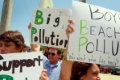
Protests are going on in many places

****************************************************************

Pelicans Injured & Killed by BP Oil


June 5-7 model and projected trajectory

The BP Oil Spill & Tyranny: Links and Notes

I. “If This Be Treason Make the Most of It!”

I will not interpret or attribute the quote above nor even say what it has to do with the horrors and struggle  in the Gulf of Mexico. For me the gusher crisis is the very strong indication that we should have real and radical change. I do not think we are likely to undertake the right changes. However, prior to the spill I had been outlining some ideas for radical change. I believe that the word Tyranny which was once the greek word for a bad monarchhas been changed by usage. The Greeks had a word for a bad aristocracy which we translate as oligarchy now and a word for a bad democracy which was ochlocracy. They could discuss intelligently what a mixed government that combined the rule of the many, few and one would be like when it was rotten. Even though most of there best political sages believed the best government would combine rule of the one, the few and the many.  Other thinkers like Montesquieu also saw that mix as ideal and it is the template of our governance. But I do believe our government has become corrupt as an institution in a way which makes it an institutional tyranny. It is from this base of ideas that I have written many blogs posts about radical political change. These posts propose change. However, while I am not hiding these posts there are too many of these blog posts to link them all to this site. These posts are in this blog and follow the link I am posting just below and the one linked here is a good place to start reading them:

FWST1. https://franksummers3ba.wordpress.com/2010/03/06/the-mental-ferment-for-men-and-women-who-might-foment-an-american-revolution-part-one/

I have among these many posts one which describes changes that might be useful to have in effect as this crisis has developed. So it will be out of sequence but will show where the proposed regime had intended to bring the country:

FWST 2. https://franksummers3ba.wordpress.com/2010/05/10/the-direct-imperial-government-in-the-new-american-regime-part-two/

While the post describes the inner workings of a proposed regime which is complex and has many parts I think you could read the two posts I have linked from that long series and have some ideas about what a possible regime change might aim to achieve. If it did exist right now then the Imperial Waste Authority (which is purely imaginary right now) might play a vital role.

II.Business  Media Coverage  of the Oil Spill

This catastrophic spill is getting attention even from those who one might argue are the most committed to the status quo. See the Wall Street Journal’s coverage in the link below:

WSJ 1. http://professional.wsj.com/professional-search/search.html?ar=1&dt=4&mf=0&pg=1&ps=25&sb=1&pid=0_0_ES_1000&cnt=&st=3&nfddg=0_0_EA_DeepDive_32|WIZARD_EDITOR_ID|deepdivel1&mod=wsjpro_hphook

WSJ 2. http://online.wsj.com/article/SB10001424052748704764404575285772746839504.html?mod=WSJ_hpp_LEFTTopStories

See also Bloomberg’s Business Week

http://www.businessweek.com/news/2010-06-04/hayward-pledges-to-steer-bp-through-crisis-has-board-backing.html

So while none of these people or institutions are advocating radical change as I am they can all see that this is a very serious situation.  We are also in a country which was already in some trouble and had some difficulties which were well-defined before this gusher blew through its controls. Besides those who are making lots of money in business under the current mode of the country’s operations there are also those who are highly motivated to be recognized as being accurate. I have a few links showing the views of such people and institutions seeking to discuss the BP Transocean rig Macondo wellsite Gulf of Mexico Spill:

III. Academic Insight into the Spill

My own undergraduate alma mater:

 UL 1. http://www.louisiana.edu/Advancement/PRNS/news/2010/477.shtml

UL 2. http://www.louisiana.edu/Advancement/PRNS/news/2010/EnvironmentalEffects.pdf

This University of Louisiana has a lot of resources to bring to this discussion that are likely to emerge as the crisis unfolds. They are likely to bring more of those resources to bear as one needs to analyse things in detail. They have expertise in petroleum and wetlands related subjects for example. However, they also have expertise in understanding how the whole complex of cultural and market forces which make up the state’s tourism scene. See this link for that  coverage:

UL. 3 http://www.louisiana.edu/AboutUs/Excellence/CCET.shtml

My own graduate alma mater, Louisiana State University:

LSU 1. http://appl003.lsu.edu/unv002.nsf/9faf000d8eb58d4986256abe00720a51/c8166483d13083bd862577370071fde5?OpenDocument

However, I want to make it very clear that I am referring to none of these people and groups in the Academic because I believe that they advocate cultural change.  All of the people listed above are simply evidence that there are major issues involved in this major event.

The longer the crisis goes on the more there will be discussion of what it all means. The news is still spreading. The ferment of political discontent may grow over time. BP has no certainty about when it can get control of this situation. We are in the throes of a full-blown calamity. The world can see the struggle as well, which I indicated in my last post. I have a sampling of world press coverage of these events which indicates that this spill commands some world attention.

IV. World Press Coverage

See this example of coverage in the China People’s Daily:

WPC 1. http://english.people.com.cn/90001/90777/90852/7012683.html

The online version of El Diario from Mexico:

WPC 2. http://www.diario.com.mx/nota.php?notaid=3e3a7ea2c10f01e84a137cfa322f779e

The coverage in the international online periodical Japan Times:

WPC 3. http://search.japantimes.co.jp/cgi-bin/eo20100605a2.html?utm_source=feedburner&utm_medium=feed&utm_campaign=Feed%3A+japantimes+(The+Japan+Times%3A+All+Stories

V. American Change Agents

There is a crisis. That much we know and the question becomes is our system creating or worsening the crisis in many ways. I think that it is. I want to explore our political situation within this context.  Now I am leaving behind a review only of the discussion of the BP Gulf of Mexico Spill. I want to discuss those who are looking for change. They do not all seek the same kinds of change and some do not believe they favor any kind of radical change. Yet, the truth is that all of them are seeking change and proposing policy or lifestyles that if they were more successful would remake America. I am listing only groups that I believe are both legitimately American and legitimately responsible groups. 

I think that we can argue that this is a time that demands radical change. I do argue that it is time for radical change. While the regime change that I have proposed earlier in this blog’s posts are my ideas and I do not claim that other American change agents support them I do think it is significant that there are many “American Change Agents” who are not informed by selfishness or hate primarily but pursue differing responsible ideals. So I want to discuss what the options are and why we should consider those options. Of course I would like to see them informing and enriching the vision I have proposed. Together we might reach more successful solutions.

A Sampling of  Other American Change Agents

Catholic Far left with Deep Right Harmonies

ACA 1. http://www.catholicworker.org/communities/index.cfm

Deep Indigenous Right with Left Roots Harmonies

ACA 2. http://www.ncai.org/

American Critical Left 

ACA 3. http://motherjones.com/politics/2010/06/next-deepwater-horizon

Mostly Protestant Activist Left 

ACA 4. http://go.sojo.net/campaign/climate2010

Strident Independent Outside Objectivism

ACA 5. http://www.csmonitor.com/USA/2010/0604/Louisianans-to-Obama-on-BP-oil-spill-Show-us-we-matter

The Counterrevolutionary Right in Catholic Populist Form

ACA 6. http://www.tfp.org/

Committed Christian Fringe Left

ACA 7. http://mcc.org/

Center Right Patriotic Catholic Voice

ACA 8. http://www.kofc.org/un/eb/en/index.html

This is only a reminder of a group people say is dead — I do not agree.

ACA 9. http://www.royalty.nu/America/Hawaii.html

American Leftist Innovation

ACA 10. http://users.erols.com/ccnv/

Deep British American Centrist Force

ACA 11. http://www.scottishrite.org/

Trying to find and preserve a Confederate Voice

ACA 12. http://www.scv.org/

V. GOHSEP’s Oil Sightings

I would like to end this post as I have the last two posts by simply reproducing what is reported on GOHSEP’s site in terms of daily oil sightings.  They show that we still have not yet reached the worst case scenario but things are not good.

Oil Sightings Report June 4, 2010

Plaquemines:
Sighting: Heavy streamers 5 miles east of Grand Terre Islands
Date: 4 Jun 10

Sighting: Sheen near South Monka Island, 7 miles NW of Barataria Bay
Date: 4 Jun 10

Sighting: Thick oil in the Lake Washington area, 8 miles NE of Grand Terre Islands
Date: 4 Jun 10

Sighting: Sheen with tar balls approximately 1 mile NW of Grand Bank Bayou with stranded wildlife
Date: 4 Jun 10

Sighting: Oil south of Bennie’s Pond, 7 miles NE of Pilot town
Date: 4 Jun 10

Sighting: North of Bay Long, the boom around the island is completely saturated and allowing the oil to approach the marsh
Date: 4 Jun 10

Sighting: Oil on the rocks off the state park shore
Date: 4 Jun 10

Sighting: Oily sheen located at the mouth of Bay Baptiste
Date: 4 Jun 10

Sighting: Heavy sheen at Four Bayou Pass, 7 miles NE of Grand Terre Islands
Date: 4 Jun 10

Sighting: 50 yards of saturated hard boom on the bank at Quatre Bayou Pass
Date: 4 Jun 10

Sighting: Oil on an island in the eastern portion of Bay Jimmy extending 3 to 4 miles N of the island
Date: 4 Jun 10

Sighting: Sheen with tar balls 200 feet wide in Bay Long at Point Chenier Ronquille
Date: 4 Jun 10

Sighting: Heavy oil sheen at Pass Abel, 8 miles E of Jetty South Pass Light
Date: 4 Jun 10

Jefferson Parish:
Sighting: Metallic sheen with tar balls extending from Middle Bank in Barataria Bay to Coupe Abel
Date: 4 Jun 10.

Sighting: Oil with sheen at Port Eads, 3 miles W of Grand Terre Islands
Date: 4 Jun 10.

Sighting: Sheen in water, mile E of Mendicant Island
Date: 4 Jun 10.

Sighting: Oil just off rocks, SW side of the Grand Terre Islands
Date: 4 Jun 10.

Sighting: Heavy oil with streamers, 3 to 4 miles inside Coupe Abel Pass
Date: 4 Jun 10.

Sighting: Oil slick with stranded wildlife in the middle of Barataria Bay
Date: 4 Jun 10.

Sighting: Oil 2 miles E of Grand Isle with stranded wildlife
Date: 4 Jun 10.

Sighting: Oil 1 mile SE of Basa Basa Island
Date: 4 Jun 10.

Sighting: Oil 1 mile SE of Grand Terre Island with stranded pelicans
Date: 4 Jun 10.

Sighting: Large tar mat mile SE of Barataria Pass
Date: 4 Jun 10.

Lafourche Parish:
Sighting: Gray sheen ribbons between Snail Bay and St. Joseph Bay 2 miles South East of Little Lake
Date: 4 Jun 10

Terrebonne Parish:
Sighting: 2 miles of containment boom on the shore of Raccoon Island
Date: 4 Jun 10

BP Spill: Environmental Awareness links & questions

Will there be a system producing the oil and gas before the relief wells are completed, supposedly in August?  Will the relief wells be fully successful early on?  There are so many distressing images coming to us over the spill cam.  For me there is so much of my memories and hopes long ago lost are brought to mind. my own life was already pinched in before this disaster. To understand the freshwater sytem behind the saltwater marshes that are behind the almost lost barrier islands. One can see that there are oil and government scars that are still across Louisiana. This spill is an attack on a struggling set of ecosystems and while they are vital and fertile they are not extremely resilient. So we hope BP gets it capped, will they?  

The Cut and Cap had not succeeded to the fullness of its potential when I posted this blog.  British Petroleum is working its robots all over the wreckage they have tried to clear and clean up. They have a trimmed Blow Out Preventer gushing more oil than ever before and a cap that was lowered down without a riser pipe to collect the oil. In addition the seal certainly seemed to be spewing lots of oil.  I of course am not sure what exactly is going on and I do believe that restoring the barrier islands is important. I have however seen that in the context of a larger system. my idea is described in the next link. https://franksummers3ba.wordpress.com/2009/10/02/ideal-wetlands-policy-on-the-louisiana-coast/ 

I hope that I wake up tomorrow to the news that the gusher is capped. However, I probably will not. Even if I did there is already a great deal of oil to deal with.  For me the world was already in a very big mess before this spill and the spill threatens a very strained set of cultures and ecosystems. So I want to look at the spill just as an environmental issue and incident in this post and yet also connect it to the  events and an analysis that have been developing. 

 The situation in the Gulf of Mexico is dire and not likely to get better very soon. I want to use this blog post to discuss this as an ecological and environmental disaster. I will also provide links that discuss this incident from that point of view.  Then I am providing some links and samples from other sources to just give a context and vision of what is happening in the Gulf of Mexico.

The Audubon Society has a unique claim to be involved and informed in this struggle.  That is because John James Audubon, the namesake of the society did much of his natural history research and bird painting in Louisiana.

1.http://www.audubonaction.org/site/PageServer?pagename=aa_HowtoHelp

2.http://www.auduboninstitute.org/gulf-oil-spill-resources

Besides the Audubon organizations there are many other major environmental organizations weighing in on the situation. I have located a few major links here as well. No two of these groups have exactly the same perspective.

3.http://members.greenpeace.org/blog/greenpeaceusa_blog/2010/06/03/the-ixtoc-blowout-31-years-ago-today

4.http://oceansociety.blogspot.com/2010/05/oil-spill-in-gulf-proves-need-for-oil.html

6.http://www.gulfmex.org/director.htm#oil

7.http://www.defenders.org/programs_and_policy/wildlife_conservation/threats/offshore_drilling.php

II. Assessment of the Situation

Besides these organization above that are advocating for various kinds of environmental policy and response there are others in the world trying to report on the situation. I list a few of those in links by home country. These reports are all very different and may offer useful insights into what we can expect different groups and interests to be discussing.

USA

Time has photos of affected wildlife.

1.http://www.time.com/time/photogallery/0,29307,1992275,00.html

New Orleans has a major newspaper covering the situation.

2.http://www.nola.com/news/gulf-oil-spill/index.ssf/2010/06/bp_places_cap_on_gulf_of_mexic.html

Scientific American Magazine looks at how the Spill could affect the microbes and their role in the Gulf, especially that area called the dead zone. 

3.http://www.scientificamerican.com/article.cfm?id=how-will-the-oil-spill-impact-dead-zone

The Society of Petroleum Engineers marks  the event and refers visitors to three other sources. See their text.

“Gulf of Mexico spill

The Society of Petroleum Engineers wishes to express its concern for all those impacted by the oil spill in the Gulf of Mexico and support for our colleagues who are working to resolve this situation. Updates on the situation are provided at the following locations: BP, Deepwater Horizon Response and API Gulf spill.”

4. http://www.spe.org/index.php

China

China’s National English Language TV discusses alternate energy policy in light of this spill.

5.http://english.cntv.cn/program/newsupdate/20100603/101270.shtml

United Kingdom

BP reports to the Prime Ministry in London, England.

6.http://business.timesonline.co.uk/tol/business/industry_sectors/natural_resources/article7143846.ece

III. GOHSEP Sightings in Louisiana

I have decided to end this post with the GOHSEP report on oil sightings so we can base the rest of the reading and discussion on basic facts about the oil’s landfall.

“Oil Sightings Report June 3, 2010

Plaquemines:
Sighting: Large dark red/brown ribbon of oil southwest of Tiger Pass (north-east to south-west direction).
Date: 3 Jun 10.

Sighting: Thick brown streamers with rainbow sheen in a one mile area running north to south, 11 miles west of lower Plaquemines Parish.
Date: 3 Jun 10.

Sighting: Two separate lines of oil 1.7 miles due south of the Mississippi River Delta.
Date: 3 Jun 10.

Sighting: Sighted oil in the reeds on the east side of Redfish Bay.
Date: 3 Jun 10.

Sighting: Oil reported of a mile east of Loumis Bay.
Date: 3 Jun 10.

Sighting: Shoreline impact of oil 0.17 miles south of Grand Bayou Pass.
Date: 3 Jun 10.

Sighting: Small patches of silver sheen 50 – 200 feet in diameter; 18 miles south-east of Mud Lumps Historical Landmark.
Date: 3 Jun 10.

Sighting: Line of emulsification 3.8 miles north-east of Timber Bayou.
Date: 3 Jun 10.

Sighting: Heavy black oil one mile long by 350 yards wide in north-west Wreck Bay.
Date: 3 Jun 10.

Jefferson Parish:
Sighting: Sheen and spots of heavy oil 200 yards off Shell Island. Beach impact is eminent.
Date: 3 Jun 10.

Lafourche Parish:
Sighting: Boom washed up on island of a mile north-west of Hacket Lake.
Date: 3 Jun 10.

Terrebonne Parish:
Sighting: Oil impacted on a small, unnamed island north of Whiskey Island; did not appear fresh and possibly remnants of a previous impact.
Date: 3 Jun 10

Sighting: Patches of light sheen at the intersection of King Lake and Mud Hole Bay.
Date: 3 Jun 10

Sighting: Ribbons of sheen on Bayou Little Caillou near Lake Boudreaux.
Date: 3 Jun 10

Sighting: Light continuous sheen approximately ten yards wide, six miles south-west of Coupe Colin Island.
Date: 3 Jun 10″

The BP Transocean Gusher’s Risk: Some Links and Notes

This post is  mostly about the oil spill from the point of view of risk. There is a great deal of risk in this crisis and it is a part of the story which is  something we need to really understand and work out in terms of making sense of these events. It is really important to  understand the parameter of risk for this crisis and for all the related crises that may or may not emerge over time.

Life is pretty damned difficult for lots of people and lots of eco-systems when things are working out within the context of the agreements and arrangements within which life and the economy ordinarily operate. When there is a large and sudden unplanned change it often causes a great deal of harm.  This gusher is a large and unexpected change. But in addition it is just a very bad thing. It is if nothing else a huge waste of valuable oil and gas. Forty days into this crisis it is still gushing out into the Gulf of Mexico. So I want to go through this set of issues related to risk.

Understanding a Salt Water Ecology is Difficult 

One of the things many of us did not like in this crisis is that we feel that the impact and risk were so downplayed and minimized in the early days when this was developing.  It seemed to many of us (how rightly time will tell) that those in charge were not considering the reality of a major gusher in that place.  I first began to deal with this crisis on-line with the following tweet: “BP Oil spill seen from space: old worry- https://franksummers3ba.wordpress.com/2009/10/02/ideal-wetlands-policy-on-the-louisiana-coast/” That tweet was posted on April 27, 2010.  Since then the story and the situation have continued to develop.

I want to start with a link that will give people an idea of how much science, skill and knowledge is required to make an assessment of toxic impacts on the environment.  When I write the word toxic I am including the sticky, choking and smothering qualities of oil besides it direct bio-chemical toxicity. Use this link to get an idea of the field. 

1. http://www.cmast.ncsu.edu/index.php/cals-agriculture-a-life-sciences/physiologicalbehavioral-biotelmetry.html

II. Tourism and Export Dollars as Well as the Natural Treasures

In the case of many Louisiana coastal industries a small relative amount of damage can have a disproportionately huge impact.  appearance of the landscape, taste and health of fish and many other things of similar nature can be very subtle and difficult to measure. Beyond that the nature of the things being marketed is that they react in complex and varied ways to the damage done by oil. Some things will heal and some will deteriorate in an accelerated manner. Determining the likely results requires some accounting for currents, rainfall, winds, acidity in the water and many other factors. 

A. Lodging

People will not choose a less desirable site without some adjustment in real cost most of the time. A minor amount of damage can have a large impact on lodging for fishing and recreation. See this link to understand the lodging industry in Louisiana. 

2.http://www.louisiana-lodging.com/regions/cajun.html

B. Seafood

With seafood there is a great deal to the complexity of how an oil spill can affect things. I hope that we can all look back and see this as a minor incident but it  will take a long time to know for sure. The next few links can educate you a bit about how this real industry really operates. 

3.http://www.louisianaseafood.com/

4.http://www.fishlcba.com/

5.http://www.wlf.louisiana.gov/pdfs/license/Certified%20Commercial%20Fishermans%20Form.pdf

6.http://204.196.151.247/oyster/

7.http://204.196.151.247/oyster/

8.http://www.wlf.louisiana.gov/pdfs/license/Personalized%20Oyster%20Tag%20Order%20Form.pdf

III. The Lingering Risks of Oil Spills

One of the first things that we have to understand is that this is not likely to be completely cleared up any time soon. The Exxon Valdez experience makes us expect bad effects that will linger and persist. 

9.http://www.miamiherald.com/2010/06/02/1660593/expert-from-exxon-valdez-accident.html

IV. This Particular Spill and Dealing with It

Much of what I have covered so far is about oil damage as a general thing. Some is about Louisiana’s risk towards all oil spills. Now we want to look at this particular spill and how it is being dealt with and should be dealt with in the exact situation we are all in right now. The next site is the grandfather of all sites on this incident if you want to understand the crisis read through the sites content if you can. 

10.http://www.deepwaterhorizonresponse.com/go/site/2931

First Note:  So far the Damage has not Been all that Huge as Far as we Know

The truth is that by almost any measure this has been a relatively modest landfall so far. Even someone like me who is highly committed to the idea that this is a stressed and fragile environment will admit that this has so far not been as catastrophic as it could be. The following text is lifted from GOHSEP’s site. I have my doubts about some of it but I think it is a fairly excellent survey and much better than no source or the average source of measurement. 

“Oil Sightings Report June 2, 2010

Plaquemines:
Sighting: Oil found on mangrove trees in the canals of East Grand Terre near the Grand Bank Bayou area.
Date: 2 Jun 10.

Sighting: Tar balls found scattered in a rip line made up of mostly trash in the south west inlet of Wilkinson Bay.
Date: 2 Jun 10.

Sighting: Boom is washing up on an unnamed island at Grand Island Port in Barataria Bay. There is no oil in the grass but not in the water.
Date: 2 Jun 10.

Sighting: Tar balls found scattered in a rip line at the southern end of Lake Grand Ecaille.
Date: 2 Jun 10.

Sighting: Oil sheen approximately 40 yards wide by two miles long just outside Baptiste Collet.
Date: 2 Jun 10.

Sighting: Blackish oil slick with some red/brown and foamy areas 4.5 miles east of the Southwest Pass Lighthouse.
Date: 2 Jun 10.

Jefferson Parish:
Sighting: Ribbon of sheen with surface foam in Bay Dosgris off of Little Lake.
Date: 2 Jun 10.

Sighting: Grey sheen running approximately mile south down the Barataria Waterway.
Date: 2 Jun 10.

Sighting: Rip line with grey sheen extending approximately 300 yards south of the mouth of Bayou St. Denis in the Barataria Bay Waterway.
Date: 2 Jun 10.

Sighting: Oil found on the mangrove trees in the canals of East Grand Terre at the north east side of Little Bayou Chevreau.
Date: 2 Jun 10.

Sighting: Thick oil found in grass on an island one mile south of Manilla Village.
Date: 2 Jun 10.

Sighting: Small area of grey sheen in north east corner of Hackberry Bay.
Date: 2 Jun 10.”

So while we do not yet know what this spill will amount to in the end we do know what  may be at risk and that risk is hard  to assess. So we have to do something.

Note: Responses and Plans

In this segment I provide some links and a little analysis as to how the response is going and how it may go. There is too much to cover well in a short blog post. The barrier islands are an idea being given attention.

11. http://usace.armylive.dodlive.mil/index.php/2010/06/corps-works-with-interagency-response-team-on-oil-spill/

12.http://www.lacpra.org/

I have seen the development of restored barrier islands in the context of an entire system of renewal as a good idea. My idea for policy is outlined in the post behind the following link.

13. https://franksummers3ba.wordpress.com/2009/10/02/ideal-wetlands-policy-on-the-louisiana-coast/

So if you read through all of this I hope that you have a better sense of what is at risk. There will probably be more posts on this subject later.

Oil Spill and Setbacks: 12 Questions

As I write this the saw which BP was using to cut the riser on the blow out preventer has gotten stuck in the pipe a mile down. The first cut was made which was vital but the second cut has been impeded by the saw blade getting stuck. They hop to bring the second saw down or use other instruments to remove the saw and operate the one that is stuck. THIS IS YET ANOTHER SETBACK!

I have a few questions to ask about setbacks. Most are about avoiding future setbacks? :

1. NOAA has been discussing what they are doing now and it is impressive. How will they contribute to the kind of policy infrastructure for the Gulf Coast that we need to build or will we use the structure of government as an excuse not to govern?

2.Has NASA and its enormous infrastructure for fluid and pressure studies been used to design the caps we are about to use to contain this oil? If they have not been used and all works well then I am unable to complain much but I wonder if the first containment dome would have worked if NASA had been consulted as to its design. Can we stop squandering our knowledge wealth?

3.When nesting oiled birds are rescued and their nests are known are the eggs brought to incubators and their chicks raised in zoos so that we a t least preserve an insurance policy outside the wild?

4. I ask the same question as regards nesting turtles — except that the behavior is different. Almost all should have hatched now but if relevant — are we saving at risk eggs in artificial beaches when we find them? 

5.Are we creating at least a small emergency Atlantic Bluefin tuna hatchery to mimic nature in this area and release later?

6.Are we calling in and positioning clean distressed aged slab, shell, gravel and other assets to quickly position in areas where bridges and berms need to be built?    

7. Are we considering the list of designs and inventions we might need for the future even if we are not going to address them now? A few things come to mind:

 a. We could use a speedy starter ship which can get anywhere and start drilling relief wells right away and then be replaced by a compatible long-term drill rig later.

b.We could use a deployable  circular boom system which could surround a site except for gates and keep a high percentage of deep water oil in a circle with a twenty-mile radius from the well site.

c. We could use quick deployment blimp bought in by helicopters and inflated on site in air that would provide integrated sensing, viewing and communications from the first day.

So are we listing thing we would like to have?

8. Have any oral historians been hired to interview those who are involved and impacted when they are not needed to respond so we can have a complete record of these instances and events?

9.Are we building an aviary in the area so we can keep birds nearby until beaches and marshes are clean and then release them to the original sites?

10. Are at least some oiled creatures being tagged so that the future assessments may be made correctly?

11. Have the Audubon Society, the Rockefeller Wildlife Refuge and other major local environmental institutions been given funds and brought into official response groups?

12. Are specific gravity measurements being made of various emulsion samples so we can better calculate their behavior in the water column?