



The Enthusiastic Edge of America
I am not starting this chapter by posting pictures of American Samoa for many reasons. What I think about when I reflect on our families arrival and life in American Samoa includes learning more wonderful things about the Pacific Ocean. I remember that we learned a great deal more about the Polynesian cultures and peoples by seeing the ways that Tonga and Samoa were similar and the ways they were different. I think that it is a time when I became very much aware of the way the American history in the far reaches of the Pacific had played out over time. .All of this was part of my experience on the island at the center of American Samoa.
It was also to be a place where we became more intimately connected to the faith experience of Christians who were not Catholics than we had been so far. In addition it was a time of gaining skills in living an intentional Christian community among a small group of people. Further, it was s time when my parents began to see life open to more children – it had taken a while for them to get their considering their conversion to the faith.
But all those things are secondary to the fact that I feel that were were really redefining our place in the culture and society of America. I feel that we were suddenly living our changing ideal not in a foreign land and not in our home environs. We were to travel a new path in this country. To understand that I have to review once more the place we left. It is in the comparison to my grandparent’s house in New Orleans and that perspective on the rest of my life in Louisiana that my American existence prior to Tonga contrasts with my life from American Samoa forward.
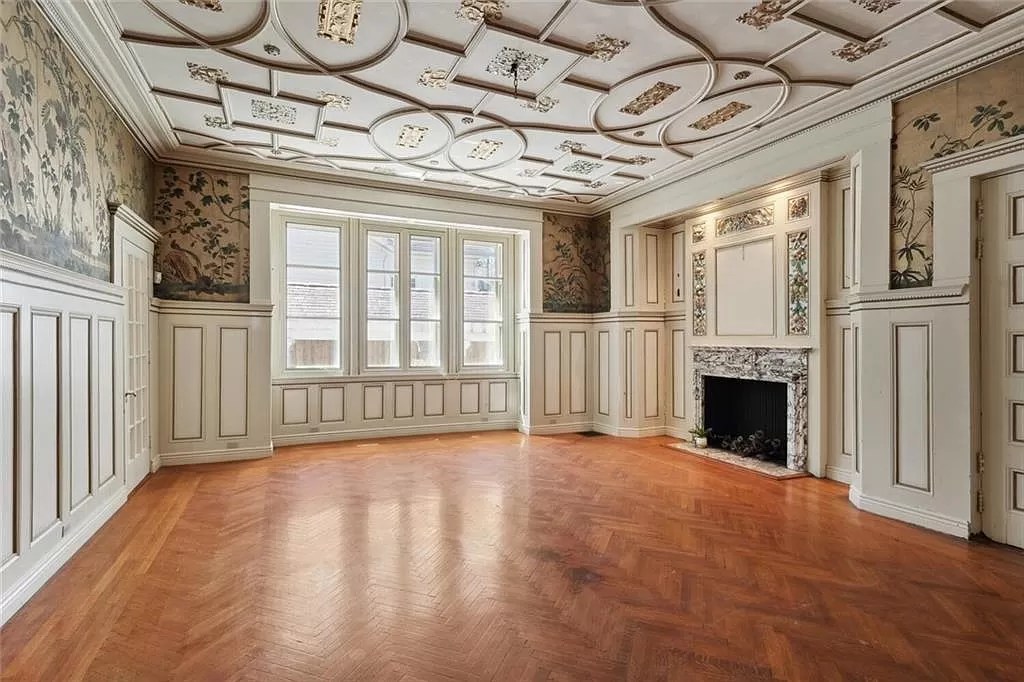
The pictures at the opening of this post are pictures taken of 1812 Palmer Avenue, New Orleans, Louisiana in recent years or at least in recent decades. This 8 bedroom home belonged to my father’s parents when we went into the missions. In those days more sumptuous wood paneling was dark and unpainted and it was filled with fine art and fine furniture. Guest of all ages could call at various times.. They came from Abbeville and the Acadiana district that elected my grandfather to the Louisiana Supreme Court. Because it was the state Supreme that sat in New Orleans — while the Governor and Legislature sat in Baton Rouge it was possible to maintain a more courtly presence if one was so inclined. Papau was the Chief Justice only briefly but the Chief Justice really was in a small group of Foreign Consuls, the Mayor and the highest officials in the Federal Customs House and the very powerful Levee Board — these people were the highest class of government officials in a city that seemed much more important then when Oil and Gas, the port on the Mississippi River and trade with Latin America all seemed vital to American interest. The industrial corridor on the Mississippi River between New Orleans and Baton Rouge was the second largest in the world in those days. If it is true that I gained delusions of grandeur when I visited the palaces of Britain and continental Europe and the mansions of New York and New England, it was not so hard for a child to make such a mistake. These places seemed like my grandparents house and it was easy to see myself as a scion of an important and entitled family. There was plenty of me that expected life might be an endless hell — but I was equally sure that I an my family would be important in the world I was going to live in and I did not really expect life to present the set of challenges that it actually did offer over time.
Among the feelings of old stories about travels to palaces and old historic sites, visits to land that had been in the family for generations and the stories of the origins and tenure of the Louisiana Supreme Court there was a modernizer in the house. In 1812 Palmer as in most houses in America in the golden age of news we all gathered to watch the evening News on most days when my grandfather got home early enough and we often watched a later edition of the news as well. My grandfather Summers was less of a man to go for new fangled gadgets than my Gremillion grandfather in Abbeville. But in my early years Abbeville had many fewer channels than New Orleans and my grandfather and grandmother had the first remote I ever used in their great living room there. It may have had an earlier version that was even simpler but the first version to last had up and down on volume and the channel select only went one way, you had to cycle through all the channels to get to the one just below yours. The remote could also turn the TV on and off. It was an amazing magical addition to the powerful instrument that could control the home in such a unique way. Later there was another TV on the third floor, but never in regular bedrooms or the kitchen. Family members played the piano or other instruments or professional musicians played a tune more often than I remember the radio playing in the big spaces of the house. Some people listened to the radio or albums on the third floor, in their spacious rooms, on balconies, on the patio or elsewhere. But he common areas of the house were for the people living there without imported entertainment. The TV was watched mostly after supper and there was another thing. When there were no big parties the Summers usually retired to their rooms pretty early. On occasion as a young child I would sneak down the then dark paneled grand staircase to the big living room in front of the house and turn the television on with the volume very low and watch scary movies that played late at night in those days. I never went to school in New Orleans until I attended Law School at Tulane when I was older than most of my classmates, if I was there I was usually living a life of leisure and did not really have to get up early. The late, late shows alone in a vast room, lying close on the carpet to watch television with the volume low when I was supposed to be in bed would leave me alone to traverse the dark and cavernous house. It was truly terrifying going back to my bed at one in the morning with no light but moonlight and a few lights from outside the windows and a few nightlights in electrical sockets. In my child’s imaginative mind, all the monsters, vampires, ghosts and sometimes ordinary murderers that were the characters in the of the film I had just seen seemed to be watching me from the deep shadows all around me. Once I made it through this gauntlet of imaginary terrors and real shadows and long spaces and secrecy I would climb into my bed and often have vivid nightmares. I did this many times.
Whenever I think back about my the life of my mind and any senses I had under very different circumstances I remember those nights of self-induced terror. It keeps me aware and perhaps skeptical of the mental and emotional landscapes that form my life history. But, compared to many people, I have spent a lot of time and energy taking seriously the feelings and thoughts I have in and of themselves. Life goes even when some of our problems may not be as real as others.
But that example is but one of several I could use to illustrate the role of television in my life. For a number of years my parents and I used to go to my mother’s parents home on the day when Mutual of Omaha’s WIld Kingdom aired on a local station. I often had someone to watch it with me but I also was willing to watch it alone. My parents were among the first of my friends parents to get cable .and there were quite a few shows I loved to watch even though I had few people to share them with — on was Speed Racer. When my paternal grandparents took me and their two youngest children to spend some time on Malibu Beach and to see DIsneyland as well as touring the Western United States. I soaked up the sea, painted desert and the great park of the Disney imagination. But I also watched tv and was amazed at all the channels and cartoons that I had never even heard existed. I was deeply interested in television and film. Somehow when I was young I managed to send a letter to Jodie Foster’s agent or fan club or something and to get a reply reputed to come from her. Television and movies would mark a connection between me and the rest of the country. Far in the future would be years when I would watch a huge number of movies but almost no television. But the years that would shape much of my life were the ones in which I watched neither film nor television. I was very much a person who understood that people talked about sports and television. I loved to watch the New Orleans Saints football games on television and often spoke about the games the next day — sometimes those games were the only thing that I could find to talk about with some of my peers.
The pictures at the opening of this post are pictures taken of 1812 Palmer Avenue, New Orleans, Louisiana in recent years or at least in recent decades. This 8 bedroom home belonged to my father’s parents when we went into the missions. In those days more sumptuous wood paneling was dark and unpainted and it was filled with fine art and fine furniture. Guest of all ages could call at various times.. They came from Abbeville and the Acadiana district that elected my grandfather to the Louisiana Supreme Court. Because it was the state Supreme that sat in New Orleans — while the Governor and Legislature sat in Baton Rouge it was possible to maintain a more courtly presence if one was so inclined. Papau was the Chief Justice only briefly but the Chief Justice really was in a small group of Foreign Consuls, the Mayor and the highest officials in the Federal Customs House and the very powerful Levee Board — these people were the highest class of government officials in a city that seemed much more important then when Oil and Gas, the port on the Mississippi River and trade with Latin America all seemed vital to American interest. The industrial corridor on the Mississippi River between New Orleans and Baton Rouge was the second largest in the world in those days. If it is true that I gained delusions of grandeur when I visited the palaces of Britain and continental Europe and the mansions of New York and New England, it was not so hard for a child to make such a mistake. These places seemed like my grandparents house and it was easy to see myself as a scion of an important and entitled family. There was plenty of me that expected life might be an endless hell — but I was equally sure that I an my family would be important in the world I was going to live in and I did not really expect life to present the set of challenges that it actually did offer over time.
Among the feelings of old stories about travels to palaces and old historic sites, visits to land that had been in the family for generations and the stories of the origins and tenure of the Louisiana Supreme Court there was a modernizer in the house. In 1812 Palmer as in most houses in America in the golden age of news we all gathered to watch the evening News on most days when my grandfather got home early enough and we often watched a later edition of the news as well. My grandfather Summers was less of a man to go for new fangled gadgets than my Gremillion grandfather in Abbeville. But in my early years Abbeville had many fewer channels than New Orleans and my grandfather and grandmother had the first remote I ever used in their great living room there. It may have had an earlier version that was even simpler but the first version to last had up and down on volume and the channel select only went one way, you had to cycle through all the channels to get to the one just below yours. The remote could also turn the TV on and off. It was an amazing magical addition to the powerful instrument that could control the home in such a unique way. Later there was another TV on the third floor, but never in regular bedrooms or the kitchen. Family members played the piano or other instruments or professional musicians played a tune more often than I remember the radio playing in the big spaces of the house. Some people listened to the radio or albums on the third floor, in their spacious rooms, on balconies, on the patio or elsewhere. But he common areas of the house were for the people living there without imported entertainment. The TV was watched mostly after supper and there was another thing. When there were no big parties the Summers usually retired to their rooms pretty early. On occasion as a young child I would sneak down the then dark paneled grand staircase to the big living room in front of the house and turn the television on with the volume very low and watch scary movies that played late at night in those days. I never went to school in New Orleans until I attended Law School at Tulane when I was older than most of my classmates, if I was there I was usually living a life of leisure and did not really have to get up early. The late, late shows alone in a vast room, lying close on the carpet to watch television with the volume low when I was supposed to be in bed would leave me alone to traverse the dark and cavernous house. It was truly terrifying going back to my bed at one in the morning with no light but moonlight and a few lights from outside the windows and a few nightlights in electrical sockets. In my child’s imaginative mind, all the monsters, vampires, ghosts and sometimes ordinary murderers that were the characters in the of the film I had just seen seemed to be watching me from the deep shadows all around me. Once I made it through this gauntlet of imaginary terrors and real shadows and long spaces and secrecy I would climb into my bed and often have vivid nightmares. I did this many times.
Whenever I think back about my the life of my mind and any senses I had under very different circumstances I remember those nights of self-induced terror. It keeps me aware and perhaps skeptical of the mental and emotional landscapes that form my life history. But, compared to many people, I have spent a lot of time and energy taking seriously the feelings and thoughts I have in and of themselves. Life goes even when some of our problems may not be as real as others.
But that example is but one of several I could use to illustrate the role of television in my life. For a number of years my parents and I used to go to my mother’s parents home on the day when Mutual of Omaha’s WIld Kingdom aired on a local station. I often had someone to watch it with me but I also was willing to watch it alone. My parents were among the first of my friends parents to get cable .and there were quite a few shows I loved to watch even though I had few people to share them with — on was Speed Racer. When my paternal grandparents took me and their two youngest children to spend some time on Malibu Beach and to see DIsneyland as well as touring the Western United States. I soaked up the sea, painted desert and the great park of the Disney imagination. But I also watched tv and was amazed at all the channels and cartoons that I had never even heard existed. I was deeply interested in television and film. Somehow when I was young I managed to send a letter to Jodie Foster’s agent or fan club or something and to get a reply reputed to come from her. Television and movies would mark a connection between me and the rest of the country. Far in the future would be years when I would watch a huge number of movies but almost no television. But the years that would shape much of my life were the ones in which I watched neither film nor television. I was very much a person who understood that people talked about sports and television. I loved to watch the New Orleans Saints football games on television and often spoke about the games the next day — sometimes those games were the only thing that I could find to talk about with some of my peers.

I will be looping back over the early years of my life, when much of my sense of self and personality were formed. As future chapters develop certain themes of my life I will revisit the early years for the early measures and parameters by which I would judge future developments of a particular kind in my life. This is one such theme. In Tonga we had no television, although Tonga today does, I have heard of many changes since I lived there, although like many places I have been I never got back there. In Tonga I went to the movies twice and both films were not films I would have been let into in Louisiana. That was about the limit of screen entertainment there and I found both films pretty disturbing at the time. Sex and violence were pretty over the top compared to what I was used to watching back home or the conservative family oriented lives of the Tongan friends I went to the movies with at the time. In American Samoa I remember the newspaper and American Magazines and the radio but if there was television available I don’t remember seeing it .During the time we were there I went quite a few times to the Rainmaker Hotel to use the pool (somehow this arrangement could be paid for cheaply enough) and I walked past lobbies and bars that I could see inside of but I don’t remember any television – I could be blocking it out but that would be hard to understand.This Lent my wife and I have given up watching TV between 8 and 4 on all regular days of Lent (not including Sunday). I also think that Television was just a small part of the transitions going on in our family. WE did not have TV out on the farm in the camp where we lived for a number of months before we left for Tonga. But the years right before our conversion saw ever increasing television viewing in our lives. .
I have discussed my great-grandmother’s painting, fishing and hunting, sight-seeing across Europe and New York,I am now admitting that my Dad played albums of Gregorian Chant and Native American ritual and ceremonial music. That was before streaming platforms made exotic music accessible to everyone. I have discussed the parties and the shrine to Saint Jude and the cattle drives and round ups. All of those stories are true. Traveling through national parks and State Parks was very important to me. My mother’s play and newspaper articles formed part of the fabric of my life and thought. However, while all of that and lots of reading took up lots of those early years I also was very much a child of one of the early American television generations. Movies were a huge thing we went to once in a while but television was the main thing that could eat up everything else if I let it. If there were enough bad things happening and I had access to a television then I could get to the place where watching television consumed most of my time that was not otherwise scheduled. Because I did no live on a working farm with lots of chores, have siblings or neighborhood kids to demand a great deal of me or belong to any sports leagues on an average day the amount of time that could be spent watching TV could be huge. Thus one of the big contradictions to people who try to figure my life out would be all that I did when I wasn’t watching TV and all the memories I have of watching TV. My parents were among the early subscribers to cable when it became available in Abbeville. I remember when .
Sarah is the next oldest of my parents’ mutual children. She is almost 12 years younger than I but is my oldest full sibling or living sibling.I lived a life before the mission and in early missions before she was born but we also lived together in missions and then she continued in missions with my parents after I moved on and then she returned to serve in their mission company in its later stages in a way that I never did. One day we had a long conversation about cross-culture and thor culture kids and all that makes an adult a product of such things as one might call cross-culture or third culture experience.
I am not sure the exact day, month or even year of this conversation but it happened about 2016 or 2017 in Abbeville, Louisiana with my adult sister Sarah Anthea Summers, Spiehler Granger – who is really Sarah Granger. I used to take her and her kids out for breakfast at McDonalds in Abbeville before they were all in school whenever I had a Monday morning that I was not working and they were available. It actually started as a tradition with her inviting me for coffee and then it evolved into something else. And it gave some meaning to my life for a number of years to do this thing. Below this discussion are some resources but not necessarily the books I read inspired by her suggestion.
The discussion started as many others have over the course of these meetings for Monday breakfasts. I was very busy and also underemployed.
“Hey Sarah.” I asked as I sat down with the things I had bought at the counter of our Abbeville Mc Donald’s restaurant. We had both helped the kids get to the Playland, while their shoes were stacked beside the equipment I asked about her older children. We had done similar things with those three Alyse, Anika and Soren. “They are all doing well. I think Anika is pretty excited about passing her travel guide licensing exam in New York CIty.”
“That is a nice distinction for her. Of course she traveled so much with you.” I spoke feeling the absence of the little girl who was my godchild and with whom I spent so much time, so gladly over the years.”Is she going to be working with Jason’s company. I follow the Walks companies online.”
“She might later, but right now I think she is going to work with Get a Guide.” Sarah nodded and then we talked a bit about all the older kids as we assembled Isaac, Isabel and Jonah for the snacks and drinks at the table.
“Have you been reading anything?” I asked as I finished my coffee and the kids went back for another round on the playground equipment. I continued “I don’t always get to reading them as quickly as I would like but I take your reading and viewing lists seriously. I learn some great things..”
“Well, thanks.” Sarah said, ” I have been reading about adults who were third and cross-culture kids. The book really has a lot to say about growing up abroad.”
“That sounds compelling. I suppose there is a good bit about missionary kids.” I said to Sarah solemnly.
‘Yes, there is a a good bit about it. They show some layers of differences and some kids stay in th home country and other live in compounds and go to schools based in their home culture. Only a small percentage go to the kinds of schools I and the others went to in General Cepda or elsewhere.”
“I really will read that and buy the book. Please send me the information.” I could see Sarah was happy to share. We talked about how Obama had brought cross-cultural childhoods into the forefront of American life.
She did send the information and for a while I studied the subject with interest. She had a lot of knowledge she was bringing together for the subject.
(Cross-Cultural Connections: Stepping Out and Fitting In Around the World Paperback – August 29, 2002, by Duane Elmer (Author); Third Culture Kids: Growing Up Among Worlds (Revised Edition) Ruth E. Van Reken.How to Raise Confident Multicultural Children: Ideas and practical advice from diverse professionals for even greater success raising a bilingual and multicultural child… Books – Fostering Creativity in Kids) Kindle Edition, by Elisavet Arkolaki (Author), Dr. Ute Limacher-Riebold (Author), Vivian Chiona (Author), & 7 more Format: Kindle Edition)
I have a set of memories of the United States of America before the Roe v. Wade decision in January of 1973. But when I got to American Samoa, the new America that had been evolving was enshrined in a set of laws that would endure until a few years ago. The Supreme Court had found a constitutional right to abortion at the federal level and all of the basic structure of the constitution and its underlying philosophies had been thrown out the window in favor of the real transformation of the brave new world I would grow up in ….I was also coming back into that country as more of an outsider than I had ever been. Everything about the course of our civilization was making me an alienated outsider. I had lived with the varied sides of my mother’s feminism as I grew up and she worked on newspaper jobs, with documentary film crews and in government programs where she tried to bring a feminist sensibility to the content and the ay of working. Now they were committed to finding a way of life that publicly incorporated traditional Christian roles for marriage as they understood them from their new commitment to scripture as well as to other literature and community influences. Tongas had exposed to a series of social norms where the oldest males in the royal family and the aristocracy inherited most titles and privileges of nobility and men had specific roles in choirs, lands, war dances and all these things were unapologetic. But Tonga also had a system whereby the oldest sister in each family could obtain and redistribute most of the portale wealth of all of her brothers within the family. FUrther women had many taboos which favored their rights over males in rooms, entrances and many other things. To add to the sexual mores that were influenced by my time in Tonga were the modesty laws that had replaced the ancient Polynesian folkways of topless and sexually charged female dancing at feasts. The other values that fit into this strangely transformed Christian expression of Polynesian culture was the preservation of the cultural institutions of trans culture, predominantly the Faka Laiti who were an.expression of the transgender types that exist throughout almost all of Polynesian history and cultural and national diversity. They were the Tongan expression of the time. I had already been exposed to a great deal of sexual role tension and conflict as a child in the United States. There were things that related to my specific personal family and personal connections and issues that related to growing up during the sexual revolution.
My mother continued to wear the Tongan themed and inspired modest garments and in time regularly wore a head cover of the same fabric. We wore crosses around our necks and were drifting to the edge of American society in appearance. Society was moving in a set of directions and we were in many ways moving in opposite directions. It was in this context that I no longer went to school as we got established in American Samoa. I did take a few advanced swimming lessons and a few lessons in a water survival class. I did not take all of these classes and I never started SCUBA class although that was the second of many times I had been in a position to think that might happen. I have never taken a SCUBA class even as I type the first main draft of this chapter of my memoir. I did enroll in a fairly formal Bible class. I also was able to persuade a family who was educating their son with a correspondence course who were willing to let me have a few excess workbooks and loaned me a reader. I am not sure what would have happened if we had stayed in American Samoa for longer. I am not sure what the compulsory education laws were or were not – but I was not in school. For the most part I was anxious about what it might mean for my future but relieved not to be adjusting to a new school.
I was however aware that I liked the beaches and the super markets. I was deliriously happy when a man we met who conducted fisheries studies invited us to go deep sea fishing a few time and catch fish he measured, weighed, photographed. This scientist also examined the scales and intestines of the fish. But none of those things diminished that we caught the fish, cleaned them and got to keep the flesh. It was a wonderful time that mattered to and reminded me of deep sea fishing in the Gulf of Mexico with my mother’s parents and their friends.
In American Samoa, I met a few High Chiefs and Talking Chiefs and grilled them as much as I could about how their culture worked within the American political system. We were to end up living with a group of singles in Youth WIth A Mission who were open minded enough to invite my Catholic parents to be their group’s Houseparents. YWAM would enhance the intensity .of my spiritual quest and the sense I had of drawing close to Jesus. It was very much something I willingly sought. Every day I spent time alone in prayer and Bible reading. I worried about my sins and repenting of them and whether or not my repentance was real enough.In prayers, in communion at mass and in conversation with others talking about their faith I drew close to the Spirit that God had showered on his people. At least, I truly believed that I was on a spiritual adventure and was helping to create the Kingdom of God on Earth. I am not sure of every part of it being authentic now – but I do know that the experience was not all false and that the spiritual life was somehow real, deep and powerful. But that is a lot less definite than how I would have described my beliefs and pursuits back then. I often said,”I feel like the Lord said this to me when I had my prayer time.”
.
The time passed with meals and prayer meeting and ministering to people who came in on the fishing fleet from Asia while many of us dreamed of bringing the Gospel to countries in Asia where there were few Christians. I was into that idea and read about Catholic and Protestant missionaries to East Asia across the centuries. But we were not in American Samoa for very long. Soon we were praying about and discussing moving on. We flew back to Hawaii, then back to the West Coast and then got off a plane in Albuquerque. We were going to spend some time with the Bordelons, the missionary family who were now working among the Navajo after having taught me to ride a bike competently and having hunted and fished a bit with me on the farm. We were in tropical clothes, we had nothing else. It was literally below freezing and there was a bit of snow here and there. We were given blankets and loose or wrong-sized jackets. We rode in their Volkswagen bus in inferior condition. I was happy to see our old friends but I knew that somehow not fitting in at all in America had come to define my life for the future.


 Franksummers3ba's Blog