
“I used to pray for an hour a day on my own at some points in my life.” I told the young deacon during a meeting this Lent. “But that is not the way I live right now.However, I have been blessed to study the prayer we have been reflecting upon.”
This conversation was one of so many I have had at various times in my life that cause me to reflect back on the years I spent in the missions and what impact they had on the other years thereafter. I remember, before Clara and I got married, saying to the couple who prepared us for the Sacrament of Marriage that I had been wounded by my last marriage’s failure and many other problems with the Church and it was with some trepidation that I had come to undertake a long and intense spiritual journey on the way to marriage when there were less demanding paths that met the Church’s minimum standard for marriage instruction.
A few weeks ago we went to their house and I told the couple, whom Clara and I have both known all our lives, that I had applied for disability. That was when the wife said in response that she could remember a vast number of things that happened to me physically over the years. “I know what your body went through since you were a little boy. I saw a lot of it with my own eyes.”
The complexity of my time in Tonga, our first mission includes getting Dengue Fever, being stung by a whole nest of tropical wasps and being stung by a deadly centipede when I was already sick. I don’t look back mostly on those events when I think of the missions. But honestly, I believe these events and their aftermath still impact my health, performance and capacity to work for a living in the way I had hoped and planned to do not so very long ago. What else did I bring from the missions? I think that to understand the impact of the missions on my later life and life today one would have to understand the way my mission life started. In order to do that, some significant effort must be made to understand Tonga and our journey to that island kingdom as a family about half a century ago.. .
To discuss the year before we left for the missions and the early years in the missions requires a recognition that a good deal of my attention in those days was on not only the themes but the real and phenomenological experience of repentance and conversion. In other words, I was very much involved in a set of beliefs and their implications for my life to the extent that a nine-year- old could be dealing with them. The Gospel was not entirely unknown to me. I had paid attention in Chapel at Saint HIlda and Saint Hugh School in Manhattan. I had paid attention in religion class at Mount Carmel Elementary School. And we had read from the New Testament and th eOld as well as learning the stories of Jesus and the Teaching of the Church. I had made my First Communion and First Confession with some faith and devotion. When I was a child in Europe, I admired my uncle Jed who made it to Mass at the churches we toured and I had both admired the Bible stories and the lives of the Saints as well as the glass, sculpture and painting they became a part of – in those days my father seemed to feel a connection to his Catholic youth. But in the days after he settled into the life they lived in Abbeville, Louisiana after returning from New York he was hardening into an articulate and cynical atheist and he said blessings before meals that were not really prayers of blessing before meals when called upon to pay by organizations that were not officially religious but still shared prayer in rural Louisiana in those days. I talked to my Dad about his atheism and at some point I converted to it without any real fears about my soul. There were serious discussions with some of the kids at school who did worry about it and some friction with teachers who had always known me to be a believer. In addition, my mother had published a play called A Sort of Miracle in Loreauville. The play was based on experiences witnessed by her grandmother who was from Loreauville, Louisiana. My mother’s writing explored how medicine practiced by a Medical Doctor, the folk medicine practice by a traiteur and the Anointing of the SIck ministered by a Catholic priest – all played their role in French Louisiana and all contributed to what was seen as a miracle by those knew the person who was cured in Loreauville. Somehow, I had gone from all this to accepting the calculated and intransigent atheism of my father. My father had been told that the reason he was refused a position teaching at one of the law schools he applied to after finishing his studies at Columbia in New York and that seemed to harden his heart against the faith of his own hometown. My mother was working on the newspaper in our town and had written an article critical of the way many in the town ostracized a priest who had married a girl he had taught when she was a little younger and was his student in high school. He was not permitted to marry as a priest and so he left the priesthood. He was the priest with whom I had served in th blessing of the Vermilion RIver on Earth Day. I had defended my parents and I was a hot tempered and energetic defender of most things that I wanted to defend over my lifetime. Then suddenly I was asked to accept my parents’ conversion and to be supportive. It was a hard thing to accept and my father’s reason was that he had prayed and God had come to him in a deep personal experience and touched his heart and given him the direction to return to church. He had been told “To keep Holy the Lord’s Day” and in his mind that meant going to church. He had called Monsignor Ignatius A. Martin who was the pastor of Saint Mary Magdalen Catholic Church. He had been part of the Abba Prayer Group. This Catholic Charismatic Prayer Group in Abbeville had actually been praying for my parents’ conversion. He had returned to Confession of his sins, received absolution in the name of the Father, Son and Holy Spirit and returned to receiving communion. When we got back from the practice divorce with my godmother in Houston Dad devoted himself to wooing her back into a good marriage while also evangelizing her into his restored faith in Christ. I was told that when Dad talked to Mom about what he thought was her definite plan for a divorce he had begged to keep me with him. She had also insisted that she would keep me. When they reconciled, they both thought that they would see me returning to my faith and following them into a new growth in faith. They were right that this would happen but it was not easy for me to make this transition. I was aware of the feeling of being repeatedly confused and misled. They were talking about a relationship with Jesus in a way that would have been compelling if I had been the same precocious theist kid that I had been until recently. Somehow it was just a lot to deal with. My uncle WIll had just returned to his parents home in New Orleans. He was no longer the reckless high school dropout and near runaway he had once been. He was now a Jehovah’s WItness and was devoted to preaching their version of the Gospel. My parents sent me to talk with him about believing in God. Somehow, the conversion I could see in his life and the words he sid that were not coming from the church with whom my nuclear family was living out its drama helped. I believed in God again, I asked Jesus to help and forgive and save me and soon I returned to confession and communion in the church. I had been sneaking cigarettes, and alcohol and generally hanging out with the toughest crowd that I could find who would accept me. It was a place of conversion for me and it was not easy to see how it would work out. Sacrificing my image and role as a kid drifting into trouble and a bit of a bad guy who had occasional brushes with authority figures and a few very small ones that involved the cops. Now I was going to try to spend all my energy being a good guy who followed Jesus who had been crucified by the cops of his time and condemned by the authority figures of his people. The conversion from sin was childlike but it was real. Renouncing a lfe of sin for a life of faith was a salvation but also a sacrifice.
Another stage of sacrifice came when my parents sold their house in town. But living on the farm in an old camp was mostly a joy for me. I got a horse from the family herd and Dad and I trained it together and I was ready to ride my own horse for the first time. I did so a good bit. I fished better than ever before. My great uncle Clay R. Summers Junior had given me a 410 gauge shot gun the previous year (called a four ten). I had used it and killed my first ducks and a lot more rabbits than when I used a pellet gun. But I had now been given use of a 20 gauge that was not entirely mine but was very effective and I began to bring back lots of ducks and rabbits that I hunted and cleaned on my own. Life was sweet. Some of my parents new Christian friends were Barry and DIane Bordelon. Their children helped me to learn to ride a bicycle well for the first time although I had ridden one badly for years. In return they came with me to the farm and the boys were delighted to fish and canoe with me although we never hunted together.
There was talk of starting a Catholic Charismatic commune either in recently abandoned set of buildings in a lower middle class neighborhood in Abbeville or out on my grandparents farm. There were many meetings and much prayer and even a little fundraising. But the plans came to nothing. The Bordelons went first to the Checkerboard Missions among the Navajo. We went to Tonga with the AMrists not long afterwards.
Before we left for Polynesia my mother’s parents had a luau in the Hawaiian style with a roast pig to send us out. There was a pig and they had humanized it a bit too much for my taste and named it Dot. It was a rare time that I objected to my Pops and Mamon’s behavior. But in the end I enjoyed the feast and we would leave with me having beach gear, a camera of my own and so forth. We stayed at Our Lady Star of the Sea Catholic parish in Hawaii with priests who knew the South Pacific. Then we went to FIji and visited much of the main island and the church’s work there. From there we flew into Tonga. I had left behind my horse, guns, fishing equipment and dogs and so many other things. I had the fervor of serving God and believing in Jesus. We had the closeness of a family on the other side of the world from home. I also had the adventure of starting off a new life as a missionary kid and in Polynesia. But I would never become competent in the three styles of fishing in Tonga that my friends or their older relatives practiced. I watched people ride horses in Tonga but I did not ride them . At mass the readings, preaching, songs and liturgy were in Tongan. I tried to learn some but only learned enough to sing a few songs. I read the reading in my bible at home. Eventually we would go to the royal chapel for a ENglish language prayer service after our mass on Sunday nights and all Christians who could not speak Tongan were welcome. My parent taught English in mostly Tongan language schools – two schools, really one for Boys and one for girls. I went to the English only Tonga Side School. There were adventures but I also felt that I was very much an outsider. I never developed any close friendships with other foreign children even though some attended my school. My Tongan friends were very different from me and I would rarely forget it. The time in Tonga would certainly not make me feel more like I fit in or blended in than before.
One of the things about Tonga was that people would ask for many things and it wa snot begging the rich and poor asked each other for things for more often. Although people could and did refuse there was always more social risk for the one refusing than the one asking if all things were equal. This had an accept even on relationships between resident foreigners. The other thing was true as well, people brought many gifts. If we said we liked fish then many fish were likely to arrive with no specific expectation of reciprocity, likewise with coconuts, passion fruit, roasted meats and tubers, coconuts and woven baskets. I did but crafts and mailed home a few tapa cloth and carved wood and shell objects. I took pictures and I shared goods from home with friends from the village of Maufanga as well as with the New Zealand couple living next door. There were things that were hard to adjust to – including cold showers with hard soap more suited for laundry than bathing. There was a pleasant homemade Tongan soap but that was something not for sale in the local shops or brought as a gift by our friends on a regular basis.
There were two long narrow houses in our compound and I was obliged to walk past the other one from ours to the cold water showers and the outhouse whenever I needed either. For that reason I was often greeting our neighbors who were a couple from New Zealand who also taught English where my parents did. It was a relationship they seemed to foster and though they had no children I thought we had a sort of bond. I was trying to get to know them and others there and was known to bring a gift or two as well. They were gracious to me as well and I remember that our neighbors from New Zealand had a baby blue outrigger canoe that they had a local make for them and seldom used. It stood out from the others and because it was painted with a marine paint not readily available in the islands. Tonga was a society of taboos, Christian religion and very complex rules of general and specific reciprocity. The rules were far more complex than any I could learn quickly or my parents would bother to learn. But people did watch us through our windows. This was in part explainable because Tongan houses usually had few or no open windows all the time. When windows were open they were not considered impolite if they looked through them. We would live in American Samoa later and the Samoans – who had a similar Polynesian culture had houses without walls and people were much less permissive of staring into houses from outside. .
Shortly after arriving in Tonga, I met three young boys from the village of Ma’ufanga. Two of them were brothers, Soane Paseka who was my age and Isitolo Paseka who was about 14. Both attended Tongan language Catholic schools and went to the same church as we did. The building of the church was a large and impressive structure made out of coral rock. That was not at all a common building material even in Tonga. Soane was the Tongan equivalent of John and Isitolo was the Tongan equivalent of Isidore. Both were good saints’ names. In time we would be close as families and I would work sometimes on their farm on the weekend. The other was Viliami Ufi, a young man about sixteen years old, who would accompany me to school at Tonga Side School, although he attended another school nearby. He also would play a role in one of the biggest events in my life in Tonga, that I would never forget. Many years later he would visit our family in Abbeville, Louisiana. Soane would become one of my closest friends while we were together in Tonga. He was not only the closest friend I had there but would be among the close friends that I never saw when I left the palace where I had known them. I was not in touch with my Abbeville classmates and friends when I traveled to London and New York and not in touch with them as I traveled to Tonga. In New York my closest friend at St. Hilda and St. Hugh School had not stayed in touch but I had corresponded a few times with Charlie Warner,my closest friend from the building where we lived. But before we get to the day when Soane would weep at my departure and honor me with his grief, I must tell of how we became close. The skinny young boy who showed up from the village at our compound during low tide when pools and tidal flats stretched out from the beach across the street from our house to the somewhat distant reefs. He had a machete and a string and we walked along the flats and when we found fish in a pool trapped he would lash out with his machete and hit the fish in the head and add it to his string. He got three in three strokes and I got one in about twenty slashes into the pools. There were no rods and reels cast nets or fishing poles among my friends. There were likes with baited hooks and weights pinning off of beer and soft drink bottles and there were strange spears that varied from boy to boy. Adults had long lines and dragnets I never got to use. Then there was the machete fishing in the low tides. “I will learn to fish here if you can teach me.” I had told Soane, but I had never mastered any of the local techniques by the time we left Tonga. But that day he told me, “ I would be glad to teach you Po.” Soane was my main means of learning and connecting to “Faka Tonga”, this was a general term for speaking, living and acting in a way that was acceptable in Tongan Society, He taught me the basics of the Haka war dances, how to sing in the choirs at church, how to fish, how to climb coconut trees, how to husk and open coconuts of different stages of maturity and how to harvest different fruits and tubers. He taught me the basic function of different taboos in village life. Other people taught me these things and other things but his teaching was different because it encompassed every one of these things and many others. It was not an easy time and in the months I lived there I never got very good at any of these things. But we were mostly friends.
It was with the Pasekas that I was most a part of Tonga. He was the only person besides me who I ever took out in the baby blue outrigger canoe. I usually used it on my own when our neighbors lent it to me and the first real sign that I was not doing as well in Tonga as I had hoped was when the neighbors got upset with the way I handled or stored or otherwise used their boat and they revoked my privilege of using it. I was very much involved with other things by then including school and the infirmary my parents supported that was run by a local nun. But I was suddenly aware that without recourse to the quiet and solitude of the outrigger canoe I was not going to have a place to recoup my energies and refocus my thoughts. I did still go with the Pasekas when I could. But I was feeling crowded and uneasy. I started going to the marina where the ocean going yachts docked. In time it became my only source of independent income. I would greet the arriving Yachtsmen and women and sometimes I would run errands for them to the markets and the shops and would sometimes collect a little fee or be asked to keep the change. Once I brought home a skipper for supper and a shower and he made a phone call on his yacht tour families in Abbeville by using Ham radio, ship to shore and phone calls around the world when that was ot easily done and there were no easily available cellular to satellite links everywhere.
It was in this marina that I had some conversations about Polynesia, VIkings, the great explorers like Captain Cook and others. But we were having a foundational kind of a year,the belief I had was that we would live in Tonga for at least five years. But we were not going to be there nearly that long.
“Viliami, why do we have to get off the bus?” I asked one day as we got off the bus as we were running late for school.
“My older sister is coming in. Once we reach a certain age we cannot be in the same room until we are married and a bus is a room. “
This day’s tardy was the first tardy in a long time. I got to Tonga Side School on time but was not very successful in making friends there and soon I felt bullied here and there and I got into a few fights. FInally this got worse and worse and I was attacked by a mob after school. I started off trying not to antagonize anyone , then I was apologetic and took a blow or two without much beyond turning the other cheek. Then I started fighting back, I was kicking and punching but I was outnumbered and had no hope of things going well. The leader of my attackers was the scion of a Tongan aristocratic family who felt that I had insulted him although I wasn’t sure why. VIliami showed up and rescued me. I am not sure what was going on or how it would have worked out, but it was not long afterwards that I was caught up in the Dengue Fever epidemic that swept through the village. The disease killed some old, sick, weak and young people in the village. When I recovered I had missed some school but so did many others have days missed although they came from other villages. I was busy with all that went with surviving and recovering, but I felt ever after that the wariness and weakness that had followed on my childhood asthma were deepened and broadened. It is the start of another phase of my lifetime struggles to find the strength to go on.
I also was a guest of honor with my parents and alone and just with my father at feasts of various kinds, dances , soccer games and cava ceremonies. I never felt uncomfortable with being honored or set apart as a dignitary or celebrity in this strange new world of Tongan culture.
In Tonga I spoke to chiefs and aristocrats and their children as well as to the people of the marinas who sailed the world in their yachts. With my parents we prayed and talked about other things and studied scripture.At the Cathedral the singing in the choirs was incredible and edifying and worship went for hours. At the Royal chapel the English language services broadened my horizons.At one of the feasts at a convent on the island I was stung by a whole nest of oversized tropical wasps and I felt like I permanently suffered some loss of sensation in my fingers. Iloved Tonga but I was not thriving really.
WE did tour the natural and royal and historic sites on occasion from the blowholes to ancient ruins. I discussed these things with mariners and aristocrats, the Pasekas and others. I found the various theories of how vikings and Polynesians and South American civilizations may have interacted. I read Kon-Tiki and other books. I also read the story of Joe Bulu a Tongan missionary.
I had just gotten the guitar I had ordered weeks ago and Dad took it and checked me out of school and we headed for the next place. It was after a time of prayer and discernment but there was a lot I did not understand. We boarded the Lady Lata, Soane wept openly on the dock and in this little ship we went to Hapai and saw a huge Momon missions and had a picnic. I had a good time on the islands we visited and was amazed to see whales but the ship was rough and harsh accommodations. We stayed in Vavau with the ship a few days and we had then arrived in the lst sub group in the archipelago that make up the Kingdom of Tonga. While staying in a Catholic mission there I was already sick, got food poisoning and was tung by a deadly centipede. I almost died. But we got on the ship with me still sick and sailed the remaining distance back to US Territory. We sailed into the Pago Pago harbor in rough seas and when we hit the flat water of the harbor I wretched repeatedly with violent sea sickness. In less than a year, we returned to the United States and as soon as we got off the ship it felt like we were back in our country although very far from home. I was still very weak as we looked for an apartment. But I went to sleep in a small motel after a more or less American meal we had bought for take out and I went to sleep in a small sort of family based motel.
.
Today as I wait for American Social Security awards and hope for the best, I live in America. I am still trying to figure out. I was very busy today discussing elections, sample ballots and property taxes with my wife at one point. On March 8,2024 Clara and I watched the State of the Union address together at 9 o’clock Washington D.C. time and 8:00 our Louisiana living room time. Like every modern State of the Union during a Presidential election year it was marked by the partisan political concerns of the moment. For me such occasions are powerful reminders of my own sense of alienation from mainstream politics. But I watched and listened and pondered with some interest. I found substantive issues to like and support and those I would oppose effectively, if I could oppose things effectively,
I also watched the Republican response by Senator Katie Britt speaking from her kitchen table in Montgomery, Alabama. She was a relatable, down to Earth working parent from a state I have visited many times and that like Louisiana is situated on the Gulf Coast. I noted that her story was very different from my own and yet compared to those I have heard many times it was more connected to my own history of long connections to a region and a people – these are things that In her words I was reminded of my own childlessness, lack of political office and lack of certainty that any of the solutions proposed will actually make it possible for the man she mentioned to pay both his medical bills and his grocery bill., SHe told the story of talking to a retired man who had to take a job in retirement while collecting his Social Security or pension income. This hit rather close to home since I am in the position of choosing to be grateful and happy to get Social Security benefits – and it is not a hard choice as it is very evident that I am in fact unable to do better.

But life in America is an endless and uninterrupted journey of miscommunication and misrepresentation from my point of view. Many of the most important questions from my point of view are never addressed by any reputable speaker or official on any side of the American political spectrum. How it happened that I would be interested and so largely alienated is not clearly explainable in some simple way. But it is relevant that the religious conversion of my parents and our movement into missionary life had a lot to do with accepting a vision of life which involved renouncing a role in the future of my home community and the State of Louisiana to which I might have felt that I would gravitate. But when I look at the last year or so before we went into the missions I can also see that there were some signs of serious troubles looming in my future if I had stayed in America. I also very much recognize that since we left for Tonga there have been successes I have had in the mainstream of my life that occurred in the mainstream of American life. When those things occurred I could see that my relative successes did draw on both the years and connections that predated my mission life and the years that I spent in mission. What I know about my path into the future is very little and a great deal depends on what happens with my Social Security DIsability Income Application which in turn relies on analysis and interpretation of vast number records including job contracts, earning records, medical bills and medical records themselves.
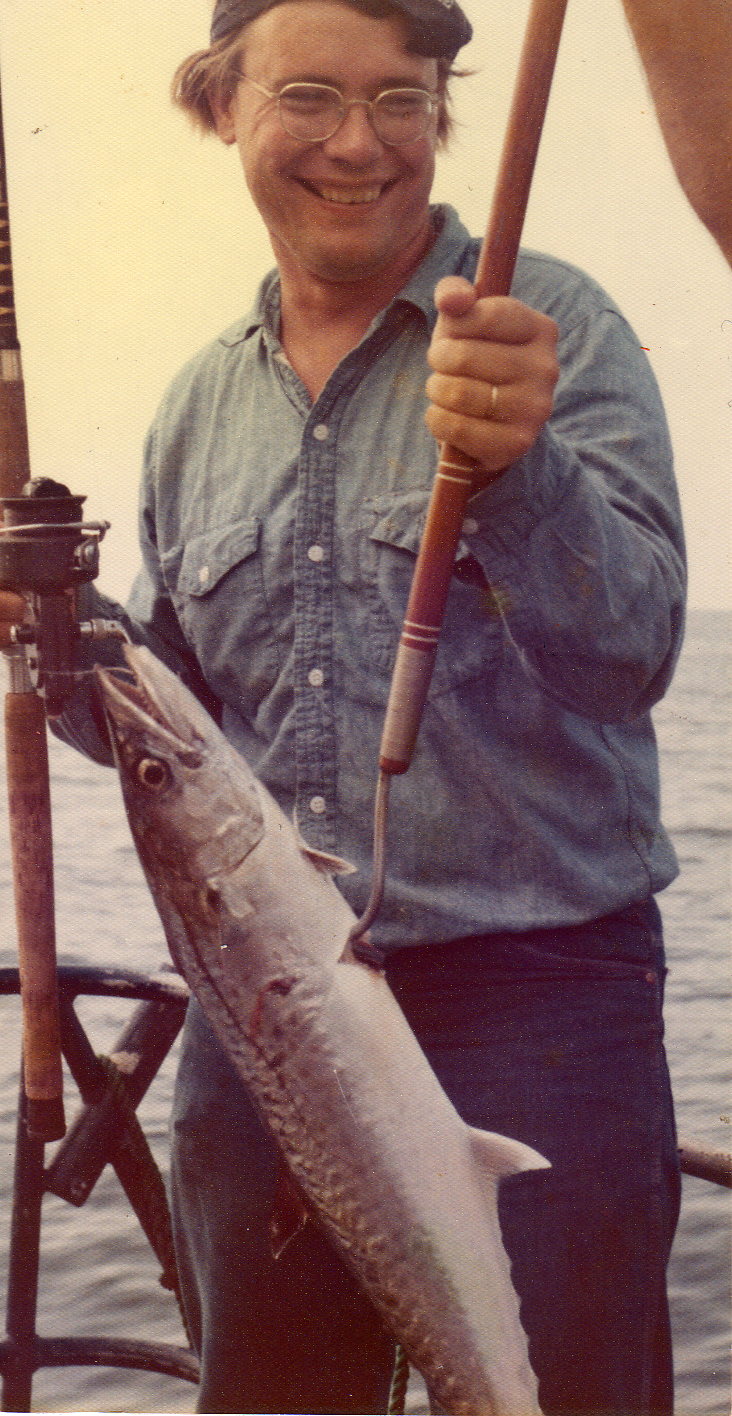
I remember the years of my early childhood fairly well and I have revisited them in a number of ways in the previous chapters and will revisit them again. But there is a lot that I never did discuss so far and the dark shadows of those early years are wrapped in layers of mystery. This chapter will deal with the themes of Sacrifice and Adventure which were prominent themes in my early efforts to respond to our families call to the missions. It is as things go, the ongoing story of my own life. I feel the struggle to connect to almost anything in almost any way and yet also look back on a life lived over decades since those events occurred.
But whatever the years before the missions may have been like, I was transformed by my years in the missions and although I may not consider myself a missionary today I am aware that I never am free of the influence of the missionary experience.


 Franksummers3ba's Blog