
My uncle Jed was with his lovely (and third) wife Jackie at the gathering on my mother’s patio. It was a special gathering with a buffet of excellent foods — not overly fancy but varied and delicious. I asked him, “I know that you have told me before but I have forgotten. How do you get paid for you online landman work? Is it by the hour?”
“It is by the day.” Jed’s face took on an overly serious look as he continued, “Now the lawyers get paid by the hour.” Jed had been a lawyer graduating with a prestigious post on Law Review and working hard. He had struggled to make ends meet, lost his first marriage in a cloud of small town scandal, had some addiction issues and formally left the profession. He had worked as a professional petroleum landman for decades while happily married and living a clean and sober life. But the loss of his position as a lawyer was always a painful memory in some way and it related to my own experience going to law school twice, losing my first marriage and never practicing law. But Jed might have heard that I was filing for disability, he continued on the theme. “I am 68 and I don’t know what a paid day off is or a sick day. We had a vacation a few years ago and the last vacation we had before that ended on the day when the World trade Center came down in New York.”
“Were you in New York?” Clara asked.
“No we were in New Orleans.” Jed replied.
“You are just trying to make the point of how long it has been when you mention 9/11. Right?” I asked.
“Right.” Jed replied.
“You mention sick days and I have worked for years with no paid days off as well.” I replied to Jed,”But you do have Medicare now, right?”
“Yes that is the best thing that ever happened to me. I used to pay hundreds over a thousand dollars a month for health insurance with a huge deductible.” Jed and Heidi spoke of some horrible experiences.
“I paid about a thousand a month for good insurance at Iberia Parish School Board’s group.” Clara and I told a few horror stories as well. But I was not like my uncle Jed fighting to keep working at all cost. I was ten years younger and I was trying to collect Social Security DIsability. My mother’s oldest surviving brother Brian was there with a special boot as he and his wife talked about continuing their contract plumbing business. He had shot himself in the leg as a young man practicing quick draw and had recently had a stroke. He had never adequately taken care of his leg after the wound and repairs but the new boot somehow tied to the surgery. I recognized in these men an ethic of dying in the saddle. That was not the way my life had worked out. Even before this recent series of events had unfurled I had been off the tracks of work a time or two. My own struggles went back a long way. We had gathered to remember my aunt Rachael and her widower was there. the same age as Jed and still working full time. I was just too sure that I had hit a final wall for me to feel any real doubt about whether I should be trying to qualify as disabled. But if there could have been a group to make me try again to work full-time, it might have been this group.
I am writing the principal draft shortly after gathering in a group of 40 of may friends and relatives to mark the interment and placing of memorial on the grave of my Aunt Rachel, who was only about eight years older than I. She was born with spina bifida and her struggle to get an education as it was constantly interrupted by numerous surgeries was mentioned in the first chapter of this memoir on my blog. The Proud name of Broussard marks the stone where she is buried. My mother included her name and the name of the still living husband with whom she raised two children. My mother, the eldest of the family and her only sister, paid for the headstone they share. All of Rachel’s grandchildren are the children of her daughter Jennifer and they were all there. Her son Joshua has never married and is openly gay. Her husband is now openly gay. But he is happy to be buried beside the woman he stayed with till death did them part.All her living siblings were there. Her dead brother was buried not far away and her parents and my father and two of her grandparents were buried nearby.

My aunt died years ago and we had a memorial service but her ashes were only recently returned to the family after her body was used for all the scientific purposes when she donated her body to science and was cremated and her cremains shipped to her daughter. Her body was ever the subject of so much intervention. It is in that science fiction study of a life that my own roots continue to impinge upon me. In my first chapter, I mentioned so much about medical history and it impact on my life, but I did not mention all of it. I was very impacted by the death and burial and remembrance of my uncle Robin who died of Sudden Infant Death Syndrome then called Crib Death. That happened when my mother was a teenager but the impact still affected me.
My father’s medical history included prostate cancer, pulmonary fibrosis, heart disease, dementia, and other factors that led to his demise. But a different memoir could spend a chapter on the impact that his breast cancer and mastectomy had on me. I will not have such a chapter, although I may return to the subject later. The brother that my mother gave up for adoption came back to us to die of AIDS after coming and going a few times throughout the previous decade and a half. It is a history that lays upon my mind and life in many ways.
But the burden of history goes beyond medical history and the first few chapters of this memoir will deal most of all with the history which defines my life whether readers can validate the connections or not. This is my story about me.
.
I have just recently reached the point in my life of seeking to find the means to retire in the collective instruments of my homeland and the republic. America is a country that spends most of its Federal revenue on Social Security, Medicare, Medicaid and interest on the National debt. In 2033. America is in a retirement demographic crisis according to a syndicated op ed piece by Robert Romano (That appeared among other places in the Tuesday February 20, 2024 issue of the Abbeville Meridional). He writes: ”…by 2033. Once interest and all other mandatory spending is accounted for, mandatory spending will account (for) 77.8 percent of all federal spending, up from its current level of 72.7 percent.” If I get my piece of the pie will it last? It partly depends on how long I live. Generally, the fact that I might receive the disability award rather than taking the earliest regular retirement award in two years and four months would indicate that I am less likely to live a long time. I personally feel that my resilience is spent. So in 2033, I may or may not be on the rolls at 68. At 78 in 2043 I think it unlikely that I will be around. It may or may not work out that a lot of my peers will be around to collect their checks in 2053 at 88 but I do not think I will be one of that group. My therapist’s wife collected her SSDI and died within a year and a few months. That was not typical but it is not unheard of either. Ask anyone in life insurance what not feeling well enough to work does in terms of defining someone’s life expectancy and they will tell you that workers or a much better bet to live long lives from any given point in time.
Such is the nature of this memoir that it focuses on an assessment of the paths taken, risks undergone and crops planted which did not yield much. I will fit the victories, trophies, literal and symbolic harvests and awards into that context. I was born in Crowley in Acadia Parish Louisiana. The Abbeville Meridional which has been publishing since 1856 (but is now ceasing direct door delivery and losing its status as a daily newspaper) has the words “Voice of Vermilion Parish-’The Most Cajun Place on Earth’”. In a thin caption-like banner on every front page. Acadia Parish is also named after Acadie. That is the colony from which many of my Acadian ancestors were deported. I have found that
The blog in which this memoir first appears (and probably only will ever appear) already has more than a little information on the Acadian people. But I will summarize a little bit of it here. In the years between 1600-1700 a.d. The Acadians created one of the world’s greatest landscapes by reclaiming land from the sea and salt marshes, created rich farms and hers and a benevolent Catholic society on the Landscape of Grand Pré recognized today by the United Nations as a World Heritage Site. This landscape is situated in the southern Minas Basin of Nova Scotia, the Grand Pré marshland and archaeological sites constitute a cultural landscape bearing testimony to the development of agricultural farmland using dykes and the aboiteau wooden sluice system, started by the Acadians in the 17th century and further developed and maintained by the Planters and present-day inhabitants. Over 1,300 ha, the cultural landscape encompasses a large expanse of polder farmland and archaeological elements of the towns of Grand Pré and Hortonville, which were built by the Acadians and their successors. The landscape is an exceptional example of the adaptation of the first European settlers to the conditions of the North American Atlantic coast. The site – marked by one of the most extreme tidal ranges in the world, averaging 11.6 m – is also inscribed as a memorial to Acadian way of life and deportation, which started in 1755, known as the Grand Dérangement.During this time the Cajuns migrated mostly from the same small region in France. Europe was changing and they sought to preserve a true Chistian community life . But they also joined closely to the native americans they met in Acadie – Nova Scotia. (See these resources:THE ACADIAN MIRACLE, 50TH ANNIVERSARY EDITION SIGNED BY AUTHOR M.M. Le BLANC Hardcover – January 1, 2016 by M. M. Le Blanc (Author), Dudley J. Le Blanc (1966 version) (Author); The Acadians: Creation of a People, by N.E.S. Griffiths, Toronto, New York, McGraw-Hill Ryerson, 19730. There is a lot more information about this part of my heritage in this blog and there is a great deal of controversy about many facts and issues related to the colony of Acadie that are important to me.

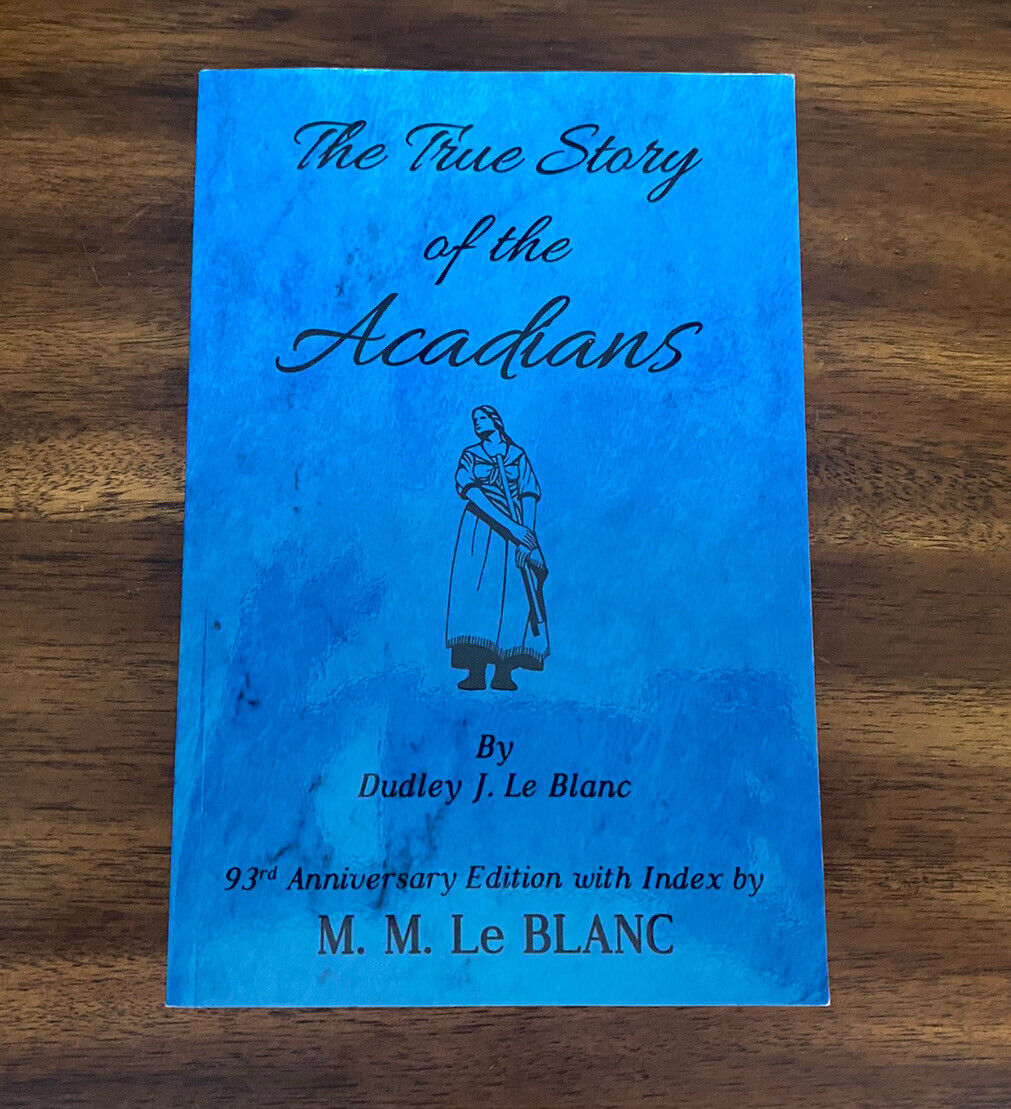
The period of the 1750’s in my heritage is a more important period than for most Americans I suppose. It involves the deportation of the Acadians that began in the autumn of 1755 and lasted until 1778. The first removals, comprising approximately 7000 people, were from settlements around the Bay of Fundy involved locking people tricked into the chapel at Grand Pre and gathering others who had not shown up. An armed resistance went on and I was very moved when I visited those sites on a pilgrimage in the late1990s with family and friends. .
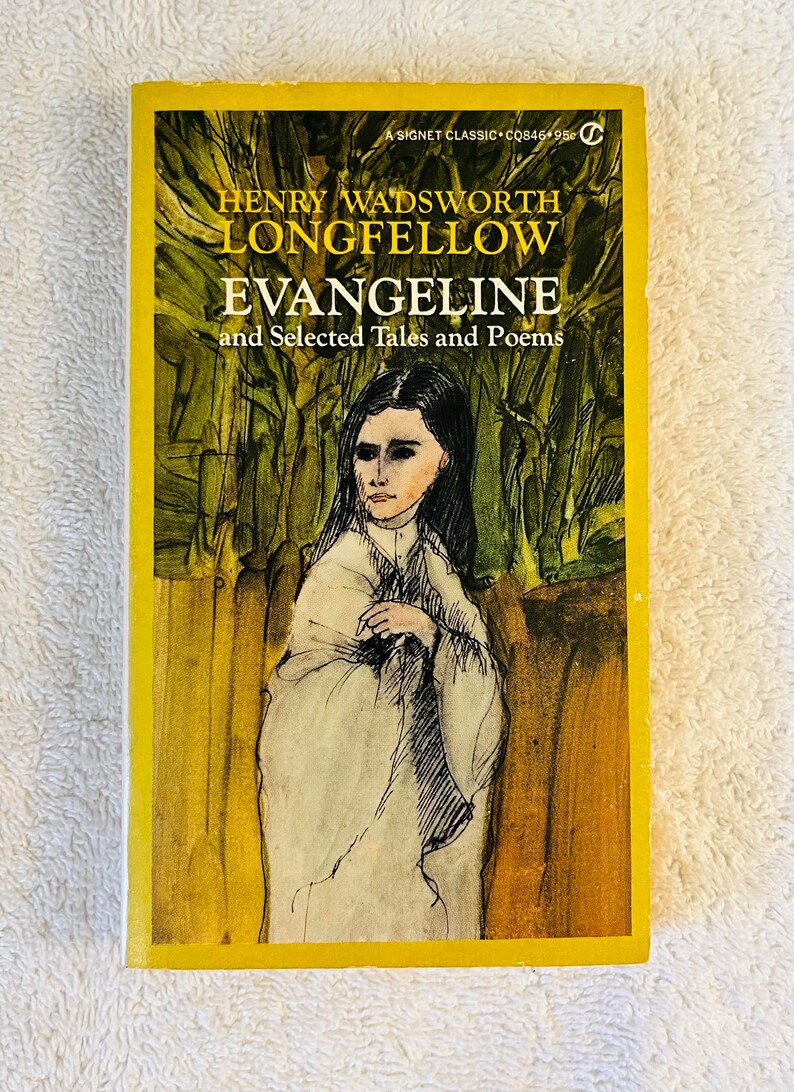
A third of all Acdians died.in the entire ordeal. There is much that is forgotten and much still not brought into a coherent narrative regarding the resistance under Joseph Broussard dit Beausoleil and some fighting on land and sea across thousands of miles. The Acadians churches and holy places were turned into concentration camps and then often defiled and burnt down. (See resources: HENRY W. LONGFELLOW – Evangeline and Selected Tales and Poems – 1964 Signet Classics Paperback; A Great and Noble Scheme: The Tragic Story of the Expulsion of the French Acadians from Their American Homeland Kindle Edition by John Mack Faragher (Author) Format: Kindle Edition; Douglas Edward Leach Roots of Conflict: British Armed Forces and Colonial Americans, 1677-1763 (Paperback)). The totality of this story is really staggering but it is not easy to have a discussion of anything remotely like the totality.

The new period in which my region of Acadiana began to emerge on the world stage starts in the 1760s with the Arrival in Louisiana of many of the Acadians who had been exiled wanderers and did not choose to return to the Acadie as third class subjects in Nova Scotia. Their leader was released in 1764, the year after the signing of the Treaty of Paris. Joseph Broussard dit Beausoleil who is my ancestor and the ancestor of both my beloved wife the former Clara Marie Duhon and my estranged wife Michell Denise Broussard was released from prison in poor physical condition as part of the geopolitical settlement at the end of an almost world war. The older than his years leader, left Nova Scotia, along with his family and hundreds of other Acadians, to Saint-Domingue (present-day Haiti). Unable to adapt to the climate and diseases that were killing Acadians, he led the group to settle in Louisiana, where some Acadins had settled ins mall groups and connected with the Spanish Imperial administration. Joseph was among the first 200 openly known Acadians recognized and supported by Spain to arrive in Louisiana on February 27, 1765, aboard the ship named the Santo Domingo. On April 8, 1765, Ina document far more remarkable than is easily understood his official role in the Spanish empire and his community’s role in the Spanish Empire was established on a land grant as Joseph Broussard appointed militia captain and commander of the “Acadians of the Atakapas” the area around present-day St. Martinville. His tenure was short lived , Joseph Broussard died near what is now the bends of the Bayou Teche, at the presumed age of 63. The exact date of his death is unknown, but it is assumed to have been on or about October 20, 1765. Broussard’s children and grandchildren generally remained in Louisiana, integrating into the slave-owning upper classes of the colony of Louisiana and yet also retaining complicated social and ethnic ties to the Acadian community and very definitely participating in a variety levels of involvement in the entire range of political and cultural development. Joseph Broussard’s society also created opportunities for their mixed race descendants to rise in a society of free people of color who enjoyed a life almost unimaginable in the Southern United States at any time after the 1860s. Joseph Broussard’s descendants include Celestine and her two daughters Beyonce and Solange and Beyonce’s offspring. (see resources: .The founding of New Acadia : the beginnings of Acadian life in Louisiana, 1765-1803 by Brasseaux, Carl A, Baton Rouge : Louisiana State University Press, 1987: “Acadian Redemption From Beausoleil Broussard to the Queen’s Royal Proclamation”, Warren Perrin, published and distributed with the Acadian Museum in Erath Louisiana).


The 1770s saw a new phase starting in the struggle of my people for meaning, prosperity and survival in their new homeland in Louisiana. In these years, the truth is that the Cajuns as a part of the Spanish Empire but also as themselves under their own title and structures defeated the British from Baton Rouge to Pensacola and drove them out as allies of the emerging united state under Catholic Spanish flag and Galvez. Gálvez had spent his early years as governor fully aware that he must be and was preparing for a potential conflict with Great Britain, which was and ambitious empire with more troops along the Gulf Coast than Spain. In April, 1779, Gálvez intercepted communications showing that Great Britain was planning an attack on New Orleans. Gálvez went on the offensive, and in that offensive he recruited Acadians (Cajuns) along with many other diverse peoples of Louisianans to join his Spanish army. THrough treaties and the grievances of the Acaidans among other factors united a force of great importance in creating the United States of America. While it is commonly believed and taught otherwise, the American Revolution War for Independence was really not a simple two sided affair. It was vastly more than 13 colonies of Anglo-Americans fighting an oppressive (or not so oppressive) British Empire. Controversies about these two powers alone that don’t look at any other players ignore much of the truth. Even if one ignores everything not officially and legally connected to the struggle (but which are still connected to it in many other real ways) it was a transatlantic conflict involving multiple countries and their colonies. Louisiana, then under the Spanish flag, waged warfare against British territories and undermining the British war effort against the emerging United States. Spain had decided to support the United States in part due to their own grievances from a loss to Great Britain during the French and Indian War, which was the North American theater of the Seven Years War. In 1762, Spain offered to help France against Britain in exchange for their secure possession of the Louisiana territory west of the Mississippi. (See Resources: INDEPENDENCE LOST: LIVES ON THE EDGE OF THE AMERICAN REVOLUTION by Kathleen DuVal (New York: Random House, 2015); Bernardo de Gálvez in Louisiana 1776–1783, Gretna: Pelican Publishing Company. Chávez, Thomas E. (2002).)
In the 1810s the struggle for an American existence outside of the British Empire was ongoing for the Acadians who would become known as Cajuns. These new Americans protected in their legal and civil rights by the treaty of the Louisiana purchase fought with Jean Lafite and Andrew Jackson in the Battle of New Orleans in 1814. There is a great deal involved in all of this but I am skimming over except to say that Iremember fine meals under a painting of the Battle of New Orleans as a small child at an exclusive club. My aunt also painted a picture of the Chalmette battlefield for me. (see resources: Lafitte the Pirate by Lyle Saxon, Pelican Pub., 1989; Historical Memoir of the War, By Arsène Lacarrière Latour 1816; A Bloodless Victory: The Battle of New Orleans in History and Memory (Johns Hopkins Books on the War of 1812) by Joseph F. Stoltz III (Author). From this great transformative battle, so much diminished in modern historical thought came one of the great moments of the 1820s when the first Acadian (to become Cajuns) Governor of Louisiana named Henry S. Thibodaux. An up and coming soldier serving in the Battle of New Orleans. Henry Schuyler Thibodaux had a complex life and was born an Acadian in exile on September 24, 1769 – October 24, 1827. After the battle he was a civilian planter and politician, who served one month in 1824 as the Fourth United States of Governor of Louisiana He was also aware of the dozens of others ho had held that title before the United States had come into power over Louisiana.. At the time Thibodaux was President of the State Senate and succeeded him as Acting Governor during an interim. Thibodaux suffered a great deal an most of his family was wiped out by the horrors of the exile and he was orphaned (his family was thought to have been deported from Pennsylvania) and adopted by General Philip Schuyler, an American Revolutionary War hero.This fact and the cat that he took Schuyler as his middle name provide another piece of evidence showing the link of the Acadian Cause tot he creation of the United States of America. Thibodaux was deeply connected to the intellectual and cultural foundations of the United States and spent his childhood in the United States and was probably educated in Scotland’s Enlightenment institutions in the 1780s. His remaining life shows that these connections to the United States did not sever his ties to the Acadian people.
Upon returning to the United States, Thibodaux moved to Louisiana in 1794, while it was under Spanish rule and chose to settle on “Acadian coast” of the Mississippi River and was deeply connected to the community. Thibodaux was married first to an Acadian or Cajun woman, Félicité Bonvillain, who bore him three children before she died a few years later. Thibodaux had five sons in total including his children by a white Creole woman after he was widowed..(wikipedia is a good a published source on Thibodaux as I know about).
In terms of connecting the Acadians to American culture, a key event occurred in the 1840’s.
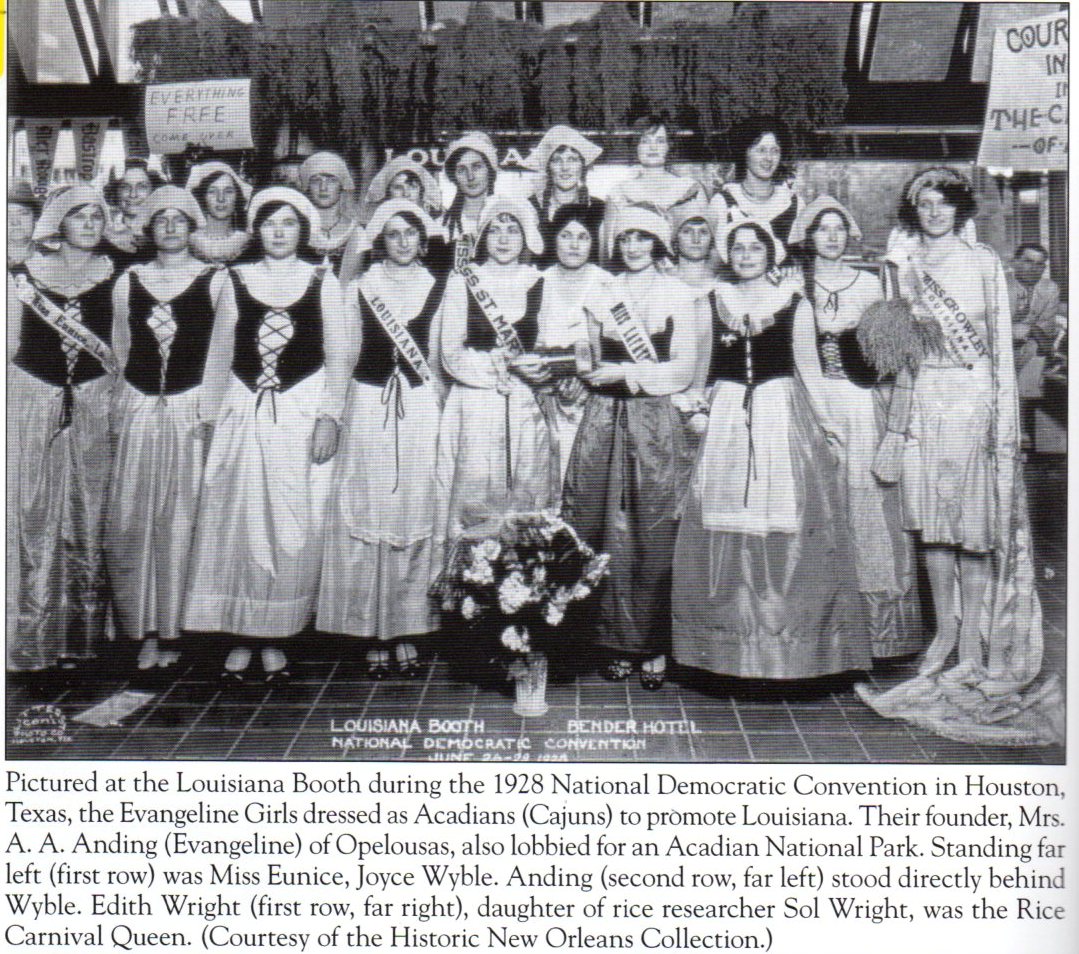
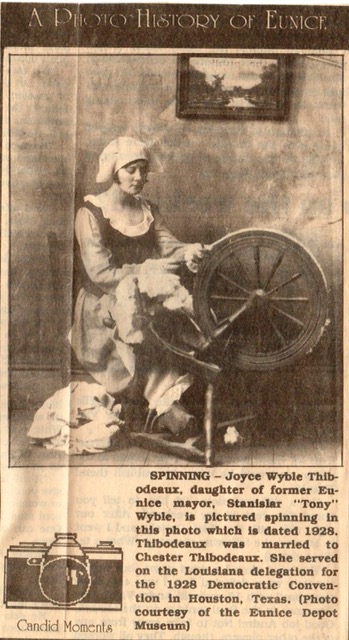
Evangeline, A Tale of Acadie is an epic poem by the New Englander Henry Wadsworth Longfellow published in 1847. The poem tells the story of an Acadian girl named Evangeline and her search for her lost love Gabriel during the time of the deportation and exile. The poem had a powerful effect in defining both Acadian history and identity in the nineteenth and twentieth centuries. It represents lost loved ones and heartbreak but also keeping hope. It was a huge commercial success. My mother’s relatives largely lived in Evangeline Parish in Louisiana. It has been the namesake of sports leagues and businesses important to my friends, family and region.
It was after Evangeline that the real transition to a very deeply Cajun experience became a reality. The issues that would lead to the CIvil War began to play a larger role than the issues that led to the American Revolution. I have lived a life much more defined by a history that is almost ignored than by a history that is endlessly controversial. (See resources: Acadian to Cajun: Transformation of a People, 1803-1877, by Carl A. Brasseaux, University of Michigan Press; Napoleon’s Soldiers In America,by Simone d Delery, Firebird Press, 1999; The Awakening by Kate Chopin). To understand Cajun culture one must understand their lives in Louisiana from 1840 t0 1860. That means knowing the State then as well.
My next chapter will deal with my background as a son of the former Confederacy and growing up in the South after being born in the country transformed by the Civil Rights movements and its aftermath. However, to understand me is to understand all this American history that occurred before the War Between the States and is part of my burden and heritage.
History would remain an important part of my life. The long struggle of a people and a region will be part of any memory of my time on this earth. I will do another chapter about the history of it all dealing with all that goes with the periods from 1860 -1960. But I am going to remember always that there was a lot of history in my mind that does not connect directly to the events of that century,
I am looking back on a life that may be ending sooner than later and a work life going down in flames I am aware that my own historical contribution will be minimal and I am coming to accept that reality better than I thought I could. But history has very much been the medium in which I have lived and moved. Over the course of this memoir, I will be able to explain a bit better why I wrote it. But for now, I post it in a blog that receives very little traffic at the end of life that has little larger significance.


 Franksummers3ba's Blog