“I am applying for Social Security Disability Income.” I told my friend Jude on the phone. “I just don’t think I can push through the pain and everything else to work any more.”
“Well, I hope that works out for you.” Jude said. “Jude had seen me underemployed and desperately broke as well as serving in my wedding When I had a good teaching position and paid for his tux and other expenses before taking Clara on a seven day Caribbean cruise for our honeymoon. “I think you have done a lot and I am sure it was not easy to decide to try.”
“It is definitely not what I hoped for.” I said over the phone, “But after the way the last two jobs ended I have no doubt that I cannot do this any more.”
“Well, I hope that it all works out for you.” Jude replied.
I thought back over all the complexities of work. I had gotten Jude started as a substitute in the Vermilion Parish Schools. I had worked the sub jobs for many years and done it much more steadily. I also remember we worked on a movie together and got food and premiere tickets
We also have a mutual friend named Philippe who lives with his wife in Argentina and we three had spent a lot of time together. All of us had worked on the movie I just mentioned and attended the premiere. We had eaten together and we had moved each other’s furniture and listened to music and discussed current troubles and also plans for the future. But mostly we had smoked and talked about big topics like the Christian Faith, women, the troubles with emotional issues and therapy. We also talked about older relatives and the issues of race and race relations that had shaped their attitudes and our relationships with them. It was a fact that all of us had come to deal with our own background of racial perceptions and the works of white relatives who grew up under the Jim Crow laws of the Southern states in the USA before we were born. There had been a lot of change and all of us had found a way to seek a new path in the world than the one of our grandparents world but we also were able to remember the ways different relatives had dealt with racism and with all other races. We had in different ways acknowledged that dealing with all different lineages, communities, ethnicities and races around the world in the different ways that we had encountered them was less complicated than the legacy of race relations between African-Americans and white families in our hometown.
Some of the incidents that had recently made me sure that I could not work regularly any more had happened in an almost all African- American Catholic school. What each day had brought since then had been less than really workable connections of health and work. But the future has gotten clearer now. I will either get the SSDI award or I will not have any future that is likely to work. I have just sort of reached the place where depending on this system I have paid into over the years is all I have left that might sustain me — if the insurance covers my disability.
I have a great deal of awareness of all the limitations of my resources, energy and even capacities of this blog. So I have the context in which I am committed to telling my story with imperfect text and images. A story which may not have a potential readership anyway.
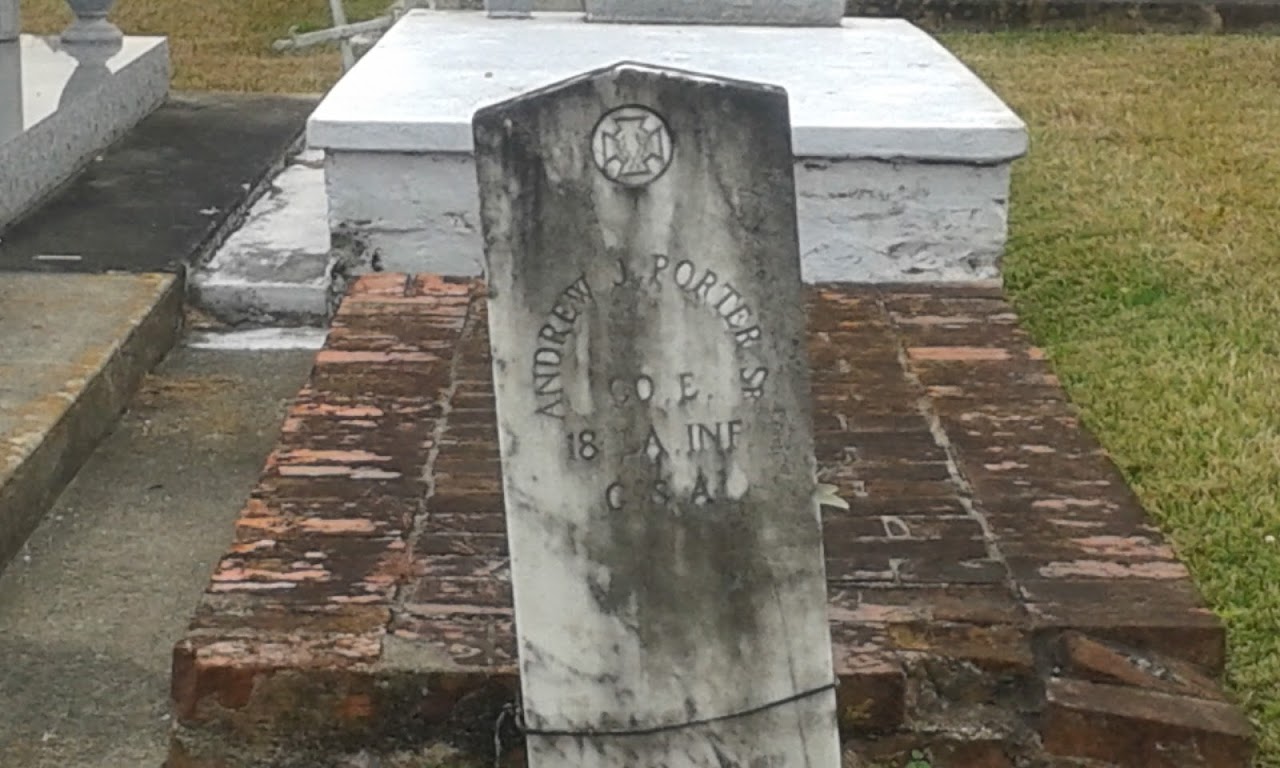
On February 21, 2024 my wife Clara and I joined the complimentary tour of Saint Mary Magdalen Church along with the parents of the second grade children preparing to make their First Communions soon. I have to say that we both enjoyed the history of the town founded by the Catholic priest Pere Antoine Megret of Abbeville, France who bought (in arpents) about 130 acres of land from my ancestor Joseph Leblanc and his wife ( a Broussard by birth). He founded the town of La Chapelle and used the Leblanc home as his first mission church. He helped the town by donating the public and courthouse squares and he also raised some funds by selling lots along planned streets. He did see some Americans convert to Catholicism and helped the Cajun and Catholic majority of the area become the Parish seat (like a county seat another states) when a nearby Anglo- American Protestant community had hoped to be the Parish Seat. The church ahs many layers of history and that is evident in the art and design of various restorations and enhancements. Older stained glass and other images or more likely tied to French origins (like John Vainney, Joan of Arc and Saint Louis King of France) or Canadian references, like John the Baptist, Patron Saint of Quebec. (although Saint George is there), but the new ones have more Italian, Vietnamese, and other connections. Saint Katherine Drexel is there in a painting that seems to be a mural and she did work among African Americans and Native Americans who were all beneficiaries of her great wealth and generosity and she worked with communities even in Louisiana and visited Acadiana. But there is not much that represents African cultures or races or the Black people of our region. There was a black catholic parish of Our Lady of Lourdes in Abbeville that burned down and I worked near it ruins when I was a child. Those families who did not leave the Catholic Church almost all went to St. Theresa CHurch with the Creoles of Color who seemed racially ambiguous in the 20th century Louisiana ad the the working class Cajuns who made up most of the founders of the parish. St. Mary Magdalen where I was baptized, made my First Communion and was married both times has few apparently Black or African American members. It is my home church and is part of the complexity of understanding a heritage that goes back through Jim Crow Laws, the Civil War, slavery and legalized racism. I was a child of the 1960s not the 1860s. I never knew a world after the first few years in which Martin Luther King Junior had not both given the I have a Dream Speech on the March on Washington and won the Nobel Prize. I also lived my life seeing a holiday, a lot of streets and buildings named for Martin Luther King Junior. But although I have taught racially mixed and majority African American classes and worked in all sorts of connections to all communities that live in these lands, race and racial politics and all the complexity of their associations have also impacted my life. Saint Mary Magdalen Parish, has had black priests, raises money for African and African American missions and institutions and maintains a presence of ministry in the site of the old Black Catholic parish of Our Lady of Lourdes. But we have to deal with the racial divisions and tensions that we cannot escape in our history.
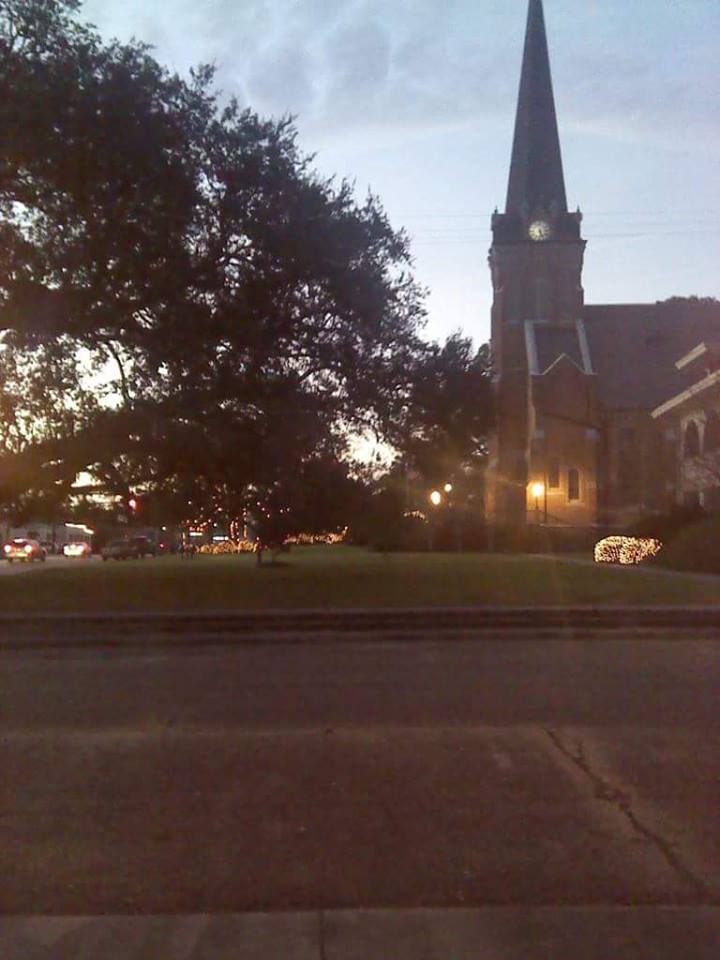

The world of politics and race and many other issues of social change in America have been evolving all my life. But I am sure that although I will come back to it there will be some value in looking at my life through that lens early on and being as honest as possible.
.. .
I was not in college at the mass demonstrations against the war in VIetnam. Hugh Thompson of Lafayette, Louisiana was trying to stop the My Lai Massacre and would not be given acknowledgement for it for many years. But in the 60s and early 70s my father was enrolled at Tulane Law School, the University of London and Columbia University and as his child I and my mother were exposed to the forces of campus life. I had some aunts and uncles who were more or less counter cultural or hip or progressive and struggled with each other in search of their own take on the future. I remember the discussion of racial and political violence forming a backdrop for our lives and dinner table discussions. Josephine Dixon was my mother’s family’s housekeeper for many years. Jake was their gardener. They were African American and we were taught to see their service and those of Maggie, and Gwynell and Ernest many others as part of the way our society worked. It was discussed in political terms and also a fac that in some sense we listened to their stories, respected their recipes and folk remedies and supported their churches, schools and clubs. We all saw them as being connected to us and everyone knew the world was changing. I also remember watching Gone with the WInd on television and hearing my mother tell the story of staying up past her bedtime to read the novel and crying herself to sleep. There was a good deal of talk of southern chivalry and southern belles in the world I grew up in every day. The ideals that were embedded in those stories would have meaning form me for a long time.
I was in my mother’s womb when John F. Kennedy was shot and killed in Dallas in November of 1963.. My wife Clara and I have visited the museum in the Texas Book Depository but there was always a lot of influence from that incident in the thoughts and minds of American Catholics, Democrats and Southerners who identified with different figures in the tragedy in different ways. But Lee Harvey Oswald was always seen as the exceptional killer not shooting for American political reasons one could tie to the strife that was all around us. In April of 1968 Martin Luther King was killed by people who espoused a racial ideology openly hostile to the ideals of the CIvil RIghts Leader. In June of the same year RObert Kennedy was shot and it was not so clear why.but people speculated that it had more to do with politics than it was clear it would be about.
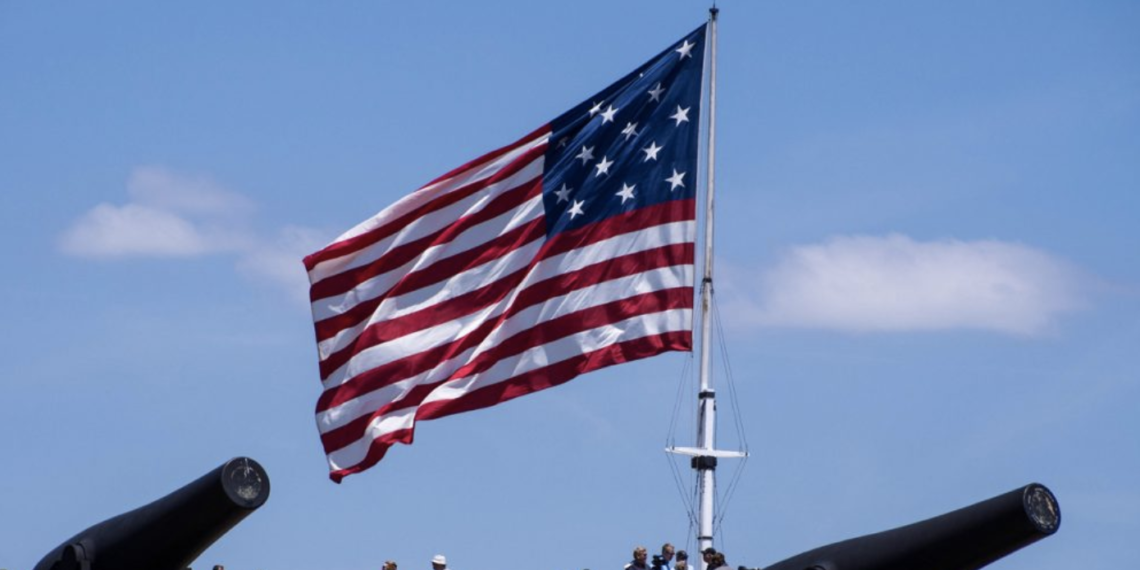
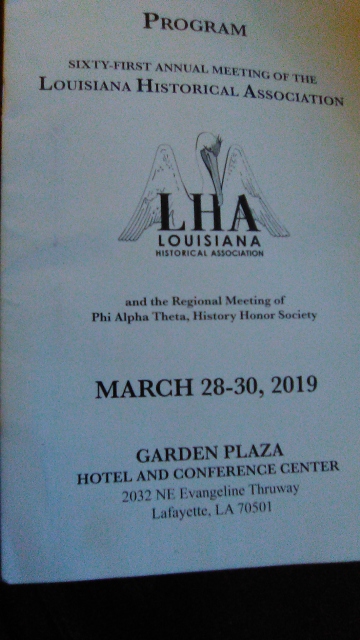
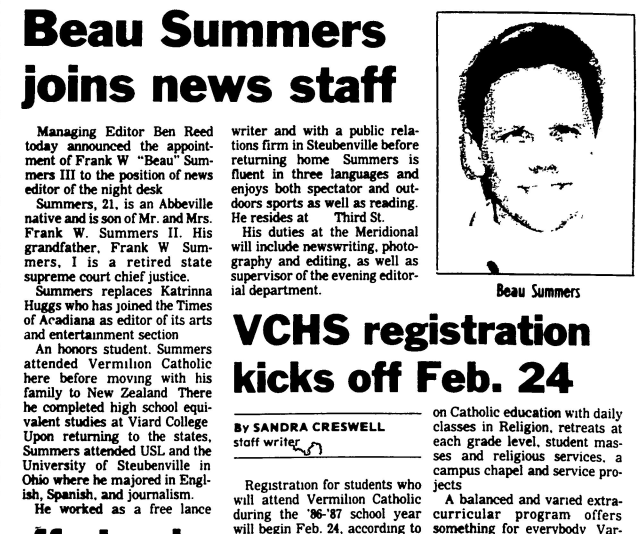

In 1972, Alabama Governor George Wallace who had run for segregation and states rights as a third party candidate in 1964 and 1968 returned to the Democratic Party as a representative of the vast majority of whites who would not yet seriously consider the GOP (the party of Lincoln) and was rallying some support for his third presidential campaign and, under a slightly more moderate platform that was responsive to the coalition that still existed in the Democratic party, He was a serious candidate in the primaries. On May 15, 1972 he was shot while campaigning in Laurel Maryland. I still remember that day when I was eight years old although not very well, he was permanently paralyzed and I remember him as a symbol of another martyrdom for a political cause in the United States.
After his getting out of the woods and danger of imminent death, Wallace remained in a wheelchair and whether that was the reason or not he ceased to be a figure of national prominence being an obscure also-ran in the primaries in 1976. As I came into my adulthood in the 1980s, Governor George Wallace’s politics became profoundly different than they had been, he became a powerful force in new racial politics. He sought the forgiveness of civil rights leaders he had forcibly opposed and gradually found ways to build coalitions with them. This new political strategy gained the support of Alabama’s growing number of African American voters as voter suppression was removed from more and more precincts and elections. In 1983 Wallace was elected Alabama governor for the last time with the large majority of the African American vote. The former champion of segregation made more African-American political appointments than any other figure in Alabama history and built other forms of racial cooperation.
The 1860s brought the clarity of war to a very complex reality. The monument to the
Louisiana Acadian General Alfred Mouton, who died fighting in the last major Confederate victory in the entire war stood in downtown Lafayette for most of my life. But it did not play a major role in my life or sense of things as a child. It was one of relatively few Confederate images in my home region. Yet common trips and memories of Lee Circle were part of my many memories of New Orleans. There Robert E. Lee towered high above everyone and everything rushing past him on the streets of a city that held the promise of being rich in oil and gas money and growing connections with an optimistic Latin American business class The Confederate images were subtler but the biographies of Confederates were on bookshelves of several family members. That was the nature of the Confederate legacy among my connections of childhood. To be a Cajun was never to be what had become the ideal of the White Southerners who waved Confederate flags and had run the “DIxiecrat” party of 1948 for States Rights and Segregation in 1948 and won a significant number of electoral votes when third parties almost never win any in our system. George Wallace won 46 or so electoral votes with the American Independence Party, but many people called him a Dixiecrat and his connection with the Confederacy was real to many. The Confederate connection to Acadian itself while Acadians were mostly Confederates they fought a civil war of their own over issues of racial relations and other matters. (see resources: Histoire de comités de vigilance aux attakapas, by Barde, Alexandre: (a number of translations have been published) publication date 1861; Children of Strangers by Lyle Saxon, 1989 by Pelican Publishing, Acadian General Alfred Mouton and the Civil War, by Arceneaux, William,Univ Of Louisiana At Lafayette, 1981)
Once the war was over the politics of the CIvil War would dominate American politics going forward but Acadians would generally call those who were not Acadians Americans by then. In the 1880s many were still motivated by their own ethnic identity. 1881, the Acadians who met at Memramcook for their first National Convention chose August 15 as the date for their national holiday. Since then, Acadians get together on that day of the Feast of the Assumption of the Blessed Virgin Mary to commemorate their history and celebrate their culture. But Acadian culture as a whole in Louisiana had entered a defensive stage. It was a time when the original bilingual constitution would be changed and French would be driven out of public institutions at enormous cost to many. A champion would arise over those issues. He sometimes would champion the rights of Creoles of color and French speaking African Americans and was a moderate voice in the Segregationist political milieu.
In the !920’s Dudley Leblanc,from my home jurisdiction of Vermilion Parish, Louisiana who led a pilgrimage to Acadie on a number of key anniversaries, wrote two histories of the Acadian people, was President of the Association of Louisiana the Acadians and made and gave away fortunes in insurance and patent medicine – That man was also a powerful political voice for the Acadians at the White House, the Vatican and in real elected offices where he was a duly elected Public Service Commissioner. A state representative and a failed but influential candidate for governor. He campaigned for governor even as he traveled across the country and Canada and was busy on pilgrimage as an already established voice for the Acadian people. True Story of the Acadians had appeared in 1926. His efforts through the Thibodeaux Benevolent Association brought new economic access to rural Acadians and other whites. However his support of Blacks in the People’s Benevolent Association was much more controverisal and his political enemies tormented him for supporting them in this life insurance company – even as some claimed to seek more moderate racial policies.
I930 he was running for Governor with a significant political resume Dudley Leblanc, the priests and the Evangeline Girls fo on a trip of remembrance and reconciliation. This story maps in a strange way with his challenge to the emerging dictatorship of Huey Long. The Abbeville Meridional’s July 12, 1930 front page explained that the planning of the trip was tied to the 175th anniversary of the Exile and would bring a Louisiana Acadian delegation to the international celebration and memorial. . As to the Evangeline Girls, “The Association of Louisiana Acadians has devised ways and means by which a young lady, preferably one with an Acadian name who can speak French can defray her expenses.” In contrast to the Share Our Wealth rhetoric for which Huey Pierce Long would become famous, and already was becoming known, the values of the Evangeline Girls were less egalitarian. It was a distinction to be an Evangeline Girl, the Evangeline Girls were chosen in large part by a multiple layer process orf real distinctions that the girls had to earn or prove.. They were certified as eligible applicants by Dudley Leblanc and the Association of Louisiana Acadians and they were then given the task of soliciting votes from the businesses operating in their communities.This took place in the Great Depression. These votes were then the principal basis for selection with fundraising pledges behind the voters groups. The group would be written up and meet with dignitaries in New Orleans, New York, Montreal and Chicago but all of this came from Abbeville and Erath in Vermilion PArish at its core. Abbeville Meridional September 6, 1930 Front page story discusses how the Evangeline Girls were feted in Lafayette on their return from Grand Pre and the reunion by many dignitaries ands supporters and about the importance of the trip for the community at large.
Dudley Leblanc was a Cajun historian before the 1930 pilgrimage in which Yvonne Pavy (later to be Yvonne Pavy Weiss married to the doctor who shot Huey Long) participated and would eventually be released in two versions during her lifetime. A later book appeared long after the deaths of Long and her husband in the state capitol — that book was The Acadian Miracle. The two Leblanc books have also been recently released again in new editions in honor of the 50th anniversary of one book and the 90th anniversary of the other, this joined a recent Dudley Leblanc exhibit opening the Acadian Museum. During the exhibit this museum in Vermilion Parish received the diary of Corinne Broussard, an Evangline Girl. on a famous trip with Yvonne Pavy who later married the man who while a famous local doctor shot Huey Long . The assassination of Huey Long did not greatly advance Dudley Leblanc’s political standing but he did survive both literally and politically. There was political retaliation against Judge Pavy and the Leblanc organization. But there is no reason to believe that his political life was not more threatened by a living Huey Long. the assertion here is not that he ordered Long to be killed.
1940’s World War II Cajuns served as advance intelligence and saboteurs for D-Day invasion:
Cajun French was a close relative of dialect spoken on the fortified coasts of Normandy and Cajuns blended into the scenery. The World Wars each contributed to Cajuns accepting their identity and seeing their value in American culture and in their own eyes. But it took time to give form to their cultural aspirations and that story is beyond what I can cover here. Corinne Broussard Murphy’s brother was the Louisiana State Senator Sam Broussard who would go on to being a major participant in the founding of an organization known as CODOFIL or the Council for the Development of French in Louisiana. He was also the featured central figure in the Pat Mire film Mon Cher Camarade. Broussard along with the still living Robert Leblanc of Abbeville, who was the father of Family Missions Company’s Founders close liefelong friends Mrs.Joseph Tinker were among the Cajuns who by character and dialect played a unique role in the intelligence operations of the United States military in France during the Second World War. These are also men who partly defined the time in which the Documentarians came to Acadiana. Corinne Broussard’s diary of her time in pilgrimage as an Evangeline Girl with Dudley Leblanc in 1930 on the pilgrimage of return to old Acadie or Nova Scotia is a testament to Acadian Identity activism. Sam Broussard is a testament to the fighting spirit and ethnic loyalty and expansive Americanism that could occur in the males attached to these Evangeline Girls. The significant political influence of Leblanc is evident to anyone fairly examining his life up to and following the assassination. That is true although there were later periods when Longism was still very much a political force when Leblanc was less openly political
POSTWAR YEARS:. During the 1943 to 1953 years many photographers were active for the government and Standard Oil documenting Cajun life. The film Louisiana Story about the Cajun family of trappers who lease land to an oi company was made in Abbeville and premiered in Abbeville. It was made by the father of Documentary film Robert Flaherty who had made Nannook of the North decades earlier. There is a plaque in forn of the old Franks?DIxie theater where it premiered.
In Abbeville Dudley Leblanc whose granddaughter was raised as the niece of my grandfather who became the Chief Justice of the Louisiana Supreme Court and my father’s first cousin by fostering when her mother died in childbirth. So she was a connection in all these times of my to a vocal ethnic activist was mostly known as the HADACOL man, leading a giant patent medicine concern. He was for a year or two the second largest advertiser in the United States He also distributed many statues of St. Therese of Lisieux to many local Catholic churches including both St. Mary Magdalene and St. Theresa. I never saw any of the CHurches where his statues stood without reference to his legacy..
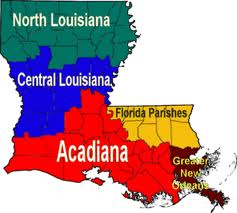
I have described the 1960’s across the United States. Cajun culture was caught up in such things but there was a whole Cajun history at the same time.In 1968, the legislature established the Council for the Development of French in Louisiana (CODOFIL) to “preserve, promote, and develop Louisiana’s French and Creole culture, heritage, and language.” Under this mandate, we seek to establish French immersion programs, promote French business and tourism, and identify … This was among the many factors that led to more development sin the next decade. In the 1970s Festivals Acadiens is a cooperative of independent festivals that began in 1977. The oldest single component of this group was the Louisiana Native Crafts Festival (later to become the Louisiana Native and Contemporary Crafts Festival), The Cajun French Music Association (CFMA) is a non-profit organization of Cajuns and non-Cajuns whose purpose is to promote and preserve Cajun music and various aspects of the Acadian Heritage that emerged in importance as an idea and perceived need in the 1970s. But it was the nextdecade in which the CFMA was founded in Basile, Louisiana in November, 1984 with Harry LaFleur of Eunice, Louisiana as its founder.
So, now we face the current US period in which racial conflicts have been taking new and varied forms. But it deserves to be said that this is not a book about Southern White guilt over racism, or American guilt over the Vietnam War. I truly was very inspired by the Space programs of the Apollo years and still hope for a future of space colonies for all races and countries of Earth. I have devoted much time and energy to Space and much space in this blog to it as well. Fllorida, Texas and Alabama were in the Confederacy but were also important locations for NASA when I was young. And the world I see around me is one in which there are countless things to address. I am not sure what the future will be, but I am now at a place where I am just hoping to draw back and live out my remaining days, we will see how that goes,
I remember all the events between the death of George Floyd and the riot at the Capitol on January 6, 2021. When I think of all these and other things I know that I live in a world in which racial and related issues continue to shape the country I live in and continue to defy my predictions.


 Franksummers3ba's Blog