
My life is either going to move into a new phase or it will turn out very possibly to be the most ruinous phase of my life. I am filing for social security disability income which in my case amounts to an early retirement insurance benefit. If granted it will enable me to have a decent quality of life in the days remaining to me. If not, then I will no longer be able to function. I have always thought Social Security to be one of the greatest achievements of this society in which I live but I had hoped for a chance to retire at a regular age despite my many challenges and limits along the way.
“I will always be your brother Simon. Even though times like this may not last for many years. ” That is what I used to tell my brother Simon Peter Emmanuel Summers when I was his full-time caregiver during the COVID 19 pandemic. I was often speaking in response to his comment, “I really appreciate this brother time.” He would near my comment and would reply “I hope we can keep these times going as long as possible.”
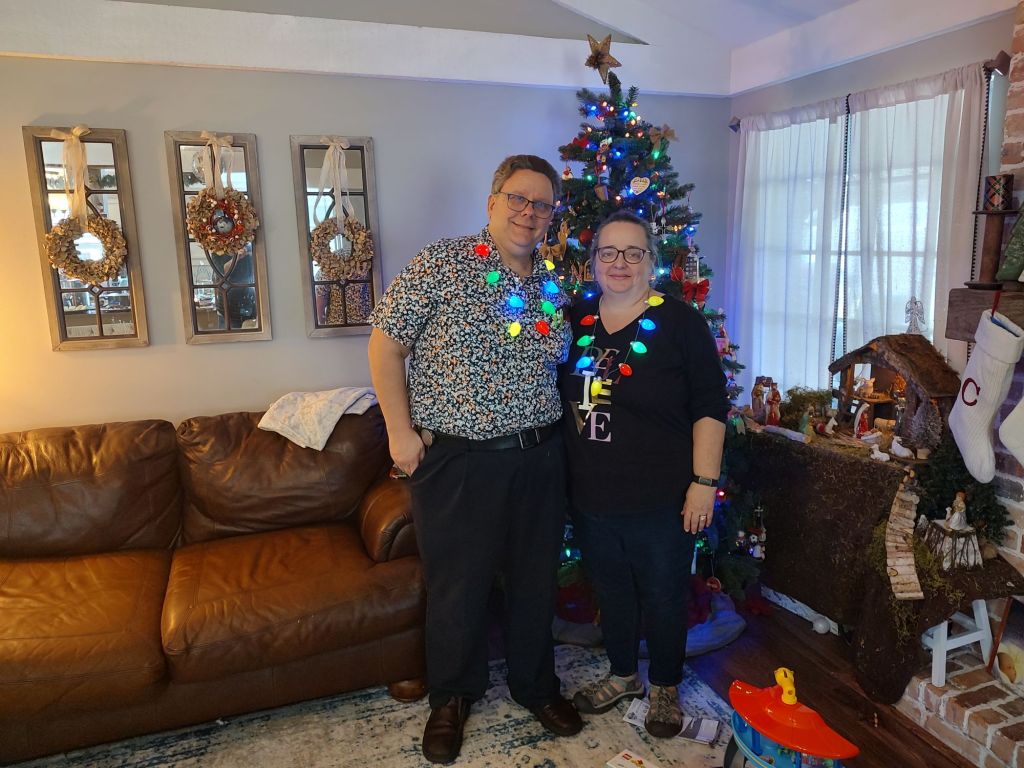
My time as his caregiver ended in April of 2022. But in November of 2022 he was the best man at our wedding as I wed Clara Marie Duhon in Saint Mary Magdalen Church. The Summers family and many others had gathered (not every relative invited but many). It had only been a few months since the church had been even fuller for my father’s funeral. I was grateful that Clara had gotten to know my Dad before he passed on September 11, 2022. “Thank you so much for loving Clara and welcoming her to the family.” I had told Dad many times in his last months with us. “I do love her he would reply and it makes my happy to see you together.” Dad had often said “Thank God for Clara.”
Clara and I and Simon and Mom and Dad had made a trip together to Galveston before we were married and while I was still working with Simon. Dad was fading already and Simon has Prader-Wili Syndrome. we had wonderful times Clara and I , Simon and I, all together but it was never easy. I carried a lot of the physical load and Clara a lot of the logistical load. Today I am in a different place. Today I am seeking to end my working life early and seek to spend the rest of my days with a little dignity and extend the time I might live on this Earth. It is that process of seeking to classify myself as disabled that inspired me to write this memoir online right now.
My Past, Prologue and Present: Reflects on A Family’s Journey Navigating the World of Education with Rare Diseases Introduction:
At the time that I am writing this memoir – I am also filing for Social Security DIsability Income with the Social Security Administration. I have paid into social security, the Louisiana State Teachers Retirement Fund and a FICA replacement retirement fund as well as into disability insurance and private retirement plans. However, it is not clear whether I will be covered and receive a benefit and I don’t know how strong I will be in waiting for such benefits. I have worked abroad as well and also done a lot of work that was never paid.
My willingness to do serious academic work (without any real tangible rewards being likely) reflects not only my commitment to intellectual pursuits but also the belief that education is a cornerstone of personal growth and societal progress. At one time or another I, both my parents, three of my sisters, a brother, one of my aunts, my paternal grandmother and my maternal maternal great-grandmother were classroom teachers. Only three of these people were ever fully certified career teachers. The pursuit of academic excellence extends beyond the boundaries of our family, as we firmly believe that all students, regardless of their health conditions or cognitive abilities, have unique insights to contribute to the academic world. For me that perspective has been vital and somewhat inspiring and I believe only sound social studies education tied to quality history can prevent a social blindness that can be very costly (see Schlessinger),. Barriers to Inclusion Despite the compelling benefits of inclusion, several barriers hinder its successful implementation. Research suggests that lack of resources, inadequate teacher training, and negative attitudes among educators and peers are significant barriers (Turnbull et al., 2017; Wilson, 2020). Schools often face challenges in accommodating students with diverse needs, leading to exclusion or segregation. To overcome these barriers, schools must invest in professional development for teachers, provide sufficient resources, and promote a culture of inclusivity and acceptance. The forces of social entropy and inertia that push against the best outcomes for people with exceptionalities can be numerous. In addition to the connections to education, my parents, several of my siblings and I myself spent a good bit of time as Catholic lay missionaries and in other ministry in the Church. My wife Clara retired from public service as well as a career as a CPA in the private sector and then went to work for the Shalom Mountain nondenominational retreat house in the Catskills. She now volunteers at our church regularly. I can remember many hours of effort in academic, humanitarian and evangelistic work that were volunteered as well as those that were poorly paid. Yet now I have to face the consequences of not having paid into a pension or retirement for those days,months and years – I have very much been given the chance to reflect on my life. I am taking some time to understand myself.
.
Whoever reads this is taking some time to understand someone else. To read a memoir or an autobiography of someone who is not famous and not likely to be discussed around what used to be a water cooler or at the neighborhood bar – that is an act of investing yourself in the life and community of humanity. I am at a place in my life where I am forced to deal with the summation of my life from a certain point of view. It is a point of view that does not necessarily scream out to be recorded. However, it is the end of a long journey. I am one who has been in the habit of reporting and recording and so my life has meant a great deal to me. Just as, if anyone reads this your life has meant a lot to you at some point and probably still does. I hope that you have reached some of the goals of your life and achieved some potential and know what some sense of fulfillment and joy feels like. The memoir that I am writing today is not the memoir I would have written at any other time. The successful memoir is one of three of four kinds. The unsuccessful memoir can be one of many other kinds.
The memoir that one writes with a ghost writer a high powered agent, a publicist, two researchers and a fact checker after one retires from a position in which one has achieved the kind of fame and historical significance that everyone expects to endure and the kind of popular interest that nobody can deny is probably the A+ memoir. The memoir that one writes with an excellent editor and a good researcher and a big advance and a hot agent as one retires from a life of distinguished achievement as a novelist, poet,songwriter, music producer, actor, historian, anthropologist or journalist who has become famous for telling the great stories of one’s age is the A kind of biography. The autobiography of the honest and revealing world famous and also infamous bad guy or gal is the B+ memoir. The truly literary memoir that matches the literary tastes and needs of the time in which it is written and is lucky enough to get published is the B memoir. A good spiritual, religious or professional testimonial written to address the beliefs and needs of a well defined community is the B-. This memoir aspires madly to a D- status. If it is not by all possible measures, an absolute failure that will be an extraordinary level of success.
I was born in Crowley, Louisiana in the United States of America on June 15, 1964. I am writing the first draft of this chapter less than six months before I turn 60. However, it is not at all assured that I will turn 60. While I do not have anything that is a known terminal disease, I am finally and completely running out of steam – unless I get a Social Security Disability Income award very soon. I have been married to a good woman for just a little over a year. I would hate to abandon her so soon by dying but I must say I think living in this crisis and uncertainty is going to be a challenge beyond whatever strength I am sure that I have right now. During the last part of my working life, and at some other times along the way, I have been a teacher. Am I going to have another chapter that is endurable? I am not sure at all that I will get to spend any social security benefit. One gets $250 as a death benefit. But since I married last year I can hope my spouse might get some survivor benefit.
The faith and footsteps of a life have left whatever impression people may or may not find in my record. But late in life I got some additional credentials on inclusion and education and felt some sense of closure in a life dealing with educational institutions with a sense of being on the outside.I will interject here that when I was in graduate school at Louisiana State University, on of the professors who ended up being on my committee used to say that I reminded him of the book, The Education of Henry Adams. That book is a memoir written by a sort of New England Patrician who wrote a memoir showing his sense of alienation from the new society emerging around him. I will say that over the years, I have slipped into the sense of the impossibilities of my life in these times that do resemble Henry Adams in his sense of his own times.
Understanding the Entire topic of Inclusion
Having traveled and been in classrooms in New York, London, the Philippines, Tonga and Mexico as well as in my native Louisiana, I was often somewhat outside the norm. I hoped that if I survived all this change and stress it might give me something to offer to the students I encountered in my life and work as a teacher. Inclusion in education is a topic of paramount importance in today’s diverse classrooms. One the films I watched in a Special Education class during my postbaccalaureate alternative path to certification in the College of Education at the University of Louisiana was the film attributed to Sue Rubin as writer titled “Autism is a World”. The film was nominated for an Academy Award for best Short Subject Documentary film. Yet today the method of Facilitated Comprehension used to enhance her IQ from about 29 to over 130 is somewhat discredited today. There is little doubt that Sue Rubin found more happiness and was better behaved when she was more fully integrated in the type of lifestyle her family and their other associates were normally part of and yet it is very much in doubt that her basis for the dramatic change in her status is entirely valid. Given that this film was assigned without much comment about the controversy related to the FC and even techniques of Augmentative and Assisted Communication cannot help but raise questions about whether Professor Beasley has some agenda regarding the films propositions about inclusion that he is not sharing with me or the class. One wonders whether recent U.S. Supreme Court decisions on affirmative action could have an impact on views of inclusion for students with disability. The case Students for Fair Admissions v. Harvard decided in June 2023 is very focused on singling out admissions policies that look solely at race and in fact the language seems to support admissions based on overcoming the struggles such as those faced by those who suffer from disabilities. Yet one wonders if people who have not been admitted to colleges may one day successfully sue for some kind of relief when questionable methods may have been used to secure the admissions of people such as Sue Rubin. There clearly are people excluded from such opportunities as she enjoyed, although I don’t have the data on the year of her admission one can draw some conclusions from the following text taken from an online post titled: Applicants, Acceptance Rate, Yield Trends at Whittier, “At Whittier College, the average acceptance rate over the past 10 years is 69.37% where the current year rate is 75.02%. Last year, it was slightly harder to get into Whittier College than the previous year. The average yield (enrollment rate) over the period is 11.91% where the 2023 yield is 11.01%. The number of applicants to Whittier increased by 4.51% (130 applicants) compared to last year.” https://www.collegetuitioncompare.com/trends/whittier-college/admission.
Had my own struggles to survive in my pursuit of education and others in my family have experienced challenges but perhaps none as severe as Sue Rubin’s. In her own journey seeking education changes in Sue Rubin’s life occurred when she was still in K-12 education where a right to Free and Appropriate Public Education (FAPE) still applies.In the same class I watched another film called Including Samuel . In this other film made by family and assigned in the same class, there is a treatment of the costs and benefits of inclusion in public schools.
All of this discussion has a great deal of significance for me personally. The world of education is an ever-evolving landscape, and for my family, it has been a journey marked by unique challenges and experiences. I started off life as an only child and an only grandchild on my father’s side and unaware of the child my mother had given up for adoption. My mother’s brother was the father of the second grandchild, Michael Gremillion was born with hydrocephaly and in the end he died before any others were born on that side of the family. A few years later, on my father’s side, his brother who was the second in his family had a son who just a few months ago ran for Vermilion Parish Sheriff and came out third in a three man race after retiring from the Louisiana State Police. I was aware of the education of my aunts and uncles, some of whom had great troubles related to their education such as my mother’s sister Rachel who was born with spina bifida and was kept out of school for many surgeries when she was a child. But the struggles that I, Frank W. Summers III, had as a child definitely connected to the story of my family’s connection to the field of education. Later in life this focus would be on other members particularly focusing on my sister, Susanna and her children, my niece, and two nephews who are battling the rare Fabry disease, and one nephew who is free from this burden but faces the hurdle of dyslexia.( Vanvickle, straight). Between my cousin Michael and the birth of my nephews and their delayed diagnosis there was the birth of my brother SImon Peter Emmanuel Summers. who has Prader-Willi Syndrome and spent a significant part of his educational journey in self-contained classrooms. Since completing my own primary and secondary education did not end my formal learning. I taught English and AMerican culture in China at the Shandong Institute of Business and Technology, I taught adults Spanish in Baton Rouge at Travel Talk Academy in Baton Rouge, I taught theology and led a television club at Saint Thomas More Catholic High School in Lafayette. I taught in every possible position as a Substitute serving short term in the Vermilion Parish School system. But some of the most important involvement I had in the world of education had to do with my bother Simon, both as a caregiver when he first moved out of the family home and I worked with the IBC agency and later during the COVID-19 pandemic when I worked for our mother and Acumen FIscal Agent. But I also spent time interacting with his education as a substitute teacher. This was a connections that provided me with a unique perspective on the challenges and triumphs faced by individuals with rare diseases and disabilities in educational settings. I cannot help but locate the issues related to education in the context of larger humanism and empathy (Vanvickle, kind).
Definition/Characteristics of Inclusion
Inclusion in education is a multifaceted concept that promotes the idea that all students, regardless of their abilities or disabilities, should be educated together in general education classrooms. This approach is supported by research, as evidenced by numerous studies (Smith et al., 2020; Johnson, 2019). Inclusion goes beyond mere placement; it emphasizes active participation and full access to the curriculum for every student. To successfully implement inclusion, schools need clear policies, trained educators, and individualized support plans tailored to each student’s unique needs. The needs of all students also include people like my brother Simon Peter who has all the emotional, physical and cognitive disabilities of PraderWili Syndrome and the needs of my niece and two nephews with Fabry and the one of them who is also dyslexic. I and some of my family have genius to high genius IQs that map 4 or more standard deviations above the norm. For me education that does not reach people on the fringes is not a very compelling kind of educational model. This textbook in sections beyond those assigned to us has done an excellent job of showing how the interaction of families with persons with disabilities and exceptionalities is entirely essential to the proper understanding of these students and their progress through school and beyond (4. Parents and Families 97 Daniel P. Hallahan/James M. Kauffman/Paige C. Pullen 97). One variable that has consistently been found to have influenced educators’ attitudes is disability education (Avramidis and Norwich 2002; Center and Ward 1987; Hastings and Graham 1995; Loreman and Earle 2007; Loreman, Forlin, and Sharma 2007; Sharma et al. 2006; Subban and Sharma 2006). Those educators who have received some disability education are more likely to have positive attitudes to inclusion. In this regard, research tends to suggest that there is a positive correlation between the amount of disability education and educators’ positive attitudes. Disability & Society Vol. 23, No. 7, December 2008, 773–785
The advantages of inclusion in education are well-documented. Research highlights that inclusive classrooms foster social interaction, enhance academic outcomes, and promote tolerance and empathy among students (Brown & Jones, 2021; Jackson, 2018). Inclusion prepares all students for a diverse society and workforce. The diversity of my connections throughout my early life was far greater than most people can imagine even if the world is now mixing so many kinds of people in many big cities that it is hard to overstate the level of diversity that comes into schools across the United States and many other places in the world.
To implement inclusion effectively, schools can employ strategies such as co-teaching, differentiated instruction, and peer tutoring. These methods ensure that students with disabilities receive the necessary support while benefiting from exposure to a general education curriculum. I think it is useful to look at other countries which proportionately single out their gifted and privileged members for even more support so that they can bring innovation and leadership to those societies. I have traveled a great deal and these issues interest me; but judging from the articles I have read (see AI and Linked in Community and McQuillan) there is limited interest in this comparative approach. The film Including Samuel shown in this class did a good job of showing how the costs, risks and benefits of inclusion play out. One of the biggest advantages is a society that is less prone to celebrate cruelty, to have people who are personally callous and to foster more empathy. For me the memoir I write is a story of the struggle for community and spiritual development among others journeys.and struggles.
Personal and Family notes: Rare Diseases and Life Skills
While every family has unique challenges, our family had little choice but to recognize the vital importance of life skills. Managing rare diseases like Fabry disease that are extremely rare can disquise that there is vast minority or even something like a plurality made up of tiny and small minoriities. the fact that learning disabilities affect a relatively modest minority of the population and that others have issues like discalulia or disgraphia and so dyslexia is a fairly rare condition. While Downs syndrome is very common as individual disabilities go, it is still fairly rare and Williams Sydrome and Prader-Willi Syndrome are less common than Downs and seem quite rare for the families who must learn to deal with them, although the efforts at inclusion in recent decades have lessened the isolation of the past. These syndromes are described and their characteristics well described in the book.( 5. Learners with Intellectual and Developmental Disabilities 125 Daniel P. Hallahan/James M. Kauffman/Paige C. Pullen 125) My brother who has this Prader-WIlli condition not only has intellectual disability but it is partly due to his physical limitations that he continues to now and as a minor often required daily care and coping strategies that extend beyond the classroom.( chapter 14. Learners with Physical Disabilities and Other Health Impairments 457 Daniel P. Hallahan/James M. Kauffman/Paige C. Pullen 45) To a remarkable degree students even in the gifted categories are united to all those with disabilities in a struggle to integrate with society effectively. Thus the skill of understanding the specialty of educating those with exceptionalities is real. ( Chapter 1. Exceptionality and Special Education 13 Daniel P. Hallahan/James M. Kauffman/Paige C. Pullen 13 2. Current Practices for Meeting the Needs of Exceptional Learners 37 Daniel P. Hallahan/James M. Kauffman/Paige C. Pullen 37). All the diverse minorities that make up the students with exceptionalities have some interests in common. Yet the interest cannot be that of competing with a theoretical normal individual who needs educational resources. Interindividual and intraindividual variation is a theory developed for students with learning disabilities but it applies to many others as well.(Chapter 6. Learners with Learning Disabilities 163 Daniel P. Hallahan/James M.
Kauffman/Paige C. Pullen 163).
My sister, Susanna Summers VanVickle, wrote the two articles on Fabry disease which are cited in this inclusion essay but she is also fully trained as a teacher in dyslexic interventions. There are no clear boundaries in the learning she has done for her sons who have Fabry and the ones who have dyslexia and her several children who are gifted. There may be an interesting Venn diagram for other professionals but for her both love and learning needed by her children define the efforts she makes each day. The struggle of families is about the individual, about family ties and about the struggle of those who are different to make their way in the world. The textbook shows an awareness of the difference between the family experience and the struggle of people involved in a purely professional capacity who must respond to legal categories. (Chapter 4. Parents and Families 97 Daniel P. Hallahan/James M. Kauffman/Paige C. Pullen 97).
. Our family has learned that life skills are not just an added layer of education but a fundamental tool for empowerment, independence, and overall well-being. Yet, I can say as my brother’s former caregiver that he created compelling works of graphic art, communicated in several languages and loved our trips to museums, state parks and art galleries. Whether because of issues with resources or otherwise, it was hard for his schools to meet his potential in those regards – yet I am also certain he did much better because of the programs the schools provided than otherwise. The schools did make it easier for him to function in any situation because of his progress in life skills. The book does a good job of condensing the basic challenges universal to students with intellectual disabilities. Although Simon’s condition is referenced elsewhere in the book as well I certainly found the discussion of pedagogical challenges, inclusion in social interaction and other matters. It does a good job of discussing how people with disabilities fit into state and federal categories as well. Academic Excellence, Educational Activism and Genius-Level IQs In our family, academic excellence has always been a driving force, bolstered by the presence of several individuals with genius-level IQs, myself included. My membership in Mensa for many years, my sister winning the University Medal when she graduated from LSU and most of my sibs and I graduating with Latin Honors is part of our story amongst ourselves and beyond the confines of home. This essay will delve into our journey, highlighting the significance of both life skills and academic education, and how I, with my upcoming presentation at The Gulf South History and Humanities Conference, seek to address the declining state of history as a profession and social studies in the schools. It seems to me that understanding the gifted and talented education is still part of something outside of the concerns central to most of General Education is important. General education may benefit from Educational Specialists but gifted education is still tied to the concepts of the exceptional and the study of exceptionalities (15. Learners with Special Gifts and Talents 489 Daniel P. Hallahan/James M. Kauffman/Paige C. Pullen 489. As an advocate for inclusive education and a presenter at The Gulf South History and Humanities Conference in Natchez, Mississippi, I am acutely aware of the challenges facing the fields of history and social studies education. That panel which I presented in Natchez during the Fall semester of 2023, involved bringing forth a work done in Graduate School at the University of Texas by my wife’s cousin Nicole Duhon-Crowell. She presented a study of the retrospective impacts, lifelong perceptions and educational outcome for Cajuns who first learned English in Schools where they were punished for speaking French. I provided some historical background for her study and discussed the place of educational history in the training of academic historians and the place historians and academic history in Social Studies education. Here again one comes across the perspectives offered in this textbook. None of the questions that I addressed can be explored adequately without understanding relevant issues related to educational exceptionality and inclusion. (chapter 3. Multicultural and Bilingual Aspects of Special Education 69 Daniel P. Hallahan/James M. Kauffman/Paige C. Pullen 69.
The decline in history as a profession and the diminishing emphasis on social studies in schools are concerning trends that threaten our understanding of the societies we inhabit. Every student, including the most exceptional has something to contribute to our basic shared and normal patrimony of social understanding. I think inclusive educational theory should emphasize both exceptional and other students dialoguing with the resources of social studies, one another and larger social issues. The risk of this not happening are found in many places (see Washington Post article in my references). I find myself committed to advocating for my own retirement when I had for many years simply hoped to fill out my years and retire as best I could at 62, 67 or 70 years of age.
My journey into the world of education, shaped by the experiences of my family, began with a profound understanding of the challenges associated with rare diseases. My sister, her daughter (my niece), and two of my nephews all grapple with Fabry disease, an exceptionally rare genetic disorder that affects various aspects of their lives, including their ability to navigate the educational system. However, the biggest issues are not how to deal with infusions, limited participation in sports sufferers learn to love when they are young and healthy. The biggest issue is for them to get diagnosed so their lives and learning are not shortened by death. Fabry disease is characterized by the accumulation of a specific type of fat in the body’s cells, leading to a range of symptoms such as pain, gastrointestinal issues, and skin abnormalities. These symptoms often interfere with their ability to attend school regularly, participate in extracurricular activities, and fully engage in the learning process.
Besides my brothers journey with Prader- Wili Syndrome that has been such a part of my life, I recently saw my sister Sarah who has reared several academically exceptional children who excelled in varied ways. One of the key milestones was this year when one of her daughter was chosen as the elementary shcool student of the year by the Vermilion Parish School Board and another child received a family vacation to DIsney World as part of her Make-a-Wish Foundation support for her struggle with cystic fibrosis. My family’s journey through the world of education also includes my brother, who has Prader-Willi Syndrome, a rare genetic disorder characterized by chronic overeating and other cognitive and behavioral challenges. Throughout his educational career, my brother spent a significant amount of time in self-contained classrooms, where educators tailored their approaches to meet his unique needs. His experiences have underscored the importance of individualized education plans and the vital role that dedicated educators play in the lives of students with rare conditions. Dyslexia: A Nephew’s Battle In addition to the challenges posed by Fabry disease, one of my nephews faces the additional hurdle of dyslexia. Dyslexia is a learning disorder that affects reading, spelling, and writing, making traditional educational methods less effective for individuals like my nephew. Witnessing his determination and the support he receives from his family and educators has deepened my commitment to advocating for inclusive practices and specialized resources for students with learning disabilities
The perspective of rights driven discourse in the Disability Rights Movement and litigation does not change the reality that an empathy and goodwill between learners with exceptionalities and the general public is vital to the underpinnings of whatever compromise we may work out (Vanvickle, kind) . As someone intimately connected to individuals facing these challenges, I have become a staunch advocate for inclusive education and increased awareness of all sorts of exceptionalities including rare diseases in which schools could play a role in saving lives through early diagnosis.. My involvement as a caregiver during the COVID-19 pandemic, when in-person learning was disrupted, allowed me to witness firsthand the importance of flexible educational models that accommodate the needs of students with disabilities or chronic illnesses. In my role as a substitute teacher, I had the opportunity to step into various classrooms and adapt my teaching style to meet the diverse needs of students. These experiences reinforced the belief that every student, regardless of their health condition or disability, deserves equal access to quality education. However, I will not pretend that I am content with the cultural milieu of the present. . Recommendations to Facilitate Inclusion To facilitate inclusion effectively, schools must adopt a holistic approach. Research supports the implementation of strategies such as Universal Design for Learning (UDL), which ensures that curriculum materials and methods are accessible to all students (Rose & Meyer, 2002). Collaborative planning and co-teaching between general and special education teachers can also promote inclusion (Cook et al., 2016). Additionally, schools should engage parents, involve students in decision-making, and create Individualized Education Plans (IEPs) that cater to students’ specific needs (Eisenman et al., 2019). These recommendations, backed by research, can pave the way for inclusive education. It seems to me that telemedicine support and AI linking, coordination with off school services like the Special Olympics and the Louisiana Association for Retarded Citizens
I could use a little less emphasis on pollical correctness that punished a program like anything LARC can offer. I would oppose the kind of culture that makes close relationships between parents and schools a unique province of SPED in many cases. Whereas it may well be that future well-being means creating a model of community and school interaction that is influenced by SPED. I also oppose a tolerance that corrodes all kinds of order and discipline and makes it simply impossible for many things to get done. But I still believe that an educational mission that embraces everyone is important. I am trying to find a way of seeing my own experience as it relates to implementing research-supported recommendations. Schools can foster a culture of inclusion that benefits all students, regardless of their abilities or disabilities. Inclusion is not just an educational philosophy; it is a path toward a more inclusive and equitable society. In navigating the world of education, my family’s journey has been marked by the rare diseases and disabilities that have touched our lives. I now am applying for disability based on struggling with sleep apnea, tinnitus, hearing loss, vision impairment, obesity, gout, vertigo, obesity and some other fairly recent issues. I am also trying to get consideration of having survived childhood asthma. severe allergies, dengue fever, giardia lamblia, amoebic dysentery, broken bones, snakebite, being stung by a deadly centipede and having been in a number of accidents including having a head-on collision with a car while riding my bicycle and being attacked by a dog I am not sure I am sick enough to qualify for disability but I am sure that I cannot keep working. The mental toll is also part of my claim although I am not eager to be classified a s severely mentally ill. I also do not have diagnoses to show that I am seriously mentally ill.
I have so many memories of sickness and pain while working and know that for me I have lost what it takes to keep going. But I am not at all sure that I have experienced is relevant in the world of people in which Social Security Disability decisions are made.





Reference Sheet for first chapter:
1. **AI and the LinkedIn Community**
* Source: LinkedIn Advice
* URL: [https://www.linkedin.com/advice/0/how-do-you-prioritize-resource-
allocation](https://www.linkedin.com/advice/0/how-do-you-prioritize-resource-allocation)
* Year: 2022-2023 (dialog)
2. Brown, E. K., & Jones, P. R. (2021). Inclusive Education and Social Interaction: A Meta-
Analysis of Recent Studies. Journal of Educational Psychology, 56(4), 421-437.
3. **Connor, D. J., & Ferri, B. A. (2007). The conflict within: Resistance to inclusion and other
paradoxes in special education.**
* Source: Disability & Society, 22(1), 63–77
* DOI: 10.1080/09687590601056717
4.Cook, B. G., Tankersley, M., & Harjusola-Webb, S. (2016). Impact of Co-Teaching on Student
Achievement: A Review of the Research. The Council for Exceptional Children, 42(4), 63-77
5. Eisenman, L. T., Smith, G. A., & Thompson, H. J. (2019). Parental Involvement in Inclusive
Education: Strategies and Benefits. Educational Policy and Practice, 32(1), 45-59.
6.**Forlin, C., Loreman, T., & Sharma, U. (2008). Impact of training on pre-service teachers’
attitudes and concerns about inclusive education and sentiments about persons with
disabilities.**
* Source: Disability & Society, 23(7), 773–785
Habib, D. photographs, interviews and videography by Dan Habib ; directed and produced by
Dan Habib. (2008). Including Samuel. [Concord, N.H.] :[D. Habib], — You Tube hosted on
Moodle for this class
7. . **Hallahan, D. P., Kauffman, J. M., & Pullen, P. C. (2014). Exceptional Learners: An
Introduction to Special Education (12th ed.).**
* Publisher: Pearson Education Limited, Essex, England
8.Jackson, L. H. (2018). Inclusive Education and Academic Achievement: A Longitudinal Study.
Journal of Special Education, 34(5), 567-582.
9. **LARC (n.d.). About**
* Source: [https://acadianvillage.org/about-us/larc/](https://acadianvillage.org/about-us/larc/)
10.. **Louisiana Department of Education. (2022). Louisiana Student Standards: K-12 Social Studies Student Standards.
11.. **McQuillan, L. (2018, September 24). Developing Countries Lead in Education Innovation: Old-line government schools are failing many children, especially in low-income
neighborhoods.**
* Source: [https://catalyst.independent.org/2018/09/24/developing-countries-lead-in-education-
innovation/](https://catalyst.independent.org/2018/09/24/developing-countries-lead-in-education-
innovation/)
12.Rose, D. H., & Meyer, A. (2002). Teaching Every Student in the Digital Age: Universal Design
for Learning. ASCD. .
13.. **Schlessinger, A. Jr. (2006). [Title of the Article].**
* Source: The New York Review of Books
* URL: [https://www.nybooks.com/articles/2006/04/27/history-and-national-
stupidity/](https://www.nybooks.com/articles/2006/04/27/history-and-national-stupidity/)
14.Smith, J. A., Brown, L. M., & Johnson, R. D. (2020). The Advantages of Inclusive Education: A
Comprehensive Review. Journal of Inclusive Education, 45(3), 213-228.Johnson, M. S. (2019).
Promoting Inclusion in General Education Classrooms:
15. **Strauss, V. (2015, March 31). Social Studies Education Facing Crisis as Class Time Is
Slashed, Departments Closed.**
* Source: The Washington Post
* URL: [https://www.washingtonpost.com/news/answer-sheet/wp/2015/03/31/social-studies-
education-facing-crisis-as-class-time-is-slashed-departments-
closed](https://www.washingtonpost.com/news/answer-sheet/wp/2015/03/31/social-studies-
education-facing-crisis-as-class-time-is-slashed-departments-closed)
16. State of the Art, inc. ; CNN. (2004). Autism is a world. [Washington, D.C.] :State of the Art,
Inc.,
17. Turnbull, A. P., Turnbull, R., & Wehmeyer, M. L. (2017). Inclusion in Education: A Review of
Key Implementation Barriers. Exceptional Children, 43(1), 67-82.
18. **[Title of the Article]these-are-the-states-that-passed-laws-restricting-the-teaching-of-racial-
history**
* Source: The 74 Million
* URL: [https://www.the74million.org/article/](https://www.the74million.org/article/these-are-
the-states-that-passed-laws-restricting-the-teaching-of-racial-history)
19. **Vanvickle, S. (2023). What those with Fabry disease understand about kindness: How
struggles can make us more sensitive to the needs of others.**
* Source: Fabry Disease News
* URL: [https://fabrydiseasenews.com/columns/how-fabry-struggles-can-make-us-more-
sensitive-kindness/](https://fabrydiseasenews.com/columns/how-fabry-struggles-can-make-us-
more-sensitive-kindness/)
Frank Summers Inclusion Essay Reference list submiƩed for SPED 391 (005) Fall 2023 …. 3
20. **Vanvickle, S. (2023). From Fabry disease symptoms to diagnosis: Here’s my family’s
story. Life’s path isn’t always a straight line, especially when it comes to chronic illness.**
* Source: Fabry Disease News
* URL: [https://fabrydiseasenews.com/columns/fabry-disease-symptoms-diagnosis-familys-
story/](https://fabrydiseasenews.com/columns/fabry-disease-symptoms-diagnosis-familys-story/)
21. **Wikipedia. (n.d.). Acadian Village (park).**
* Source:
[https://en.wikipedia.org/wiki/Acadian_Village_(park)](https://en.wikipedia.org/wiki/Acadian_Villa
ge_(park))
22. Wilson, S. A. (2020). Attitudes Toward Inclusion Among General Education Teachers: An
Exploratory Study. Teaching and Teacher Education, 25(2), 167-176


 Franksummers3ba's Blog